The Best Supplements for Muscle Growth, Ranked on Hypertrophy Evidence
The honest verdict first: the best supplement for muscle growth is creatine monohydrate, and our pick is Optimum Nutrition Micronized Creatine Monohydrate — 5 g per serving of the exact form nearly all the research used, single-ingredient, and among the cheapest supplements per effective dose you can buy. The second-best is whole protein, and our pick there is Dymatize ISO100 Hydrolyzed. After those two, the list of things with credible hypertrophy evidence gets very short very fast, and that is the most useful thing this page can tell you. Muscle growth is driven by three inputs you cannot buy in a tub: progressive mechanical tension from lifting heavy things, enough total daily protein, and enough total calories and sleep to support the repair. The International Society of Sports Nutrition's 2017 position stand on protein and exercise puts the useful numbers on the second of those: roughly 1.4 to 2.0 g of protein per kg of body weight per day builds and maintains muscle in physically active people, delivered in servings of about 0.25 g/kg or 20-40 g containing roughly 700-3,000 mg of leucine, repeated every three to four hours. For a 180-lb lifter that is about 115-165 g a day. Note what that recommendation is not: it is not a narrow post-workout window you have to sprint to hit. Hit the daily total from real food first, and use a powder when food is inconvenient — this site's position is whole foods first, powders as the convenience they actually are. Creatine earns the top slot because the evidence is not close: the ISSN's 2017 creatine position stand calls creatine monohydrate the most effective ergogenic nutritional supplement currently available to athletes for increasing high-intensity exercise capacity and lean body mass during training. That is a position-stand sentence, not a label claim. Beta-alanine and complete EAAs sit below as genuinely useful but narrow, and vitamin D is on the page for a reason most muscle-growth articles miss — correcting a deficiency affects muscle function, while topping up someone already replete does not. Everything here is scored on a public rubric weighted toward hypertrophy evidence specifically, and a supplement can be worth taking for other reasons and still rank low. And the exclusions matter as much as the picks: you will not find a testosterone booster, an HMB tub, a BCAA blend, or a proprietary mass-gainer matrix on this list, and the FAQs explain exactly why. This is general information, not medical advice.
Top pick
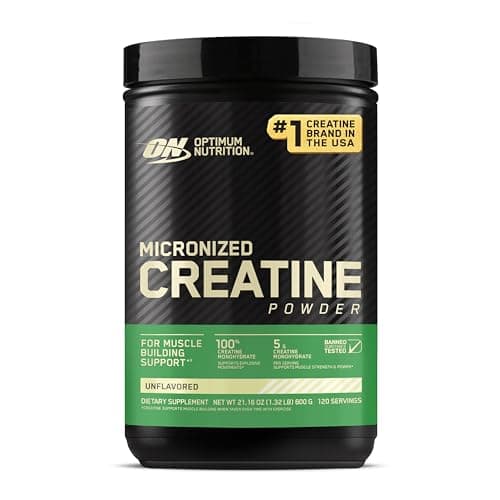
Optimum Nutrition — Creatine Monohydrate Powder (Micronized)
5 g creatine monohydrate per serving · 600 g tub · Creapure-grade micronized monohydrate · single ingredient · no loading phase required · unflavored
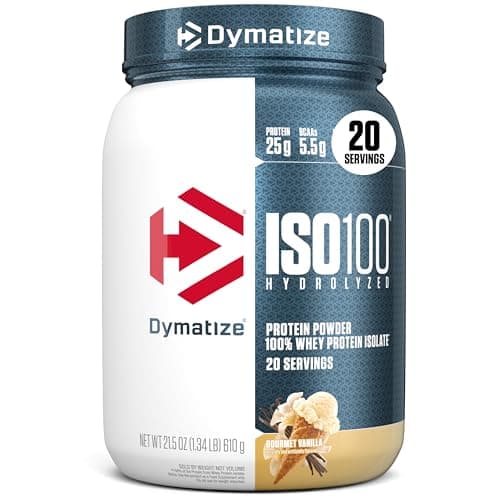
Dymatize — ISO100 Hydrolyzed
At a glance
Tap a row to check price · tap a header to sort| # | Best for | Price | ||
|---|---|---|---|---|
| 1 | 1. Optimum Nutrition — Creatine Monohydrate Powder (Micronized)Best overall for muscle growth | Best overall for muscle growth | 9.4/10 | |
| 2 | 2. Dymatize — ISO100 HydrolyzedBest protein for muscle growth | Best protein for muscle growth | 9/10 | |
| 3 | 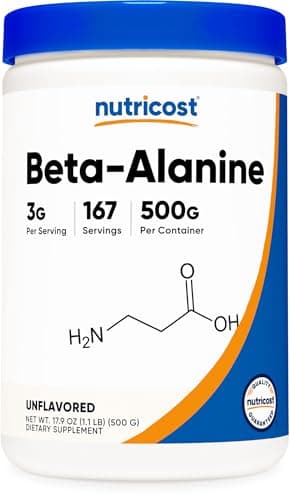 3. Nutricost — Beta-Alanine Powder (500 g)Best for training volume | Best for training volume | 8.2/10 | |
| 4 | 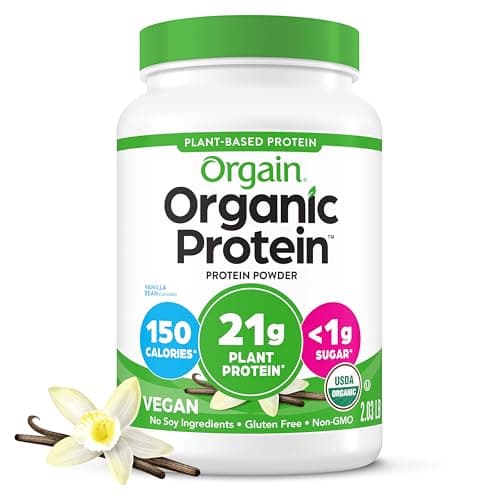 4. Orgain — Organic Vegan Protein Powder (21 g)Best dairy-free protein | Best dairy-free protein | 8/10 | |
| 5 | 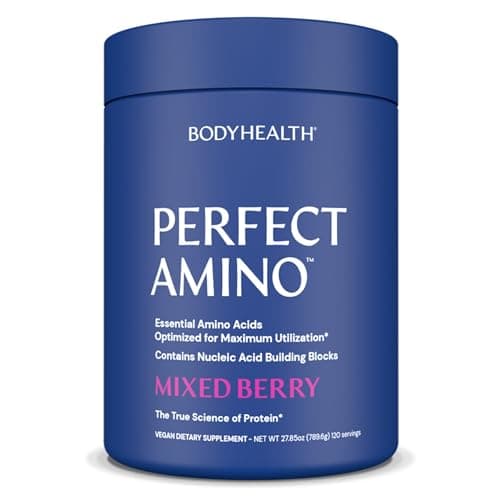 5. BodyHealth — PerfectAmino Powder (Mixed Berry, 120 servings)Best EAA option | Best EAA option | 7.4/10 | |
| 6 |  6. Sports Research — Vitamin D3 with Coconut Oil (5,000 IU)Best for correcting a real deficiency | Best for correcting a real deficiency | 7.2/10 |
Prices pulled from Amazon as of October 18, 2026 and are subject to change. The price shown on Amazon at checkout applies.
How we scored
Every product below is scored on six metrics, 0-10 each, with the weighting described on how we review. The criteria specific to this category:
- Hypertrophy evidence specifically. The heaviest-weighted metric, and narrower than the category pretends. The question is not whether a supplement is healthy or whether it has a plausible mechanism — it is whether controlled trials in training humans show more lean mass or more strength than placebo when training and protein intake are matched. We reward repeated randomized trials and position-stand-level consensus, and we mark down anything resting on mechanism stories, rodent work, or a single manufacturer-funded study.
- Dose and form that match the studies. A supplement only works at the amount and in the form that was tested. That means 5 g per day of creatine MONOHYDRATE, not an upcharge 'advanced' creatine; 20-40 g of complete protein per serving with 700-3,000 mg of leucine; 3.2-6.4 g per day of beta-alanine, split to limit paraesthesia. We mark down undersized servings and anything where the effective amount is buried inside a blend.
- Label honesty and no proprietary blends. Mass-gain and pre-workout shelves are the worst offenders for proprietary-blend fairy dust: fourteen ingredients, one combined milligram total, and no way to know what you are actually getting. We reward single-ingredient products and fully disclosed amounts, and mark down blends, filler aminos used to inflate the protein figure, added sugar, and marketing language implying clinical results the product never earned.
- Third-party testing. Supplements are not pre-approved by the FDA, so independent verification is the only practical assurance that the tub contains what the label says. We favor NSF Certified for Sport, Informed Choice and Informed Sport, and USP verification. This weighs double for anyone competing in a tested sport, where a contaminated tub is a banned-substance finding.
- Value per effective dose. We cost out a genuinely effective serving, not the smallest serving printed on the label. A tub that looks cheap per scoop but needs two scoops to reach a studied dose is not cheap. Creatine monohydrate scores at the ceiling here — pennies per day for the best-supported supplement in sports nutrition — while premium isolates and EAA powders have to justify a much higher cost per gram of actual benefit.
- Does it earn its place over food and training? The last and most important check. If the same result comes from adding a chicken breast, eating 300 more calories, adding a set, or sleeping another hour, we say so rather than selling you a tub. Several products here rank lower than their own category-page score precisely because they fail this test for hypertrophy specifically.
What to know before buying
- Buy creatine monohydrate and ignore every other form. Five grams a day, every day, timing irrelevant. You do not need a loading phase — loading just gets you to saturation in a week instead of a month. You do not need HCl, buffered, liquid, or 'advanced' creatine: none has beaten plain monohydrate head to head in a trial, and all cost more per effective gram. Monohydrate is also the form in the overwhelming majority of the research, which is the entire reason it is the default. Expect one to three pounds of water weight inside muscle in the first weeks — that is the mechanism working, not fat gain.
- Total daily protein beats protein timing, and food beats powder. The ISSN position stand points at 1.4-2.0 g/kg/day for building and maintaining muscle in active people, in servings of about 20-40 g every three to four hours. The old anabolic window you had to sprint to hit has not held up: if you have eaten protein in the hours around training, you are fine. So the right way to use a powder is as a tool for hitting a daily total you would otherwise miss — not as a magic post-workout agent. Eggs, meat, fish, dairy and legumes do the same job, and come with everything else food contains.
- Calories are the supplement nobody sells you. You cannot build meaningful muscle in a large deficit. If you are eating at maintenance or below and wondering why nothing is growing, no tub on this page fixes it — a modest surplus of roughly 10-20% above maintenance, paired with progressive overload, is the actual intervention. This is also why mass-gainer powders are mostly expensive maltodextrin: if you need more calories, rice, oats, olive oil and whole milk are cheaper, and a whole-food-first approach means you get nutrients with them rather than just sugar.
- Beta-alanine helps a specific thing, and hypertrophy is not quite it. Beta-alanine raises muscle carnosine, which buffers acidity and improves performance in efforts lasting roughly one to four minutes — think a brutal set of 20 squats, a 500 m row, or high-rep metcon work. That extra work capacity can indirectly support hypertrophy by letting you accumulate more quality volume, which is an honest second-order case rather than a direct one. It needs 3.2-6.4 g daily for several weeks to saturate, dose timing is irrelevant, and the harmless skin-tingling (paraesthesia) is reduced by splitting doses.
- This is YMYL territory and some of this category is genuinely risky. Nothing here treats a condition or raises hormones. Be sceptical of anything marketed as a testosterone booster, a SARM, a 'legal anabolic', or a proprietary growth matrix — the ones that work are drugs with real risks, and the ones sold as supplements mostly do not work. Products in this category have also been found adulterated with undeclared pharmaceuticals, which is precisely why third-party certification is weighted so heavily here. If you are pregnant, nursing, under 18, taking medication, or managing a health condition — kidney disease especially, since creatine raises serum creatinine readings without harming healthy kidneys — talk to your doctor before adding any of this.
Our picks
Optimum Nutrition — Creatine Monohydrate Powder (Micronized)
Key specs: 5 g creatine monohydrate per serving · 600 g tub · Creapure-grade micronized monohydrate · single ingredient · no loading phase required · unflavored
Pros
- The ISSN position stand calls creatine monohydrate the most effective ergogenic nutritional supplement available to athletes for increasing high-intensity exercise capacity and lean body mass during training
- Plain monohydrate is the exact form used in the overwhelming majority of the research — no upcharge form has beaten it head to head
- Single-ingredient label with nothing to hide: 5 g per serving, fully disclosed, no blend
- Among the cheapest supplements per effective dose in existence, which is why it beats far more expensive products on this page
- Works regardless of timing, so adherence is trivial — one scoop in anything, any time of day
Cons
- Micronized monohydrate still settles in water more than the pricier soluble forms, which is a texture complaint rather than a performance one
- Water-weight gain inside the muscle in the first weeks is normal and puts some people off
- Not third-party certified for sport at this price point — competitive athletes should look at the NSF Certified for Sport option in our creatine roundup
Who this one is for
For everyone who lifts, essentially without caveat. If you buy exactly one supplement off this page, buy this one. It is the right pick whether you are a beginner on your first linear-progression program or ten years in, because the effect is on high-intensity work capacity and lean mass rather than on anything training-level-specific. The only readers who should pause are those with kidney disease, who should talk to a doctor first.
Optimum Nutrition — Creatine Monohydrate Powder (Micronized)
- Hypertrophy evidence10/10
- Dose & form10/10
- Label honesty10/10
- Third-party testing7/10
- Value10/10
Dymatize — ISO100 Hydrolyzed
Key specs: 25 g protein / 110 cal per scoop · hydrolyzed whey protein isolate · very low lactose and fat · Informed Choice certified on listed batches
Pros
- A single scoop lands squarely in the 20-40 g per-serving range the ISSN position stand points at for maximizing muscle protein synthesis
- Whey is a complete protein with all nine essential amino acids and a high leucine content — the thing that separates it from any BCAA product
- Hydrolyzed isolate strips most of the lactose and fat, which makes it the easiest whey to tolerate for people who bloat on concentrate
- Informed Choice certification on listed batches is meaningful third-party assurance and matters if you compete in a tested sport
- 110 calories for 25 g of protein is an excellent ratio if you are tracking macros on a lower-carb approach
Cons
- Clearly more expensive per gram of protein than a concentrate blend, and hydrolysis buys convenience rather than extra muscle
- Dairy-derived, so it is out for anyone avoiding dairy — see our plant protein coverage instead
- It is a convenience product: the same protein from meat, eggs, fish or dairy does exactly the same job for growth
Who this one is for
For the lifter who keeps missing their daily protein total because real food is inconvenient at the wrong times of day. The hydrolyzed isolate is also the pick if whey concentrate upsets your stomach, since most of the lactose is stripped out. If you are already hitting 1.6 g/kg from food comfortably, you do not need this — and we would rather say that than sell you a tub.
Dymatize — ISO100 Hydrolyzed
- Hypertrophy evidence9/10
- Dose & form10/10
- Label honesty9/10
- Third-party testing8/10
- Value7/10
Nutricost — Beta-Alanine Powder (500 g)
Key specs: Pure beta-alanine powder · 500 g tub · roughly 2-3 g per scoop · unflavored · single ingredient · made in a GMP facility · months of servings per tub
Pros
- Raises muscle carnosine and improves performance in efforts lasting roughly one to four minutes — one of the better-replicated findings in sports supplementation
- Supports the indirect but real path to hypertrophy: more quality volume completed per session, accumulated over months
- A big tub of pure powder makes the genuinely effective 3.2-6.4 g daily dose affordable, which is where capsule products fall apart on cost
- Single-ingredient and unflavored, so you can split the daily dose to reduce tingling and stack it into anything
Cons
- No direct hypertrophy evidence — the mechanism is a buffering effect on work capacity, not a growth signal
- Needs several weeks of daily dosing to saturate muscle carnosine, so there is nothing to feel on day one
- Harmless skin tingling (paraesthesia) at larger single doses puts some people off until they split the dose
Who this one is for
For the lifter whose sets die on reps 12-20, or who does high-rep squat work, sled pushes, rowing intervals or metcons. The case for hypertrophy is indirect — it lets you accumulate more hard volume, and volume drives growth. If your training is all heavy triples and long rests, this one does very little for you and you should skip it.
Nutricost — Beta-Alanine Powder (500 g)
- Hypertrophy evidence6/10
- Dose & form10/10
- Label honesty10/10
- Third-party testing6/10
- Value10/10
Orgain — Organic Vegan Protein Powder (21 g)
Key specs: 21 g protein per scoop from organic pea, brown rice and chia/hemp · USDA Organic · vegan, gluten-, dairy- and soy-free · lightly sweetened with stevia/erythritol · 2.03 lb tub
Pros
- Blending pea with rice covers the limiting amino acids either source has alone, which is what makes it a complete protein rather than a partial one
- 21 g per scoop is inside the useful per-serving range for stimulating muscle protein synthesis
- USDA Organic and free of the common allergens, which solves a real problem for dairy-avoidant lifters
- Mixes and tastes well enough to actually drink daily — the main reason plant proteins get abandoned is palatability
Cons
- Plant blends are lower in leucine per gram than whey, so the per-serving anabolic response is modestly weaker at equal protein
- Costs more per gram of protein than whey concentrate
- Sweetened with stevia and erythritol, which some people dislike and some tolerate poorly
Who this one is for
For the lifter who cannot or will not use whey and still needs a convenient 20 g+ hit of complete protein. The pea-and-rice blend covers the amino acid gaps that either source has alone. If you tolerate dairy, whey remains the better value per gram of leucine, and we would rather you knew that.
Orgain — Organic Vegan Protein Powder (21 g)
- Hypertrophy evidence8/10
- Dose & form8/10
- Label honesty9/10
- Third-party testing6/10
- Value7/10
BodyHealth — PerfectAmino Powder (Mixed Berry, 120 servings)
Key specs: Complete essential amino acid profile (all eight/nine EAAs) rather than BCAAs only · vegan · sugar-free · Mixed Berry · 120 servings per container
Pros
- A complete EAA profile is the correct version of the amino acid idea — muscle protein synthesis needs all nine essentials present together, which is exactly why BCAA products underdeliver
- Free-form aminos need no digestion, which is the one real advantage over whole protein for fasted or appetite-limited training
- Sugar-free and vegan, so it fits a low-carb or dairy-free approach without adding calories
- 120 servings per container is a long supply, which softens the per-serving cost somewhat
Cons
- By far the most expensive product on this page, and whole protein does the same job for a small fraction of the cost
- No meaningful hypertrophy advantage over a protein shake when total daily protein is adequate — which it should be
- Flavored amino powders rely on sweeteners and flavorings some readers would rather avoid
Who this one is for
For the niche where free-form aminos genuinely beat whole protein: training fasted, an appetite that cannot handle food around sessions, or a medical reason to keep protein volume low. For almost everyone else this is an expensive way to buy what a protein shake delivers for a fraction of the price, and we would rather you spent the money on food.
BodyHealth — PerfectAmino Powder (Mixed Berry, 120 servings)
- Hypertrophy evidence6/10
- Dose & form9/10
- Label honesty9/10
- Third-party testing6/10
- Value3/10
Sports Research — Vitamin D3 with Coconut Oil (5,000 IU)
Key specs: 5,000 IU vitamin D3 per softgel in organic coconut oil · 360-count bottle · single active ingredient · fat-based carrier for absorption of a fat-soluble vitamin
Pros
- Vitamin D deficiency is genuinely common in people who train indoors or live at higher latitudes, and low status is associated with reduced muscle function
- A fat-based softgel is the sensible delivery vehicle for a fat-soluble vitamin
- 360 softgels is roughly a year's supply at one a day, which makes it the cheapest fix on this page by a wide margin
- Single-ingredient label with no proprietary 'bone and muscle complex' padding
Cons
- Only helps if you are actually low — this is deficiency correction, not a hypertrophy agent, and no reputable evidence says otherwise
- 5,000 IU is more than many people need; it is a fat-soluble vitamin and excessive long-term intake is not harmless, so testing beats guessing
- No K2 in this formulation, which some readers prefer alongside higher-dose D3 — see our vitamin D roundup for a combined option
Who this one is for
For the lifter who trains indoors, lives at a northern latitude, covers up in the sun, or has had a low vitamin D result on a blood test. The honest framing: correcting a deficiency helps muscle function, while topping up someone already replete does nothing for growth. Get tested rather than guessing, and do not take this as a growth supplement — it is a gap-filler.
Sports Research — Vitamin D3 with Coconut Oil (5,000 IU)
- Hypertrophy evidence5/10
- Dose & form8/10
- Label honesty9/10
- Third-party testing7/10
- Value10/10
Frequently asked questions
Creatine monohydrate, and the gap between it and everything else is not close. Our pick is Optimum Nutrition Micronized Creatine Monohydrate at 5 g per serving, single-ingredient, no loading phase needed. The reason it wins is not marketing but consensus: the International Society of Sports Nutrition's 2017 creatine position stand calls creatine monohydrate the most effective ergogenic nutritional supplement currently available to athletes for increasing high-intensity exercise capacity and lean body mass during training. It is also one of the cheapest supplements in existence per effective dose, which makes the cost-benefit absurdly favorable. The second pick is simply enough protein — a powder like Dymatize ISO100 is a convenience for hitting a daily total of roughly 1.4-2.0 g/kg, not a growth agent in its own right. Everything after those two is a rounding error by comparison, and if you spend your supplement budget anywhere else before covering creatine and protein, you have the order wrong.
Related reading
- → How much protein do you need per day?
- → How to take creatine
- → Does beta-alanine actually work?
- → How to choose a protein powder
- → How many days a week should you lift?
- → Creatine vs BCAA
- → Whey isolate vs concentrate
- → Whey vs plant protein
- → Creatine monohydrate vs HCl
- → Best creatine supplements
- → Best protein powders
- → Best beta-alanine supplements
- → Best supplements for muscle recovery
- → Best supplements for CrossFit athletes
- → Best plant-based protein powders
Sources
- International Society of Sports Nutrition Position Stand: Protein and Exercise (1.4-2.0 g/kg/day; 0.25 g/kg or 20-40 g per serving; 700-3,000 mg leucine) — Journal of the International Society of Sports Nutrition, 2017
- International Society of Sports Nutrition Position Stand: Safety and Efficacy of Creatine Supplementation in Exercise, Sport, and Medicine — Journal of the International Society of Sports Nutrition, 2017
- International Society of Sports Nutrition Position Stand: Beta-Alanine (3.2-6.4 g/day; performance in 1-4 minute efforts) — Journal of the International Society of Sports Nutrition, 2015
- Vitamin D — Health Professional Fact Sheet (status, deficiency prevalence, upper intake levels) — NIH Office of Dietary Supplements, 2023
- Tainted Body Building Products — public notifications on muscle-building supplements containing undeclared or hidden drug ingredients — U.S. Food and Drug Administration
- Product titles, serving sizes, stated doses, live prices and availability for all six ranked products — retrieved via the Amazon product data layer — Amazon product listing data, 2026
Last verified: October 5, 2026. See our editorial policy and how we review for details on scoring and update cadence. Canonical URL: https://trustedhealthgear.com/reviews/best-supplements-for-muscle-growth.
Optimum Nutrition — Creatine Monohydrate Powder (Micronized)
$27.00 · on Amazon