How Many Days a Week Should You Lift Weights?
The baseline from national guidelines is muscle-strengthening on at least two days a week, hitting all the major muscle groups — and for most people, two to four lifting days covers nearly every goal. Beginners do best with two or three full-body sessions a week; intermediates often move to three or four days; and advanced lifters may train four to six days using a split. The number that matters most isn't the day count itself but your total weekly work and your recovery: more days is only better if it lets you do quality volume and still recover, eat, and sleep well. If you can only manage two solid sessions, that still beats none by a wide margin. Match your frequency to your goal, your experience, and — honestly — the schedule you'll actually keep.
Affiliate disclosure: Trusted Health Gear is an Amazon Associate. If you buy through links on this page, we may earn a commission at no extra cost to you. Commission does not influence our rankings. Full policy.
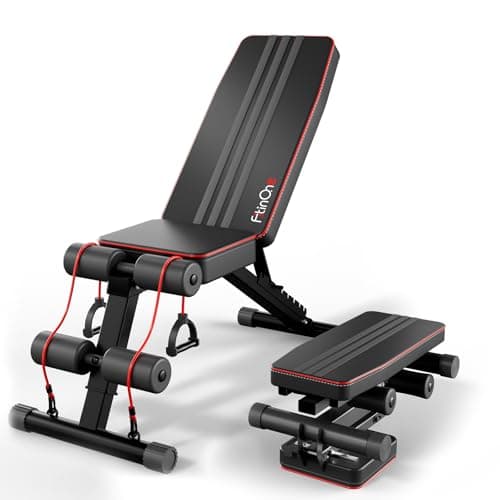
FitinOne — FitinOne Adjustable Weight Bench
Best budget — a fast-folding incline/decline bench for building out a starter home gym cheaply
The baseline: at least two days a week
Start with the floor, because it's lower than most people think. The Physical Activity Guidelines for Americans recommend that adults do muscle-strengthening activities of moderate or greater intensity involving all major muscle groups — legs, hips, back, abdomen, chest, shoulders, and arms — on two or more days a week. That's the evidence-based minimum for the health benefits of resistance training, and hitting it consistently already puts you ahead of most of the population. Notice what the guideline emphasizes: not a specific number of hours, but that you train all the major groups and that you do it at least twice weekly. So the honest answer to 'how many days should I lift' starts at two — and everything above that is about how much faster and how far you want to progress, not about whether you're doing enough to be healthier and stronger. If two days is what your life allows, build the best two-day, full-body plan you can and run it consistently.
Frequency by goal and experience
Above the baseline, the right number depends on where you are and what you want. Beginners should train two or three days a week with full-body sessions — this is plenty of stimulus while you're adapting fast, it lets you practice each movement often (skill matters early), and it's forgiving if you miss a day. Intermediates, after several months of steady training, often benefit from three or four days, which allows more total weekly volume and the room to split the body up. Advanced lifters chasing maximum size or strength may train four to six days using a split so each session can be focused and each muscle gets enough work and recovery across the week. Your goal nudges this too: general health and strength are well served by two to four days; noticeable muscle growth usually benefits from three-plus days so you can accumulate enough volume; and pure strength or physique specialization is where higher frequencies start to pay off. But more days always has to be earned by your recovery capacity — adding a fourth or fifth day you can't recover from just digs a hole.
What actually drives your split: weekly frequency per muscle
Here's the concept that ties day count to program design. Research on training frequency shows that when your total weekly volume (roughly, hard sets per muscle) is held equal, training a muscle more times per week doesn't dramatically change muscle growth — volume is the primary driver of hypertrophy, and frequency is mostly a tool for distributing that volume. Strength gains may benefit slightly from higher frequency, with diminishing returns. The practical implication is huge: how many days you lift should be chosen to let you fit in enough quality volume per muscle across the week while recovering — not because a magic number of sessions is required. A useful rule of thumb many coaches use is training each major muscle group roughly twice a week, which naturally shapes your split: fewer total days push you toward full-body sessions (so each muscle still gets hit often enough), while more days let you break the body into upper/lower or other splits without any muscle waiting a full week between sessions. Pick the structure that lets you distribute your volume sensibly across the days you can commit.
Full-body vs upper/lower vs push-pull-legs
The common templates each pair naturally with a day count. Full-body (each session trains the whole body) is ideal for two or three days a week — it hits every muscle two to three times weekly, maximizes movement practice, and is the most efficient choice when you can't train often; it's the default recommendation for beginners. Upper/lower (alternating upper-body and lower-body days) fits four days beautifully, giving each half of the body two sessions a week with more volume per muscle than a full-body plan can fit — a great intermediate step. Push-pull-legs (pushing muscles, pulling muscles, then legs) suits three or six days: run once through for a three-day week where each muscle is trained about once, or twice through for a six-day week that trains each muscle group about twice with high total volume — better suited to advanced lifters who recover well. There's no single best split; the best one is the template that matches the days you'll realistically train and lets each muscle get worked often enough. Full-body for a little time, upper/lower for moderate, push-pull-legs for a lot.
Recovery, rest days, and sleep
Training is the stimulus; recovery is where you actually get stronger, and it's the part people shortchange. Muscle is repaired and built between sessions, not during them, so rest days aren't wasted days — they're when the adaptation happens. Program at least one to two rest days a week for most people, and don't train the same muscle group hard on back-to-back days; give a worked muscle roughly a day or two before hammering it again. Rest days don't have to be sedentary — walking, easy cycling, mobility work, or a sport all count as active recovery and can help you feel better. Sleep is the other half of recovery and the most underrated performance tool there is: most of your repair and hormonal recovery happens overnight, so protect seven to nine hours. Nutrition matters too — enough total calories and adequate protein across the day give your body the material to rebuild. Watch for signs you're overreaching: persistent soreness beyond a couple of days, stalled or dropping performance, poor sleep, or low motivation usually mean you need more recovery, not another workout. When in doubt, more days is not the answer; better recovery is.
The minimum effective dose
If there's one liberating idea here, it's this: you don't need a lot of days to get real results — you need a few good ones, done consistently. Even two quality strength sessions a week produce meaningful gains in strength, muscle, and health, and they crush the results of a five-day plan you abandon after three weeks. Consistency over months and years is what actually moves the needle, so the best frequency is the highest one you can sustain without burning out or skipping. If your life allows only two days, make them full-body, hit every major muscle group, train with real effort (a rep or two from failure), and progress the load over time — that's a complete, effective program. If you can add a third or fourth day later, great, but don't let 'I don't have time for five days' become a reason to do nothing. Two good days beat zero perfect ones every single week. Build the routine you'll keep, then add to it only when you're confident you'll keep the bigger version too.
Sample weekly templates
Here are practical starting points you can adapt. Two days (full-body): Monday and Thursday, each session covering a squat, a hinge, a push, a pull, and a core movement — the minimum effective plan, and a strong one. Three days (full-body): Monday/Wednesday/Friday, same full-body structure with a rest day between each — the classic beginner-to-early-intermediate template that hits everything three times a week. Four days (upper/lower): Monday upper, Tuesday lower, Thursday upper, Friday lower, with more volume per session and each half of the body trained twice — a great intermediate step up. Six days (push-pull-legs x2): push/pull/legs, a rest day, then push/pull/legs again, training each muscle group about twice a week at high volume — reserved for advanced lifters with the recovery to back it up. Whatever you pick, keep at least one full rest day, avoid training the same muscles hard on consecutive days, and progress gradually. And remember the honest caveat that applies to all of this: it's general fitness guidance, not medical advice — if you're new to training, coming back from a layoff, or managing an injury or health condition, check with a doctor or coach before ramping up your frequency.
Frequently asked questions
Two or three full-body days a week is ideal for beginners. It provides plenty of stimulus while you're adapting fast, lets you practice each movement often, and is forgiving if you miss a session. A Monday/Wednesday/Friday or Monday/Thursday schedule works well. You can add days later as you progress and your recovery allows.
Related reading
Sources
- Physical Activity Guidelines for Americans, 2nd Edition (muscle-strengthening on 2+ days/week, all major muscle groups) — U.S. Department of Health and Human Services, 2018
- How many times per week should a muscle be trained to maximize muscle hypertrophy? A systematic review and meta-analysis of resistance training frequency — Sports Medicine (Schoenfeld, Grgic, Krieger), 2019
- Adult Activity: An Overview (physical activity recommendations) — Centers for Disease Control and Prevention
- Resistance Training and Program Design Basics — National Strength and Conditioning Association
FitinOne — FitinOne Adjustable Weight Bench
$59.98 · on Amazon