A Beginner's Full-Body Dumbbell Workout at Home
You can build real strength at home with one adjustable pair of dumbbells (or two or three fixed pairs) and a mat. Run a simple full-body routine two or three times a week, alternating two workouts — an A day and a B day — built from a handful of compound movements: goblet squat, dumbbell Romanian deadlift, floor or bench press, one-arm row, reverse lunge, overhead press, and a plank. Beginners do best with 2-3 sets of 8-12 reps per exercise, leaving a rep or two in reserve. Warm up first, use a weight you actually control, and check with a doctor before starting a new program. Progress by adding reps first, then weight.
Affiliate disclosure: Trusted Health Gear is an Amazon Associate. If you buy through links on this page, we may earn a commission at no extra cost to you. Commission does not influence our rankings. Full policy.
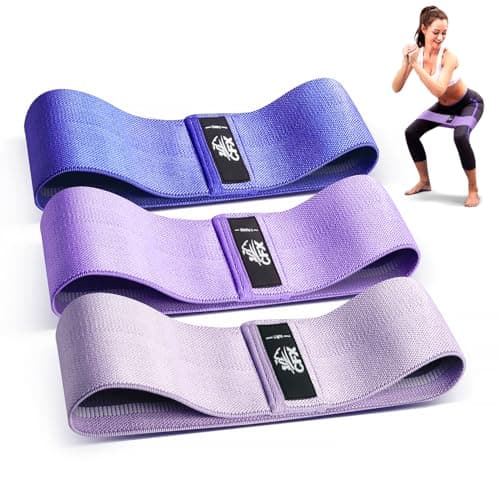
CFX — CFX Booty Bands (3-Level Set)
Most versatile budget set — a low-cost non-slip fabric kit that covers glutes plus Pilates and full-body home work
What you need to get started
You need less than the fitness industry wants you to think. The single most versatile purchase is one adjustable pair of dumbbells, which replaces a rack of fixed weights and covers everything from light presses to heavier squats and rows. If you'd rather buy fixed dumbbells, start with two or three pairs — a light pair for presses and overhead work, a medium pair for rows, and a heavier pair for squats and deadlifts. Add a mat so you can kneel, plank, and set weights down without wrecking the floor. A bench is a nice-to-have, not a requirement: every pressing movement here has a floor version. That's the whole shopping list — dumbbells, a mat, and eventually a bench when you outgrow the floor. Skip the gadgets and put the money into weights you'll grow into. One good adjustable pair that runs from about 5 to 50 pounds per hand will carry a beginner through their entire first year and well beyond, so it's rarely money wasted.
Warm up first (and a quick honest note)
Skipping the warm-up is the fastest way to a bad first month. Spend five to ten minutes raising your body temperature and moving the joints you're about to load. A simple sequence: march or jog in place for two minutes, then do arm circles, bodyweight squats, hip hinges, and a few slow lunges — ten to fifteen reps each. Follow with one light set of your first two exercises using very little or no weight to groove the pattern. The goal is warm muscles and rehearsed movement, not fatigue. A note that matters: this is general fitness education, not personalized medical advice. Warm up, use a weight you can control for every rep, and check with a doctor before starting a new program if you're new to exercise or have any health concerns. Nothing here should hurt — discomfort from effort is fine, sharp pain is a stop sign.
The full-body A/B routine
Run two alternating workouts so you hit everything twice a week without overloading any one movement. Day A: goblet squat (hold one dumbbell at your chest, sit down between your hips, knees tracking over your toes), floor or bench press (press two dumbbells from chest to lockout, elbows about 45 degrees from your sides), and one-arm row (hinge at the hips, pull the dumbbell toward your hip, keep your back flat). Day B: dumbbell Romanian deadlift (soft knees, push your hips back, feel the hamstrings, stand tall), reverse lunge (step back, drop the back knee, drive through the front heel), and overhead press (press from your shoulders to overhead without leaning back). Finish each day with a plank — brace your abs and keep a straight line from head to heels — for two to three holds of 20-40 seconds. Alternate A and B each session, so over a typical week you might run A on Monday, B on Wednesday, and A again on Friday. Each movement is a compound lift that trains several muscles at once, which is exactly why this short list of exercises covers your whole body without needing a machine for every angle.
Sets and reps for beginners
Keep the numbers boring on purpose. For each exercise, do 2-3 sets of 8-12 reps. That rep range is forgiving enough to learn technique and heavy enough to build strength and muscle. Rest 60-90 seconds between sets — long enough to recover, short enough to keep the session under 45 minutes. The plank is the exception: hold for time, 20-40 seconds, rather than counting reps. In your first few weeks, stay at the lower end (2 sets) while your joints and connective tissue adapt, then add the third set. Every rep should look the same as the first — when your form falls apart, the set is over, even if you had more reps 'in you.' Quality reps at a controlled tempo beat grinding out sloppy ones, and they're far kinder to a beginner's body. Consistency across weeks, not heroics in one session, is what builds you.
How to pick your weight and progress (the 2-for-2 rule)
Pick a weight that lets you finish your target reps with about two reps left in the tank on the first set. If you can't reach eight clean reps, it's too heavy; if twelve feels easy, it's too light. To progress, use the classic 2-for-2 rule: when you can complete two extra reps beyond your target on the last set for two workouts in a row, bump the weight up at the next session. With adjustable dumbbells you can make small jumps; with fixed pairs the jumps are bigger, so add reps and sets before moving up. Strength doesn't climb in a straight line — some days feel heavier than others, and that's normal. Track your weights and reps in a notebook or your phone so progression is a decision based on data, not a guess based on how you feel that day.
Rest days and how often to train
Two to three full-body sessions a week is the sweet spot for beginners. It's enough to drive progress and infrequent enough that you recover between workouts — muscle is built during rest, not during the set. Leave at least one full day between sessions; a Monday/Wednesday/Friday or a Tuesday/Thursday pattern works well. On off days you're not required to sit still: walking, easy cycling, mobility work, or a sport all count as active recovery and help you feel better. Sleep is the other half of the equation and gets treated too casually — most of your adaptation happens overnight, so protect seven to nine hours. If you're sore for more than a couple of days, that's a sign to eat and sleep more, not to add another workout. Getting enough protein across the day supports the recovery your training depends on. More is not better; better is better.
Common form mistakes to avoid
A few errors show up in almost every beginner. On squats and lunges, people let the knees cave inward and the heels lift — cue your knees out and drive through mid-foot. On the Romanian deadlift, rounding the lower back and turning it into a squat is the classic fault; keep the dumbbells close to your legs, hinge at the hips, and stop when you feel the hamstrings stretch. On presses, flaring the elbows straight out to the sides stresses the shoulders — keep them tucked closer to 45 degrees. On rows, yanking with the arm and twisting the torso robs the back of the work; move slowly and squeeze the shoulder blade. And universally: holding your breath, rushing the lowering phase, and choosing ego-weight over control. Slow the eccentric — the lowering part — to about two seconds, breathe on each rep, and the movements start to coach themselves.
Frequently asked questions
Two to three non-consecutive days a week. That's enough to build strength while leaving time to recover, since muscle is built during rest, not during the workout. A Monday/Wednesday/Friday or Tuesday/Thursday schedule works well and is easy to stick to.
Related reading
Sources
- Physical Activity Guidelines for Americans, 2nd Edition — U.S. Department of Health and Human Services, 2018
- Progression Models in Resistance Training for Healthy Adults (Position Stand) — American College of Sports Medicine, 2009
- ACE Exercise Library — American Council on Exercise
- Basics of Strength and Conditioning Manual — National Strength and Conditioning Association
CFX — CFX Booty Bands (3-Level Set)
$9.90 · on Amazon