When to Take Magnesium: Morning, Evening, or With Food?
There's no strong absorption difference between morning and evening magnesium dosing in published research. What matters most is taking it consistently every day. Evening is popular because some people subjectively notice a calming effect that fits a wind-down routine — and because splitting the dose evening/morning reduces the mild laxative effect of higher doses. Take with food if it causes any stomach upset; without food is fine otherwise.
Affiliate disclosure: Trusted Health Gear is an Amazon Associate. If you buy through links on this page, we may earn a commission at no extra cost to you. Commission does not influence our rankings. Full policy.
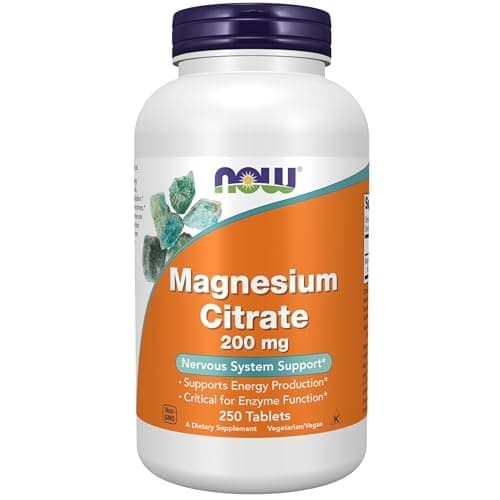
NOW Foods — Magnesium Citrate
Budget choice with third-party testing
Timing doesn't meaningfully change absorption
Magnesium absorption in the small intestine isn't strongly time-of-day dependent. The published bioavailability literature compares different forms (glycinate, citrate, oxide) far more than time-of-day effects. If you're taking a single 200-300mg elemental dose, any consistent time of day is fine for absorption.
Why evening is popular
Two practical reasons. First, the subjective 'relaxing' effect many users report (particularly with glycinate) fits an evening routine. The research on magnesium and sleep, while modest in effect size, is consistent enough that evening dosing is a reasonable default if sleep support is your goal. Second, if you're taking higher doses (300+ mg elemental, especially of citrate), the mild GI effect is less inconvenient at night than during the day.
When morning makes sense
If you're taking magnesium primarily for general repletion (not sleep), or if you prefer to take all your supplements at breakfast for consistency, morning works fine. Some people report mild sleep disruption with evening magnesium — rare, but if it happens to you, move to morning.
Split dosing — the compromise
For doses over 300mg elemental, splitting into morning + evening reduces any GI discomfort. It also smooths the blood-level curve across the day. Example: 200mg with breakfast + 200mg before bed is more comfortable than 400mg at once for most people.
With or without food
Magnesium is water-soluble and doesn't require fat for absorption (unlike vitamin D or K). Taking it with food is fine and can reduce GI upset if that's an issue. Taking it on an empty stomach is also fine for most people — just start with a smaller dose if you haven't tested your tolerance.
Timing around other supplements and medications
Magnesium can reduce the absorption of certain antibiotics (tetracyclines, fluoroquinolones) and thyroid medication (levothyroxine). If you take any of these, separate magnesium by at least 2-4 hours. This is a doctor conversation if you're unsure. Calcium and magnesium compete for absorption at very high doses — not usually a problem at typical supplemental levels, but another reason to avoid mega-dosing.
Consistency trumps clock time
The most important thing: take it every day. Missing doses intermittently does more to reduce benefit than suboptimal timing does. If evening is hard to remember, take it at breakfast. If you're on the road, take it with whatever meal is reliable. Consistency is the variable research actually supports.
Frequently asked questions
Either works for absorption. Evening is popular for sleep-focused use and for splitting higher doses. If you've noticed magnesium causes sleep disruption (rare), move to morning.
Sources
- Magnesium — Fact Sheet for Health Professionals — NIH Office of Dietary Supplements
- Bioavailability of US Commercial Magnesium Preparations — Magnesium Research, 2001
- Oral magnesium supplementation in insomnia in the elderly — Journal of Research in Medical Sciences, 2012
NOW Foods — Magnesium Citrate
$19.99 · on Amazon