Best Probiotic Supplements, Scored on a Public Rubric
The probiotic category is overpopulated, under-regulated, and full of products that either don't list specific strains or don't disclose CFU counts at end-of-shelf-life. What actually matters: which strains (at the strain-designation level, e.g., Lactobacillus rhamnosus GG, not just 'L. rhamnosus'), CFU dose at expiration (not at manufacture), and whether there's published human clinical trial evidence for the specific strain combination. We scored six on those criteria.
Top pick
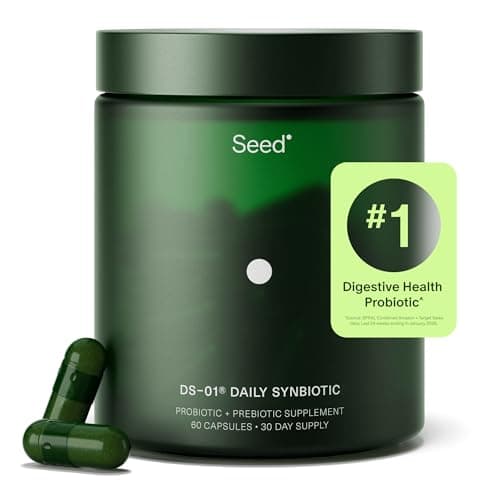
Seed — Daily Synbiotic (DS-01)
24 named strains, 53.6 billion AFU end-of-shelf-life, 2-in-1 capsule with inner prebiotic coating, 30-day subscription
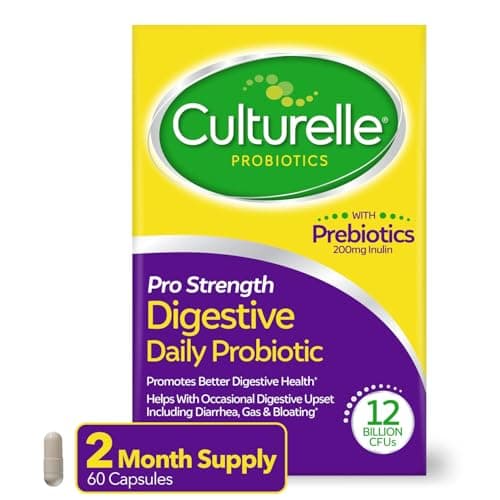
Culturelle — Culturelle Digestive Daily
At a glance
Tap a row to check price · tap a header to sort| # | Best for | Price | ||
|---|---|---|---|---|
| 1 | 1. Seed — Daily Synbiotic (DS-01)Best overall for research transparency | Best overall for research transparency | 8.5/10 | |
| 2 | 2. Culturelle — Culturelle Digestive DailyBest evidence for single-strain use | Best evidence for single-strain use | 8.7/10 | |
| 3 | 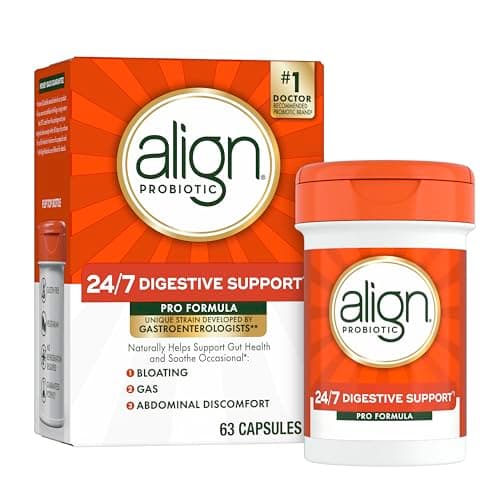 3. Align — Align Probiotic SupplementSingle-strain with IBS-targeted research | Single-strain with IBS-targeted research | 7.7/10 | |
| 4 | 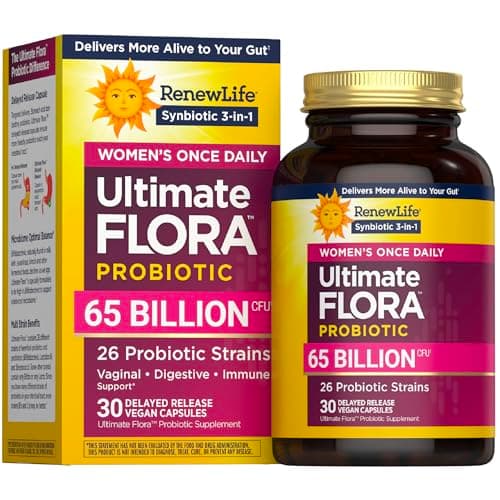 4. Renew Life — Ultimate Flora Women's CareMulti-strain at reasonable price | Multi-strain at reasonable price | 6.8/10 | |
| 5 | 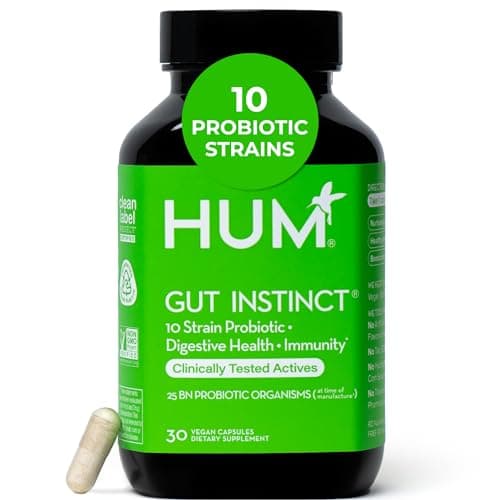 5. HUM Nutrition — Gut Instinct Daily ProbioticBest moderate-dose multi-strain | Best moderate-dose multi-strain | 6.8/10 | |
| 6 | 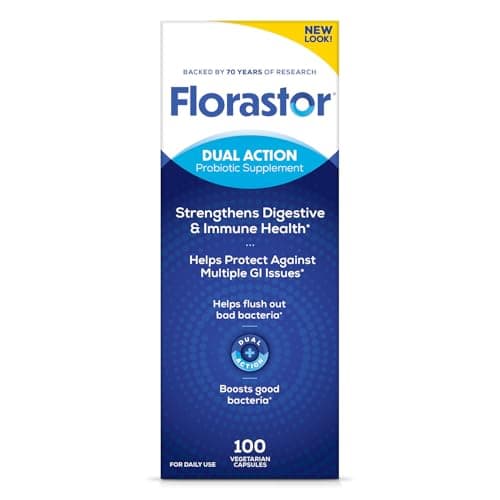 6. Florastor — Florastor Daily ProbioticBest yeast-based probiotic (antibiotic support) | Best yeast-based probiotic (antibiotic support) | 7.8/10 |
Prices pulled from Amazon as of October 18, 2026 and are subject to change. The price shown on Amazon at checkout applies.
How we scored
Every product below is scored on six metrics, 0-10 each, with the weighting described on how we review. The criteria specific to this category:
- Named strains with the research-designation identifier (e.g., LGG, B-420, DSM numbers).
- CFU guaranteed at end of shelf life — not 'at time of manufacture'.
- Published human clinical trial evidence for the specific strain combination in the product.
- Shelf stability — refrigerated vs room-temperature; delivery technology.
- Third-party testing evidence (USP, ConsumerLab, or published COAs).
- Value per day, not per bottle.
What to know before buying
- "More CFUs is better" is a myth. Research doses are strain-specific and often in the 1-25 billion range. 100-billion-CFU megablends with no strain designation aren't evidence-based.
- Probiotics don't permanently colonize the gut for most people. They work while being taken; benefits fade within weeks of stopping.
- There's limited evidence to support taking probiotics 'preventatively' for general health. Stronger evidence exists for specific indications (antibiotic-associated diarrhea, IBS-D symptoms) with specific strains.
Our picks
Seed — Daily Synbiotic (DS-01)
Key specs: 24 named strains, 53.6 billion AFU end-of-shelf-life, 2-in-1 capsule with inner prebiotic coating, 30-day subscription
Pros
- Publishes the full strain designation list with clinical references
- End-of-shelf-life AFU (Active Fluorescent Units) disclosure — more honest than manufacture-date CFU
- Shelf-stable at room temperature
Cons
- Subscription-only purchase model
- Premium price per day
Seed — Daily Synbiotic (DS-01)
- Third-party testing8/10
- Bioavailability9/10
- Clinical evidence9/10
- Value6/10
- Brand transparency10/10
- Form & absorption9/10
Culturelle — Culturelle Digestive Daily
Key specs: Lactobacillus rhamnosus GG, 10 billion CFU, 30-count
Pros
- LGG is one of the most-studied single probiotic strains in published human trials
- Shelf-stable at room temperature
- Affordable per day
Cons
- Single strain — not a broad-spectrum option
- Limited recent innovation vs newer multi-strain competitors
Culturelle — Culturelle Digestive Daily
- Third-party testing8/10
- Bioavailability8/10
- Clinical evidence10/10
- Value9/10
- Brand transparency9/10
- Form & absorption8/10
Align — Align Probiotic Supplement
Key specs: Bifidobacterium 35624, 1 billion CFU, 28-count
Pros
- Strain-specific research including IBS symptom trials
- Shelf-stable
- Widely available retail
Cons
- Single strain, low CFU count
- Non-trivial price per day vs comparable single-strain options
Align — Align Probiotic Supplement
- Third-party testing7/10
- Bioavailability8/10
- Clinical evidence9/10
- Value6/10
- Brand transparency8/10
- Form & absorption8/10
Renew Life — Ultimate Flora Women's Care
Key specs: 10 strains, 25 billion CFU, refrigerated recommended for potency
Pros
- Multi-strain diversity at a mass-market price point
- Delayed-release capsules to survive stomach acid
- ConsumerLab-tested historically
Cons
- Genus + species but some strain designations not fully disclosed on pack
- Potency declines faster at room temperature
Renew Life — Ultimate Flora Women's Care
- Third-party testing6/10
- Bioavailability7/10
- Clinical evidence7/10
- Value8/10
- Brand transparency6/10
- Form & absorption7/10
HUM Nutrition — Gut Instinct Daily Probiotic
Key specs: 10-strain probiotic blend, 25 billion CFU, 30 capsules (30-day supply)
Pros
- 25 billion CFU is a gentler total dose than the 50-billion-plus blends here — a sensible starting point if probiotics have upset your stomach before
- Ten strains spanning Lactobacillus, Bifidobacterium and Streptococcus thermophilus give broader coverage than a single-strain capsule
- HUM publishes its formulas and ingredient sourcing publicly, which is more than most retail probiotic brands do
Cons
- No clinical trials on this specific 10-strain blend — probiotic evidence is strain-specific, and a blend does not inherit it
- Costs more per capsule than a drugstore multi-strain without a proven advantage over one
HUM Nutrition — Gut Instinct Daily Probiotic
- Third-party testing7/10
- Bioavailability7/10
- Clinical evidence6/10
- Value7/10
- Brand transparency7/10
- Form & absorption7/10
Florastor — Florastor Daily Probiotic
Key specs: Saccharomyces boulardii CNCM I-745, 250mg, 50-count capsules
Pros
- S. boulardii is a yeast — resistant to antibiotics, so it can be taken during a course
- Strongest published trial evidence for antibiotic-associated diarrhea prevention
- Shelf-stable without refrigeration
Cons
- Not a broad-spectrum bacterial probiotic — a complementary product, not a replacement
- Higher per-day cost than bacterial options
Florastor — Florastor Daily Probiotic
- Third-party testing7/10
- Bioavailability8/10
- Clinical evidence9/10
- Value6/10
- Brand transparency8/10
- Form & absorption9/10
Frequently asked questions
Evidence is strain-specific and indication-specific. Stronger evidence exists for Lactobacillus rhamnosus GG and Saccharomyces boulardii in preventing antibiotic-associated diarrhea, and for Bifidobacterium 35624 for some IBS symptoms. General 'gut health' claims for broad-spectrum megablends are much weaker in the literature.
Related reading
- → Do probiotics actually work? The evidence, condition by condition
- → How much fiber do you need per day?
- → Seed vs Culturelle
- → AG1 vs Seed (does a greens powder's probiotic replace a real one?)
- → Best prebiotic supplements
- → Best fiber supplements
- → Best fish oil supplement
- → Best multivitamin
- → Best supplements for gut health (where probiotics rank against fiber)
Sources
- Health Benefits of Probiotics: A Review — ISRN Nutrition, 2013
- Probiotics for the Prevention of Antibiotic-Associated Diarrhea — Cochrane Review
- World Gastroenterology Organisation Global Guidelines: Probiotics and Prebiotics — WGO, 2023
- HUM Gut Instinct — Formula and Ingredients (10 strains, 25 billion CFU) — HUM Nutrition, 2026
Last verified: April 21, 2026. See our editorial policy and how we review for details on scoring and update cadence. Canonical URL: https://trustedhealthgear.com/reviews/best-probiotic.
Seed — Daily Synbiotic (DS-01)
$59.99 · on Amazon