Creatine Benefits for Women: What the Research Shows
Creatine monohydrate has a strong published evidence base for improvements in high-intensity performance, lean muscle mass, and strength gains — and published trials specifically in women show those benefits apply without sex-specific safety concerns. Dosing for women is the same as for men: 5 grams per day, every day, long-term. Initial water retention is normal and reflects intramuscular hydration, not bloating.
Affiliate disclosure: Trusted Health Gear is an Amazon Associate. If you buy through links on this page, we may earn a commission at no extra cost to you. Commission does not influence our rankings. Full policy.
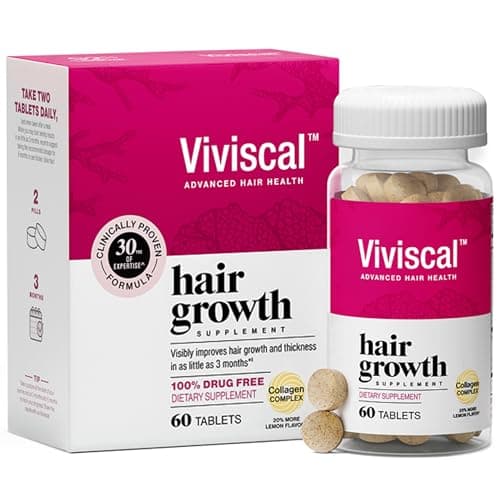
Viviscal — Viviscal Hair Growth Supplements for Women (60 tablets, 1 month)
Best-studied actual supplement — with the trial caveats stated plainly
Why women-specific evidence matters
Early creatine research (1990s-2000s) was predominantly in male athletes. That changed in the last decade, and a growing body of published research specifically in women shows the underlying mechanism and benefits are the same. A 2021 review in Nutrients summarized the evidence base for women, covering performance, pregnancy, menopause, and mental health endpoints — concluding the benefits are consistent with those seen in men.
Benefit 1: High-intensity performance
Creatine supplementation increases phosphocreatine stores in muscle, which support rapid ATP regeneration during short, high-intensity efforts. Published trials in women show improvements in strength, power, and repeat-sprint performance consistent with findings in men. Effect sizes are moderate and show up most clearly in resistance-trained athletes.
Benefit 2: Lean mass accrual during resistance training
When paired with resistance training, creatine supplementation is associated with modestly greater lean mass gains compared to training alone. This is the most consistently-replicated finding in the creatine literature, and trials specifically in women confirm the effect is not sex-specific.
Benefit 3: Possible cognitive support
An emerging but smaller literature suggests creatine supplementation may support cognition under sleep deprivation or cognitive strain. Effect sizes are small and the research is preliminary, but this is one area where women-specific interest is increasing — particularly for perimenopausal and postmenopausal cognitive health, where a few trials have tested higher doses (10-20g/day) with some positive findings.
Benefit 4: Bone-mineral density in older women
A 2015 trial by Chilibeck et al. paired creatine with resistance training in postmenopausal women and found greater preservation of femoral bone mineral density vs training alone. Not all trials replicate this, but the evidence is sufficiently interesting that creatine is commonly recommended as part of exercise-based protocols for bone-health maintenance in older women.
The water-retention myth
The biggest misunderstanding in women's creatine is weight. In the first 1-3 weeks, you may gain 1-2 pounds of water weight — this is intracellular fluid (inside the muscle cell), not subcutaneous bloating. It's a feature, not a bug: more hydrated cells perform better and look fuller, not puffy. This effect stabilizes within a month.
Dosing for women
Same as men: 5 grams per day, every day. No need to 'load' with 20g for a week — you'll reach saturation in 3-4 weeks at the standard 5g dose, with a slightly easier stomach and no loading-phase side effects. Take any time of day, with or without food.
Viviscal — Viviscal Hair Growth Supplements for Women (60 tablets, 1 month)
Frequently asked questions
Initial weight gain of 1-2 pounds is typical and reflects intramuscular water, not subcutaneous bloating. This is not cosmetic puffiness. It stabilizes within 3-4 weeks.
Related reading
Sources
- Creatine Supplementation in Women's Health: A Lifespan Perspective — Nutrients, 2021
- International Society of Sports Nutrition Position Stand: Safety and Efficacy of Creatine Supplementation — JISSN, 2017
- Effects of creatine and resistance training on bone health in postmenopausal women — Medicine & Science in Sports & Exercise, 2015
Viviscal — Viviscal Hair Growth Supplements for Women (60 tablets, 1 month)
$37.50 · on Amazon