Magnesium Glycinate Benefits: What Research Actually Shows
Magnesium glycinate is magnesium bound to the amino acid glycine. It's well-absorbed, gentle on digestion, and the glycine component may contribute mild calming effects. Published research supports modest benefits for general magnesium repletion, possible improvements in self-reported sleep in people with low baseline intake, and lower GI side effects than cheaper forms like magnesium oxide. Many claims online go beyond what the research supports — this guide separates them.
Affiliate disclosure: Trusted Health Gear is an Amazon Associate. If you buy through links on this page, we may earn a commission at no extra cost to you. Commission does not influence our rankings. Full policy.
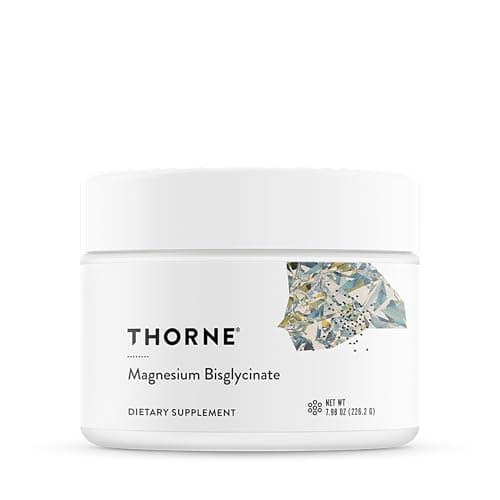
Thorne — Basic Nutrients Magnesium Bisglycinate
Overall pick — third-party testing + clinical-grade transparency
What is magnesium glycinate?
Magnesium glycinate (also written 'magnesium bisglycinate') is the mineral magnesium chelated with two glycine molecules. The chelation improves absorption compared to inorganic forms like oxide. It also reduces the mineral's tendency to have a laxative effect, making it easier on digestion. About 14% of the compound's weight is elemental magnesium — so '1,000 mg of magnesium glycinate' contains roughly 140 mg of actual magnesium.
Benefit 1: Efficient magnesium repletion
The most well-established benefit is straightforward: glycinate is absorbed well enough to reliably raise magnesium status. For the roughly 48% of US adults whose intake falls below the RDA (NIH ODS), that's the core reason to take it. A 2001 bioavailability study in Magnesium Research placed chelated forms in the 20-40% absorption range vs oxide at around 4%.
Benefit 2: Lower GI side effects vs citrate or oxide
Citrate and oxide can cause loose stools or diarrhea at doses above 300mg elemental. Glycinate rarely does. If you're taking magnesium daily and tolerating citrate poorly, glycinate is the practical upgrade. This is one of the best-supported advantages of glycinate over alternatives.
Benefit 3: Possible sleep-quality support
A 2012 RCT in elderly adults with insomnia (Abbasi et al., Journal of Research in Medical Sciences) found magnesium supplementation improved self-reported sleep onset and quality. Effect sizes were modest and the population was specific (older adults with low baseline intake). The evidence is consistent enough to support using magnesium for sleep — but unrealistic if you're expecting a dramatic sleep-aid effect. Glycinate specifically has some mechanistic rationale here because glycine itself has documented mild sleep-supportive effects in other trials.
Benefit 4: Associated with reduced self-reported anxiety in some trials
Several short trials suggest magnesium supplementation may be associated with modest reductions in self-reported anxiety scores, particularly in people with low baseline magnesium. A 2017 systematic review in PLOS ONE found evidence was suggestive but not conclusive. This is not a treatment for clinical anxiety — that's a doctor's conversation.
What glycinate won't do
Claims online often go far beyond the evidence: treating chronic migraines, curing depression, eliminating restless leg syndrome, reducing blood pressure dramatically. Some of these have weak supportive data in specific populations (e.g., migraine frequency in people with low magnesium); others don't. Treat bold 'cure' claims skeptically. Magnesium is a basic mineral supplement, not a miracle compound.
How to choose
Look for a product that clearly discloses elemental mg (not just the compound weight). Target 100-200mg elemental per serving so you can titrate to 200-400mg elemental total daily. Third-party testing (USP, NSF, Informed Sport) is a reasonable quality bar. See our best magnesium supplement roundup for specific product scoring.
Frequently asked questions
For repletion (raising magnesium status), several weeks to months depending on baseline deficit. For subjective effects on sleep or stress, if they occur, most people who report benefits notice within 2-4 weeks of daily use.
Related reading
Sources
- Magnesium — Fact Sheet for Health Professionals — NIH Office of Dietary Supplements
- Bioavailability of US Commercial Magnesium Preparations — Magnesium Research, 2001
- The Effect of Magnesium Supplementation on Primary Insomnia in Elderly — Journal of Research in Medical Sciences, 2012
- The effects of magnesium supplementation on subjective anxiety and stress: a systematic review — PLOS ONE, 2017
Thorne — Basic Nutrients Magnesium Bisglycinate
$52.00 · on Amazon