Magnesium Glycinate vs Citrate: Which Form Should You Choose?
Both glycinate and citrate are well-absorbed magnesium forms backed by published bioavailability data — far better than oxide (absorbed at around 4%). The practical differences come down to GI tolerance and use case: glycinate is gentler on digestion, citrate is cheaper and has a mild laxative effect at higher doses.

Thorne — Basic Nutrients Magnesium Bisglycinate
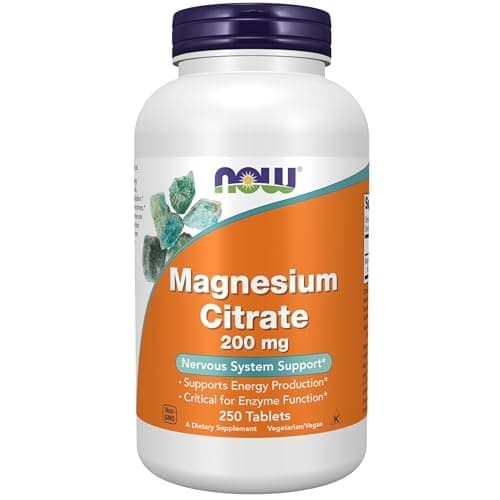
NOW Foods — Magnesium Citrate
The verdict
Pick glycinate if you're taking magnesium daily and don't want GI side effects, or if you're targeting sleep/relaxation use. Pick citrate if you want the cheapest well-absorbed form and either don't notice GI effects or are specifically using magnesium to support regularity.
Side-by-side
| Attribute | Magnesium glycinate | Magnesium citrate |
|---|---|---|
| Chemical form | Magnesium bis-glycinate (chelated with glycine) | Magnesium citrate (bound to citric acid) |
| Typical elemental mg | ~14% of compound weight | ~16% of compound weight |
| Bioavailability (%) | ~23-40% (varied by study) | ~25-30% (varied by study) |
| GI effect at standard dose | Rarely causes loose stool | Mild laxative effect common at 300+ mg elemental |
| Common use cases | General repletion, sleep, anxiety, athletic recovery | General repletion, constipation support |
| Typical cost per elemental gram | Higher | Lower |
| Label transparency | Varies — check elemental mg disclosure | Varies — check elemental mg disclosure |
| Where to buy |
Prices pulled from Amazon as of October 18, 2026 and are subject to change. The price shown on Amazon at checkout applies.
Who should pick which
Pick Magnesium glycinate
- Daily users focused on general repletion, sleep, or relaxation.
- People with sensitive digestion.
- Higher-dose users (300+ mg/day) who want to avoid GI effects.
Pick Magnesium citrate
- Cost-sensitive buyers — citrate is less expensive per elemental gram.
- People who want the mild laxative effect for constipation support.
Bioavailability is close — GI tolerance is the real differentiator
Published bioavailability studies consistently put both glycinate and citrate in the 20-40% absorption range, with oxide at the bottom around 4%. Between glycinate and citrate specifically, the difference is small and study-dependent. What matters in practice is GI tolerance: citrate has a mild osmotic laxative effect, and once you exceed ~300mg elemental in a single dose, most people will notice it. Glycinate rarely causes this at standard doses.
Cost matters at daily dosing
If you're taking magnesium daily at 400mg elemental (the upper end of common supplemental doses), the per-gram cost difference between glycinate and citrate compounds to real money over 6-12 months. Citrate is usually 30-50% cheaper per elemental gram. If you tolerate it, it's a reasonable choice.
Targeting sleep
Glycinate is often marketed as 'the sleep magnesium.' The mechanism argument is that the glycine component has its own mild GABAergic calming effect, layered on top of magnesium's NMDA-receptor modulation. The evidence for glycine's effect on sleep is modest but exists; the combination is why glycinate gets the sleep reputation. Citrate at similar elemental doses may work equally well — the glycinate advantage here is more about tolerability than unique efficacy.
Targeting constipation
Citrate's laxative effect is clinically real and predictable — it's used in colonoscopy prep at much higher doses. If you're dealing with occasional constipation and also want daily magnesium, citrate at 300-400mg elemental is a reasonable combined-use pattern. Not recommended as a long-term laxative solution.
Frequently asked questions
Marginally. The glycine component of glycinate has its own mild calming effect, which layers with magnesium's nervous-system effects. Citrate at comparable elemental doses works similarly well for most people.
Related reading
Sources
- Bioavailability of US Commercial Magnesium Preparations — Magnesium Research, 2001
- Magnesium — Fact Sheet for Health Professionals — NIH Office of Dietary Supplements
- Glycine as a Co-Agonist at the NMDA Receptor — Nature, 1989
Thorne — Basic Nutrients Magnesium Bisglycinate
$52.00 · on Amazon