Creatine vs BCAAs: Which Supplement Actually Builds Muscle?
If you're choosing between creatine and BCAAs, this is one of the easier calls in the supplement aisle: creatine wins, and it isn't close. Creatine monohydrate is among the most researched and most cost-effective supplements in existence — the International Society of Sports Nutrition calls it the most effective ergogenic nutritional supplement available for increasing high-intensity exercise capacity and lean body mass, with a strong safety record. BCAAs (the three branched-chain amino acids: leucine, isoleucine, and valine) get sold as a muscle-building must-have, but for anyone already eating enough total protein they're largely redundant. Here's why: to actually build muscle, your body needs all nine essential amino acids, not just three. Complete protein and EAA supplements already contain the BCAAs plus everything else, so a BCAA-only product is an incomplete signal — it nudges the muscle-building machinery without supplying all the raw materials. In practice, that makes most BCAA powders expensive flavored water. If you can buy only one, buy creatine, every time. BCAAs occupy a narrow niche — a palatable intra-workout drink for fasted training — and even that is a distant priority behind creatine and adequate protein.
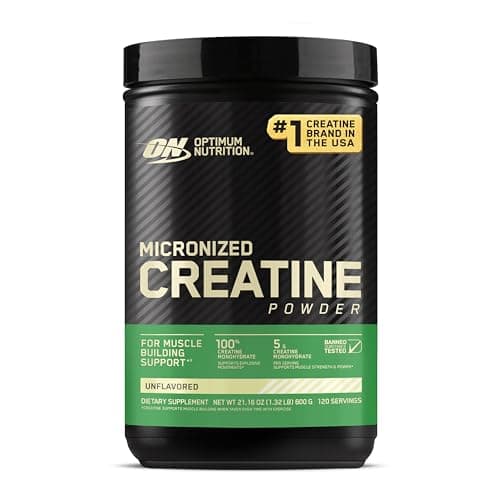
Optimum Nutrition — Creatine Monohydrate Powder (Micronized)
BodyHealth — PerfectAmino Powder (Mixed Berry, 120 servings)
The verdict
Buy creatine. Creatine monohydrate is one of the most evidence-backed, safest, and cheapest supplements you can own, with well-documented benefits for strength, power, and lean mass — it belongs in almost every lifter's cabinet. BCAAs are the opposite story: if you already hit your daily protein target, they're mostly redundant, because complete protein and EAAs supply the branched-chain aminos plus the other essential aminos your body actually needs to build muscle. A BCAA-only powder is an incomplete signal and, for most people, overpriced flavored water. If you must pick one, it's creatine, without hesitation. BCAAs have a legitimate but small niche — a flavored intra-workout drink that helps some people train fasted or stay consistent — but they belong far down the priority list, behind creatine, enough total protein, training, and sleep. As always with health products, if you have a kidney condition or take medication, check with your doctor before starting creatine.
Side-by-side
| Attribute | Creatine | BCAAs |
|---|---|---|
| What it is | Creatine monohydrate, a compound stored in muscle | Three amino acids: leucine, isoleucine, valine |
| Strength of evidence | Very strong — one of the best-studied supplements | Weak for muscle gain if protein is adequate |
| What it does | Boosts strength, power, and lean mass over time | Incomplete muscle signal; mostly redundant |
| Complete building blocks? | N/A — it fuels performance, not amino supply | No — only 3 of 9 essential amino acids |
| Cost-effectiveness | Excellent — cheap per serving | Poor — often overpriced flavored water |
| Redundant with enough protein? | No — works independently of protein intake | Yes — complete protein/EAAs already supply BCAAs |
| Safety record | Strong, well-documented in healthy people | Generally safe but largely unnecessary |
| If you buy only one | This one — every time | Skip unless you have the fasted-training niche |
Who should pick which
Pick Creatine
- Nearly everyone who lifts or trains for strength and size — creatine is the most evidence-backed, cost-effective pick for power and lean mass.
- Budget-focused buyers who want the single supplement with the best return on money — plain creatine monohydrate is cheap and proven.
- Anyone forced to choose just one supplement — it's creatine over BCAAs every time, no close second.
Pick BCAAs
- The narrow niche who train fasted and want a flavored intra-workout drink for taste and adherence — only after they already have creatine and enough protein.
- People who genuinely can't hit protein targets from food or complete-protein powder — though an EAA blend is the better redundancy-free choice here.
Creatine is the rare supplement the evidence actually backs
Most of the supplement aisle is hope with a label on it. Creatine is the exception. Creatine monohydrate is one of the most thoroughly studied supplements in sports nutrition, and the International Society of Sports Nutrition's position stand is blunt about it: creatine monohydrate is the most effective ergogenic nutritional supplement currently available for increasing high-intensity exercise capacity and lean body mass during training, with a strong safety profile in healthy people. It works by topping up your muscles' phosphocreatine stores, which helps regenerate energy during short, hard efforts — so you can push a little more in your sets, and that extra work adds up to more strength and lean mass over time. It's also dirt cheap per serving, and plain monohydrate is all you need — the fancier, pricier forms don't outperform it. That combination of strong evidence, strong safety, and low cost is why creatine sits at the top of almost every honest supplement recommendation.
Why BCAAs are mostly redundant
BCAAs — leucine, isoleucine, and valine — are three of the nine essential amino acids, and leucine in particular helps trigger muscle protein synthesis. That's the kernel of truth the marketing inflates. The problem is that triggering the signal isn't enough: to actually build muscle, your body needs all nine essential amino acids present as raw materials, not just the three branched-chain ones. If you already eat enough total protein, you're getting the BCAAs and all the other essential aminos anyway — from food and from any complete-protein or EAA supplement you use. So a BCAA-only product is redundant: it duplicates aminos you already have while leaving out the ones needed to finish the job. Research on BCAA supplementation for muscle gain in people eating adequate protein consistently underwhelms, precisely because you can't build much on an incomplete set of building blocks. For the typical lifter hitting their protein, BCAAs add little the diet isn't already providing.
Complete protein and EAAs beat BCAAs — always
This is the crux. BCAAs give you three essential amino acids; complete proteins (like whey, or a mixed diet of meat, eggs, dairy, and legumes) and EAA supplements give you all nine. Since muscle can only be built when the full set is available, the complete option wins on the biology every time — it supplies the leucine 'trigger' plus the other aminos that are the actual bricks. That's why spending on BCAAs while under-eating protein is backwards: you'd get more from simply eating more complete protein, usually for less money. If your goal is muscle, the priority order is clear — enough total protein first, creatine for performance, then everything else. A tub of BCAAs bought instead of hitting your protein target is money spent to solve the wrong problem. Buy complete protein, hit your daily target, and the BCAA question mostly disappears on its own.
If you can only pick one, it's creatine
Put the two side by side and the decision makes itself. Creatine has strong, direct evidence for improving strength, power, and lean mass, it's cheap, it's safe in healthy people, and it works independently of how much protein you eat. BCAAs, for anyone eating enough protein, are redundant, incomplete, and usually overpriced. So if your budget or simplicity forces a single choice, it's creatine, without hesitation and without a close runner-up. There's really no scenario where a protein-adequate lifter should choose BCAAs over creatine as their one supplement. Start with three to five grams of creatine monohydrate daily, take it consistently — timing barely matters, so pick whenever you'll remember — and give it several weeks to saturate your muscles. That single, unglamorous, inexpensive habit will do more for your training than a shelf of flavored amino powders.
The narrow niche where BCAAs earn a spot
BCAAs aren't useless in every context — they just have a much smaller legitimate role than the marketing suggests. The honest niche is adherence and taste: a flavored BCAA (or better, EAA) drink can make fasted or early-morning training more pleasant, help someone sip fluids and stay consistent through a long session, or provide a low-calorie flavored beverage during a cut. If that flavored-intra-workout habit keeps you showing up, fine — but it's a convenience, not a muscle-building necessity, and it only makes sense after you already have creatine and enough total protein handled. If your real reason for wanting BCAAs is 'I struggle to hit my protein,' an EAA blend is the smarter buy because it isn't missing two-thirds of the essential aminos. And watch the labels here too: BCAA products love proprietary blends and inflated 'ratios' (10:1:1 and the like) that sound impressive but aren't backed by better results. Don't pay a premium for marketing math.
Frequently asked questions
Creatine, in almost every case. Creatine monohydrate has strong evidence for improving strength, power, and lean mass, it's cheap, and it's safe in healthy people. BCAAs, if you already eat enough total protein, are largely redundant — your diet and any complete-protein powder already supply the branched-chain aminos plus the other essential aminos you need to build muscle. If you can only buy one, it's creatine, without hesitation. BCAAs have a small niche as a flavored intra-workout drink for fasted training, but that's a convenience, not a priority, and it comes well after creatine and protein.
Related reading
Sources
- International Society of Sports Nutrition Position Stand: Safety and Efficacy of Creatine Supplementation (creatine monohydrate is the most effective ergogenic nutritional supplement for high-intensity exercise capacity and lean body mass, with a strong safety profile; ~3-5 g/day) — Journal of the International Society of Sports Nutrition, 2017
- Branched-chain amino acids (BCAAs): why supplying only 3 of the 9 essential amino acids is an incomplete stimulus for muscle protein synthesis compared with complete protein or EAAs — Examine.com
- Creatine — overview of a well-researched supplement for strength and exercise performance, and general safety considerations — Cleveland Clinic
Optimum Nutrition — Creatine Monohydrate Powder (Micronized)
$27.99 · on Amazon