Do You Need BCAAs?
Almost certainly not, and the reason is arithmetic rather than opinion. Muscle protein synthesis needs all nine essential amino acids present at once. A BCAA supplement gives you three of them — leucine, isoleucine and valine — which means that if the other six are not already circulating from the food you ate, the three you just drank have nothing to build with. That is why the position on this site is blunt: if you are hitting a reasonable daily protein target, BCAAs are the most over-marketed category in sports nutrition, and the 20-30 g of complete protein in a scoop of whey contains more leucine than most BCAA servings while also bringing the other six. Our top pick for the person asking this question is therefore not a BCAA at all: it is Optimum Nutrition Gold Standard 100% Whey, which answers the actual need. If you want a free amino acid product because you train fasted, cannot tolerate whey, or are travelling without a shaker, buy a full essential amino acid formula instead of a BCAA — Thorne Amino Complex is the pick there, and it is NSF Certified for Sport. And if you want the one supplement in this aisle with a genuinely strong evidence base for strength and power, it is creatine monohydrate, which costs less than almost every BCAA tub on the shelf. There are two narrow cases where free amino acids earn their place, and we cover both below: training in a genuinely fasted state where no protein has been eaten for many hours, and clinical situations involving liver disease, which are a matter for a physician rather than a supplement aisle. Outside those, the honest recommendation is to spend the money on food, whey, or creatine.
Affiliate disclosure: Trusted Health Gear is an Amazon Associate. If you buy through links on this page, we may earn a commission at no extra cost to you. Commission does not influence our rankings. Full policy.
Why three amino acids out of nine is the whole problem
Protein synthesis is not a switch that leucine flips on its own; it is a construction job that needs every brick. There are nine essential amino acids your body cannot make — histidine, isoleucine, leucine, lysine, methionine, phenylalanine, threonine, tryptophan and valine — and a BCAA product supplies exactly three of them. Leucine is genuinely the most important of the three, because it is the strongest signal to initiate synthesis, and that is the grain of truth the whole category is built on. But a signal without substrate is a foreman with no materials. If the other six essential amino acids are not available from a recent meal or from circulating stores, the leucine signal cannot translate into new muscle protein, and the practical outcome of drinking BCAAs on an otherwise inadequate protein intake is an expensive signal and no building. This is why the research on BCAAs in isolation has been so consistently underwhelming next to complete protein, and why the more useful product category — if you want free amino acids at all — is full essential amino acids rather than branched-chain only. The International Society of Sports Nutrition's position stand on protein and exercise frames the whole question around total daily protein intake and the leucine content of complete protein sources, not around isolated BCAA supplementation.
A scoop of whey already contains more leucine than most BCAA servings
This is the comparison that ends the argument for most people. Whey protein is unusually rich in leucine — it is roughly a tenth of its amino acid content by weight — which means a standard 25 g serving of whey delivers somewhere around 2.5-3 g of leucine, comfortably above the threshold typically cited for maximally stimulating muscle protein synthesis in a single feeding. A typical 2:1:1 BCAA serving contains around 5 g of total BCAAs, of which roughly 2.5 g is leucine. So on the metric the category sells itself on, a scoop of whey is at least competitive, and it arrives with the other six essential amino acids, 20-plus grams of actual protein substrate, and usually a lower cost per serving. The same logic applies to food: a chicken breast, a tin of tuna, four eggs, a cup of Greek yogurt or a 25 g serving of pea protein at an adequate dose all clear the bar. The only thing whey does not give you that a BCAA drink does is a near-zero-calorie, low-digestive-load option — which matters in one case, covered next, and almost nowhere else.
The two cases where free amino acids genuinely earn their place
Case one: genuinely fasted training, where you have eaten no protein for many hours and you are about to do a long or hard session. The concern here is not muscle wasting away during an hour of lifting — that is a marketing story — but that in a true fasted state there is no circulating pool of essential amino acids to work with, and a small intra-workout dose of free amino acids absorbs quickly without the digestive load of a full shake. Even here, the correct product is a complete essential amino acid formula rather than BCAAs, because the same substrate problem applies. Case two is clinical rather than athletic: branched-chain amino acids have a legitimate therapeutic literature in hepatic encephalopathy and advanced liver disease, where the amino acid balance is genuinely disturbed. That is a prescription-adjacent context managed by a physician, not a reason for a healthy lifter to buy a tub. Two things people believe are cases and are not: BCAAs for reducing muscle soreness, where the effects reported are small and inconsistent, and BCAAs during a cut, where the thing that preserves muscle is adequate total daily protein plus resistance training, not three amino acids in water.
What we'd buy instead of a BCAA tub
Every pick below is already reviewed and scored in our roundups — same products, same specs, with live Amazon prices.
| Attribute | Optimum Nutrition Gold Standard 100% WheyOur pick | Thorne Amino Complex (Berry, 30 servings) | Optimum Nutrition Creatine Monohydrate Powder (Micronized) | Optimum Nutrition Instantized BCAA 5000 (Unflavored, 60 servings) |
|---|---|---|---|---|
| Best for | Best mainstream whey concentrate + isolate blend | Best for tested athletes — NSF Certified for Sport | Best overall value + widely stocked | Best unflavored / stack-it-yourself BCAA |
| Who it's for | For the person who came here asking about BCAAs and should be buying this instead. A 25 g serving of whey carries more leucine than a typical BCAA serving and brings the other six essential amino acids plus the protein substrate with it — the complete answer at a lower cost per serving. | For the narrow real use case: fasted training or travel where you want fast-absorbing free amino acids without a full shake. It is a complete amino profile rather than BCAAs only, and NSF Certified for Sport — the pick if you are drug-tested. | For anyone whose actual goal is more strength and power from this aisle. Creatine monohydrate has the largest and most consistent evidence base of any supplement here and costs a fraction of a BCAA tub per serving. | For the person who has read all of the above and still wants a plain 2:1:1 BCAA — unflavored, no sweetener system, from a brand with real quality control, so you can stack it yourself and know exactly what is in it. |
| Key specs | 24g protein / 120cal, 5.5g BCAAs, Informed Choice certified on listed batches | EAA + BCAA powder, NSF Certified for Sport, dairy-free, Berry, 30 servings | 5g creatine monohydrate per serving, 600g tub, Creapure-grade micronized | 5g BCAAs in a 2:1:1 ratio, unflavored, instantized for easy mixing, keto-friendly, 60 servings |
| Our score | 8/10 | 8.7/10 | 8.8/10 | 7.3/10 |
| Where to buy |
Prices pulled from Amazon as of October 18, 2026 and are subject to change. The price shown on Amazon at checkout applies.
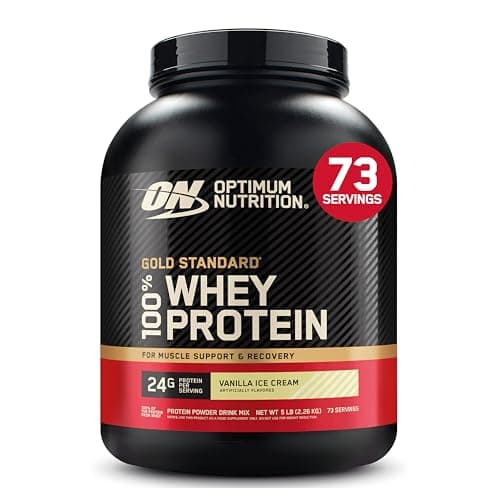
Optimum Nutrition — Gold Standard 100% Whey
For the person who came here asking about BCAAs and should be buying this instead. A 25 g serving of whey carries more leucine than a typical BCAA serving and brings the other six essential amino acids plus the protein substrate with it — the complete answer at a lower cost per serving.
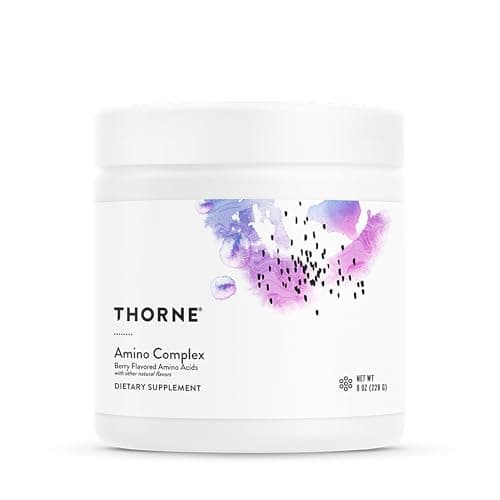
Thorne — Amino Complex (Berry, 30 servings)
For the narrow real use case: fasted training or travel where you want fast-absorbing free amino acids without a full shake. It is a complete amino profile rather than BCAAs only, and NSF Certified for Sport — the pick if you are drug-tested.
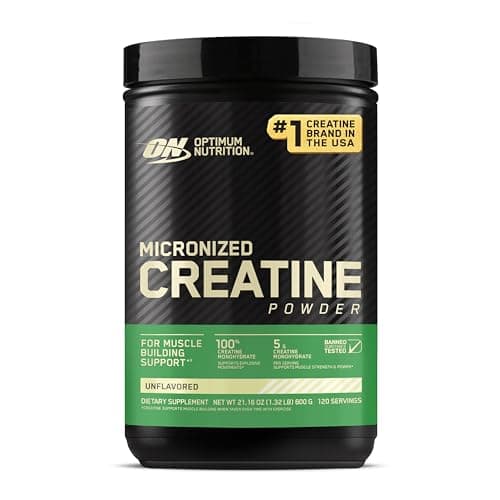
Optimum Nutrition — Creatine Monohydrate Powder (Micronized)
For anyone whose actual goal is more strength and power from this aisle. Creatine monohydrate has the largest and most consistent evidence base of any supplement here and costs a fraction of a BCAA tub per serving.
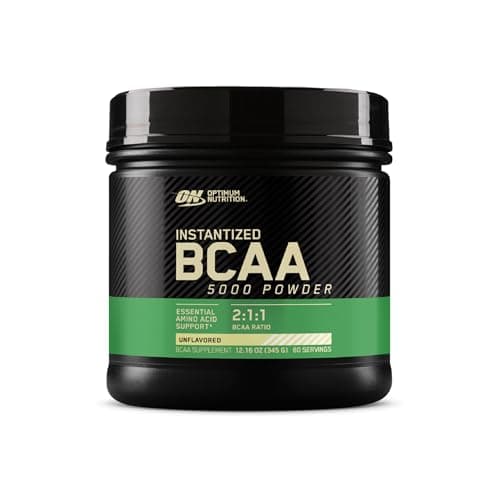
Optimum Nutrition — Instantized BCAA 5000 (Unflavored, 60 servings)
For the person who has read all of the above and still wants a plain 2:1:1 BCAA — unflavored, no sweetener system, from a brand with real quality control, so you can stack it yourself and know exactly what is in it.
What to buy instead, in order
Spend the money in this order and you will get more out of it than any BCAA tub. First, fix total daily protein. Active people generally land near 1.6 g per kilogram of bodyweight per day, and the single most common reason someone's training is not producing results is that this number is 30% short — no supplement patches that. Second, buy a complete protein powder if food alone is not getting you there; whey if you tolerate it, a 25-30 g serving of pea or blended plant protein if you do not. Third, buy creatine monohydrate, which is the one supplement in this aisle with a large, consistent evidence base for strength, power and lean mass, at a cost per serving that embarrasses the rest of the category. Fourth, and only if you specifically want free amino acids for fasted sessions or travel, buy a full EAA product with all nine aminos listed in disclosed amounts — not a proprietary blend, and not a 2:1:1 BCAA. If you are drug-tested, that product needs a third-party certification such as NSF Certified for Sport, because free amino acid powders are a category where contamination risk is not theoretical.
How to read a BCAA or EAA label without being fooled
Four things to check, and they will disqualify most of the shelf. First, is it a proprietary blend? If the label lists an amino acid blend with one total number instead of a disclosed amount per amino acid, you cannot know what you are buying and you should not buy it — this is the single clearest signal in the aisle. Second, are all nine essential amino acids present? If only leucine, isoleucine and valine appear, you are buying the incomplete product regardless of what the front of the tub says. Third, what is the actual leucine dose per serving, and how does it compare with a scoop of whey you probably already own? Fourth, is there third-party certification? Free amino acids are cheap bulk ingredients sourced globally, and NSF Certified for Sport or Informed Sport is the only way to verify the tub from the outside. One more pattern worth naming: a product that lists its BCAA ratio prominently — 2:1:1, 4:1:1, 8:1:1 — is drawing your attention to the least important variable on the label. There is no evidence that a more leucine-heavy ratio outperforms, and a higher ratio means less isoleucine and valine for the same money.
So where does that leave the aisle?
Mostly as a monument to a good hypothesis that did not survive testing. The leucine-trigger mechanism is real, the branded science behind it was presented honestly enough at the start, and the product persisted because it tastes like fruit punch, has almost no calories, and gives people something to sip during a session — which is a genuine adherence benefit and not nothing. But the honest accounting is that most people buying BCAAs are buying three-ninths of a solution to a problem they do not have, at a price above the complete product. Our BCAA roundup still exists and still ranks the category, and its top picks are deliberately the complete EAA formulas rather than the 2:1:1 classics, which tells you where we think the value is. If you take one thing from this page: look at your daily protein number first. If it is adequate, you do not need this category. If it is not, no amount of amino acid powder will fix what the food was supposed to do.
Frequently asked questions
No. A standard 25 g serving of whey delivers roughly 2.5-3 g of leucine — at least as much as a typical BCAA serving — and it brings the other six essential amino acids and 20-plus grams of protein substrate with it. Muscle protein synthesis requires all nine essential amino acids present together, so adding three of them on top of a complete protein does not give you a second effect; it gives you a slightly more expensive version of what the whey already did. If you already use protein powder, the supplement that would actually add something to your training is creatine monohydrate, not a BCAA tub.
Related reading
Sources
- International Society of Sports Nutrition Position Stand: protein and exercise (total daily protein intake and the leucine content of complete protein sources drive muscle protein synthesis) — Journal of the International Society of Sports Nutrition
- Branched-chain amino acids and muscle protein synthesis in humans: myth or reality? (BCAAs alone cannot maximally stimulate muscle protein synthesis without the remaining essential amino acids) — Journal of the International Society of Sports Nutrition
- Branched-chain amino acid supplementation for people with hepatic encephalopathy — the clinical context in which BCAAs have an established role — Cochrane Database of Systematic Reviews
- NSF Certified for Sport — third-party certification screening for banned substances and contaminants — NSF International
- Product titles, amino acid profiles, serving sizes, certifications, live prices and availability for the supplements referenced — retrieved via the Amazon product data layer — Amazon product listing data, 2026
Optimum Nutrition — Gold Standard 100% Whey
$90.90 · on Amazon