How to Read a Supplement Label
A supplement label is a marketing document wrapped around a legal one, and learning to read it is the single best way to stop overpaying for underdosed products. Start with the Supplement Facts panel — not the front of the bottle — and find the serving size, because the eye-catching "1,000 mg" on the front is often the dose in two or three capsules, not one. Multiply out the amount you'll actually take per day, then divide the price by the servings per container to get a real cost-per-day. Treat any "proprietary blend" as a red flag: it lets a brand list a group of ingredients by total weight while hiding how much of each you're getting, which is usually a sign the expensive, effective ingredients are present in trace amounts. Skim the Other Ingredients line for fillers, flow agents, allergens, and capsule material. Look for a genuine third-party seal — USP Verified, NSF, NSF Certified for Sport, or Informed Sport/Choice — because under U.S. law the FDA does not approve supplements for safety or effectiveness before they're sold, so independent testing is the closest thing to a quality guarantee you'll get. Finally, check the expiration date and storage instructions. Do those things and you'll buy on evidence instead of on the size of the number on the front.
Affiliate disclosure: Trusted Health Gear is an Amazon Associate. If you buy through links on this page, we may earn a commission at no extra cost to you. Commission does not influence our rankings. Full policy.
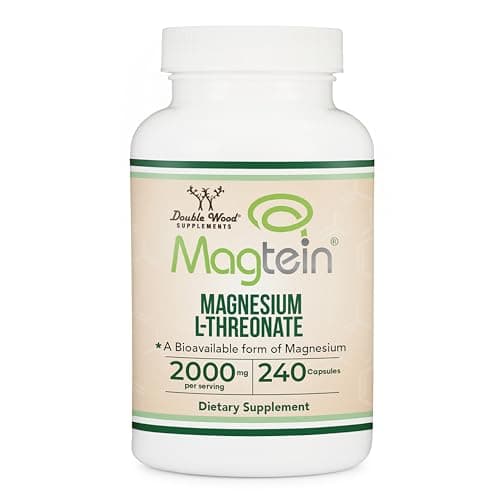
Double Wood Supplements — Magnesium L-Threonate (Magtein®)
Best for cognition and sleep onset — brain-penetrating threonate
Supplement Facts vs. Nutrition Facts: two different panels
The black-and-white box on the back of a supplement is a Supplement Facts panel, and it is not the same as the Nutrition Facts panel on a food. They look similar on purpose, but the rules differ. A Supplement Facts panel is required to list the serving size, the amount per serving of each dietary ingredient, and — where one has been established — the % Daily Value. Crucially, it must also name the source of botanical ingredients and the part of the plant used, and it can list ingredients that have no Daily Value at all (like most herbs, amino acids, and specialty compounds). Foods use Nutrition Facts and are regulated as foods; supplements use Supplement Facts and fall under a separate 1994 law called DSHEA. The practical takeaway: the front of the package is advertising, and the Supplement Facts panel is where the actual, legally required information lives. Read the panel first, every time, before a single marketing claim on the front influences you.
Serving size and servings per container: the oldest trick on the shelf
This is where most people get quietly overcharged. The label lists a serving size and the amount of each ingredient per serving — but the serving is not necessarily one pill. A bottle that shouts "1,000 mg" on the front may deliver that dose only across two or three capsules, so a "60-count" bottle can actually be a 20- or 30-day supply, not 60 days. Always do two pieces of arithmetic. First, compute the amount you'll take per day: multiply the amount per serving by the number of servings you'll actually use daily (which for many products means taking more than one serving to hit an effective dose). Second, compute cost-per-day: divide the total price by the true number of servings per container. A bottle that looks cheap can cost more per effective day than a "premium" one once you account for how many capsules you have to swallow. When two products list the same milligrams, the one with the lower cost-per-effective-day and fewer pills to get there is the better buy.
% Daily Value — and when there isn't one
The % Daily Value (%DV) tells you how much one serving contributes toward a general daily reference amount for that nutrient, based on a 2,000-calorie diet. It's genuinely useful for established vitamins and minerals: 100% DV of vitamin D or magnesium gives you a quick sense of scale, and it helps you avoid doubling up to excessive levels across a multivitamin, a standalone product, and fortified foods. But here's the catch that trips people up — many popular ingredients have no Daily Value because a reference intake has never been set for them. Creatine, most amino acids, botanical extracts, probiotics, CoQ10, and countless "specialty" compounds will show an amount in milligrams with a dash or a footnote where the %DV would be. That absence is normal and doesn't mean the ingredient is useless, but it also means the label gives you no built-in yardstick for whether the dose is meaningful. For those ingredients you have to bring your own reference — compare the listed amount against the dose used in actual research, not against the panel.
Proprietary blends: the number-one red flag
If you learn one thing from this guide, make it this: a "proprietary blend" (sometimes called a "matrix," "complex," or "formula") is the biggest warning sign on a label. A blend lists a group of ingredients together under a single total weight — say "Energy Blend 1,500 mg" — followed by the individual ingredient names in descending order but without telling you how much of each is inside. That total might be mostly cheap filler like caffeine or a bulking agent, with a pixie-dust sprinkle of the expensive compounds the front of the label is bragging about. Legally the ingredients must be listed in order of predominance by weight, so whatever is named first makes up the largest share — but you still can't tell whether the effective ingredient is at a research-backed dose or a trace amount. Reputable brands increasingly disclose every dose individually (this is often marketed as a "fully transparent" or "clinically dosed" label). When you see a proprietary blend hiding the doses of the ingredients you actually care about, assume the doses are too low to matter until proven otherwise, and favor a product that shows its full formula.
"Other Ingredients": fillers, flow agents, allergens, and the capsule
Below the Supplement Facts box you'll find an "Other Ingredients" line, and it's worth a look even though it's easy to skip. This is where the non-active components live: fillers and bulking agents (rice flour, microcrystalline cellulose, maltodextrin), flow and anti-caking agents (magnesium stearate, silicon dioxide), binders, colors, sweeteners, and the capsule material itself — gelatin (animal-derived) versus vegetable cellulose (HPMC) matters if you're vegetarian or vegan. It's also where allergen information and warnings often appear: soy, dairy, gluten, tree nuts, shellfish-derived ingredients, and "manufactured in a facility that also processes…" statements. Most of these excipients are harmless and present in tiny amounts — magnesium stearate, despite internet panic, is a well-established, safe flow agent — but the Other Ingredients line is how you catch an allergen, an unwanted sweetener, or a capsule you can't take. A very short, recognizable list is generally a good sign; a long roster of colors and sweeteners in a health product is a fair reason to look elsewhere.
Third-party seals: what USP, NSF, and Informed Sport actually screen
Because no government agency verifies what's in the bottle before it's sold (more on that next), independent testing is the closest thing to quality assurance you'll find — and a real seal is one of the most useful marks on a label. USP Verified (from U.S. Pharmacopeia) confirms the product contains the ingredients listed, in the declared amounts and potency, that it will break down and release properly, that it's screened for specified contaminants like heavy metals and microbes, and that it was made under good manufacturing practices. NSF (from the NSF public-health organization) certifies that what's on the label is in the bottle and that it's free of unsafe levels of specified contaminants. NSF Certified for Sport and Informed Sport / Informed Choice add a critical layer for competitive athletes: batch-level screening for a long list of substances banned in sport, which matters because supplements are a known source of inadvertent doping violations. What none of these seals do is prove the product works or is right for you — they verify identity, potency, and purity, not efficacy. Still, a genuine third-party mark meaningfully lowers your risk of buying an underdosed, contaminated, or mislabeled product, and it's worth prioritizing over flashier front-label claims.
The FDA reality under DSHEA: no pre-market approval
Here's the part the industry doesn't advertise, and it changes how you should read every claim. Under the 1994 Dietary Supplement Health and Education Act (DSHEA), supplements are regulated more like foods than like drugs. That means the FDA does not review or approve supplements for safety or effectiveness before they go on sale — unlike prescription medications, which must prove both before reaching the market. Manufacturers are responsible for ensuring their own products are safe and accurately labeled, and the FDA generally acts after the fact, pulling products or issuing warnings once a problem surfaces. This is why you'll see the required disclaimer on so many bottles: "This statement has not been evaluated by the Food and Drug Administration. This product is not intended to diagnose, treat, cure, or prevent any disease." It also explains the careful wording of claims. Supplements may make "structure/function" claims — that an ingredient "supports immune health" or "helps maintain healthy joints" — but they cannot legally claim to treat, cure, or prevent a disease. When a label edges toward disease language or promises dramatic results, that's a signal to be more skeptical, not less. And because pre-market approval doesn't exist, that third-party seal from the previous section is doing real work.
Expiration, lot number, storage — and a final checklist
Two small details round out a careful read. Check the expiration or "best by" date and the lot/batch number: potency of some ingredients (probiotics, certain vitamins, fish oil) declines over time, and the lot number is what lets a product be traced in the event of a recall — its presence is a basic sign of a legitimate manufacturer. Then check the storage instructions, because "store in a cool, dry place, away from heat and moisture" is not boilerplate; a bathroom cabinet's humidity and a hot car will degrade many supplements faster than the date suggests. Put it all together into a quick shelf-side checklist: (1) Read the Supplement Facts panel before the front label. (2) Find the serving size and compute both your real daily amount and your cost-per-effective-day. (3) Check the %DV where it exists, and compare no-DV ingredients against research doses. (4) Reject or discount any proprietary blend hiding the doses you care about. (5) Scan Other Ingredients for allergens, sweeteners, and capsule type. (6) Look for a genuine USP, NSF, or Informed Sport seal. (7) Remember the FDA didn't pre-approve this, and be wary of disease claims. (8) Confirm the expiration date, lot number, and storage. None of this requires a nutrition degree — just the discipline to read the back of the bottle before the front sells you.
Double Wood Supplements — Magnesium L-Threonate (Magtein®)
Frequently asked questions
Because the manufacturer chose to spread the labeled dose across multiple capsules, and it's often a marketing decision. A bottle can advertise a big milligram number on the front while defining a "serving" as two or three capsules, which makes the dose look impressive but also means the bottle lasts fewer days than the pill count suggests. Always read the Supplement Facts panel, note how many capsules make one serving, and multiply out how much you'll actually take per day. Then divide the price by the true number of servings to get an honest cost-per-day. Two products with the same headline milligrams can differ sharply once you account for how many pills you have to swallow to get there.
Sources
- Dietary Supplements — Supplement Facts labels, DSHEA, structure/function vs. disease claims — U.S. Food and Drug Administration (FDA)
- Dietary Supplements: What You Need to Know (serving size, %DV, reading a label, third-party testing) — NIH Office of Dietary Supplements (ODS)
- USP Verified Mark — Dietary Supplement Verification Program (identity, potency, purity, GMP) — U.S. Pharmacopeia (USP)
- NSF Certified for Sport and dietary supplement certification (label accuracy, contaminants, banned-substance screening) — NSF
Double Wood Supplements — Magnesium L-Threonate (Magtein®)
$59.89 · on Amazon