Are Gummy Vitamins as Good as Pills?
The short answer is that gummies are worse than pills for reasons almost nobody names, and better than pills for one reason nobody expects. Start with the expectation, because it is wrong: the common assumption is that a gummy absorbs poorly. In a crossover trial published in Nutrients, healthy adults took a single 20,000 IU dose of vitamin D3 as either gummies or tablets, then crossed over after a two-week washout. The gummies won, and not narrowly — area under the concentration curve was 1,474 ng·h/mL for gummies against 774 for tablets, and peak blood concentration was 47.3 ng/mL against 23.4, both at p below 0.0001. So if you have been avoiding gummies because you heard they do not absorb, that specific fear does not survive contact with the data. The real objections are structural. A gummy has a dose ceiling, because the active ingredient has to fit inside a piece of candy that still tastes like candy — which is why you will not find a 400 mg magnesium gummy or a meaningful iron gummy, and why a gummy multivitamin cannot match a two-capsule clinical formula. A gummy is a sugar delivery system by construction, and the serving sizes make that worse: a popular vitamin C gummy takes four gummies to make one serving. A gummy label appears to be a looser promise than a pill label — when researchers bought 25 melatonin gummy products and tested them, 22 were inaccurately labeled, with content ranging from 74% to 347% of what the bottle said. And a gummy is the one supplement format that looks like food to a four-year-old, which is not a small point: pediatric melatonin ingestions reported to US poison control centers rose 530% over ten years, with five children requiring mechanical ventilation and two deaths. So the decision is simple. If you genuinely cannot or will not swallow a pill, a gummy from a brand that publishes testing is better than the supplement you skip — adherence beats theory. For everyone else, the pill is cheaper, sugar-free, dose-flexible and tighter-labeled, and the honest version of this question is not which format absorbs better but which one you will actually take for a year.
Affiliate disclosure: Trusted Health Gear is an Amazon Associate. If you buy through links on this page, we may earn a commission at no extra cost to you. Commission does not influence our rankings. Full policy.
The absorption question, answered properly
This is where most articles on this topic go wrong in both directions, so it is worth stating the actual evidence. The best-controlled study we could find is a two-part crossover trial in Nutrients by Wagner and colleagues: an initial randomized crossover in nine healthy adults followed by a larger confirmatory study in thirty-one. Participants aged 18-45 with a BMI of 18-30, no anemia and no vitamin D deficiency received a single 20,000 IU dose of vitamin D3 as either gummies or tablets, with blood drawn at baseline and at 3, 6, 10, 24 and 48 hours, then crossed over to the other format after a two-week washout. In the confirmatory study, area under the concentration curve was 1,474 ng·h/mL (95% CI 1,393-1,555) for gummies versus 774 ng·h/mL (693-855) for tablets, and peak concentration was 47.3 ng/mL versus 23.4 ng/mL. Both differences came in at p below 0.0001. The authors concluded that vitamin D3 gummies had greater bioavailability than tablets. Two honest caveats. First, this is one nutrient in one pair of products — a chewed, pre-dissolved gummy with a fat-soluble vitamin in a sugar matrix plausibly has an easier path than a compressed tablet with a binder, but that reasoning does not transfer automatically to a mineral or a water-soluble vitamin. Second, a single-dose pharmacokinetic study tells you about one dose, not about what happens over a year. What it does establish is that 'gummies don't absorb' is not the reason to prefer a pill. The reasons are elsewhere.
The dose ceiling is the real limitation
A gummy is a confection that has to hold its shape, taste acceptable and dissolve in your mouth, and those requirements cap how much active ingredient you can put in one. This is why the gummy shelf looks the way it does. Vitamin D works fine as a gummy — 1,000 IU is a physically tiny amount of a fat-soluble vitamin, and the gummies in that Nutrients trial carried a far larger dose than any retail product. Vitamin C works in the sense that it fits, though the serving math gets silly fast. But the minerals are where the format hits a wall: 400 mg of elemental magnesium, 25 mg of elemental iron, or 500 mg of calcium are large, often bitter or metallic masses that would wreck the texture and the taste, so either the gummy carries a token fraction of a useful dose or it does not exist. The same ceiling applies to anything with multiple actives. A clinical-grade multivitamin delivers its full spectrum in a two-capsule serving precisely because capsules do not have to taste like anything; recreating that in gummy form means either a handful of gummies or a thinner formula. So the practical rule is that the format question is really a nutrient question. For a single fat-soluble vitamin at a modest dose, a gummy is a legitimate choice. For a mineral, a full multivitamin, or any product where the dose is the point, the pill is not a preference — it is the only version that works.
Sugar, serving size, and the processed-food problem
This is the objection we weigh most heavily, because it cuts against the whole premise of the site: real food first, minimize ultra-processed food, and do not take nutritional advice from something engineered to be eaten in handfuls. A gummy is, structurally, a sweet. Look at the serving sizes rather than the per-gummy numbers, because the serving size is where the trick lives. A widely sold maximum-strength vitamin C gummy requires four gummies for one 1,000 mg serving — so a bottle of 80 gummies is a 20-day supply, and the daily dose is four pieces of candy. Against that, the FDA's Daily Value for added sugars is 50 grams a day on a 2,000-calorie diet, based on the Dietary Guidelines recommendation to keep added sugars under 10% of total calories. A few grams from a daily vitamin is not going to wreck a good diet. But it is pure downside in a format where a sugar-free alternative exists for less money, and the habit it builds is the wrong one: a supplement that tastes like a treat gets eaten like a treat. There is a second-order version of this worth naming for anyone cutting carbohydrate or managing blood sugar — a daily four-gummy serving is a small but real carbohydrate load, and it is the kind of thing that does not get logged. If you are tracking, log it.
Label accuracy: the evidence is thinner than anyone admits, and what exists is unflattering
We looked for a large published study comparing the measured nutrient content of gummy vitamins against their labels and did not find one, which is itself the finding — this is a format that dominates retail shelves on a thinner evidentiary base than you would guess. What does exist is a JAMA research letter by Cohen and colleagues, who bought 25 products labeled as melatonin gummies and had an independent lab test them. Twenty-two of the 25 were inaccurately labeled. Melatonin content ranged from 74% to 347% of the amount on the label, and only three products came within 10% of their stated dose. One product contained no melatonin at all — it contained 31.3 mg of CBD. The authors' conclusion was aimed squarely at parents: pediatric use of melatonin gummies may result in ingestion of unpredictable quantities of melatonin and CBD. Two things need saying about how far that generalizes. It is a study of melatonin gummies, not of vitamin gummies, and the trade groups that disputed it were correct that it does not license a claim about every gummy on the market. But the sampling was format-based rather than brand-based — these were simply the first 25 gummy melatonin products listed in an NIH supplement-label database — which makes it a reasonable warning about buying an unverified gummy from a brand with no testing program. The defense is the same one that works everywhere in this industry: USP Verified, NSF Certified for Sport, or a manufacturer that publishes batch certificates of analysis. Those seals exist for gummies too, and they are the only thing standing between you and a number someone typed.
The kids problem, which is not a footnote
Of all the arguments against gummies this is the one with the hardest numbers behind it, and it applies to the whole household rather than to the person buying. A CDC Morbidity and Mortality Weekly Report analyzed isolated melatonin ingestions among people aged 19 and under reported to US poison control centers between 2012 and 2021. Over that decade there were 260,435 pediatric melatonin ingestions, and the annual number rose 530%. Melatonin accounted for 4.9% of all pediatric ingestions reported to poison control centers in 2021, against 0.6% in 2012. Hospitalizations and serious outcomes increased over the period, driven primarily by unintentional ingestions in children aged five and under. Five children required mechanical ventilation. Two died. Melatonin is not a vitamin, and a vitamin gummy is a less dangerous thing to eat a bottle of than a 10 mg melatonin gummy — though iron is the exception that matters, because iron-containing products are a leading cause of fatal poisoning in young children, which is one more reason the iron gummy mostly does not exist. The mechanism behind those numbers is not pharmacology, it is packaging: a supplement that is formulated to taste like a sweet, in a bottle a child can open, in a house where the adults eat them off the counter. If you have small children and you buy gummies, the bottle belongs in a latched cupboard, not next to the coffee. That is the entire intervention and it costs nothing.
What to look for, if you are buying gummies anyway
Plenty of people genuinely cannot swallow pills, and for them this is not a close call — a verified gummy you take every day beats a capsule you abandon. Five checks, in order. First, third-party verification: USP Verified, NSF, or published certificates of analysis, for the reason the melatonin study makes obvious. Second, read the serving size before the dose, because 'per serving' on a gummy label frequently means two to four gummies, and that multiplies the sugar, the cost and the carbohydrate without touching the headline number. Third, check that the dose is one a gummy can honestly carry — a single fat-soluble vitamin at a sane amount, not a mineral or a 'complete' multivitamin, and be suspicious of any gummy claiming a clinical dose of anything heavy. Fourth, count the added sugar per daily serving and put it in your day's total rather than mentally filing it under medicine. Fifth, check storage: gummies are more sensitive to heat and humidity than a sealed capsule, so a bathroom cabinet is the wrong place for them, and a bottle that has fused into a block has been somewhere it should not have been. What would we actually buy? For a plain daily vitamin D, either format is defensible and the gummy has the better pharmacokinetic data behind it. For a multivitamin, a mineral, or anything where the milligrams are the product, buy the pill — or buy a liquid or a powder, which is the format most people forget and which has no dose ceiling at all.
What we'd buy, in both formats
Every pick below is already reviewed and scored in our roundups — same products, same specs, with live Amazon prices.
| Attribute | Nordic Naturals Vitamin D3 GummiesOur pick | Nature Made Vitamin D3 1000 IU | Thorne Basic Nutrients 2/Day | Nature Made Multi For Her Tablets (300 ct) |
|---|---|---|---|---|
| Best for | Best gummy option for kids/adults who won't swallow softgels | Best USP-verified mainstream option | Best overall — clinical-grade formulation | Best mainstream USP-verified option |
| Who it's for | The honest case for a gummy, and the nutrient the format genuinely suits: a single fat-soluble vitamin at a modest 1,000 IU, from a brand that third-party tests. This is the one category where the gummy has better pharmacokinetic data behind it than the tablet. Buy it if you or a family member will not swallow softgels, and store it out of reach of children. | The same 1,000 IU dose with no added sugar, at a fraction of the cost, and USP Verified — which is the seal that answers the label-accuracy problem directly. This is what we would buy if you can swallow a softgel, and it is the comparison that shows what the gummy format actually costs you. | The example of what a gummy structurally cannot do. A full-spectrum formula with active folate and B12 forms in a two-capsule serving, NSF Certified for Sport — the dose ceiling in a confection makes this formula impossible as a gummy. If you want one multivitamin and you can swallow capsules, this is the argument for pills in a single product. | For anyone who wants the pill-format advantages without the premium: a USP-verified mainstream multivitamin at a few cents a day. It makes the cost comparison concrete — a four-gummy daily serving typically costs several times this for a thinner formula and a few grams of added sugar. |
| Key specs | 1,000 IU D3 per gummy, non-GMO, 3rd-party tested | 1,000 IU D3 softgel, USP Verified | 2-capsule daily serving, methylfolate + methylcobalamin + MK-4 K2, NSF Certified for Sport | 1-tablet daily, 23 key nutrients with iron and calcium plus vitamin D3, 300 tablets (300-day supply), USP Verified mark on the bottle |
| Our score | 7.7/10 | 8.3/10 | 9.2/10 | 7.8/10 |
| Where to buy | $8.97$19.2953% offCheck Price on Amazon |
Prices pulled from Amazon as of October 20, 2026 and are subject to change. The price shown on Amazon at checkout applies.

Nordic Naturals — Vitamin D3 Gummies
The honest case for a gummy, and the nutrient the format genuinely suits: a single fat-soluble vitamin at a modest 1,000 IU, from a brand that third-party tests. This is the one category where the gummy has better pharmacokinetic data behind it than the tablet. Buy it if you or a family member will not swallow softgels, and store it out of reach of children.

Nature Made — Vitamin D3 1000 IU
The same 1,000 IU dose with no added sugar, at a fraction of the cost, and USP Verified — which is the seal that answers the label-accuracy problem directly. This is what we would buy if you can swallow a softgel, and it is the comparison that shows what the gummy format actually costs you.
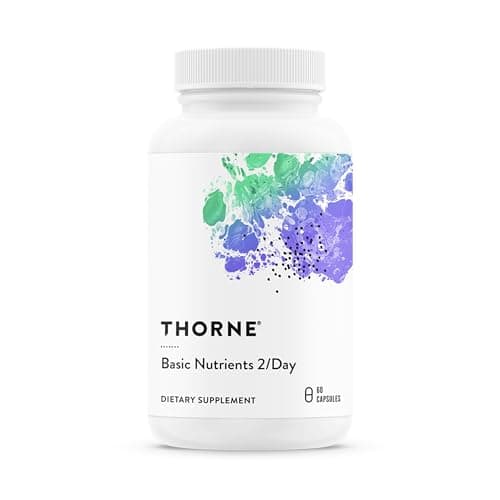
Thorne — Basic Nutrients 2/Day
The example of what a gummy structurally cannot do. A full-spectrum formula with active folate and B12 forms in a two-capsule serving, NSF Certified for Sport — the dose ceiling in a confection makes this formula impossible as a gummy. If you want one multivitamin and you can swallow capsules, this is the argument for pills in a single product.
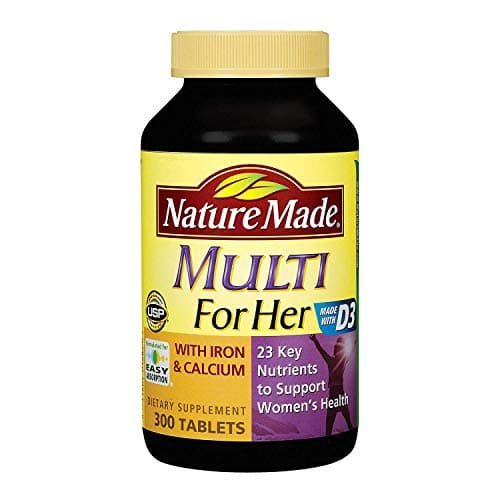
Nature Made — Multi For Her Tablets (300 ct)
For anyone who wants the pill-format advantages without the premium: a USP-verified mainstream multivitamin at a few cents a day. It makes the cost comparison concrete — a four-gummy daily serving typically costs several times this for a thinner formula and a few grams of added sugar.
What we would actually do
Three cases. If you can swallow a capsule: buy the pill. It is cheaper per dose, carries no sugar, comes in doses a gummy cannot reach, and is held to a label you can check against a verification seal — and for a daily multivitamin a two-capsule serving does something no gummy formula can. If you genuinely cannot swallow pills, or you are buying for someone who will not: buy the gummy, but buy a verified one, read the serving size, and limit the gummy format to the one or two nutrients where a small dose is the correct dose. A nutrient you actually take beats a theoretically superior one sitting in the cupboard. And if you are buying for a child: talk to a pediatrician first, buy only what they recommend, and store it like medicine, because the poison-control numbers above are not about dosage errors by adults — they are about a four-year-old finding a jar of sweets. The framing we would push back on hardest is the one the category is built on, which is that the format is the decision. It is not. The decision is whether you need the supplement at all, at what dose, and whether the brand can prove what is in it. Food first, a short list of supplements chosen for actual gaps, verified labels, and then pick whichever shape you will take consistently.
Frequently asked questions
For a single fat-soluble vitamin at a modest dose, yes — and possibly better absorbed. A crossover trial in Nutrients gave healthy adults a single 20,000 IU dose of vitamin D3 as gummies or tablets with a two-week washout between formats, and the gummies produced a markedly higher area under the concentration curve (1,474 versus 774 ng·h/mL) and peak concentration (47.3 versus 23.4 ng/mL), both at p below 0.0001. For minerals and full multivitamins the answer flips, and the reason is physical rather than biological: a gummy has to taste good and hold its shape, which caps how much active ingredient fits inside one. That is why there is no meaningful iron gummy and no gummy that matches a two-capsule clinical multivitamin. So the format is not the variable — the nutrient and the dose are.
Related reading
Sources
- Bioequivalence Studies of Vitamin D Gummies and Tablets in Healthy Adults: Results of a Cross-Over Study (Wagner CL, Shary JR, Nietert PJ, Wahlquist AE, Ebeling MD, Hollis BW — crossover trials in 9 and 31 healthy adults aged 18-45, single 20,000 IU dose of vitD3 as gummies or tablets with a 2-week washout; AUC 1,474 ng·h/mL for gummies vs 774 for tablets and Cmax 47.3 vs 23.4 ng/mL, both p < 0.0001) — Nutrients, 2019
- Quantity of Melatonin and CBD in Melatonin Gummies Sold in the US (Cohen PA, Avula B, Wang YH, Katragunta K, Khan I — 25 gummy products tested; 22 inaccurately labeled, melatonin content 74%-347% of label, only 3 within 10%, and one product containing no melatonin but 31.3 mg of CBD) — JAMA, 2023
- Pediatric Melatonin Ingestions — United States, 2012-2021 (Lelak K, Vohra V, Neuman MI, Toce MS, Sethuraman U — 260,435 pediatric ingestions reported to the National Poison Data System over the decade, annual number up 530%, 4.9% of all pediatric ingestions in 2021 vs 0.6% in 2012, five children requiring mechanical ventilation and two deaths) — CDC Morbidity and Mortality Weekly Report, 2022
- Added Sugars on the Nutrition Facts Label (Daily Value of 50 grams per day based on a 2,000-calorie diet, derived from the Dietary Guidelines recommendation to limit calories from added sugars to less than 10 percent of total calories per day) — U.S. Food and Drug Administration
- Product titles, doses, serving sizes, counts, certifications, live prices and availability for the supplements referenced — retrieved via the Amazon product data layer — Amazon product listing data, 2026
Nordic Naturals — Vitamin D3 Gummies
$18.66 · on Amazon