Best Melatonin Supplements, Scored on a Public Rubric
Melatonin is the most misunderstood bottle in the sleep aisle. It is not a sedative — it is the hormone your brain releases in darkness to tell your body clock that night has started, which is why the research treats it as a timing tool rather than a knockout drug. The honest effect size is small: a meta-analysis of randomized placebo-controlled trials in PLOS ONE found melatonin helped people fall asleep about 7 minutes faster on average, with modest gains in total sleep time and sleep quality. The American Academy of Sleep Medicine goes further and recommends clinicians not use melatonin for sleep-onset or sleep-maintenance insomnia at all. Where it genuinely earns its place is circadian: jet lag, shift work, and a body clock that has drifted late — and for those, the AASM's circadian-disorders guideline points to small doses of 0.5-3 mg, taken strategically. Which makes the American supplement shelf faintly absurd. The bestsellers are 5 mg, 10 mg, and 20 mg — up to sixty times the physiological dose — and they are frequently sold as candy. So we scored these seven on the number that actually matters: the dose, and whether you can trust the label that prints it. If you train hard and lift heavy, sleep is where the adaptation happens. Protect it with light, a consistent schedule, and a caffeine curfew first; use melatonin as the small, well-timed nudge it was meant to be.
Top pick
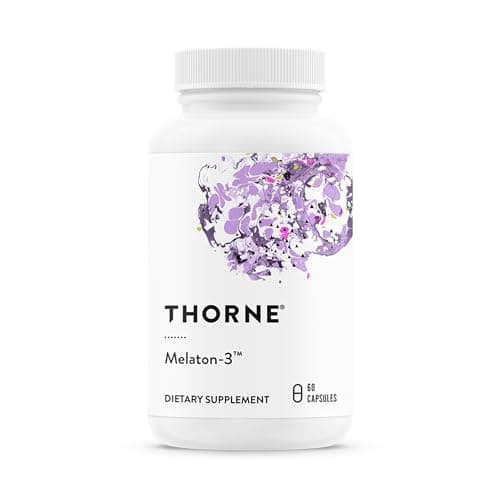
Thorne — Melaton-3 (3 mg, 60 capsules)
3 mg melatonin, capsule, NSF Certified for Sport, gluten/dairy/soy-free, 60 capsules
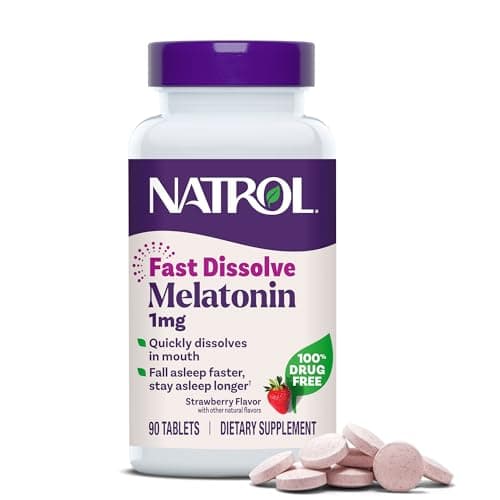
Natrol — Fast Dissolve Melatonin 1 mg (90 tablets)
At a glance
Tap a row to check price · tap a header to sort| # | Best for | Price | ||
|---|---|---|---|---|
| 1 | 1. Thorne — Melaton-3 (3 mg, 60 capsules)Best overall | Best overall | 8.5/10 | |
| 2 | 2. Natrol — Fast Dissolve Melatonin 1 mg (90 tablets)Best low dose | Best low dose | 8.2/10 | |
| 3 | 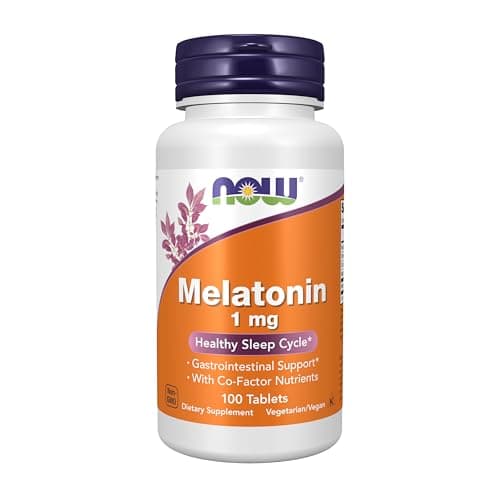 3. NOW Foods — Melatonin 1 mg with Co-Factor Nutrients (100 tablets)Best 1 mg tablet from a QC-serious brand | Best 1 mg tablet from a QC-serious brand | 7.8/10 | $6.49$12.9950% offCheck Price for NOW Foods Melatonin 1 mg with Co-Factor Nutrients (100 tablets) on AmazonIn Stock |
| 4 | 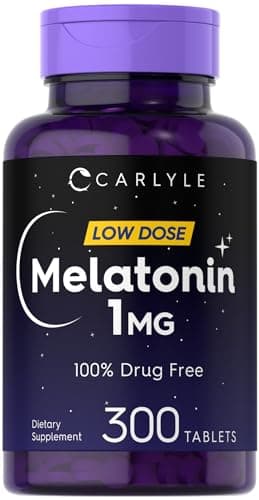 4. Carlyle — Melatonin 1 mg (300 low-dose tablets)Lowest cost per correct dose | Lowest cost per correct dose | 7.8/10 | |
| 5 | 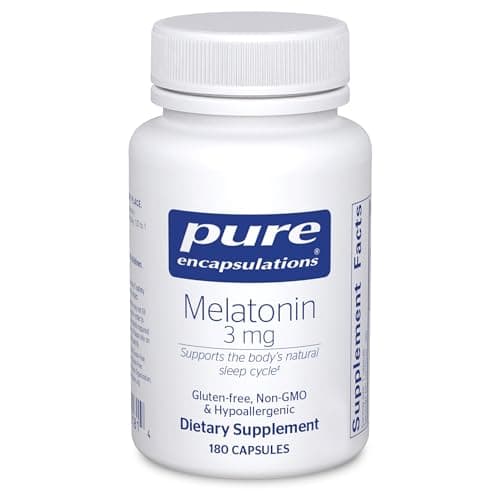 5. Pure Encapsulations — Melatonin 3 mg (180 capsules)Best clean-label capsule for sensitive stomachs | Best clean-label capsule for sensitive stomachs | 7.5/10 | |
| 6 | 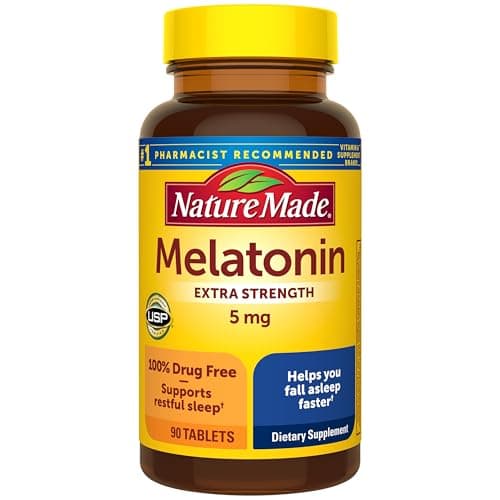 6. Nature Made — Melatonin 5 mg Extra Strength (90 tablets)The drugstore benchmark | The drugstore benchmark | 7.2/10 | $7.49$10.5929% offCheck Price for Nature Made Melatonin 5 mg Extra Strength (90 tablets) on AmazonIn Stock |
| 7 | 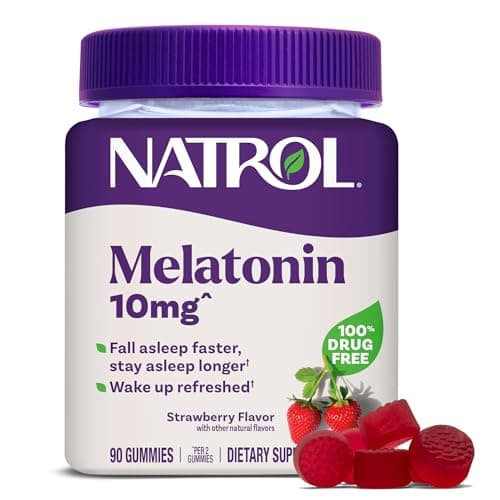 7. Natrol — Melatonin Gummies 10 mg (90 gummies)The category bestseller | The category bestseller | 4.8/10 |
Prices pulled from Amazon as of October 18, 2026 and are subject to change. The price shown on Amazon at checkout applies.
How we scored
Every product below is scored on six metrics, 0-10 each, with the weighting described on how we review. The criteria specific to this category:
- Dose inside the evidence-supported range — the AASM's circadian guideline points to 0.5-3 mg, so 5 mg is generous, 10 mg is excessive, and 20 mg is theater.
- Single-ingredient labels — no kitchen-sink 'sleep blends' burying melatonin among trace-dose botanicals.
- Third-party certification stated on the listing (NSF Certified for Sport or equivalent) — the only real check in a category with documented label inaccuracy.
- Tablets and capsules over gummies — gummies are the format the JAMA analysis found most mislabeled, and the one driving pediatric poison-control calls.
- Splittable and titratable down — the ability to get to 1 mg or below without cutting a candy in half.
- Cost per correct dose rather than headline price per bottle.
What to know before buying
- Melatonin is a clock signal, not a sleeping pill. It tells your brain the sun has gone down; it does not sedate you. The PLOS ONE meta-analysis of randomized placebo-controlled trials put the average benefit at falling asleep roughly 7 minutes sooner (weighted mean difference 7.06 minutes), with small improvements in total sleep time and quality that did not fade with continued use. Small and real is the honest summary — and it is nothing like the effect the packaging implies.
- More is not better, and the best study on this is 25 years old. In a double-blind trial published in the Journal of Clinical Endocrinology & Metabolism, a physiological 0.3 mg dose restored sleep efficiency in older adults with disturbed sleep. The 3 mg pharmacological dose also improved sleep, but it induced hypothermia and left plasma melatonin elevated into the following daylight hours — which is a decent description of the grogginess people blame on 'melatonin hangover'. Start at the bottom of the range, not the top.
- For a drifted body clock, timing matters more than dose. The AASM's clinical practice guideline for circadian rhythm sleep-wake disorders endorses strategically timed melatonin for delayed sleep-wake phase disorder, taken in the early evening — usually 4 to 5 hours before the bedtime you actually want — with 0.5-3 mg described as the optimal range. Taken at lights-out instead, you have used it as a weak sedative rather than a phase-shifting signal.
- Assume the label is approximate until a certification says otherwise. Researchers who analyzed 31 melatonin supplements across 16 brands (Journal of Clinical Sleep Medicine) found actual melatonin content ranging from 83% below to 478% above the labeled amount, with lot-to-lot variation inside a single product as high as 465%, and serotonin turning up in 26% of the products tested. A 2023 JAMA analysis of 25 melatonin gummy products found 22 of the 25 inaccurately labeled, with real melatonin content between 74% and 347% of the label — one contained no detectable melatonin at all. Those studies did not name brands, so we do not claim any specific product here was mislabeled. We do the only thing that data allows: score down the formats and labels with the least accountability, and score up the ones carrying an independent certification.
- It is not a nightly crutch for chronic insomnia. The AASM's pharmacologic-treatment guideline recommends clinicians not use melatonin for sleep-onset or sleep-maintenance insomnia — a weak recommendation on low-quality evidence, but a recommendation against nonetheless, with CBT-I as the first-line treatment. If you cannot sleep most nights, the fix is upstream: morning light, a real schedule, a dark cool room, and a caffeine curfew. Our pre-workout roundup covers the caffeine half of that equation — 400 mg six hours before bed still measurably cost people sleep in a controlled trial.
- Keep it away from children. The CDC's Morbidity and Mortality Weekly Report documented a 530% rise in pediatric melatonin ingestions reported to US poison-control centers between 2012 and 2021 — 260,435 in total, rising from 0.6% of all pediatric ingestions in 2012 to 4.9% in 2021, with five children requiring mechanical ventilation and two deaths. Sweet, chewable, 10 mg and stored on the nightstand is exactly how that happens.
Our picks
Thorne — Melaton-3 (3 mg, 60 capsules)
Key specs: 3 mg melatonin, capsule, NSF Certified for Sport, gluten/dairy/soy-free, 60 capsules
Pros
- NSF Certified for Sport — an independent check on identity and contents, which is the single biggest gap in this category
- Single-ingredient capsule at 3 mg: the top of the range the AASM cites, with nothing else riding along
- The only pick here a drug-tested athlete can take without thinking twice about it
Cons
- 3 mg is the ceiling of the evidence-supported range, not the floor — many people do better on 1 mg or less, and a capsule cannot be split
- Costs several times more per dose than the drugstore tablets below
Thorne — Melaton-3 (3 mg, 60 capsules)
- Third-party testing10/10
- Bioavailability8/10
- Clinical evidence9/10
- Value7/10
- Brand transparency9/10
- Form & absorption8/10
Natrol — Fast Dissolve Melatonin 1 mg (90 tablets)
Key specs: 1 mg melatonin, fast-dissolve tablet, no water needed, 90 tablets
Pros
- 1 mg sits inside the 0.5-3 mg range the AASM's circadian guideline calls optimal — and it is scoreable, splittable, and honest
- Fast-dissolve tablets make it easy to hit a precise pre-bed or pre-flight timing window
- Costs pennies a night, and at 1 mg you are not paying for melatonin you should not be taking in the first place
Cons
- No third-party certification stated on the listing — you are trusting the brand's own QC
- Flavored fast-dissolve tablets are sweetened; the ingredient list is longer than a plain capsule's
Natrol — Fast Dissolve Melatonin 1 mg (90 tablets)
- Third-party testing6/10
- Bioavailability8/10
- Clinical evidence10/10
- Value9/10
- Brand transparency7/10
- Form & absorption9/10
NOW Foods — Melatonin 1 mg with Co-Factor Nutrients (100 tablets)
Key specs: 1 mg melatonin with co-factor nutrients, tablet, 100 tablets
Pros
- 1 mg is the right starting dose, and NOW is one of the few mass-market brands that runs its own analytical lab
- Tablet form is easy to halve if you want to test 0.5 mg
- Sensible price for a hundred nights
Cons
- Not strictly single-ingredient — the co-factor nutrients ride along whether you want them or not
- No sport certification listed on this SKU
NOW Foods — Melatonin 1 mg with Co-Factor Nutrients (100 tablets)
- Third-party testing7/10
- Bioavailability8/10
- Clinical evidence10/10
- Value8/10
- Brand transparency6/10
- Form & absorption8/10
Carlyle — Melatonin 1 mg (300 low-dose tablets)
Key specs: 1 mg melatonin, tablet, 300 tablets, drug free
Pros
- 300 tablets at 1 mg — by far the cheapest way to buy the dose the research actually supports
- Small plain tablet, easy to split down toward the 0.3-0.5 mg physiological range
- No gummy sugar, no blend, no theater
Cons
- No third-party certification stated on the listing — the weakest accountability of our recommended picks
- House-brand supply chain; expect less published QC detail than Thorne or NOW
Carlyle — Melatonin 1 mg (300 low-dose tablets)
- Third-party testing5/10
- Bioavailability8/10
- Clinical evidence10/10
- Value10/10
- Brand transparency7/10
- Form & absorption7/10
Pure Encapsulations — Melatonin 3 mg (180 capsules)
Key specs: 3 mg melatonin, capsule, 180 capsules
Pros
- Short, plain capsule label from a brand built around minimal excipients
- 3 mg is within the AASM's stated range, and 180 capsules is a long supply
- No sweeteners, dyes, or flavoring — nothing to react to
Cons
- The most expensive option here by a wide margin
- Capsules cannot be split, so 3 mg is the floor as well as the ceiling
Pure Encapsulations — Melatonin 3 mg (180 capsules)
- Third-party testing7/10
- Bioavailability8/10
- Clinical evidence9/10
- Value5/10
- Brand transparency8/10
- Form & absorption8/10
Nature Made — Melatonin 5 mg Extra Strength (90 tablets)
Key specs: 5 mg melatonin, tablet, 90 tablets, drug free
Pros
- Cheap, everywhere, and a plain tablet you can cut in half to land near 2.5 mg
- Straightforward single-active label from a mainstream brand
- 90 tablets at a drugstore price
Cons
- 5 mg is above the 0.5-3 mg range the AASM's circadian guideline points to — 'extra strength' is a marketing frame, not a clinical one
- Higher doses are the ones associated with next-day grogginess and daytime melatonin still circulating
Nature Made — Melatonin 5 mg Extra Strength (90 tablets)
- Third-party testing7/10
- Bioavailability8/10
- Clinical evidence6/10
- Value8/10
- Brand transparency7/10
- Form & absorption7/10
Natrol — Melatonin Gummies 10 mg (90 gummies)
Key specs: 10 mg melatonin, strawberry gummy, 90 gummies, added sugar
Pros
- Genuinely pleasant to take, which is why this format dominates the category
- Widely available and cheap per gummy
Cons
- 10 mg is more than three times the top of the range the AASM cites, and roughly thirty times the 0.3 mg physiological dose that outperformed 3 mg in the JCEM trial
- Gummies are the format the JAMA analysis of 25 products found inaccurately labeled in 22 cases — brands were not identified, so this is a format-level penalty, not a finding about this product
- Candy-like sweets at 10 mg are exactly the profile behind the 530% rise in pediatric poison-control calls; if there are kids in the house, this is the wrong bottle
Natrol — Melatonin Gummies 10 mg (90 gummies)
- Third-party testing4/10
- Bioavailability7/10
- Clinical evidence3/10
- Value6/10
- Brand transparency4/10
- Form & absorption5/10
Frequently asked questions
Modestly, and not the way most people think. A meta-analysis of randomized, placebo-controlled trials published in PLOS ONE found that melatonin helped people fall asleep about 7 minutes faster on average (weighted mean difference 7.06 minutes), increased total sleep time, and improved sleep quality — with the effects holding up rather than fading over continued use. Meanwhile the American Academy of Sleep Medicine's guideline on pharmacologic treatment of chronic insomnia recommends clinicians not use melatonin for sleep-onset or sleep-maintenance insomnia. Both things are true: it is a real but small effect, and it is not a treatment for insomnia. It is a circadian signal, best used for a body clock that is in the wrong place.
Related reading
- → How much tart cherry juice for sleep
- → When to take magnesium
- → Do weighted blankets actually work?
- → Tart cherry vs melatonin
- → Magnesium glycinate vs citrate
- → Melatonin vs Magnesium for Sleep
- → Best supplements for sleep
- → Best tart cherry supplements
- → Best magnesium for sleep
- → Best sleep masks
- → Best weighted blankets
- → Best pre-workout (and the caffeine curfew)
Sources
- Meta-Analysis: Melatonin for the Treatment of Primary Sleep Disorders — PLOS ONE, 2013
- Clinical Practice Guideline for the Pharmacologic Treatment of Chronic Insomnia in Adults — Journal of Clinical Sleep Medicine (American Academy of Sleep Medicine), 2017
- Clinical Practice Guideline for the Treatment of Intrinsic Circadian Rhythm Sleep-Wake Disorders (ASWPD, DSWPD, N24SWD, ISWRD) — Update for 2015 — Journal of Clinical Sleep Medicine (American Academy of Sleep Medicine), 2015
- Melatonin Treatment for Age-Related Insomnia (0.1, 0.3 and 3.0 mg dose-response) — The Journal of Clinical Endocrinology & Metabolism, 2001
- Melatonin Natural Health Products and Supplements: Presence of Serotonin and Significant Variability of Melatonin Content — Journal of Clinical Sleep Medicine, 2017
- Quantity of Melatonin and CBD in Melatonin Gummies Sold in the US — JAMA, 2023
- Pediatric Melatonin Ingestions — United States, 2012-2021 — CDC Morbidity and Mortality Weekly Report, 2022
Last verified: July 13, 2026. See our editorial policy and how we review for details on scoring and update cadence. Canonical URL: https://trustedhealthgear.com/reviews/best-melatonin.
Thorne — Melaton-3 (3 mg, 60 capsules)
$16.00 · on Amazon