Do Weighted Blankets Work? What the Evidence Actually Shows
Weighted blankets show a modest but real benefit for anxiety and for sleep problems tied to anxiety — the effect sizes in the research are small to moderate, not dramatic, and we'll be honest about that. The strongest single trial is Ekholm 2020, a randomized study in psychiatric patients with insomnia where a chain-weighted blanket beat a light control blanket for insomnia severity. The proposed mechanism, deep pressure touch, is plausible and the subjective comfort is consistent, but a weighted blanket is a sleep-hygiene tool, not a treatment for a sleep disorder. If you sleep cool, run hot, or have a clinical condition like sleep apnea, it won't fix the underlying problem. Treat it as a low-risk add-on you try, not a guaranteed fix.
Affiliate disclosure: Trusted Health Gear is an Amazon Associate. If you buy through links on this page, we may earn a commission at no extra cost to you. Commission does not influence our rankings. Full policy.
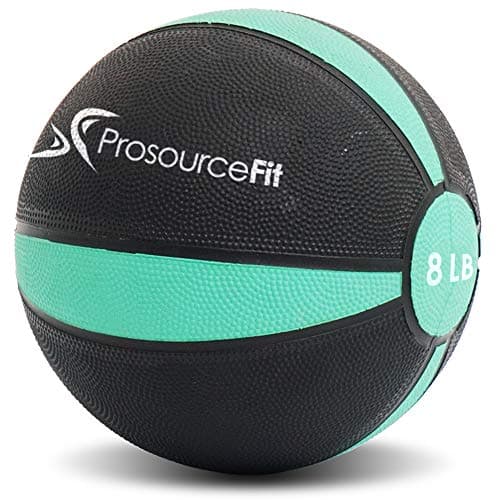
ProsourceFit — ProsourceFit Weighted Rubber Medicine Ball (8 lb)
Best overall — a textured rubber ball with dependable bounce for wall throws, passes, and rotational core work
How they're supposed to work: deep pressure touch
The leading hypothesis is deep pressure touch (also called deep pressure stimulation): broad, gentle, evenly distributed weight across the body is thought to nudge the nervous system toward 'rest-and-digest' parasympathetic activity and away from the 'fight-or-flight' sympathetic state. The idea borrows from occupational therapy, where firm pressure (think a snug hug, swaddling, or a therapy vest) is used to calm arousal. Some small studies have measured drops in physiological arousal markers under deep pressure, but the data linking that mechanism specifically to better sleep is thinner than the marketing suggests. So the theory is reasonable and biologically plausible — just hold it loosely. The honest summary: plausible mechanism, modest mechanistic proof.
The anxiety evidence: the strongest case
Anxiety is where weighted blankets have their best support. A 2020 randomized controlled trial by Ekholm and colleagues in patients with major depressive disorder, bipolar disorder, GAD, or ADHD found the weighted-blanket group had significantly lower insomnia severity, and many of those patients also had anxiety. Smaller studies and a 2020 single-session study by Becklund and colleagues reported reduced self-reported anxiety after using a weighted blanket in a clinical setting. The pattern across this literature is consistent in direction — people feel calmer — but the trials are small, often short, and rely heavily on self-report. That's a genuinely useful signal for a low-risk product, but it's not the same as a large, blinded, long-term trial. Modest, real, worth trying if anxiety is part of your picture.
The insomnia and sleep evidence
The Ekholm 2020 RCT (Journal of Clinical Sleep Medicine) is the anchor study here: 120 psychiatric patients with insomnia were randomized to a chain-weighted blanket or a light control blanket for four weeks. The weighted-blanket group had a significantly better response on the Insomnia Severity Index, and at a 12-month follow-up extension a majority maintained improvements. That's a real, randomized result — but note the population was psychiatric patients, not the general public, and 'response' is a clinical scale, not an objective sleep-lab measure. Objective sleep metrics (total sleep time, sleep efficiency measured by actigraphy or polysomnography) have shown weaker and less consistent effects across the broader literature. So the fair read: weighted blankets can improve how severe your insomnia feels, with the best evidence in people whose sleep problems travel with anxiety or a mood disorder. The effect on hard, measured sleep numbers is smaller and less certain.
What a weighted blanket won't do
It will not treat sleep apnea, restless legs syndrome, circadian disorders, or chronic insomnia driven by an untreated medical or psychiatric condition — those need real diagnosis and care. It won't out-perform the fundamentals: a consistent sleep-wake schedule, a dark cool room, getting morning light, and limiting late caffeine and alcohol. It won't compensate for a bedroom that's too warm — and because the blanket adds insulation, it can make a hot sleeper worse, not better. And if you do high-intensity training (CrossFit, lifting, conditioning), no blanket substitutes for the recovery basics: enough total sleep hours, protein, and managing training load. Think of it as one supporting layer on top of sleep hygiene, never a replacement for it.
How to choose the right weight
The widely used rule of thumb is roughly 8-12% of your body weight — for a 150 lb adult that's about a 12-15 lb blanket; for a 200 lb adult, about 15-20 lb. This is a comfort guideline, not a clinically validated dose, so treat the range as a starting point and adjust to what feels snug-but-not-trapped. Go lighter if you feel pinned, claustrophobic, or overheat. Sizing should match the sleeper, not the bed: a shared blanket sized to the mattress will be too heavy for one partner, so many couples are better off with individual blankets. Look for evenly distributed glass-bead or chain fill (less heat-trapping and quieter than plastic poly pellets) and a breathable cotton or bamboo-derived cover if you sleep warm.
Who benefits, and who should be cautious
Best candidates: adults with anxiety-related sleep trouble, racing-mind 'tired but wired' nights, or general restlessness at lights-out who run cool or neutral on temperature. Use caution or check with a clinician first if you have sleep apnea or other breathing problems, are pregnant, have low blood pressure or circulation issues, claustrophobia, or limited mobility that makes it hard to push the blanket off. Weighted blankets are NOT recommended for infants or young toddlers — they pose a suffocation and entrapment risk, and child-sized versions should only be used per a pediatric occupational therapist's guidance. If you're a hot sleeper, prioritize a cooling cover and a lighter weight, or skip it.
Bottom line
Weighted blankets work in a modest, real way for the right person: the best evidence (notably the Ekholm 2020 RCT) supports improvement in how severe insomnia feels, especially when anxiety or a mood disorder is in the mix, and self-reported anxiety tends to drop. The effect sizes are small to moderate and the strongest trials are small and self-report-heavy, so don't expect a transformation. The upside: it's low-risk, drug-free, and you'll usually know within a week or two whether you like it. Lock in your sleep fundamentals first — schedule, dark cool room, morning light, caffeine cutoff — then add a weighted blanket as a comfort layer. Worth a try, not a miracle.
ProsourceFit — ProsourceFit Weighted Rubber Medicine Ball (8 lb)
Frequently asked questions
For some people, modestly. The best randomized trial (Ekholm 2020) found weighted blankets reduced insomnia severity versus a light blanket in psychiatric patients, and many users report falling asleep feeling calmer. The effect on objectively measured sleep (total sleep time, sleep efficiency) is smaller and less consistent. Treat it as a comfort aid that may help, not a guaranteed fix.
Related reading
Sources
- Weighted Chain Blankets Are an Effective and Safe Intervention for Insomnia in Patients With Major Depressive Disorder, Bipolar Disorder, Generalized Anxiety Disorder, and Attention Deficit Hyperactivity Disorder (Ekholm et al.) — Journal of Clinical Sleep Medicine, 2020
- The effectiveness of a weighted blanket on anxiety and stress: A single-subject design study (Becklund et al.) — Australian Occupational Therapy Journal, 2021
- Weighted blankets and sleep in psychiatric patients: A randomized clinical trial — 12-month follow-up — Journal of Sleep Research, 2022
- Exploring the Safety and Therapeutic Effects of Deep Pressure Stimulation Using a Weighted Blanket — Occupational Therapy in Mental Health, 2015
- Healthy Sleep Habits — American Academy of Sleep Medicine — Sleep Education
ProsourceFit — ProsourceFit Weighted Rubber Medicine Ball (8 lb)
$34.99 · on Amazon