Can You Take Too Much Vitamin D?
Yes, and the route is almost always a supplement rather than the sun. Vitamin D is fat-soluble, so unlike vitamin C it does not simply get excreted when you overshoot — it accumulates, and because its job is to increase calcium absorption, a true overdose shows up as hypercalcemia: total blood calcium above 11.1 mg/dL against a normal range of 8.4-10.2, with serum 25(OH)D typically above 150 ng/mL. That causes nausea, vomiting, muscle weakness, pain, loss of appetite, dehydration, excessive thirst and frequent urination, and in extreme cases renal failure, calcification of soft tissue including coronary vessels and heart valves, cardiac arrhythmias and death. Those are NIH's words, not an alarmist reading of them. The numbers that matter: the Tolerable Upper Intake Level for adults is 100 mcg (4,000 IU) a day, the RDA is 15-20 mcg (600-800 IU), and the Food and Nutrition Board notes that signs and symptoms of toxicity are unlikely below 250 mcg (10,000 IU) a day. So the honest framing of the 5,000 IU softgel on the shelf is that it is above the upper limit but well below the level where acute toxicity appears — which is a different and more useful statement than either 'dangerous' or 'fine'. Here is the part that changes how we think about this: the FNB also recommends avoiding serum 25(OH)D levels above roughly 125-150 nmol/L (50-60 ng/mL), and found that even lower levels — about 75-120 nmol/L, or 30-48 ng/mL — are associated with increases in all-cause mortality, risk of cancer at some sites, cardiovascular events, and falls and fractures in older adults. Meanwhile NHANES data from 2011-2014 found 4% of Americans already above 50 ng/mL, against 18% at risk of inadequacy and 5% at risk of deficiency. In other words, the overshoot problem is smaller than the shortfall problem but it is not rare, and 'more is better' is not what the evidence says at any point on the curve. The practical verdict: for most adults not known to be deficient, 1,000-2,000 IU a day is the sensible range, which is why a USP-verified 1,000 IU softgel is the default we would buy. Anything at or above 5,000 IU a day should be driven by a blood test and a clinician, not by a bottle. And if you take a thiazide diuretic, this is a conversation to have before you buy anything.
Affiliate disclosure: Trusted Health Gear is an Amazon Associate. If you buy through links on this page, we may earn a commission at no extra cost to you. Commission does not influence our rankings. Full policy.
The numbers: RDA, upper limit, and where toxicity actually starts
Three separate thresholds get conflated in most discussions of this question, so it is worth separating them. The RDA — the intake that meets the needs of nearly all healthy people — is 15 to 20 mcg (600-800 IU) a day for adults, rising to 20 mcg (800 IU) at age 71 and over. The Tolerable Upper Intake Level, the daily intake the Food and Nutrition Board considers unlikely to cause adverse effects, is 100 mcg (4,000 IU) a day for adults, with lower limits for infants and young children. And the level at which overt toxicity appears is higher still: the FNB acknowledges that signs and symptoms of toxicity are unlikely at daily intakes below 250 mcg (10,000 IU). Those three numbers explain the whole retail landscape. A 1,000 IU softgel sits comfortably above the RDA and far below the UL. A 5,000 IU softgel is above the UL and far below the toxicity threshold — not an emergency, but also not a dose anyone should take indefinitely without knowing their blood level. A 50,000 IU capsule is a prescription-style dose that exists for diagnosed deficiency under supervision and has no business in a daily routine. The FNB adds a caution that is easy to skip and important: even vitamin D intakes lower than the ULs might have adverse health effects over time. That is the opposite of how the category markets itself, and it is the reason we do not treat the UL as a target to approach.
What vitamin D toxicity actually does
The mechanism is straightforward and it runs through calcium. Vitamin D increases calcium absorption in the gastrointestinal tract, so a genuine excess produces marked hypercalcemia — NIH defines it here as total calcium greater than 11.1 mg/dL against a normal range of 8.4-10.2 — along with hypercalciuria, calcium spilling into the urine, and serum 25(OH)D levels typically above 375 nmol/L (150 ng/mL). The symptoms of hypercalcemia are the ones to recognize: nausea, vomiting, muscle weakness, neuropsychiatric disturbances, pain, loss of appetite, dehydration, excessive urination and excessive thirst. None of those are specific to vitamin D, which is precisely the problem — they read as a stomach bug or stress, so people continue taking the supplement that is causing them. In extreme cases, vitamin D toxicity causes renal failure, calcification of soft tissues throughout the body including coronary vessels and heart valves, cardiac arrhythmias, and death. The documented causes are instructive, because they are not mysterious: NIH attributes cases to dietary supplements that contained excessive vitamin D because of manufacturing errors, supplements taken inappropriately or in excessive amounts, and doses incorrectly prescribed by physicians. Two of those three are a label-accuracy problem, which is one more argument for buying a product carrying a USP or NSF seal rather than trusting a number on a bottle from a brand with no testing program.
You cannot do this with sunlight, and you almost cannot do it with food
This is the reassuring half of the page, and it is worth stating clearly because the fear is usually pointed in the wrong direction. Experts do not believe that excessive sun exposure results in vitamin D toxicity, and the reason is elegant: thermal activation of previtamin D3 in the skin gives rise to various non-vitamin D forms that limit how much vitamin D3 can form in the first place, and some of the D3 that is produced is converted to non-active forms. Your skin has a built-in ceiling. That said, NIH notes that frequent use of tanning beds, which deliver artificial UV radiation, can push 25(OH)D well above 375 to 500 nmol/L — so the ceiling is a feature of ordinary sun exposure rather than of UV exposure in general, and tanning beds carry their own well-known risks that make this a bad route to vitamin D regardless. Food is similarly hard to overshoot on: the natural sources are limited to fatty fish, fish liver oils, egg yolks, some mushrooms and fortified foods like milk and cereal, and the amounts involved are modest. The upshot is that essentially every case of vitamin D toxicity on record traces back to a capsule. If you are worried about getting too much, the only shelf to audit is your own — and that includes the vitamin D hiding inside your multivitamin, your calcium supplement and your fish oil, which is the single most common way people end up at double the dose they think they are taking.
The high-dose trials, and why bigger doses have not delivered
The strongest argument against taking more than you need is not the toxicity threshold, which most people never approach — it is that the large trials of generous-but-safe doses have repeatedly come back empty. A 2022 ancillary study of the Vitamin D and Omega-3 Trial gave 50 mcg (2,000 IU) a day of vitamin D3 or placebo to 25,871 generally healthy adults — men 50 and over, women 55 and over, mean age 67 — and followed them for a median of 5.3 years, specifically to see whether supplementation lowered fracture risk. It did not, and no substantial between-group differences appeared by race, ethnic group, BMI, age, baseline 25(OH)D level, calcium use, fracture risk, or prior fragility fracture. On falls, the US Preventive Services Task Force reviewed seven studies in community-dwelling adults 65 and over without osteoporosis or deficiency and concluded with moderate certainty that vitamin D supplementation does not reduce falls or injuries resulting from falls. The same VITAL trial found no significant reduction in heart attacks, strokes, coronary revascularization or cardiovascular deaths. There are positive signals elsewhere in the literature — a meta-analysis of six trials in 49,282 older adults found daily vitamin D at 400 or 800 IU with calcium reduced any fracture by 6% and hip fracture by 16% — but note the dose in that one. It is modest, and it is paired with calcium. The pattern across the evidence is that correcting a shortfall is worth doing and exceeding sufficiency is not, which makes the 5,000 IU habit a cost with no demonstrated benefit attached. One group deserves specific mention: NIH notes that Black Americans might have a greater risk than White Americans of falls and fractures at daily vitamin D intakes of 50 mcg (2,000 IU) or more, and that the bone health of older Black American women does not appear to benefit from raising serum 25(OH)D beyond 50 nmol/L (20 ng/mL).
How much you actually need, and when to test instead of guess
Start with the blood level rather than the dose, because the dose is only a means to it. The Food and Nutrition Board considers 50 nmol/L (20 ng/mL) or more sufficient for most people; 30 to 50 nmol/L (12-20 ng/mL) potentially inadequate; below 30 nmol/L (12 ng/mL) a deficiency risk; and above 125 nmol/L (50 ng/mL) potentially associated with adverse effects. The NHANES 2011-2014 picture is that most Americans are sufficient, 18% are at risk of inadequacy, 5% are at risk of deficiency, and 4% are above 50 ng/mL. For a healthy adult with no reason to suspect deficiency, 1,000-2,000 IU a day is the range we would stay inside — comfortably above the RDA, comfortably below the UL, and backed by the dose range used in the large trials. Test rather than guess if any of the following apply: very little sun exposure or consistently covered skin, darker skin pigmentation, age over 70, obesity or a history of bariatric surgery, a condition affecting fat absorption such as celiac or Crohn's disease, osteoporosis, or symptoms like bone pain and muscle weakness. Ask for serum 25(OH)D, and if it comes back low, let the result and a clinician set the dose rather than the biggest number on the shelf. One practical tip that is worth more than a dose increase: vitamin D is fat-soluble, so taking it with the largest meal of the day rather than on an empty stomach meaningfully improves absorption. If your level is lower than expected on a reasonable dose, change when you take it before you change how much.
What we'd buy, by dose
Every pick below is already reviewed and scored in our roundups — same products, same specs, with live Amazon prices.
| Attribute | Nature Made Vitamin D3 1000 IUOur pick | Thorne Vitamin D3 + K2 | Sports Research Vitamin D3 with Coconut Oil |
|---|---|---|---|
| Best for | Best USP-verified mainstream option | Best overall D3+K2 combo | Best value per IU |
| Who it's for | The default for most adults, and the dose this page argues for: 1,000 IU, USP Verified, cents a day. USP verification is what makes the number on the label trustworthy — which matters here because NIH attributes some documented toxicity cases to manufacturing errors that put far more vitamin D in a capsule than the label claimed. | For anyone who wants K2 alongside their D3 and NSF Certified for Sport testing behind it, at the same sensible 1,000 IU dose. A reasonable pairing, and notably not a calcium combination — NIH notes that taking calcium supplements together with vitamin D supplements may increase the risk of certain adverse effects. | The 5,000 IU softgel, included so the trade-off is explicit rather than hidden. This is a dose above the 4,000 IU adult upper limit — it is the right product for a confirmed low 25(OH)D under a clinician's direction, and the wrong product to take indefinitely on a hunch. If you are on it long-term without a blood test, test. |
| Key specs | 1,000 IU D3 softgel, USP Verified | 1,000 IU D3 + 200mcg K2 (MK-4), NSF Certified for Sport softgel | 5,000 IU D3 in organic coconut oil softgel, 360-count |
| Our score | 8.3/10 | 8.5/10 | 8.5/10 |
| Where to buy | $8.97$19.2953% offCheck Price on Amazon |
Prices pulled from Amazon as of October 20, 2026 and are subject to change. The price shown on Amazon at checkout applies.

Nature Made — Vitamin D3 1000 IU
The default for most adults, and the dose this page argues for: 1,000 IU, USP Verified, cents a day. USP verification is what makes the number on the label trustworthy — which matters here because NIH attributes some documented toxicity cases to manufacturing errors that put far more vitamin D in a capsule than the label claimed.
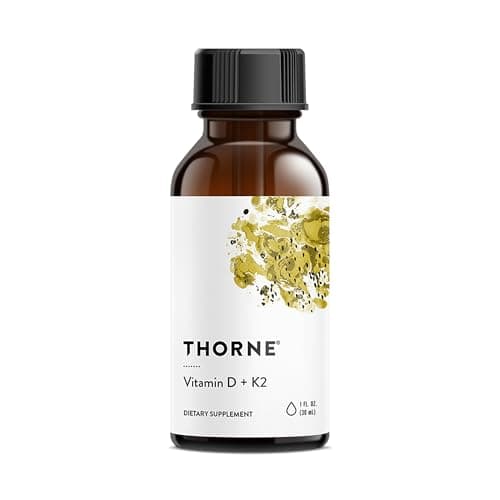
Thorne — Vitamin D3 + K2
For anyone who wants K2 alongside their D3 and NSF Certified for Sport testing behind it, at the same sensible 1,000 IU dose. A reasonable pairing, and notably not a calcium combination — NIH notes that taking calcium supplements together with vitamin D supplements may increase the risk of certain adverse effects.

Sports Research — Vitamin D3 with Coconut Oil
The 5,000 IU softgel, included so the trade-off is explicit rather than hidden. This is a dose above the 4,000 IU adult upper limit — it is the right product for a confirmed low 25(OH)D under a clinician's direction, and the wrong product to take indefinitely on a hunch. If you are on it long-term without a blood test, test.
Medication interactions and the stacking problem
Four medication classes interact with vitamin D, and one of them is the reason this page carries a clinician warning rather than just a number. Thiazide diuretics decrease urinary calcium excretion; combined with a vitamin D supplement, which increases intestinal calcium absorption, that combination might lead to hypercalcemia — particularly in older adults and in people with compromised kidney function or hyperparathyroidism. That is the interaction most likely to turn a well-intentioned supplement into a medical problem. The others run the other direction. The weight-loss drug orlistat, taken with a reduced-fat diet, can reduce absorption of vitamin D from both food and supplements. Corticosteroids such as prednisone reduce calcium absorption and impair vitamin D metabolism — in NHANES 2001-2006, deficiency below 25 nmol/L was more than twice as common among oral steroid users (11%) as non-users (5%). And statins cut cholesterol synthesis, which is where endogenous vitamin D comes from; high supplemental vitamin D intakes may also reduce the potency of atorvastatin, lovastatin and simvastatin. Separately, NIH notes that taking calcium supplements together with vitamin D supplements may increase the risk of certain adverse effects, which is a reason not to default to the combination pill. The stacking problem is the quiet one: add up the vitamin D in your multivitamin, your calcium supplement, your fish oil, any D3+K2 product and your standalone softgel before you decide you are at 2,000 IU. People routinely find they are at double what they assumed.
What we would actually do
Four cases. If you are a healthy adult with no reason to suspect deficiency: take 1,000-2,000 IU a day with your largest meal, buy a product with a USP or NSF seal so the number on the bottle means something, and add up every source in your cupboard before you settle on a dose. If you are in one of the higher-risk groups — minimal sun exposure, darker skin, over 70, obesity or bariatric surgery, a fat-absorption condition, osteoporosis: get serum 25(OH)D measured and let the result pick the dose. If you have been taking 5,000 IU or more a day for months without a blood test: that is the single most common pattern worth correcting on this page. It is not an emergency, it is well below the 10,000 IU threshold where symptoms appear, but it is above the upper limit for no demonstrated benefit, and the fix is a test rather than a panic. And if you have nausea, vomiting, unusual thirst or urination, muscle weakness or loss of appetite while taking a high-dose vitamin D supplement: stop and call a clinician, because those are the symptoms of hypercalcemia and they are not specific enough to self-diagnose. Underneath all four cases is the same principle the rest of this site runs on: vitamin D is a nutrient you are topping up, not a drug you are titrating, and the ceiling exists because the dose-response curve turns over. Sunlight and oily fish first, a modest verified capsule second, and a blood test rather than a bigger bottle whenever you are uncertain. This is general information, not medical advice.
Frequently asked questions
Yes. Because vitamin D is fat-soluble it accumulates rather than being excreted like excess vitamin C, and because its function is to increase calcium absorption, a genuine excess shows up as hypercalcemia: total blood calcium above 11.1 mg/dL against a normal range of 8.4-10.2, with serum 25(OH)D typically above 150 ng/mL. That produces nausea, vomiting, muscle weakness, pain, loss of appetite, dehydration, frequent urination and excessive thirst, and in extreme cases renal failure, calcification of soft tissues including coronary vessels and heart valves, cardiac arrhythmias and death. The important qualifier is that it takes a lot: the Food and Nutrition Board notes signs and symptoms of toxicity are unlikely at daily intakes below 250 mcg (10,000 IU). Almost every documented case traces to supplements — taken in excessive amounts, incorrectly prescribed, or containing more than the label claimed because of a manufacturing error.
Related reading
Sources
- Vitamin D — Health Professional Fact Sheet (RDA 15-20 mcg / 600-800 IU for adults; Tolerable Upper Intake Level 25-100 mcg / 1,000-4,000 IU by age, 4,000 IU for adults; toxicity signs unlikely below 250 mcg / 10,000 IU per day; hypercalcemia defined as total calcium above 11.1 mg/dL against a normal 8.4-10.2 range with 25(OH)D typically above 375 nmol/L / 150 ng/mL; symptoms and extreme outcomes; sun exposure does not cause toxicity while tanning beds can push levels above 375-500 nmol/L; sufficiency thresholds and the FNB caution on serum levels above 125-150 nmol/L; NHANES 2011-2014 showing 18% at risk of inadequacy, 5% at risk of deficiency and 4% above 125 nmol/L; 3.2% of US adults taking 4,000 IU or more in 2013-2014; medication interactions with thiazide diuretics, orlistat, corticosteroids and statins; calcium co-supplementation caution) — NIH Office of Dietary Supplements
- Supplemental Vitamin D and Incident Fractures in Midlife and Older Adults — the 2022 VITAL ancillary study (LeBoff MS, Chou SH, Ratliff KA, Cook NR, Khurana B, Kim E, et al. — 2,000 IU/day vitamin D3 vs placebo in 25,871 generally healthy adults, mean age 67.1, median follow-up 5.3 years; no reduction in fracture incidence overall or in any subgroup by race, ethnicity, BMI, age, baseline 25(OH)D, calcium use or fracture risk) — New England Journal of Medicine, 2022
- Vitamin D, Calcium, or Combined Supplementation for the Primary Prevention of Fractures in Community-Dwelling Adults: US Preventive Services Task Force Recommendation Statement (concluded with moderate certainty that vitamin D supplementation does not reduce the number of falls or resulting injuries in community-dwelling adults 65 and older without osteoporosis or vitamin D deficiency) — U.S. Preventive Services Task Force
- Product titles, doses, counts, certifications, live prices and availability for the vitamin D supplements referenced — retrieved via the Amazon product data layer — Amazon product listing data, 2026
Nature Made — Vitamin D3 1000 IU
$8.97 · on Amazon