Can You Take Magnesium and Vitamin D Together?
Yes. There is no interaction between magnesium and vitamin D that requires you to separate them, and the biology argues for the opposite — magnesium assists in the activation of vitamin D, and all of the enzymes that metabolize vitamin D appear to require magnesium as a cofactor in the liver and kidneys. That matters more than it sounds, because according to NHANES, 79% of US adults do not meet their Recommended Dietary Allowance for magnesium. So the most common version of this stack is a person correcting a real shortfall in the mineral their vitamin D supplement depends on. The cautions are real but they are not about the two nutrients fighting each other. Magnesium's Tolerable Upper Intake Level from supplements is 350 mg a day for adults, vitamin D's is 100 mcg (4,000 IU), and magnesium — not vitamin D — is the one with meaningful drug conflicts: it should be taken at least 2 hours away from oral bisphosphonates, and 2 hours before or 4 to 6 hours after tetracycline and quinolone antibiotics. Practical version: take both with your largest meal of the day, because vitamin D is fat-soluble and moving the dose to the biggest meal raised blood levels about 50% in patients who were not responding to treatment.
Affiliate disclosure: Trusted Health Gear is an Amazon Associate. If you buy through links on this page, we may earn a commission at no extra cost to you. Commission does not influence our rankings. Full policy.
Why people ask this question in the first place
The worry is almost always imported from somewhere else. Most people have heard that minerals compete for absorption — calcium and iron are the classic example — and they reasonably assume magnesium and vitamin D belong in that category. They do not, for a simple structural reason: magnesium is a mineral and vitamin D is a fat-soluble vitamin, so they are not competing for the same intestinal transporters. The second source of confusion is the bone-health shelf, where magnesium, vitamin D, calcium and vitamin K2 all sit next to each other in overlapping combination products, and it becomes hard to tell which of those pairings has evidence behind it and which is just a marketing bundle. And the third is that vitamin D has a genuine upper limit that gets talked about a lot, so anything taken alongside it feels like it might push the total somewhere dangerous. The honest answer is that this specific pair is one of the few in the supplement aisle where taking them together is not merely tolerated but mechanistically sensible, and where the real risks are elsewhere — in total dose, in form, and in what else you are swallowing at the same time.
Magnesium is a cofactor for vitamin D, not a competitor
This is the part the labels leave out. A 2018 review in the Journal of the American Osteopathic Association laid out the relationship plainly: magnesium assists in the activation of vitamin D, which in turn regulates calcium and phosphate homeostasis, and all of the enzymes that metabolize vitamin D seem to require magnesium, which acts as a cofactor in the enzymatic reactions in the liver and kidneys. The review's own conclusion was that it is essential to consume the recommended amount of magnesium in order to obtain the optimal benefits of vitamin D. That is not a small mechanistic footnote. Vitamin D from a softgel or from sunlight is not biologically active as it arrives; it has to be hydroxylated in the liver to 25-hydroxyvitamin D, the form your blood test measures, and again in the kidney to the active hormone. If the cofactor for those steps is short, the pathway runs poorly. The clearest clinical demonstration of that is an old and extreme one: magnesium supplementation substantially reversed resistance to vitamin D treatment in patients with magnesium-dependent, vitamin-D-resistant rickets — a condition where giving vitamin D alone simply did not work until magnesium was replaced. Population data points the same way. Analyzing NHANES 2001-2006 and the NHANES III cohort, researchers found that high intake of total, dietary or supplemental magnesium was independently associated with significantly reduced risks of vitamin D deficiency and insufficiency, that magnesium intake significantly interacted with vitamin D intake in relation to both, and that the inverse association appeared primarily among populations at high risk of vitamin D insufficiency. Those are observational findings and the authors called them preliminary, but they are consistent with the enzymology rather than in tension with it.
What the one randomized trial actually found — and its limit
There is exactly one randomized trial we would hang anything on here, and it is more interesting than the supplement marketing version of it. Published in the American Journal of Clinical Nutrition in 2018, it enrolled 180 participants aged 40 to 85 in a double-blind, 2 x 2 factorial design nested inside the Personalized Prevention of Colorectal Cancer Trial, with magnesium and placebo doses customized to each participant's baseline dietary intake, and vitamin D metabolites measured by liquid chromatography-mass spectrometry. The headline result is a regulation effect, not a boost: the relationship between magnesium treatment and plasma 25-hydroxyvitamin D3 depended significantly on baseline vitamin D status, and the interactions survived Bonferroni correction. Magnesium supplementation increased 25(OH)D3 when baseline 25(OH)D concentrations were close to 30 ng/mL, but decreased it when baseline was higher — from roughly 30 to 50 ng/mL. The authors' conclusion was that optimal magnesium status may be important for optimizing vitamin D status. Read that carefully, because it is the opposite of a stacking argument. Magnesium did not simply push vitamin D levels up; it moved them toward the middle, which is what you would expect from restoring a cofactor to a regulated system rather than from adding a booster. Our practical takeaway is modest and worth saying out loud: fixing a magnesium shortfall is a reasonable thing to do if your vitamin D level is stubbornly low, and it is not a reason to expect a number to climb if your level is already comfortable. One trial in 180 people is also not a large evidence base, and we would rather tell you that than imply this is settled.
The numbers that actually constrain the stack
Four sets of figures do all the real work here, and all four come from the National Institutes of Health Office of Dietary Supplements. Magnesium: the Recommended Dietary Allowance ranges from 310 to 420 mg a day for adults depending on age and sex, and the Tolerable Upper Intake Level for supplemental magnesium is 350 mg for adults. That UL is widely misread — it applies to magnesium from supplements and medications, not to magnesium from food, because the kidneys handle dietary magnesium without trouble in healthy people. The reason the supplemental ceiling is lower than the RDA is that excess supplemental magnesium causes diarrhea, nausea and abdominal cramping long before anything systemic happens. Vitamin D: the RDA is 15 mcg (600 IU) a day for adults 19 to 70 and 20 mcg (800 IU) for adults 71 and older, with a UL ranging from 25 to 100 mcg (1,000 to 4,000 IU) depending on age. Status thresholds: the Food and Nutrition Board considers serum 25(OH)D below 30 nmol/L (12 ng/mL) a deficiency risk, 30 to 50 nmol/L (12 to 20 ng/mL) potentially inadequate, 50 nmol/L (20 ng/mL) or more sufficient for most people, and flags concentrations above 125 nmol/L (50 ng/mL) as potentially associated with adverse effects. And the prevalence figures that put the whole question in context: in US survey data, 18% of people age 1 and older were at risk of vitamin D inadequacy and 5% at risk of deficiency, while an estimated 3.2% of US adults were taking 100 mcg (4,000 IU) or more of vitamin D a day — which is the actual overdose risk on this shelf, and it has nothing to do with magnesium. Vitamin D toxicity is almost always a result of excessive intake through supplements, and ODS specifically notes that taking calcium supplements in combination with vitamin D supplements may increase the risk of certain adverse effects.
How to take them: the four details that change the outcome
First, take vitamin D with the largest and fattiest meal of the day. This is the single highest-leverage thing in this guide and it costs nothing. In a prospective study at the Cleveland Clinic Bone Clinic, 17 patients being treated for vitamin D deficiency who were not responding to treatment were simply instructed to take their usual supplement with the largest meal of the day; after two to three months, mean serum 25(OH)D rose from 30.5 ng/mL to 47.2 ng/mL, an average increase of 56.7% (p < 0.01), across doses ranging from 1,000 to 50,000 IU. No dose change, just a timing change. Second, read elemental magnesium, not compound weight, and pick a form that absorbs. A '500 mg magnesium oxide' tablet is not 500 mg of magnesium, and oxide is the worst-absorbed common form on the shelf — a bioavailability study of four US commercial preparations measured fractional absorption of magnesium oxide at about 4%, with significantly higher and roughly equivalent bioavailability for magnesium chloride, lactate and aspartate. Glycinate and the other chelates are the forms we'd buy for daily use. Third, split the magnesium dose if your gut complains, and take it with food; the dose-limiting side effect is loose stools, which is a signal to lower the per-serving amount rather than abandon the supplement. Fourth — and this is the interaction that actually matters — mind what else is in the same glass of water. Magnesium-rich supplements can decrease absorption of oral bisphosphonates such as alendronate, so take them at least 2 hours apart. Magnesium forms insoluble complexes with tetracyclines like doxycycline and with quinolones like ciprofloxacin and levofloxacin, which should be taken at least 2 hours before or 4 to 6 hours after a magnesium-containing supplement. Going the other direction, loop and thiazide diuretics can increase urinary magnesium loss enough to cause depletion, and prescription proton pump inhibitors taken for more than about a year can cause low blood magnesium — in the cases the FDA reviewed, supplements often corrected it, but in 25% they did not and the PPI had to be stopped. None of those is a reason to avoid taking magnesium with vitamin D. All of them are reasons to talk to whoever prescribes your medications.
What we'd actually buy for this pairing
Every pick below is already reviewed and scored in our roundups — same products, same specs, with live Amazon prices.
| Attribute | Thorne Basic Nutrients Magnesium BisglycinateOur pick | Doctor's Best High Absorption Magnesium Glycinate/Malate | Thorne Vitamin D3 + K2 | Nature Made Nature Made Vitamin D3 1000 IU |
|---|---|---|---|---|
| Best for | Overall pick — third-party testing + clinical-grade transparency | Best value for glycinate at scale | Best overall D3+K2 combo | Best USP-verified mainstream option |
| Who it's for | The magnesium side, done properly: bisglycinate rather than oxide, in a powder you can titrate down if the dose loosens your stool, from a brand that publishes its testing. | The value version of the same decision — a named TRAACS chelate at 100 mg elemental magnesium per serving, which makes it easy to stay inside the 350 mg supplemental ceiling. | If you want the K2 pairing in one softgel: 1,000 IU D3 with 200 mcg K2, NSF Certified for Sport, and a dose modest enough to titrate rather than overshoot. | The cheapest defensible way to take vitamin D: a plain 1,000 IU D3 softgel that is USP Verified, which is the quality mark that confirms the label matches the bottle. |
| Key specs | 135mg elemental magnesium bisglycinate, 60 capsules, NSF-certified facility | 100mg elemental magnesium, 240 tablets, chelated form (TRAACS) | 1,000 IU D3 + 200mcg K2 (MK-4), NSF Certified for Sport softgel | 1,000 IU D3 softgel, USP Verified |
| Our score | 8.7/10 | 8.2/10 | 8.5/10 | 8.3/10 |
| Where to buy |
Prices pulled from Amazon as of October 18, 2026 and are subject to change. The price shown on Amazon at checkout applies.

Thorne — Basic Nutrients Magnesium Bisglycinate
The magnesium side, done properly: bisglycinate rather than oxide, in a powder you can titrate down if the dose loosens your stool, from a brand that publishes its testing.

Doctor's Best — High Absorption Magnesium Glycinate/Malate
The value version of the same decision — a named TRAACS chelate at 100 mg elemental magnesium per serving, which makes it easy to stay inside the 350 mg supplemental ceiling.
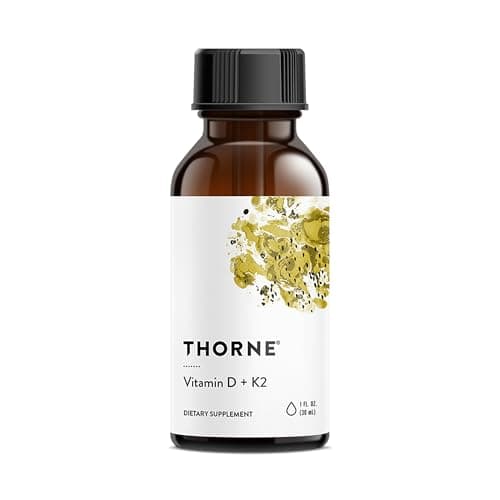
Thorne — Vitamin D3 + K2
If you want the K2 pairing in one softgel: 1,000 IU D3 with 200 mcg K2, NSF Certified for Sport, and a dose modest enough to titrate rather than overshoot.

Nature Made — Nature Made Vitamin D3 1000 IU
The cheapest defensible way to take vitamin D: a plain 1,000 IU D3 softgel that is USP Verified, which is the quality mark that confirms the label matches the bottle.
Where calcium and K2 fit, and where they don't
Since almost nobody buys these two in isolation, it is worth being direct about the rest of the bone-health shelf. Magnesium plays a role in the active transport of calcium and potassium ions across cell membranes, and vitamin D's job is regulating calcium and phosphate homeostasis, so there is a genuine physiological triangle here — which is exactly why the combination products exist. What does not follow is that you should take all three by default. Calcium is the one nutrient on this shelf most people can get from food without much effort if dairy or fortified alternatives are in the diet at all, and the ODS caution above is specific: combining calcium supplements with vitamin D supplements may increase the risk of certain adverse effects. If you have a diagnosed reason to supplement calcium — a clinician's call, usually about bone density — that is a different conversation than adding it because it was in the same bottle. Vitamin K2 is a reasonable pairing at higher vitamin D doses, which is why the better combination products exist at all, but the two common forms are not interchangeable in dosing: MK-4 has a shorter half-life than MK-7 and needs more frequent administration. Our general rule for this corner of the store is the same one we apply everywhere: add one thing at a time, know why it is there, and get the mineral from food where food can do it. Magnesium is abundant in exactly the foods a high-protein, whole-food diet already contains — nuts, seeds, legumes, leafy greens and whole grains — and a capsule is a patch on a gap, not a substitute for the diet.
Bottom line
Take them together, with dinner, and stop worrying about the pairing. The question behind the question is usually 'am I doing something wrong?', and in this case the answer is no — you are taking a vitamin alongside the mineral its activating enzymes depend on, at a moment when the fat in your meal helps you absorb it. Spend your attention on the things that actually move the number instead: get a 25(OH)D test rather than guessing at a dose, take the dose with your largest meal, buy a magnesium form that absorbs and read the elemental milligrams on the label, stay under 350 mg of supplemental magnesium and 4,000 IU of vitamin D unless a clinician has told you otherwise, and keep both of them a couple of hours clear of bisphosphonates and tetracycline or quinolone antibiotics. And keep the frame we use for every supplement on this site: the magnesium in a bag of pumpkin seeds and the vitamin D in twenty minutes of midday sun are the version of this that costs nothing. The capsules are for the gap that is left over — which, given that four in five US adults fall short on magnesium, is a gap most people genuinely have.
Frequently asked questions
Yes. There is no documented interaction between magnesium and vitamin D that requires separating the doses, and there is a mechanistic reason to take them together: a 2018 review in the Journal of the American Osteopathic Association notes that magnesium assists in the activation of vitamin D and that all of the enzymes that metabolize vitamin D appear to require magnesium as a cofactor in the liver and kidneys. The practical advice is to take both with your largest meal of the day — vitamin D is fat-soluble, and in a Cleveland Clinic study of 17 patients who were not responding to vitamin D treatment, simply moving the dose to the largest meal raised mean serum 25-hydroxyvitamin D from 30.5 to 47.2 ng/mL, about a 57% increase, with no change in dose. The timing rules that do matter on this shelf involve medications rather than each other: keep magnesium at least 2 hours away from oral bisphosphonates, and 2 hours before or 4 to 6 hours after tetracycline or quinolone antibiotics.
Related reading
- → Best magnesium supplements, scored on a public rubric
- → Best vitamin D supplements
- → When to take magnesium (morning or night)
- → Magnesium oxide vs glycinate: why the form changes the dose
- → Magnesium glycinate vs citrate
- → Vitamin D2 vs D3: which form raises blood levels
- → How to read a supplement label
- → Best magnesium for sleep
Sources
- Role of Magnesium in Vitamin D Activation and Function (magnesium assists in the activation of vitamin D; all of the enzymes that metabolize vitamin D seem to require magnesium as a cofactor in the liver and kidneys; concludes it is essential to consume the recommended amount of magnesium to obtain the optimal benefits of vitamin D) — Journal of the American Osteopathic Association, 118(3):181-189, 2018
- Magnesium status and supplementation influence vitamin D status and metabolism: results from a randomized trial (180 participants aged 40-85, double-blind 2 x 2 factorial RCT nested in the Personalized Prevention of Colorectal Cancer Trial, doses customized to baseline dietary intake; magnesium increased 25(OH)D3 when baseline 25(OH)D was close to 30 ng/mL but decreased it from ~30 to 50 ng/mL, interactions significant after Bonferroni correction; states that per NHANES, 79% of US adults do not meet their RDA for magnesium; NCT03265483) — American Journal of Clinical Nutrition, 108(6):1249-1258, 2018
- Magnesium, vitamin D status and mortality: results from NHANES 2001 to 2006 and NHANES III (high intake of total, dietary or supplemental magnesium independently associated with significantly reduced risks of vitamin D deficiency and insufficiency; magnesium intake significantly interacted with vitamin D intake; magnesium supplementation substantially reversed resistance to vitamin D treatment in magnesium-dependent vitamin-D-resistant rickets; authors describe the findings as preliminary) — BMC Medicine, 11:187, 2013
- Taking vitamin D with the largest meal improves absorption and results in higher serum levels of 25-hydroxyvitamin D (prospective cohort, 17 patients non-responsive to vitamin D treatment at doses of 1,000-50,000 IU; mean serum 25(OH)D rose from 30.5 +/- 4.7 to 47.2 +/- 10.9 ng/mL after 2-3 months, an average increase of 56.7% +/- 36.7%, p < 0.01) — Journal of Bone and Mineral Research, 25(4):928-930, 2010
- Magnesium — Fact Sheet for Health Professionals (adult RDA 310-420 mg/day; Tolerable Upper Intake Level for supplemental magnesium 350 mg for adults; magnesium is a cofactor in more than 300 enzyme systems and plays a role in the active transport of calcium and potassium ions across cell membranes; excess supplemental magnesium causes diarrhea, nausea and abdominal cramping; interactions with bisphosphonates — separate by at least 2 hours — and with tetracyclines and quinolones — at least 2 hours before or 4-6 hours after; loop and thiazide diuretics increase urinary magnesium loss; prescription PPIs taken more than about a year can cause hypomagnesemia, uncorrected by supplements in 25% of FDA-reviewed cases) — NIH Office of Dietary Supplements, 2026
- Vitamin D — Fact Sheet for Health Professionals (RDA 15 mcg/600 IU for adults 19-70 and 20 mcg/800 IU for adults 71+; UL 25-100 mcg / 1,000-4,000 IU depending on age; serum 25(OH)D below 30 nmol/L [12 ng/mL] deficiency risk, 30-50 nmol/L potentially inadequate, 50 nmol/L [20 ng/mL] or more sufficient for most people, above 125 nmol/L [50 ng/mL] potentially adverse; 18% of Americans age 1+ at risk of inadequacy and 5% at risk of deficiency; an estimated 3.2% of US adults took 100 mcg [4,000 IU] or more daily in 2013-2014; vitamin D toxicity is almost always a result of excessive supplement intake, and combining calcium supplements with vitamin D supplements may increase the risk of certain adverse effects; orlistat with a reduced-fat diet can reduce vitamin D absorption) — NIH Office of Dietary Supplements, 2026
- Bioavailability of US commercial magnesium preparations (fractional absorption of magnesium oxide approximately 4%, with significantly higher and equivalent bioavailability for magnesium chloride, lactate and aspartate) — Magnesium Research, 14(4):257-262, 2001
- Product titles, forms, elemental magnesium amounts, IU amounts, certifications, live prices and availability for the magnesium and vitamin D products referenced — retrieved via the Amazon product data layer — Amazon product listing data, 2026
Thorne — Basic Nutrients Magnesium Bisglycinate
$52.00 · on Amazon