The Best Calcium Supplements for Bone Health
Calcium is essential for bone health, but the way it's sold gets two things badly wrong, and getting them right is most of what this guide is about. The first is that food should be your primary calcium source, not a pill. Dairy, fortified plant milks, tofu set with calcium, canned sardines and salmon with the bones, and leafy greens deliver calcium alongside protein and other nutrients in a form your body handles well — and dietary calcium doesn't carry the concerns that high-dose supplements do. The second is that more is not better: your body can only absorb so much calcium at once, blood levels are tightly regulated, and there's growing caution about routinely taking large calcium supplements, with some research linking high supplemental (not dietary) calcium to kidney stones and possible cardiovascular concerns. So the honest goal is to figure out your gap — how much calcium you're missing from food relative to the roughly 1,000-1,200 mg a day adults need — and fill only that gap, in the right form, at the right dose. On form, the two you'll see are calcium citrate and calcium carbonate. Carbonate is cheaper and packs more elemental calcium per pill, but it needs stomach acid and is best taken with food; citrate absorbs well with or without food and is the better choice for older adults, anyone on acid-reducing medication (PPIs or H2 blockers), or people with low stomach acid. Two more rules matter: absorption drops off above about 500 mg of calcium at a time, so split larger daily amounts into separate doses; and pair calcium with adequate vitamin D, which your body needs to absorb it. We ranked these on form and absorption, whether they include vitamin D, sensible per-pill dosing, label cleanliness and testing, and value. And because bone health and cardiovascular and kidney risk are involved, this is genuine YMYL territory — talk to your doctor about whether you need a calcium supplement at all before you start one.
Top pick
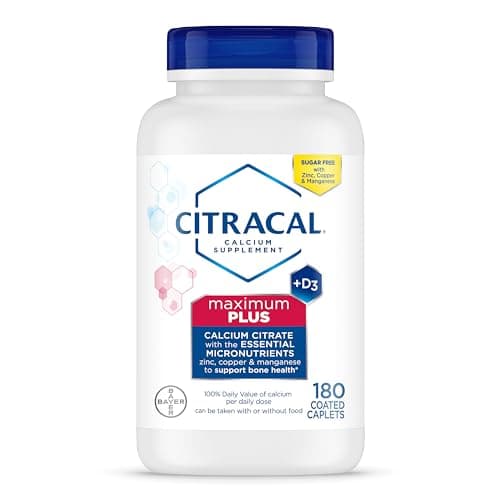
Citracal — Citracal Maximum Plus (Calcium Citrate + D3)
Calcium citrate with vitamin D3 · plus supporting minerals on this SKU · absorbs with or without food and without stomach acid · tablet · the leading calcium-citrate brand
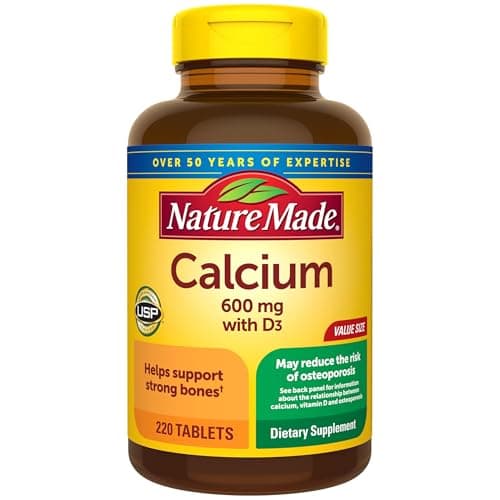
Nature Made — Nature Made Calcium 600 mg + D3 (Carbonate)
At a glance
Tap a row to check price · tap a header to sort| # | Best for | Price | ||
|---|---|---|---|---|
| 1 | | Best overall | 8.4/10 | $14.96$20.06 |
| 2 | | Best value carbonate | 8.3/10 | $11.24$21.69 |
| 3 | 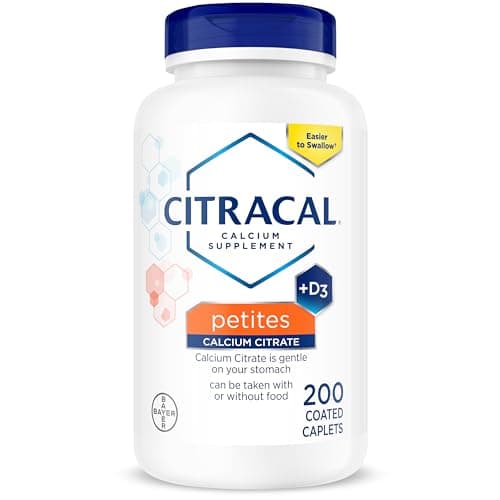 | Best for easy swallowing | 8.1/10 | $10.92$14.99 |
| 4 | 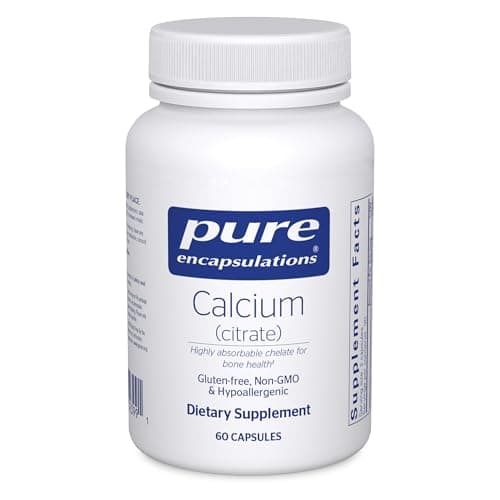 | Best clean-label option for sensitive users | 7.7/10 | $14.00 |
| 5 | 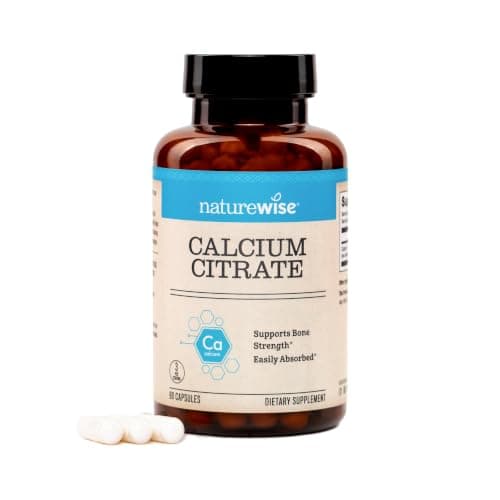 | Best per-dose sizing | 7.6/10 | $14.99 |
| 6 | 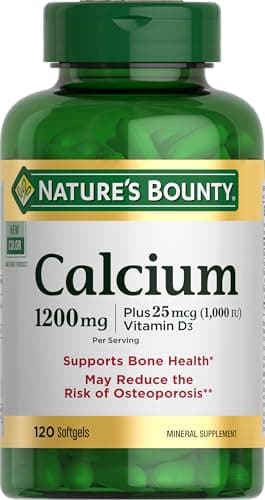 | Best cheapest option | 7.3/10 | $8.87 |
| 7 | 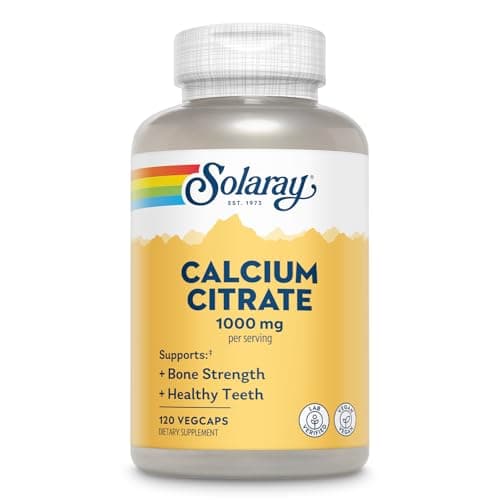 | Best vegan option | 7.2/10 | $14.79$16.39 |
Prices pulled from Amazon as of Sep 16, 2026 and are subject to change. The price shown on Amazon at checkout applies.
How we scored
Every product below is scored on six metrics, 0-10 each, with the weighting described on how we review. The criteria specific to this category:
- Form and absorption — citrate vs carbonate. This is the most practical decision. Calcium carbonate is cheaper and has more elemental calcium by weight, but it requires stomach acid and should be taken with food; calcium citrate absorbs well with or without food and is the better pick for older adults, people on acid-reducers (PPIs/H2 blockers), and anyone with low stomach acid. We match the form to the user rather than declaring one universally best, and reward products that are clear about which they are.
- Includes vitamin D (and sensible cofactors). Your body needs vitamin D to absorb calcium, so a calcium supplement paired with vitamin D3 is often the more useful package — especially for people who are low on D. We reward sensible calcium-plus-D formulas and note where vitamin K2 or magnesium is added. We're skeptical of kitchen-sink 'bone blends' that pad the label to justify a premium without adding proven benefit.
- Per-pill dose and the 500 mg rule. Absorption of calcium falls off above roughly 500 mg taken at once, so the best products either dose at or below that per pill or make it easy to split a larger daily target into separate doses. We reward realistic per-dose amounts and mark down single mega-pills that dump 1,000+ mg at once, since much of that simply isn't absorbed.
- Clean label and third-party testing. Calcium supplements are simple, so the label should be too — the calcium form, vitamin D if included, and minimal fillers. We reward third-party verification (such as USP Verified) and clean formulations, and mark down products padded with unnecessary extras or vague proprietary 'bone support' blends.
- Pill size, count, and tolerability. Calcium pills are often large, and carbonate can cause gas, bloating, or constipation in some people. We note pill size and format (tablets, smaller 'petites,' or capsules), since a supplement you find hard to swallow or that upsets your stomach won't get taken. Splitting doses and taking carbonate with food both help tolerability.
- Value per dose. Calcium is inexpensive, so value comes down to cost per elemental-calcium dose, factoring in whether vitamin D is included. Carbonate is usually the cheapest per milligram; citrate costs a bit more for its absorption advantages. We reward honest value and note where you're paying for a form or cofactor you genuinely need versus a premium 'bone health' label.
What to know before buying
- Food first — and dietary calcium is safer than supplemental. Aim to hit your calcium target from food before reaching for a pill: dairy, fortified plant milks and juices, calcium-set tofu, canned sardines and salmon with bones, and leafy greens are all good sources, and they come with other nutrients. This isn't just the site's general philosophy — it's specific to calcium, because the concerns about high intake (kidney stones, possible cardiovascular risk) attach to large supplemental doses, not to calcium from food. Use a supplement only to close the gap food leaves.
- Figure out your gap, then supplement only that. Adults generally need about 1,000 mg of calcium a day, rising to 1,200 mg for women over 50 and men over 70. The smart move is to estimate how much you already get from food and supplement just the shortfall — not to add a full 1,000+ mg pill on top of a decent diet. Over-supplementing is where the risks live, and it's easy to do by accident when you're already eating dairy and fortified foods. Less is often the right answer.
- Pick citrate if you're older or on acid-reducing meds; carbonate with food otherwise. Calcium carbonate needs stomach acid to dissolve, so take it with a meal — and know that older adults and people on proton-pump inhibitors or H2 blockers (common heartburn medications) make less stomach acid, which impairs carbonate absorption. Calcium citrate absorbs well with or without food and regardless of stomach acid, making it the better, if slightly pricier, choice for those groups. If you're young, healthy, and want the cheapest option, carbonate with meals is fine.
- Split doses above 500 mg and pair with vitamin D. Your gut absorbs calcium best in amounts of about 500 mg or less at a time, so if your supplement target is higher, take it in two separate doses rather than one big pill. And because vitamin D is required to absorb calcium, make sure you're getting enough — many calcium supplements include D3 for exactly this reason, which is convenient if you're also low on vitamin D. Taking 1,200 mg all at once with no vitamin D is the least efficient way to do it.
- This is YMYL — talk to your doctor before starting. Whether you need a calcium supplement at all depends on your diet, age, sex, medications, and bone-health status, and the answer for many people who eat some dairy is 'not much, if any.' Because high supplemental calcium has been linked in some studies to kidney stones and possible cardiovascular concerns, and because it can interact with certain medications, this is a decision to make with your doctor — especially if you have kidney issues, a history of stones, heart disease, or take prescription drugs. Don't self-prescribe a large daily calcium dose just to 'be safe.'
Our picks
Citracal — Citracal Maximum Plus (Calcium Citrate + D3)
Key specs: Calcium citrate with vitamin D3 · plus supporting minerals on this SKU · absorbs with or without food and without stomach acid · tablet · the leading calcium-citrate brand
Pros
- Calcium citrate absorbs well with or without food and regardless of stomach acid, making it the most broadly reliable form — ideal for older adults and anyone on acid-reducing medication
- Includes vitamin D3, the cofactor you need to actually absorb the calcium, in one convenient tablet
- From the best-known calcium-citrate brand, with wide availability and consistent quality
- A sensible all-in-one for the person who genuinely has a calcium gap to fill
Cons
- Tablets are on the larger side, and you may need two a day to reach a target — split them across meals rather than taking both at once
- Costs more per milligram of calcium than plain carbonate
- The added minerals on the 'Maximum' SKU are more than some people need — a simpler citrate-plus-D is fine
Citracal — Citracal Maximum Plus (Calcium Citrate + D3)
- Form/absorption9/10
- Vitamin D included9/10
- Dose sizing7/10
- Clean label7/10
- Value7/10
Nature Made — Nature Made Calcium 600 mg + D3 (Carbonate)
Key specs: Calcium carbonate 600 mg elemental with vitamin D3 · USP Verified · take with food for best absorption · tablet · widely stocked
Pros
- USP Verified, which independently confirms the tablet contains what the label says and disintegrates properly — a real mark of quality on a cheap supplement
- Includes vitamin D3, and 600 mg elemental calcium per tablet is a sensible per-dose amount close to the absorption sweet spot
- Carbonate gives the most calcium per pill at the lowest price for people with normal stomach acid who take it with meals
- From a trusted mainstream brand at an excellent value
Cons
- Carbonate must be taken with food and needs stomach acid, so it's a poorer choice for older adults or anyone on PPIs/H2 blockers
- Carbonate is the form most likely to cause gas, bloating, or constipation in sensitive people
- Tablets are fairly large
Nature Made — Nature Made Calcium 600 mg + D3 (Carbonate)
- Form/absorption7/10
- Vitamin D included9/10
- Dose sizing8/10
- Clean label9/10
- Value9/10
Citracal — Citracal Petites (Calcium Citrate + D3)
Key specs: Calcium citrate with vitamin D3 in smaller 'petite' tablets · ~400 mg elemental calcium per serving · absorbs with or without food · easier to swallow than standard calcium tablets
Pros
- Solves the biggest real complaint about calcium pills — size — with smaller tablets that are much easier to swallow
- Citrate form absorbs with or without food and stomach acid, and vitamin D3 is included
- The ~400 mg per-serving amount fits neatly under the 500 mg absorption ceiling
Cons
- Smaller tablets mean you take more of them to reach a higher daily target
- Costs more per milligram than carbonate
- Still a supplement — most people who eat some dairy may need only a modest top-up, if any
Citracal — Citracal Petites (Calcium Citrate + D3)
- Form/absorption9/10
- Vitamin D included9/10
- Dose sizing9/10
- Clean label7/10
- Value7/10
Pure Encapsulations — Pure Encapsulations Calcium (Citrate)
Key specs: Calcium citrate in a hypoallergenic capsule · minimal excipients, free of common allergens and unnecessary fillers · third-party tested by the brand · vegetarian capsule
Pros
- About as clean as calcium gets — citrate in a hypoallergenic capsule with minimal fillers, a good fit for people who react to additives
- Citrate absorbs with or without food, and the capsule format is easy to take
- Pure Encapsulations has a strong reputation for testing and formulation transparency
Cons
- The most expensive per milligram of calcium here — you pay a real premium for the clean-label positioning
- Doesn't include vitamin D in this SKU, so you'll need to get D separately if you're low
- Capsules deliver less elemental calcium per unit than big carbonate tablets, so you take more
Pure Encapsulations — Pure Encapsulations Calcium (Citrate)
- Form/absorption9/10
- Vitamin D included4/10
- Dose sizing8/10
- Clean label10/10
- Value5/10
NatureWise — NatureWise Calcium Citrate (500 mg)
Key specs: Calcium citrate ~500 mg elemental per serving · citrate absorbs with or without food · vegetarian capsules · single-form simplicity
Pros
- A ~500 mg citrate dose sits right at the point where calcium absorption is most efficient, so little is wasted
- Citrate form works with or without food and for people with low stomach acid
- Simple, single-form calcium without a lot of padding
Cons
- No vitamin D in this SKU — pair it with a D3 supplement if your levels are low
- Mid-range price per milligram, more than carbonate
- Capsule count adds up if you need a higher daily total
NatureWise — NatureWise Calcium Citrate (500 mg)
- Form/absorption9/10
- Vitamin D included4/10
- Dose sizing9/10
- Clean label8/10
- Value7/10
Nature's Bounty — Nature's Bounty Calcium 1,200 mg + D3 (Carbonate)
Key specs: Calcium carbonate 1,200 mg elemental with vitamin D3 · softgels · take with food · very low cost per serving · widely available
Pros
- About the cheapest calcium-plus-D you'll find, from a mainstream brand — hard to beat on pure price
- Softgels can be easier to swallow than big chalky calcium tablets
- Includes vitamin D3 for absorption
Cons
- 1,200 mg in a single dose exceeds the ~500 mg absorption sweet spot, so much of it isn't absorbed at once — better to split calcium across the day
- Carbonate needs food and stomach acid, so it's a weaker choice for older adults or those on acid-reducers
- Very high single-dose calcium is exactly the pattern that raises over-supplementation concerns — most people don't need this much added on top of food
Nature's Bounty — Nature's Bounty Calcium 1,200 mg + D3 (Carbonate)
- Form/absorption6/10
- Vitamin D included9/10
- Dose sizing5/10
- Clean label8/10
- Value9/10
Solaray — Solaray Calcium Citrate (1,000 mg, VegCaps)
Key specs: Calcium citrate ~1,000 mg elemental (across the labeled serving) in vegetarian capsules · citrate absorbs with or without food · vegan-friendly
Pros
- Citrate in vegetarian VegCaps makes it a clean choice for vegans and vegetarians
- Absorbs with or without food and works for people with low stomach acid
- Straightforward single-form calcium with a trusted natural-products brand
Cons
- The labeled serving spans multiple capsules to reach 1,000 mg — split across the day rather than taking it all at once for better absorption
- No vitamin D included in this SKU
- More capsules per day than a concentrated carbonate tablet
Solaray — Solaray Calcium Citrate (1,000 mg, VegCaps)
- Form/absorption9/10
- Vitamin D included4/10
- Dose sizing7/10
- Clean label8/10
- Value7/10
Frequently asked questions
Many people who eat some dairy or fortified foods don't need much added calcium, if any — and food is the safer source. The right approach is to estimate how much calcium you already get from your diet and compare it to your target (about 1,000 mg a day for most adults, 1,200 mg for women over 50 and men over 70), then supplement only the gap. Piling a full 1,000 mg pill on top of a decent diet can push you into over-supplementation, which is where the concerns lie. Because whether you need one depends on your diet, age, medications, and bone health, it's genuinely a question for your doctor rather than a default purchase.
Related reading
Sources
- Calcium — Fact Sheet for Health Professionals (RDAs ~1,000-1,200 mg/day; UL 2,000-2,500 mg; carbonate needs food/stomach acid, citrate absorbs with or without; ~500 mg per-dose absorption; supplemental-calcium safety debate) — NIH Office of Dietary Supplements
- Calcium and Vitamin D — bone health, food sources, and supplement guidance — Bone Health & Osteoporosis Foundation
- Calcium supplements: A risk factor for heart disease? (discussion of the debate over high-dose supplemental calcium and cardiovascular risk) — Mayo Clinic
- USP Verified Dietary Supplements — independent verification of identity, potency, and quality — U.S. Pharmacopeia (USP)
Last verified: August 2, 2026. See our editorial policy and how we review for details on scoring and update cadence. Canonical URL: https://trustedhealthgear.com/reviews/best-calcium-supplement.
Citracal — Citracal Maximum Plus (Calcium Citrate + D3)
$14.96 · on Amazon