Best Vitamin C Supplements, Scored on a Public Rubric
Vitamin C is the most over-bought supplement in the aisle, and the reason is a number almost nobody prints on a label: your body saturates. The NIH Office of Dietary Supplements puts the adult RDA at 90 mg a day for men and 75 mg for women, notes that absorption runs 70-90% at moderate intakes of 30-180 mg a day, and then delivers the line the industry would rather you skipped — above 1 gram a day, absorption falls to less than 50%, and plasma concentrations plateau at intakes around 200 mg a day. Push past that and the surplus is largely escorted out through your kidneys. The 1,700 mg capsule is not seven times better than the 250 mg one; it is mostly expensive urine. The second inconvenient fact is that the fancy forms don't rescue it. ODS states flatly that the ascorbic acid in supplements has a bioavailability equivalent to the ascorbic acid naturally occurring in foods, and that one study found no differences in bioavailability among plain ascorbic acid, Ester-C, and ascorbic acid with bioflavonoids. That is three of the category's biggest premium stories — natural sourcing, buffered Ester-C, bioflavonoid complexes — landing on the same plasma curve as the $6 bottle. Then there's the cold. The Cochrane review pooled 29 comparisons and 11,306 participants and found regular supplementation did not reduce how often people in the general population caught colds at all (relative risk 0.97). It shortened them by about 8% in adults — call it a few hours off a week-long cold — and did nothing consistent when taken after symptoms started. So: the RDA is small, the ceiling is low, the forms are equivalent, and it won't stop your cold. Which is exactly where this gets interesting, because there is one population the evidence treats completely differently, and if you're reading this site you're probably in it. Across five trials of 598 marathon runners, skiers, and soldiers under heavy physical stress, vitamin C cut cold incidence roughly in half (RR 0.48). Not 8%. Half. Vitamin C is a nearly pointless supplement for a sedentary person eating produce — and a genuinely useful one for somebody training hard in a cold garage gym through the winter. We scored these seven on that reality: the dose that absorbs, the testing behind the label, and the cost of the dose you'll actually use.
Top pick
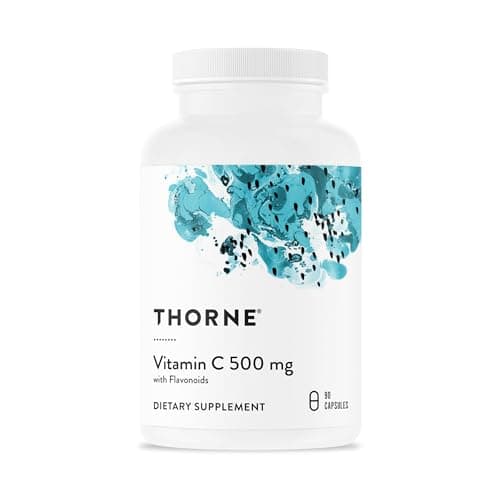
Thorne — Vitamin C 500 mg with Citrus Bioflavonoids (90 servings)
Vitamin C 500 mg with citrus bioflavonoids from oranges, capsule, 90 servings, third-party certified
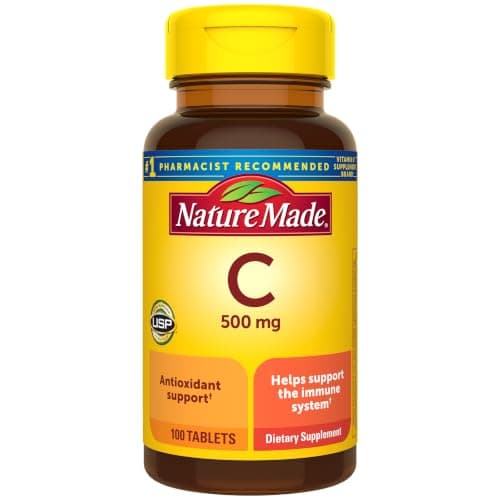
Nature Made — Vitamin C 500 mg Tablets (100 count)
At a glance
Tap a row to check price · tap a header to sort| # | Best for | Price | ||
|---|---|---|---|---|
| 1 | 1. Thorne — Vitamin C 500 mg with Citrus Bioflavonoids (90 servings)Best overall | Best overall | 8.4/10 | |
| 2 | 2. Nature Made — Vitamin C 500 mg Tablets (100 count)Best value | Best value | 8.1/10 | |
| 3 | 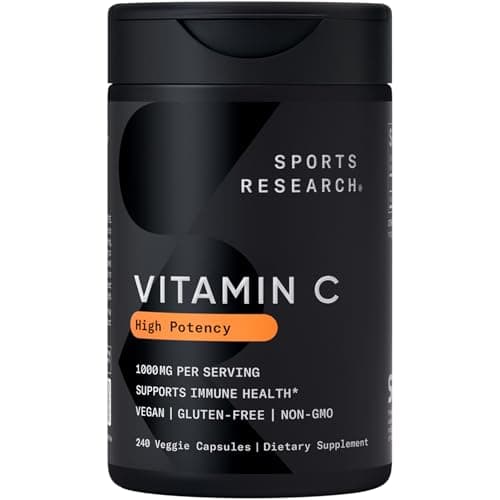 3. Sports Research — High Potency Vitamin C 1000 mg (240 vegan capsules)Best for hard training | Best for hard training | 7.4/10 | |
| 4 | 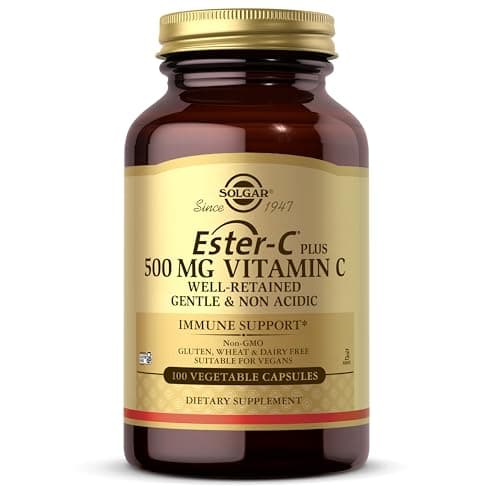 4. Solgar — Ester-C Plus 500 mg (100 vegetable capsules)Best if plain vitamin C upsets your stomach | Best if plain vitamin C upsets your stomach | 6.9/10 | $12.74$17.9929% offCheck Price for Solgar Ester-C Plus 500 mg (100 vegetable capsules) on AmazonIn Stock |
| 5 | 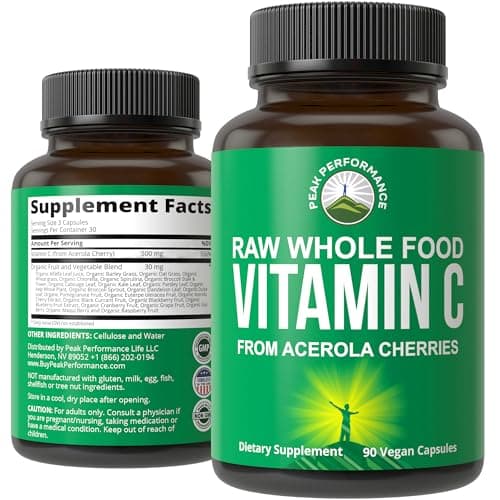 5. Peak Performance — Raw Whole Food Vitamin C from Acerola Cherry (90 capsules)Best whole-food-derived | Best whole-food-derived | 6.2/10 | |
| 6 | 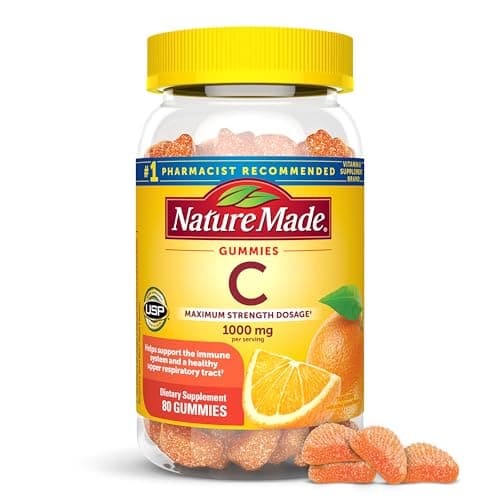 6. Nature Made — Maximum Strength Vitamin C 1000 mg Gummies (80 gummies, 20-day supply)Popular format | Popular format | 4.8/10 | $14.58$19.4925% offCheck Price for Nature Made Maximum Strength Vitamin C 1000 mg Gummies (80 gummies, 20-day supply) on AmazonIn Stock |
| 7 | 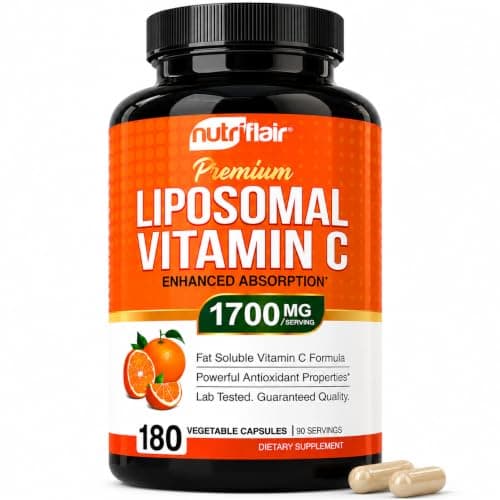 7. NutriFlair — Liposomal Vitamin C 1700 mg (180 capsules)The absorption-theater pick our rubric is built to catch | The absorption-theater pick our rubric is built to catch | 4.6/10 |
Prices pulled from Amazon as of October 18, 2026 and are subject to change. The price shown on Amazon at checkout applies.
How we scored
Every product below is scored on six metrics, 0-10 each, with the weighting described on how we review. The criteria specific to this category:
- A dose that respects saturation, not the biggest number on the bottle — plasma tops out around 200 mg/day and absorption drops below 50% past 1 g/day, so 250-500 mg servings score above 1,000-1,700 mg ones.
- Third-party testing stated by the brand — vitamin C is cheap to make and cheap to fake, and an independent identity-and-potency check is the only real accountability on a supplement label.
- No premium charged for a form that performs identically — NIH found no bioavailability difference between plain ascorbic acid, Ester-C, and bioflavonoid blends, so a price jump for 'non-acidic' or 'complex' scores down unless it buys something real, like genuine GI tolerability.
- Honest labeling over absorption theater — 'high absorption', 'max absorption', and 'fat soluble vitamin C' are marketing phrases attached to a nutrient whose absorption is limited by your intestinal transporters, not by the capsule.
- Cost per daily dose you'd actually take, not price per bottle — a bottle is cheap or expensive only relative to how many capsules a day it takes and how many of those milligrams you keep.
- Format that doesn't smuggle in junk — a supplement that arrives wrapped in added sugar is a candy with a claim on it, and it doesn't belong in the same tier as a plain tablet.
What to know before buying
- You saturate around 200 mg a day, and this is the single fact that should drive your purchase. NIH's ODS reports absorption of 70-90% at intakes of 30-180 mg/day, falling to under 50% above 1 g/day, with plasma concentrations plateauing near a 200 mg daily intake. Your body defends a set point: absorption efficiency drops as intake climbs and the kidneys excrete the excess. That means a 500 mg tablet comfortably covers the RDA plus headroom, and a 1,700 mg capsule is buying you a marginal, rapidly excreted increment at several times the price. The dose-response curve on this nutrient is a cliff followed by a flat line, and almost every product in the category is priced as though it were a straight diagonal.
- The expensive forms are not better absorbed — NIH says so directly. ODS states that the ascorbic acid used in supplements has a bioavailability equivalent to that of the ascorbic acid that occurs naturally in foods, and that a study found no differences in bioavailability among ascorbic acid, Ester-C, and ascorbic acid with bioflavonoids. Read that again with a price tag in hand: 'natural, whole-food-sourced' vitamin C, buffered Ester-C, and citrus-bioflavonoid complexes all land on the same curve as generic ascorbic acid. There are still legitimate reasons to choose them — a buffered mineral ascorbate genuinely can sit easier in an acid-sensitive stomach — but 'absorbs better' is not one of them, and it is the reason most of them cost more.
- Liposomal is the one form with a real absorption signal, and it still doesn't clear the bar. A 2025 scoping review in Basic & Clinical Pharmacology & Toxicology looked at 10 studies from 2016-2024 and found 9 of 10 showed higher plasma bioavailability for liposomal ascorbate — 1.2 to 5.4-fold higher peak concentrations. That is not nothing. But every single study carried industry funding or author affiliations with the companies selling it, most didn't report baseline ascorbate levels, none assessed urinary elimination, and the authors' conclusion is the part the ads leave out: whether there are any clinically relevant differences in biological effects between liposomal and non-liposomal ascorbate, and whether any differences might translate into improved health outcomes, remain to be explored. Better absorption of a dose you were already saturating on is solving a problem you don't have.
- It does not prevent colds — unless you train like an athlete. The Cochrane review (29 comparisons, 11,306 participants) found a pooled relative risk of 0.97 for cold incidence in community trials: no meaningful protection for the general population, no matter how many people insist otherwise every January. Duration fell about 8% in adults and 14% in children, and taking it after symptoms appeared had no consistent effect at all across 3,249 episodes. The exception is dramatic and specific: in five trials of 598 marathon runners, skiers, and soldiers exposed to extreme physical stress or cold, the pooled RR was 0.48 — cold incidence roughly halved. If you're doing high-volume conditioning, lifting heavy year-round, or training outdoors in the cold, you are much closer to that trial population than to the sedentary average, and a cheap daily tablet through the winter block is one of the few genuinely evidence-backed uses of this supplement.
- Whole food gets you there without a bottle, and that's the honest starting point. Half a cup of raw red bell pepper carries 95 mg of vitamin C — more than a man's entire RDA. Three-quarters of a cup of orange juice is 93 mg, a medium orange 70 mg, a kiwifruit 64 mg, half a cup of cooked broccoli 51 mg, half a cup of sliced strawberries 49 mg, and half a cup of cooked Brussels sprouts 48 mg (all per NIH's food table). A plate with peppers and broccoli on it clears the RDA before you've touched a supplement, and it brings fiber and polyphenols a capsule can't. Deficiency is genuinely rare on a diet with produce in it. Supplement the gap or the training stress — don't supplement instead of the vegetables.
- If you smoke, your requirement is measurably higher. ODS is specific: people who smoke need 35 mg/day more vitamin C than people who don't, because smoking increases oxidative stress and depletes the vitamin faster. That's a real, quantified adjustment — 125 mg for a man, 110 mg for a woman — and it's still comfortably inside what one modest tablet or a decent produce habit delivers.
- The upper limit is 2,000 mg, and the side effects are a plumbing problem, not a toxicity one. ODS sets the adult UL at 2,000 mg/day and notes that the most common complaints are diarrhea, nausea, abdominal cramps, and other GI disturbances caused by the osmotic effect of unabsorbed vitamin C sitting in your gut. That is the mechanism worth understanding: the symptoms come from the fraction you failed to absorb, which is precisely the fraction you paid extra for. A 1,700 mg capsule is 85% of the UL in one swallow.
- Two real risks deserve more than a disclaimer. High intakes increase urinary oxalate and uric acid excretion, which could contribute to kidney stone formation — ODS notes the best evidence is in people with pre-existing hyperoxaluria, so if you're a stone former, mega-dosing is a bad trade. And anyone in cancer treatment should talk to their oncologist before taking vitamin C or other antioxidants, especially at high doses, because of the concern that antioxidants could protect tumor cells from radiation and chemotherapy. Vitamin C also improves absorption of non-heme iron — useful if you're plant-based, worth flagging with your doctor if you have a condition involving iron overload.
Our picks
Thorne — Vitamin C 500 mg with Citrus Bioflavonoids (90 servings)
Key specs: Vitamin C 500 mg with citrus bioflavonoids from oranges, capsule, 90 servings, third-party certified
Pros
- 500 mg sits in the range your body can actually use — above the RDA with headroom, well short of the point where absorption falls off a cliff
- Third-party certified from a brand whose testing program is among the most rigorous in supplements, which is the accountability the rest of this cheap-to-fake category lacks
- Clean capsule and a 90-serving bottle — a full quarter of a year on one purchase
Cons
- The citrus bioflavonoids are the marketing, not the mechanism: NIH found no bioavailability difference between ascorbic acid with bioflavonoids and plain ascorbic acid
- About 26 cents a serving — roughly four times the plain tablet below for a physiologically identical dose
Thorne — Vitamin C 500 mg with Citrus Bioflavonoids (90 servings)
- Third-party testing9/10
- Bioavailability8/10
- Clinical evidence9/10
- Value5/10
- Brand transparency8/10
- Form & absorption7/10
Nature Made — Vitamin C 500 mg Tablets (100 count)
Key specs: Vitamin C 500 mg per tablet, 100 tablets, 100-day supply, no artificial flavors, no added color, no preservatives, gluten free
Pros
- About six cents a day for a dose that covers the RDA several times over — on a nutrient where the ceiling is low, this is the rubric's honest answer
- 500 mg once daily with a meal is the whole protocol; one tablet, no stacking, 100 days per bottle
- Nature Made was the first brand accepted into USP's Dietary Supplement Verification Program and carries more USP-verified products than any other brand — check the USP mark on the bottle you're buying, since it's granted per product, not per brand
Cons
- USP verification is listed by some retailers for this tablet but isn't stated on the manufacturer's own product page, so treat the mark on the physical label as the source of truth rather than the listing
- A plain white tablet with no testing story printed on the bottle — you're trusting the brand's QC reputation rather than a certificate
Nature Made — Vitamin C 500 mg Tablets (100 count)
- Third-party testing7/10
- Bioavailability8/10
- Clinical evidence9/10
- Value10/10
- Brand transparency7/10
- Form & absorption8/10
Sports Research — High Potency Vitamin C 1000 mg (240 vegan capsules)
Key specs: Ascorbic acid 1000 mg, vegan veggie capsules, Non-GMO Project Verified, gluten free, 240 count
Pros
- 1,000 mg matches the upper end of the doses used in the Cochrane extreme-stress trials, where cold incidence in runners, skiers, and soldiers roughly halved — the one context where a bigger dose has a real evidence base
- 240 capsules at under 10 cents each makes a winter training block cheap to run
- Non-GMO Project Verified, vegan capsule, and a plain single-ingredient label — no bioflavonoid upcharge, no blend
Cons
- 1,000 mg is the exact point where NIH says absorption falls below 50% — a meaningful share of every capsule is excreted, which is tolerable here only because the athlete evidence used this dose
- Overkill for anyone not under heavy physical stress; if that's you, the 500 mg tablets do more for less
Sports Research — High Potency Vitamin C 1000 mg (240 vegan capsules)
- Third-party testing7/10
- Bioavailability6/10
- Clinical evidence8/10
- Value8/10
- Brand transparency7/10
- Form & absorption7/10
Solgar — Ester-C Plus 500 mg (100 vegetable capsules)
Key specs: Ester-C ascorbate complex 500 mg, non-acidic, vegetable capsule, non-GMO, vegan, gluten-free, kosher, 100 servings
Pros
- A buffered mineral ascorbate is genuinely gentler on an acid-sensitive stomach, which is a real reason to pay a little more — unlike the absorption claim
- 500 mg keeps the dose sensible, and Solgar is a long-established brand with a clean vegan, non-GMO label
- About 13 cents a capsule — a modest premium rather than a gouge
Cons
- The core Ester-C promise doesn't survive the evidence: NIH cites a study finding no bioavailability difference among ascorbic acid, Ester-C, and ascorbic acid with bioflavonoids
- 'Non-acidic' is doing heavy marketing work for a benefit that only matters if plain ascorbic acid actually bothers you — most people it doesn't
Solgar — Ester-C Plus 500 mg (100 vegetable capsules)
- Third-party testing6/10
- Bioavailability8/10
- Clinical evidence8/10
- Value7/10
- Brand transparency6/10
- Form & absorption6/10
Peak Performance — Raw Whole Food Vitamin C from Acerola Cherry (90 capsules)
Key specs: Whole food vitamin C from acerola cherry, 500 mg serving (2 capsules for 1000 mg), vegan, USA sourced, 90 pills
Pros
- Acerola-derived vitamin C arrives with the cherry's naturally occurring cofactors rather than as isolated ascorbic acid — a fair fit if you'd rather your supplements came from food
- Vegan, US-sourced, and a short ingredient list with no proprietary blend
Cons
- 'For Max Absorption' is the claim NIH specifically contradicts — supplemental ascorbic acid is bioequivalent to the ascorbic acid naturally occurring in foods, so food-sourced does not mean better absorbed
- The most expensive way here to buy a mainstream dose, and no third-party certification is surfaced to justify it
- If whole-food vitamin C is the goal, half a cup of red pepper is 95 mg and costs less than the capsule
Peak Performance — Raw Whole Food Vitamin C from Acerola Cherry (90 capsules)
- Third-party testing5/10
- Bioavailability8/10
- Clinical evidence6/10
- Value4/10
- Brand transparency5/10
- Form & absorption7/10
Nature Made — Maximum Strength Vitamin C 1000 mg Gummies (80 gummies, 20-day supply)
Key specs: Vitamin C 1000 mg per serving, 80 gummies, 4 gummies per serving, 20-day supply
Pros
- From a brand with a real quality-control record — the manufacturing here is not the problem
- Genuinely easier to take daily than a tablet if you struggle to swallow pills, and adherence does count for something
Cons
- Four gummies for one serving, and a gummy is a sugar delivery system by construction — this is exactly the processed-food packaging we tell people to keep out of an otherwise clean diet
- 1,000 mg is well past the ~200 mg saturation point, so 'Maximum Strength' is selling you the fraction of the dose your kidneys discard
- Roughly 60 cents a day against six cents for the 500 mg tablet — about ten times the cost for a worse dose in a worse format, and 80 gummies is a 20-day bottle
Nature Made — Maximum Strength Vitamin C 1000 mg Gummies (80 gummies, 20-day supply)
- Third-party testing7/10
- Bioavailability5/10
- Clinical evidence4/10
- Value3/10
- Brand transparency6/10
- Form & absorption3/10
NutriFlair — Liposomal Vitamin C 1700 mg (180 capsules)
Key specs: Liposomal vitamin C 1700 mg, marketed as fat soluble, non-GMO, vegan capsule, 180 capsules
Pros
- Cheap per capsule, and liposomal delivery does have a measurable plasma signal in the published studies
- Non-GMO and vegan, with a large 180-count bottle
Cons
- 1,700 mg is 85% of the 2,000 mg upper limit in a single serving, at a dose where NIH says absorption is already below 50% — the headline number is the least defensible thing on the label
- 'Fat Soluble VIT C' inverts the chemistry: ascorbic acid is water-soluble, which is the entire reason you excrete the excess; the lipid is the carrier, not the vitamin
- The liposomal absorption case rests on studies that are uniformly industry-funded, and the 2025 scoping review of them concluded that clinically relevant differences in biological effects 'remain to be explored' — better uptake of a dose past saturation buys nothing
NutriFlair — Liposomal Vitamin C 1700 mg (180 capsules)
- Third-party testing4/10
- Bioavailability5/10
- Clinical evidence4/10
- Value6/10
- Brand transparency3/10
- Form & absorption5/10
Frequently asked questions
The NIH RDA is 90 mg/day for adult men and 75 mg/day for adult women, plus 35 mg/day more if you smoke. A 250-500 mg supplement covers that with comfortable headroom and lands inside the range your body absorbs efficiently — NIH reports 70-90% absorption at intakes of 30-180 mg/day. Plasma concentrations plateau at intakes around 200 mg/day, and above 1 g/day absorption falls to under 50%. The tolerable upper limit is 2,000 mg/day. Practically: one 500 mg tablet with a meal is a complete protocol for almost everyone, and the mega-dose bottles are selling you a plateau.
Related reading
- → How much protein you actually need per day
- → Does vitamin C prevent colds?
- → Best collagen peptides (vitamin C is a required cofactor for collagen synthesis)
- → Best multivitamin (most already include your vitamin C)
- → Best vitamin D (the other immune-support staple)
- → Best iron supplement (vitamin C boosts non-heme iron from food — but not from a tablet)
- → Best pre-workout supplements
- → Best supplements for immune support (the whole category, ranked)
- → Best natural vitamin C supplements (whole-food sourcing, honestly assessed)
Sources
- Vitamin C — Fact Sheet for Health Professionals — NIH Office of Dietary Supplements, 2025
- Vitamin C for preventing and treating the common cold (29 comparisons, 11,306 participants) — Cochrane Database of Systematic Reviews, 2013
- Do Liposomal Vitamin C Formulations Have Improved Bioavailability? A Scoping Review Identifying Future Research Directions — Basic & Clinical Pharmacology & Toxicology, 2025
- Liposomal-encapsulated Ascorbic Acid: Influence on Vitamin C Bioavailability and Capacity to Protect Against Ischemia-Reperfusion Injury — Nutrition and Metabolic Insights, 2016
Last verified: July 17, 2026. See our editorial policy and how we review for details on scoring and update cadence. Canonical URL: https://trustedhealthgear.com/reviews/best-vitamin-c.
Thorne — Vitamin C 500 mg with Citrus Bioflavonoids (90 servings)
$23.00 · on Amazon