The Best Greens Powders — and Why a Plate of Vegetables Still Wins
Let's start with the part the ads won't tell you: a greens powder is not a substitute for eating vegetables, and no scoop of dried spinach dust is going to 'detox' anything a healthy liver and kidneys aren't already handling for free. The whole category is built on a real insecurity — most people don't eat enough plants — and then oversold with proprietary blends, alkalizing claims, and superfood counts that mean almost nothing. A tub that brags about '50 superfoods' is usually telling you it contains a pinch of 50 things rather than a useful dose of any of them, and because the ingredients are hidden inside a proprietary blend, you can't tell whether you're getting a gram of organic kale or a rounding error. That said, we're not here to tell you greens powders are useless. For someone who genuinely struggles to get vegetables in — a traveler living out of hotels, a shift worker, someone in a rut of takeout — a decent greens powder is a reasonable insurance policy: it delivers some real micronutrients and fiber, it's convenient, and it beats nothing. The trick is buying one honestly. We ranked these on the things that actually matter: whether the greens are real and listed with amounts (not buried in a blend), whether the label is transparent, whether it's third-party tested, how it tastes and mixes (because a powder you gag on gets abandoned), and value per serving. Throughout, keep the owner's rule in mind — whole food first. Real vegetables give you fiber, water, and a food matrix a powder can't replicate. Treat a greens powder as a supplement to a plant-forward diet, never as permission to skip the plate.
Top pick
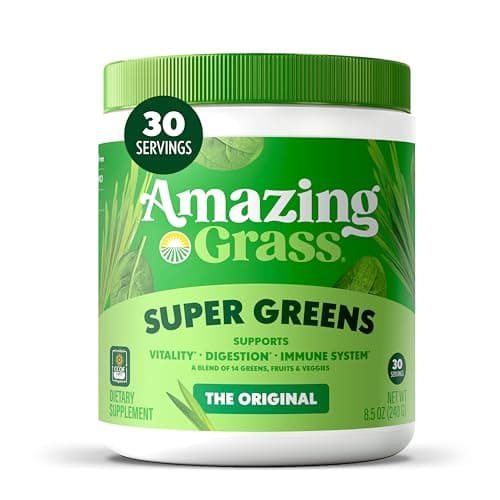
Amazing Grass — Amazing Grass Green Superfood (Original)
Wheatgrass, barley grass, alfalfa, spirulina, chlorella base · plus a fruit/veggie blend and added greens · ~1g fiber per scoop · lightly sweetened options and unflavored/original · vegan · USDA Organic on most SKUs · 30 servings
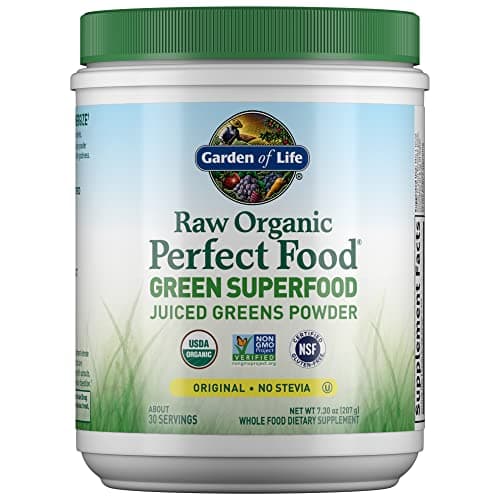
Garden of Life — Garden of Life RAW Organic Perfect Food Juiced Greens
At a glance
Tap a row to check price · tap a header to sort| # | Best for | Price | ||
|---|---|---|---|---|
| 1 | | Best overall | 8.4/10 | $22.47$24.99 |
| 2 | | Best organic | 8.2/10 | $34.29$48.99 |
| 3 | 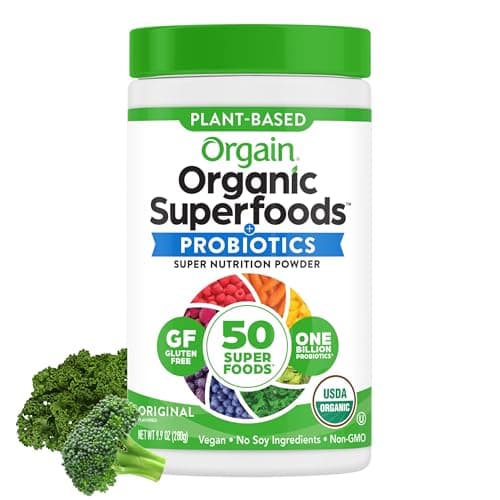 | Best-tasting daily driver | 8/10 | $16.35$19.99 |
| 4 | 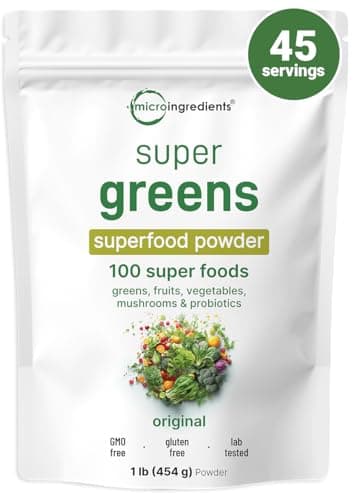 | Best big-tub value | 7.5/10 | $24.99 |
| 5 | 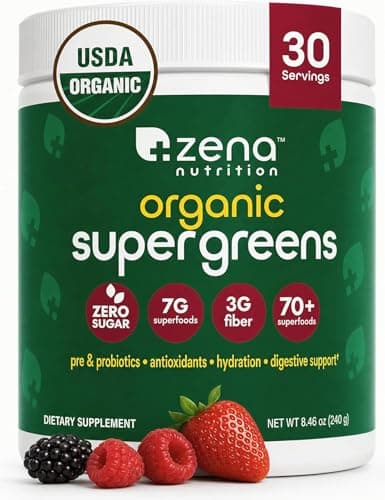 | Best low-sugar organic blend with real fiber | 7.4/10 | $29.99 |
| 6 | 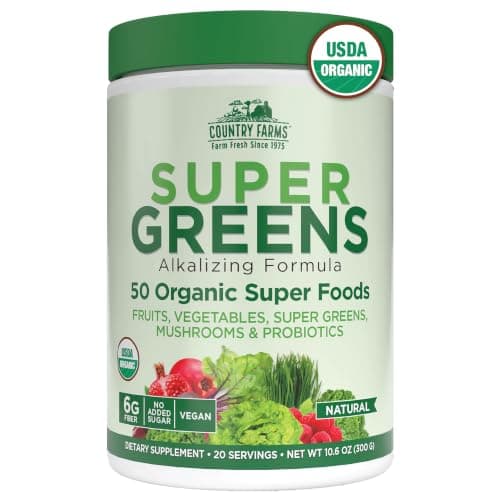 | Best budget mass-market pick | 7.2/10 | $17.99$19.99 |
| 7 | 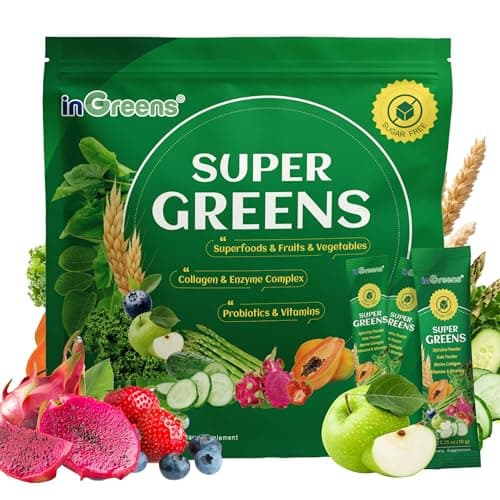 | Best for travel | 7/10 | $24.35 |
Prices pulled from Amazon as of Sep 16, 2026 and are subject to change. The price shown on Amazon at checkout applies.
How we scored
Every product below is scored on six metrics, 0-10 each, with the weighting described on how we review. The criteria specific to this category:
- Real greens, listed with amounts — not a proprietary blend. The single biggest tell of an honest greens powder is whether it lists how much of each ingredient you actually get. Most don't: they hide everything inside a 'proprietary blend' so you can't see if the kale, spirulina, and chlorella are a meaningful dose or a sprinkle for the label. We reward products that disclose amounts and lead with genuine greens (grasses, leafy greens, algae) over ones padded with cheap fillers and fruit sugar to make the scoop look impressive.
- Label transparency and honest claims. We mark down 'alkalizing,' 'detoxifying,' and disease-adjacent claims because they aren't supported — your body regulates its own pH, and detox is a marketing word, not a physiological service a powder provides. A trustworthy brand tells you the ingredients and doses and lets the food speak for itself. Added probiotics and enzymes are fine but are frequently underdosed and of unproven benefit in a powder, so we don't let them inflate a score.
- Third-party testing and contaminant screening. Greens — especially rice-based fillers and some algae — can carry heavy metals (lead, cadmium, arsenic) that concentrate from soil and water. This is a real, documented issue for the category, so independent testing (NSF, Informed Sport, or published third-party heavy-metal panels) is worth a genuine premium here in a way it isn't for a plain vitamin. Organic certification helps with pesticides but does not guarantee low heavy metals.
- Taste, mixability, and texture. A greens powder only works if you actually drink it daily, and many are grassy, chalky, or leave a swamp at the bottom of the glass. Products sweetened lightly (stevia, monk fruit, or a little fruit) go down easier; unflavored blends are cleaner but harder to stomach in water. We note where a powder needs to be blended into a smoothie to be palatable versus where it dissolves acceptably in a shaker.
- Fiber, sugar, and what's really doing the work. Much of any real benefit from a greens powder comes from its added vitamins/minerals and its fiber, not from exotic superfoods. We look at grams of fiber, and we watch added sugar and fruit powders that quietly turn a 'greens' drink into a low-dose smoothie mix. A short, honest ingredient list beats a sprawling one padded to hit a superfood count.
- Value per serving. Greens powders run from roughly $0.60 to over $2.00 a serving, and the expensive ones are rarely better in any way you can measure — they're better marketed. We calculate cost per serving and reward powders that deliver real greens and honest labeling cheaply, while flagging premium tubs whose price buys packaging and claims rather than more or better ingredients.
What to know before buying
- Eat the vegetables first; use the powder to fill gaps. This is the whole-food-first principle in one line. Whole vegetables give you fiber, water, phytonutrients, and satiety in a food matrix a dried powder can't reproduce, and they cost less per nutrient. A greens powder is a reasonable hedge for days you fall short — travel, a brutal work week, a picky stretch — but if you find yourself using it as an excuse to skip real produce, it's doing you harm, not good. Think of it the way the owner thinks of all supplements: it supplements a real diet, it doesn't replace one.
- 'Proprietary blend' is a red flag, not a feature. When a label lists a 'Super Greens Blend: 6,000 mg' and then names twenty ingredients under it without individual amounts, the brand is hiding the doses on purpose — almost always because the marquee ingredients are present in trivial amounts and the bulk is cheap filler. Prefer powders that disclose how much of each real green you get. If you can't tell whether the spirulina is a gram or a milligram, assume the worst and pay less.
- Ignore 'alkalizing' and 'detox' claims entirely. Your kidneys and lungs hold your blood pH in a tight range no food can meaningfully shift, and 'detox' is handled continuously by your liver and kidneys — a powder doesn't do it. These claims are pure marketing and, worse, they're often used to justify a higher price. Buy a greens powder for convenient micronutrients and fiber, not for a physiological service it can't deliver.
- Heavy metals are the one real safety issue — testing matters here. Independent labs have repeatedly found detectable lead and cadmium in greens and 'superfood' powders, because plants concentrate metals from soil and water and these products stack many plant sources. This is the rare case where paying for third-party testing (or a brand that publishes heavy-metal results) is genuinely worth it. It matters even more if you'd take a scoop every single day for years.
- Watch the fruit sugar and the serving math. A lot of 'greens' powders are really greens-and-fruit powders, and the fruit is there for taste and to pad the superfood count — which can add sugar and dilute the actual greens. Check the label for added sugar and for whether fruit powders dominate the blend. And do the cost-per-serving math: a tub that looks cheap at 20 servings can cost more per drink than a 'premium' 60-serving tub. Price per serving, not price per tub, is what you actually pay.
Our picks
Amazing Grass — Amazing Grass Green Superfood (Original)
Key specs: Wheatgrass, barley grass, alfalfa, spirulina, chlorella base · plus a fruit/veggie blend and added greens · ~1g fiber per scoop · lightly sweetened options and unflavored/original · vegan · USDA Organic on most SKUs · 30 servings
Pros
- Leads with actual grasses and algae (wheatgrass, barley, alfalfa, spirulina, chlorella) rather than padding the scoop with cheap rice filler, so more of what you're drinking is real greens
- One of the most widely tested and reviewed greens powders on the market, with organic certification on most versions, which lowers pesticide exposure
- Mixes acceptably in water and disappears completely in a smoothie; the original flavor is mild and grassy rather than cloyingly sweet
- Reasonable price per serving for a legitimately greens-forward blend — you're paying for greens, not just packaging
Cons
- Still uses a proprietary blend for parts of the formula, so you can't see the exact dose of every ingredient
- Organic certification reduces pesticide risk but does not guarantee low heavy metals — Amazing Grass publishes some testing, but check current third-party data if daily use is your plan
- Like all greens powders, the actual micronutrient payload per scoop is modest compared with a real bowl of vegetables
Amazing Grass — Amazing Grass Green Superfood (Original)
- Real greens8/10
- Label transparency6/10
- Testing7/10
- Taste/mix7/10
- Value8/10
Garden of Life — Garden of Life RAW Organic Perfect Food Juiced Greens
Key specs: USDA Organic and Non-GMO Project Verified · juiced grasses and vegetables (kale, spinach, broccoli, beet, carrot) plus sprouts · raw, vegan, gluten-free · no added sugar in the original · 30 servings
Pros
- One of the more genuinely greens-dominant blends — built on juiced grasses and vegetables rather than fruit sugar and rice filler
- USDA Organic and Non-GMO Project Verified, which meaningfully reduces pesticide exposure and is backed by a brand with a long testing track record
- No added sugar in the original, so it stays a greens drink rather than a low-dose smoothie mix
- Strong choice for anyone who wants the powder to actually resemble the vegetables it's replacing
Cons
- Noticeably 'green' and earthy in taste — most people will want to blend it into a smoothie rather than drink it in plain water
- Costs more per serving than mass-market blends; you're paying a real organic premium
- As with any concentrated plant powder, verify current heavy-metal testing if you plan to take it daily for years
Garden of Life — Garden of Life RAW Organic Perfect Food Juiced Greens
- Real greens9/10
- Label transparency7/10
- Testing8/10
- Taste/mix6/10
- Value6/10
Orgain — Orgain Organic Greens Powder + Probiotics
Key specs: USDA Organic · 50 superfoods blend (greens, veggies, fruits) plus added probiotics · lightly sweetened · vegan, gluten-free, dairy-free · widely stocked · about 0.62 lb tub
Pros
- Among the more palatable greens powders — mixes smoothly and tastes mild enough to drink in water, which is the difference between a tub you finish and one you abandon
- USDA Organic and easy to find at a fair price, making it a low-friction first greens powder
- The added flavor and light sweetness make it an easy sell for people transitioning off soda or sugary drinks
Cons
- Leans on a '50 superfoods' proprietary blend, so many marquee ingredients are present in token amounts you can't quantify
- The added probiotics are a modest dose and of unproven benefit in a shelf-stable powder — treat them as a bonus, not a reason to buy
- More of a greens-and-fruit blend than a pure greens powder, which softens the taste but dilutes the actual greens
Orgain — Orgain Organic Greens Powder + Probiotics
- Real greens6/10
- Label transparency6/10
- Testing7/10
- Taste/mix9/10
- Value8/10
Micro Ingredients — Micro Ingredients Super Greens (100 Superfoods, 1 lb)
Key specs: 1 lb tub · 100-superfoods blend of greens, vegetables, fruits, mushrooms and more · unflavored · vegan, no added sugar · large serving count for the price
Pros
- Very low cost per serving thanks to a large 1 lb tub — the value pick if you blend greens into a daily smoothie
- Unflavored and no added sugar, so it doesn't turn your drink into a dessert and stacks cleanly with protein or fruit
- Big ingredient roster covers a wide micronutrient spread for people whose diet is genuinely thin on plants
Cons
- '100 superfoods' is exactly the kind of count that signals a sprinkle of many things rather than a dose of any — most ingredients sit inside an undisclosed blend
- Unflavored greens are grassy and best hidden in a smoothie; plain water is a tough drink
- A budget brand stacking dozens of plant sources is precisely the profile where independent heavy-metal testing matters most — confirm current data before committing to daily use
Micro Ingredients — Micro Ingredients Super Greens (100 Superfoods, 1 lb)
- Real greens6/10
- Label transparency5/10
- Testing6/10
- Taste/mix6/10
- Value9/10
Zena Nutrition — Zena Nutrition Organic Super Greens
Key specs: USDA Organic · 70+ superfoods with spirulina and chlorella · 0g added sugar · ~3g fiber per serving · vegan, gluten-free
Pros
- Zero added sugar and a genuine ~3g of fiber per serving — closer to what a greens drink should be than the fruit-heavy blends
- Organic, with spirulina and chlorella contributing real greens rather than only fruit powders for taste
- A sensible pick for someone watching sugar who still wants an easy micronutrient hedge
Cons
- Still a large multi-ingredient blend, so exact per-ingredient doses aren't fully disclosed
- Less of an established testing track record than the biggest brands — check for published heavy-metal results
- Low sugar means a more earthy taste; expect to blend it rather than sip it in water
Zena Nutrition — Zena Nutrition Organic Super Greens
- Real greens7/10
- Label transparency6/10
- Testing6/10
- Taste/mix6/10
- Value7/10
Country Farms — Country Farms Super Greens (Original)
Key specs: USDA Organic · 50 organic superfoods with greens, fruits and veggies · lightly flavored · vegan · low price per serving · widely available in stores
Pros
- One of the cheapest organic greens powders you'll find, which lowers the barrier for someone testing whether they'll stick with the habit
- USDA Organic and stocked in mainstream stores, so it's easy to buy and easy to replace
- Mild flavor mixes acceptably for a beginner moving off a plants-light diet
Cons
- Heavy reliance on a '50 superfoods' proprietary blend with undisclosed doses — value comes at the cost of transparency
- Fruit powders do a lot of the flavoring work, nudging it toward a smoothie mix rather than a pure greens drink
- Budget positioning makes independent heavy-metal testing all the more important to verify
Country Farms — Country Farms Super Greens (Original)
- Real greens6/10
- Label transparency5/10
- Testing6/10
- Taste/mix7/10
- Value9/10
inGreens — inGreens Super Greens (Single-Serve Packets)
Key specs: 30 single-serve packets · 0g sugar · superfoods blend with greens · vegan · no tub to haul · convenient for hotels, offices, and gym bags
Pros
- Individual packets are genuinely useful for the exact person a greens powder is for — travelers and people who eat away from home and miss vegetables
- Zero sugar keeps it an honest greens drink rather than a sweetened one
- No scooping and no tub to carry; toss a few packets in a bag and you're covered on the road
Cons
- Per-serving cost is higher than a bulk tub — you pay for the convenience of the packaging
- Single-use packets create more waste than a tub and a reusable scoop
- Smaller brand, so scrutinize the ingredient disclosure and any available testing before committing
inGreens — inGreens Super Greens (Single-Serve Packets)
- Real greens6/10
- Label transparency6/10
- Testing6/10
- Taste/mix7/10
- Value6/10
Frequently asked questions
It depends entirely on what you expect. If you expect a greens powder to replace vegetables, 'detox' you, or transform your health, it's a waste of money — none of that is real. If you expect a convenient way to add some micronutrients and a little fiber on days you genuinely can't get vegetables in, a decent greens powder is a reasonable, low-cost insurance policy. The honest framing is that it's a supplement to a plant-forward diet, not a replacement for one. Someone who already eats plenty of vegetables gains almost nothing from it; someone stuck eating poorly gets a modest hedge. Buy it for what it is.
Related reading
- → How to choose a greens powder (what to actually look for)
- → How to read a supplement label (spot proprietary blends and testing marks)
- → Greens powder vs multivitamin (which fills the gap better)
- → AG1 vs Seed (greens scoop vs a dedicated synbiotic)
- → Best multivitamins (the cheaper way to cover micronutrient gaps)
- → Best fiber supplements (if fiber is what you're really after)
- → Best probiotics (buy a real dose, not the pinch in a greens scoop)
Sources
- Greens powders: are they worth it? (greens powders do not replace vegetables; benefits are modest and marketing outruns evidence) — Cleveland Clinic — Health Essentials
- Should you take a greens powder? (a powder is not a substitute for whole vegetables; watch proprietary blends and unproven claims) — Harvard Health Publishing
- Dietary Supplements: What You Need to Know (supplements complement but do not replace a healthy diet; 'proprietary blend' hides individual amounts) — NIH Office of Dietary Supplements
- Heavy metals in protein and 'superfood' powders — independent testing has found detectable lead and cadmium in plant-based powders — Clean Label Project / consumer testing reports
Last verified: August 2, 2026. See our editorial policy and how we review for details on scoring and update cadence. Canonical URL: https://trustedhealthgear.com/reviews/best-greens-powder.
Amazing Grass — Amazing Grass Green Superfood (Original)
$22.47 · on Amazon