AG1 vs Seed: Do You Actually Need Either One?
These two get compared constantly because they occupy the same slot in people's heads: the premium daily subscription that is supposed to be your health foundation. But they are not the same kind of product, and pretending otherwise is how people end up paying twice for one benefit. AG1 is a powdered greens-and-multivitamin scoop — the Next Gen formula is a 13 g serving with more than 75 ingredients, including a 10 billion CFU probiotic blend of four Lactobacillus strains and one Bifidobacterium. Seed's DS-01 Daily Synbiotic is a two-capsule probiotic with a prebiotic attached: 24 named bacterial strains at 53.6 billion AFU, plus a non-fermenting polyphenol prebiotic concentrated from Indian pomegranate. One is trying to be your whole supplement shelf in a glass. The other does a single job. So the useful question is not which one wins a head-to-head — it is whether the probiotic bundled into AG1 is enough to skip a dedicated one, whether either belongs in your budget before the food is fixed, and which company is actually willing to tell you what is in the product.
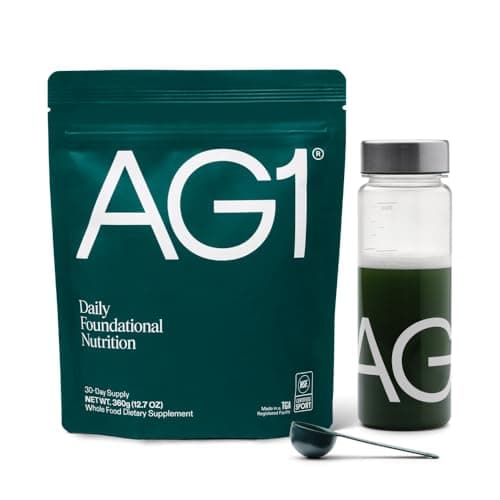
Athletic Greens — Athletic Greens AG1 Daily Foundational Nutrition
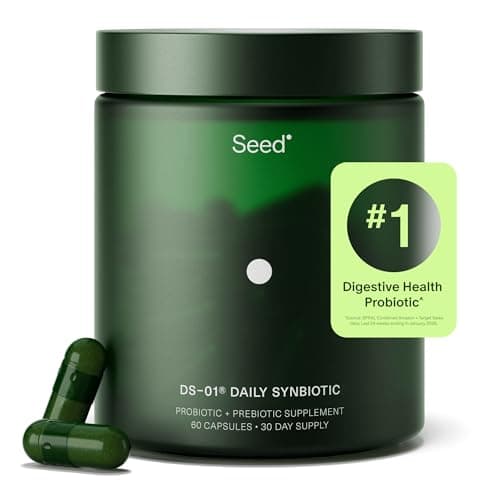
The verdict
Seed is the better product on the axis this site cares most about, which is whether you can audit what you are buying. It publishes all 24 strain designations, guarantees its count at end of shelf life rather than at the factory, and does one thing. AG1's real advantage is genuine and worth naming: it is NSF Certified for Sport, which is a meaningful mark and rare in the greens aisle. But you are paying a premium for a formula whose individual ingredient doses you are not permitted to see, because they sit inside proprietary blends — and a 10 billion CFU, five-strain probiotic is a supporting player in a scoop, not a replacement for a dedicated probiotic. The bigger point is that this is not really an either/or. If you want a probiotic, buy a probiotic. If you want micronutrient insurance, a USP Verified multivitamin costs a fraction of AG1. And neither of these is a substitute for eating vegetables, hitting your protein, training hard, and sleeping — which is where the returns actually are. "Neither" is a completely legitimate answer here.
Side-by-side
| Attribute | AG1 | Seed DS-01 |
|---|---|---|
| What it actually is | A greens and multivitamin powder with a probiotic included | A synbiotic — probiotic plus prebiotic — in a capsule |
| Daily serving | One 13 g scoop mixed in water (Next Gen formula) | Two capsules |
| Scope of formula | More than 75 ingredients | 24 named bacterial strains plus one prebiotic compound |
| Live-culture dose | 10 billion CFU across 5 strains (4 Lactobacillus, 1 Bifidobacterium) | 53.6 billion AFU across 24 strains |
| How that dose is measured | CFU — colony-forming units, counted by plate culture | AFU — active fluorescent units, counted by flow cytometry |
| When the count is guaranteed | Not stated as an end-of-shelf-life figure | At end of shelf life, per the brand |
| Dose transparency | Ingredients are named but grouped into proprietary blends, so individual amounts are not disclosed | Full strain designations published |
| Third-party certification | NSF Certified for Sport | No NSF Certified for Sport mark |
| Prebiotic component | Not the product's stated focus | Non-fermenting polyphenol prebiotic from Indian pomegranate |
| Storage | Shelf-stable powder | Shelf-stable — no refrigeration required |
| Best described as | Broad, convenient, expensive nutrient insurance | A single-purpose, unusually transparent probiotic |
| Where to buy |
Prices pulled from Amazon as of October 18, 2026 and are subject to change. The price shown on Amazon at checkout applies.
Who should pick which
Pick AG1
- Drug-tested athletes who want a greens product with NSF Certified for Sport status — that certification screens for banned substances and very few products in this category carry it.
- People who genuinely will not take several separate supplements and know it, and who value one scoop covering a broad micronutrient panel over knowing the exact dose of each item.
- Travelers and shift workers who want a single, mixable powder rather than a stack of bottles.
Pick Seed DS-01
- Anyone who specifically wants a probiotic, rather than a probiotic bundled into something else as a marketing bullet.
- People who want to look up the exact strain designations — the letters and numbers after the species name — because that is the level at which probiotic research actually applies.
- Buyers who care that the live-culture count is guaranteed at end of shelf life instead of at the time of manufacture, which is the more honest way to state it.
- Anyone who wants a shelf-stable capsule that does not need refrigeration and does not have to be mixed into a drink.
These aren't the same product — and that's most of the answer
The comparison exists because of marketing symmetry, not product symmetry. Both are premium direct-to-consumer subscriptions, both are sold as the foundation of a daily routine, and both are pitched at the same person. Underneath that, they barely overlap. AG1's Next Gen formula is a 13 g powder with more than 75 ingredients — vitamins, minerals, a greens blend, adaptogens, and a probiotic — designed to cover a wide surface area at once. Seed's DS-01 is two capsules containing 24 named bacterial strains and a prebiotic, designed to do one thing. The only genuine point of overlap is the probiotic, and it is not a close contest in intent: AG1 includes 10 billion CFU across five strains as one component among dozens, while that component is Seed's entire product. So before arguing about which is better, get the framing right. If your reason for buying is "I want to support my gut," you are shopping for a probiotic, and AG1 is an expensive way to buy a small one. If your reason is "I don't eat many vegetables and I want insurance," you are shopping for a multivitamin, and Seed does not do that at all. People who buy both are usually paying twice for one intention they never made explicit.
The number trap: 53.6 billion AFU is not simply more than 10 billion CFU
This is the single most common error in every AG1-versus-Seed comparison online, and it is worth slowing down for. The two numbers are produced by different laboratory methods and are not interchangeable units. CFU — colony-forming units — is the traditional measure the NIH Office of Dietary Supplements describes as the standard on supplement labels: "The number of viable cells in a probiotic supplement is indicated by the number of colony-forming units (CFU) listed on the label." It is generated by plating a sample and counting the colonies that grow. AFU — active fluorescent units — comes from flow cytometry, in which cells are tagged with fluorescent viability stains and counted individually as they pass a laser. The method is standardized for lactic acid bacteria under ISO 19344 | IDF 232, which specifies quantification of lactic acid bacteria and probiotic strains by flow cytometry. The practical difference is what each method can see. Plate counting only registers cells that will grow into a colony under specific lab conditions; flow cytometry also registers cells that are alive and metabolically active but will not culture — the viable-but-non-culturable population. Seed is explicit that this is why it uses the method, stating that flow cytometry lets it "calculate a more precise measurement of all viable cells, including ones that are viable but not necessarily culturable." That is a defensible choice. It also means a flow-cytometry count on a given sample can come out higher than a plate count on the same sample. So Seed's 53.6 billion AFU is a larger number than AG1's 10 billion CFU, but part of that gap is the ruler, not the product. The honest reading is that Seed is delivering substantially more live cells across far more strains — just not by a clean 5.4x, and anyone quoting that ratio is comparing a measurement in inches to one in centimeters without converting.
Proprietary blends: what AG1's label is legally allowed not to tell you
AG1 names its ingredients. What it does not do is tell you how much of most of them you are getting, because they are grouped into proprietary blends. This is legal and extremely common. Under the FDA's dietary supplement labeling rule at 21 CFR 101.36, a proprietary blend has to declare the total weight of the blend and list its dietary ingredients in descending order of predominance — but the individual amount of each ingredient inside the blend does not have to be disclosed. Registered dietitian Chelsea Rae Bourgeois put the consequence plainly in BarBend's review of the product: "They list the ingredients in every blend. They just don't tell you how much of each ingredient is included." For a product whose pitch is comprehensiveness, that is a real problem, because comprehensiveness is exactly the claim you cannot verify. A blend can lead with a few cheap, heavy ingredients and finish with pinches of the expensive ones you are actually buying it for, and the label will look identical either way. The same review flags how uneven the disclosed portion is — 556 percent of the Daily Value for vitamin C sitting alongside 6 percent of the DV for iron and 7 percent for magnesium. This site's bias is stated openly in our review standards: minimal, fully disclosed labels beat long ones with hidden math. On this axis Seed is the opposite kind of product. It publishes the full strain designations for all 24 strains — not just "Lactobacillus plantarum" but the specific strain identifier — which matters because, as ODS notes, "the effects of probiotics can be specific to certain probiotic strains," so recommendations "need to be strain-specific." Without the designation, published research on a strain cannot be connected to the capsule in your hand.
What the evidence actually supports for a healthy person
Both companies sell the idea that a daily dose is foundational maintenance for a healthy adult. The evidence is more restrained than either pitch. On probiotics, the NIH Office of Dietary Supplements is direct: "There are currently no formal recommendations for or against the use of probiotics in healthy people." Where the evidence is strongest, it is specific rather than general — LGG or Saccharomyces boulardii started within two days of a first antibiotic dose to reduce the risk of antibiotic-associated diarrhea, specific combinations in preterm infants, and modest symptom improvement in irritable bowel syndrome. ODS also notes that probiotics "may transiently colonize the human gut mucosa in highly individualized patterns, depending on the baseline microbiota, probiotic strain, and gastrointestinal tract region." Transiently is the operative word: this is a product that works while you take it, not one that renovates your gut permanently. Add the strain-specificity point and the picture is clear — a probiotic is a reasonable, low-risk purchase for a defined reason, and a weak purchase as vague daily insurance. The same discipline applies to AG1's side of the ledger. A greens-and-vitamin powder can plug genuine micronutrient gaps, and if you are short on vitamin D or B12 that is worth fixing. What it cannot do is stand in for produce: the total greens content of a 13 g scoop is a rounding error against actual vegetables, and fiber — the thing that most reliably moves gut health — is not what you are buying either way. Whole-foods-first is not a slogan here. Fix the diet, then decide what gap is left.
Where AG1 clearly wins: NSF Certified for Sport
Give credit where it is earned. AG1 Next Gen is NSF Certified for Sport, and in a category this crowded that is a legitimate differentiator rather than a badge. The certification is aimed at competitive athletes subject to drug testing, and it screens finished product for banned substances — a real concern with any product containing a long list of botanicals and adaptogens, where contamination risk is highest and where a positive test ends a season. Seed does not carry that mark. If you compete in a tested sport, that asymmetry may settle the question by itself, and it is the one place where AG1's price premium buys something concrete and verifiable rather than something atmospheric. It is worth being precise about what the mark does and does not prove, though. NSF Certified for Sport tells you the product was tested against a banned-substances list and that what is in the tub matches what the label claims at the certification level. It does not tell you that 75 ingredients at undisclosed individual doses will do more for you than a short list at disclosed ones, and it does not resolve the proprietary-blend problem. It is a contamination and label-integrity guarantee, which is valuable, rather than an efficacy guarantee, which no supplement certification provides.
How to choose — including the case for neither
Start by naming the job. If the job is gut health, buy the probiotic: Seed is the more transparent product, and our probiotic rubric ranks it near the top specifically for publishing strain designations and an end-of-shelf-life count. Note that our top-scoring pick on that page is Culturelle, on the strength of LGG being one of the most-studied single strains in published human trials — a reminder that more strains is not automatically better, and that a cheaper single-strain product with deep research behind it is a serious option. If the job is micronutrient insurance, AG1 is an expensive way to buy it. A USP Verified multivitamin costs a fraction per day and gives you a fully disclosed panel; our multivitamin roundup covers what that mark actually proves. If the job is more vegetables, no scoop solves it, and our greens powder roundup says so directly. And if you compete in a tested sport and want a greens product, AG1's NSF Certified for Sport status is the strongest single reason on this page to pick it. The uncomfortable option deserves equal billing: for a lot of people the right move is neither. Both are premium subscriptions in a category where the returns come from food, training, and sleep long before they come from powder. Check the current price on both before deciding — these are recurring costs, not one-time buys, and a year of either is real money that could go to protein and produce instead.
Frequently asked questions
For most purposes, no. AG1's Next Gen formula includes 10 billion CFU across five strains — four Lactobacillus and one Bifidobacterium — as one component of a 75-plus ingredient scoop. Seed's DS-01 is 24 named strains at 53.6 billion AFU and nothing else. If you have a specific reason to take a probiotic, the dedicated product is the one built for the job, and it publishes the strain designations you would need to connect any published research to what you are swallowing. AG1's probiotic content is best understood as a bonus inside a greens powder rather than a substitute for a probiotic.
Related reading
- → Best probiotics (our full rubric-scored roundup)
- → Best greens powders (where AG1 sits against the field)
- → Best multivitamins (the cheaper way to buy micronutrient insurance)
- → Seed vs Culturelle (24 strains vs the most-studied single strain)
- → Greens powder vs multivitamin
- → Best prebiotic supplements
Sources
- Probiotics — Fact Sheet for Health Professionals ("The number of viable cells in a probiotic supplement is indicated by the number of colony-forming units (CFU) listed on the label"; effects "can be specific to certain probiotic strains" so recommendations "need to be strain-specific"; probiotics "may transiently colonize the human gut mucosa in highly individualized patterns"; "There are currently no formal recommendations for or against the use of probiotics in healthy people") — NIH Office of Dietary Supplements
- ISO 19344:2015 | IDF 232 — Milk and milk products: Starter cultures, probiotics and fermented products — Quantification of lactic acid bacteria by flow cytometry (the standard defining active fluorescent unit / AFU measurement) — International Organization for Standardization, 2015
- 21 CFR 101.36 — Nutrition labeling of dietary supplements (proprietary blends must declare the total weight of the blend and list ingredients in descending order of predominance; individual ingredient amounts within the blend are not required) — US Food and Drug Administration / eCFR
- CFU vs. AFU: How to Decipher Probiotic Labels ("we use flow cytometry to measure AFU ... we are able to calculate a more precise measurement of all viable cells, including ones that are viable but not necessarily culturable") — Seed
- AG1 Next Gen Review — formula specifics and dietitian commentary (75+ ingredients; 10 billion CFU probiotic blend of Lactobacillus rhamnosus, L. acidophilus, Bifidobacterium lactis, L. casei and L. plantarum; NSF Certified for Sport; "They list the ingredients in every blend. They just don't tell you how much of each ingredient is included" — Chelsea Rae Bourgeois, RD) — BarBend, 2026
Athletic Greens — Athletic Greens AG1 Daily Foundational Nutrition
$99.99 · on Amazon