The Best Prebiotic Supplements for Gut Health
A prebiotic is one of the more legitimate supplements on this site, and also one of the most oversold — so buying well means understanding exactly what it is. A prebiotic is not a probiotic: a probiotic adds live bacteria, while a prebiotic is a specific fermentable fiber or compound that feeds the beneficial bacteria you already have, letting them grow and produce short-chain fatty acids like butyrate that your gut lining uses. The main studied prebiotics are inulin and FOS (from chicory root), GOS (galactooligosaccharides, which has the deepest human research), resistant starch (found in cooked-and-cooled potatoes and rice, green bananas, and unmodified potato starch), and gentler fibers like acacia and partially hydrolyzed guar. Here's the honest framing the owner's philosophy demands: whole food comes first. Prebiotics are abundant and cheap in onions, garlic, leeks, asparagus, oats, slightly-green bananas, legumes, and cooled potatoes and rice, and a diverse plant-forward diet is the single best thing you can do for your gut microbiome — no powder replaces that. A supplement is a convenient top-up for people whose diet is thin on those foods, or who want to target a specific fiber. The one real catch, and the reason people quit, is fermentation: because gut bacteria ferment prebiotics, they can cause gas and bloating, especially inulin and FOS at higher doses, and people with IBS or a FODMAP sensitivity often react badly — which is exactly why gentler, slower-fermenting options like acacia and PHGG exist. So the smart approach is to start low, ramp up slowly, and match the prebiotic type to your gut. We ranked these on the strength of the prebiotic evidence, tolerability, the type and form, label cleanliness, and value — and we're clear throughout that this is a supportive nudge for a food-first gut strategy, not a cure for any digestive condition. If you have a diagnosed GI disorder, talk to your doctor before adding fermentable fiber.
Top pick
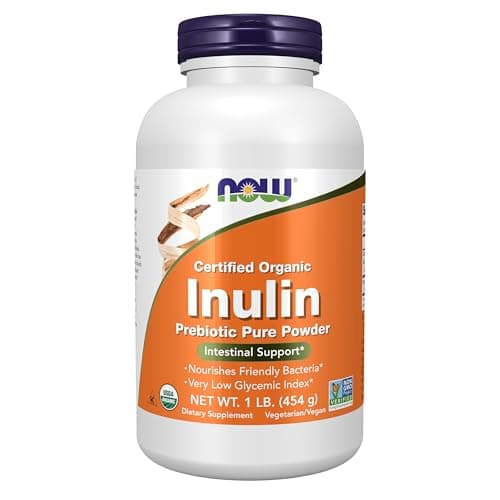
NOW — NOW Inulin Prebiotic Pure Powder (Organic)
Certified Organic inulin (FOS) from chicory root · single-ingredient powder · Non-GMO Project Verified · dissolves in water or food · GMP-manufactured · scalable dosing
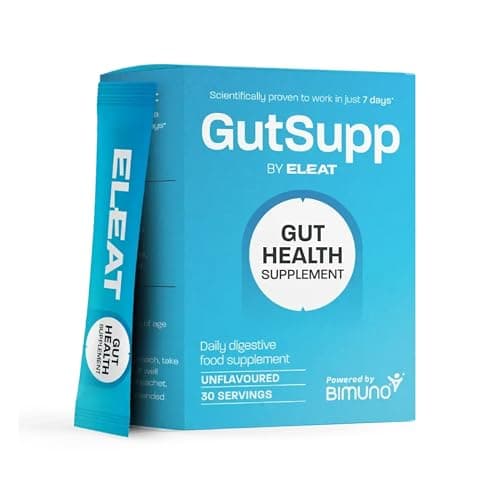
Bimuno — Bimuno GutSupp Prebiotic (GOS)
At a glance
Tap a row to check price · tap a header to sort| # | Best for | Price | ||
|---|---|---|---|---|
| 1 | 1. NOW — NOW Inulin Prebiotic Pure Powder (Organic)Best overall | Best overall | 8.5/10 | |
| 2 | 2. Bimuno — Bimuno GutSupp Prebiotic (GOS)Best evidence-backed prebiotic | Best evidence-backed prebiotic | 8.3/10 | |
| 3 | 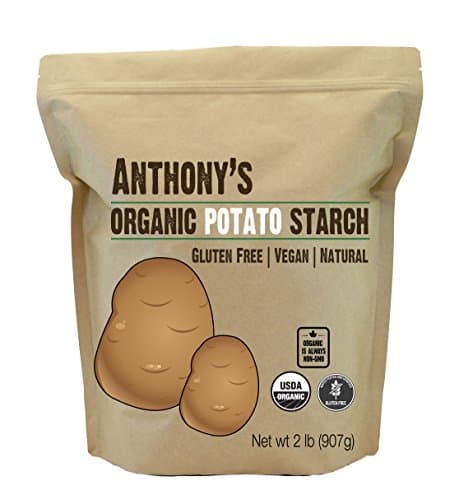 3. Anthony's — Anthony's Organic Potato Starch (Unmodified)Best resistant starch | Best resistant starch | 8/10 | |
| 4 | 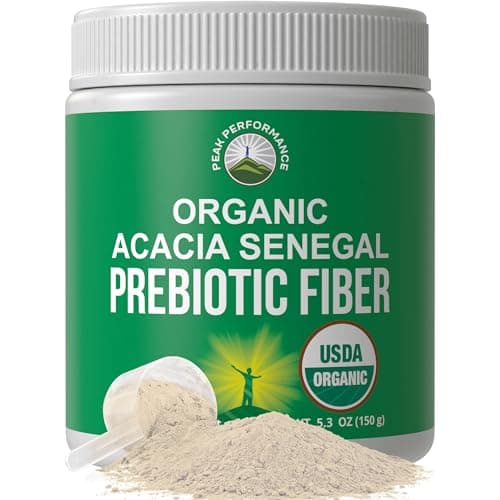 4. Peak Performance — Peak Performance Organic Acacia Senegal Prebiotic FiberBest gentle option | Best gentle option | 7.9/10 | |
| 5 | 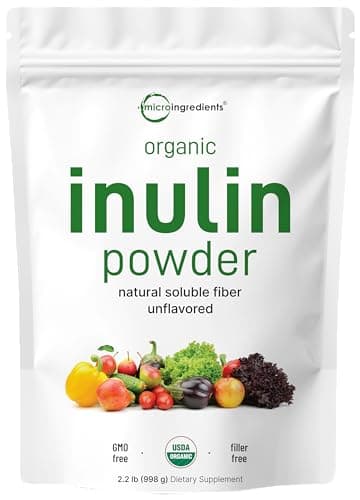 5. Micro Ingredients — Micro Ingredients Organic Inulin FOS Fiber (2.2 lb)Best big-tub value | Best big-tub value | 7.6/10 | |
| 6 | 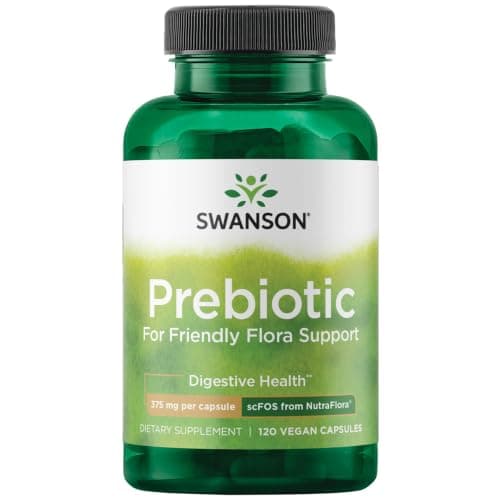 6. Swanson — Swanson Prebiotic Fiber Capsules (750 mg)Best capsule | Best capsule | 7.3/10 | |
| 7 | 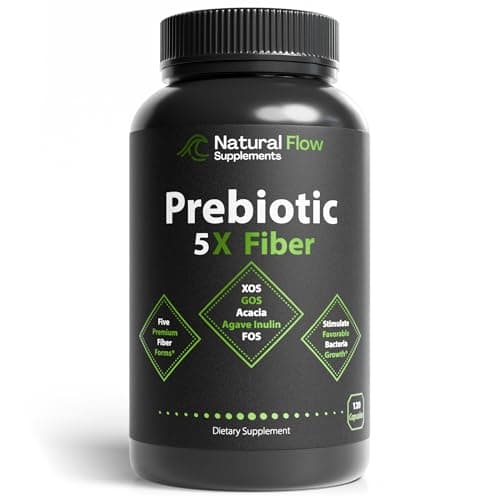 7. Natural Flow — Natural Flow 5X Prebiotic Fiber ComplexBest multi-prebiotic blend | Best multi-prebiotic blend | 7.1/10 |
Prices pulled from Amazon as of Sep 24, 2026 and are subject to change. The price shown on Amazon at checkout applies.
How we scored
Every product below is scored on six metrics, 0-10 each, with the weighting described on how we review. The criteria specific to this category:
- Prebiotic type and the evidence behind it. Not all 'prebiotic' fibers are equal. GOS (galactooligosaccharides) has some of the deepest human research for reliably increasing beneficial Bifidobacteria; inulin and FOS from chicory are well-studied and cheap but the most gas-producing; resistant starch feeds butyrate-producing bacteria and has metabolic interest; acacia and partially hydrolyzed guar are gentler, slower-fermenting fibers with a milder prebiotic effect. We reward products that use a genuine, named, studied prebiotic at a sensible dose over vague 'prebiotic blend' marketing.
- Tolerability — the reason people quit. Because prebiotics are fermented by gut bacteria, they produce gas, and some (inulin, FOS) far more than others. We weight tolerability heavily: the best product for you is the one you can actually take daily without misery. We reward gentler, slower-fermenting fibers (acacia, PHGG) and clear low-and-slow dosing guidance, and we flag that people with IBS or FODMAP sensitivity should be cautious with inulin/FOS specifically.
- Type, form, and mixability. Prebiotics come as powders (mix into water, coffee, or food), capsules (convenient, but you need several to reach a dose), and blends. Inulin and acacia dissolve fairly clear; resistant starch (like raw potato starch) must be used cold and unheated to keep its resistant structure. We note form and how easily each fits into a daily routine, since a prebiotic only works if you keep taking it.
- Clean label and honest claims. Prebiotics attract a lot of overreach — 'heals leaky gut,' 'detox,' broad immune cure-alls, and probiotic-blend padding. We reward short, honest labels that name the actual prebiotic and dose, and we don't let marketing claims inflate a score. Added sugar in flavored versions and unnecessary blend ingredients count against a product.
- Dose per serving. Effective prebiotic doses in studies are often around 3-5 g/day for inulin and GOS (resistant starch is used higher), so we look at whether a serving delivers a meaningful, research-relevant amount and whether it's easy to titrate up from a small starting dose. A capsule that provides a fraction of a gram is a marketing dose that won't meaningfully shift your microbiome.
- Value per serving. Prebiotic fibers are inexpensive raw materials (inulin especially), so value comes down to cost per gram of actual prebiotic, not per bottle. We reward bulk powders that deliver a real dose cheaply and note where you're paying a premium for a branded, better-studied ingredient (like GOS) or for the convenience of capsules rather than for more or better prebiotic.
What to know before buying
- A prebiotic is not a probiotic — know which problem you're solving. This is the confusion the whole category trades on. A probiotic supplies live bacteria; a prebiotic supplies the fermentable fiber that feeds the beneficial bacteria you already have so they can grow and make short-chain fatty acids. They're complementary, not interchangeable, and a product that combines them is called a synbiotic. If your goal is to nourish and diversify your existing microbiome, a prebiotic (or better, prebiotic-rich food) is the tool; if you want to introduce specific strains, that's a probiotic. Don't buy a prebiotic expecting it to do a probiotic's job.
- Whole food is the best prebiotic, and it's cheaper. Onions, garlic, leeks, asparagus, oats, slightly-green bananas, legumes, and cooked-then-cooled potatoes and rice are loaded with prebiotic fibers, and a diverse, plant-forward diet is the most effective, best-evidenced way to feed a healthy microbiome — far more so than any single isolated fiber in a tub. Use a supplement to top up when your diet is genuinely low on these foods or to target a specific fiber, not as a substitute for eating plants. That's the same whole-food-first rule this site applies to every supplement.
- Start low and ramp up slowly — this is where people fail. Because gut bacteria ferment prebiotics into gas, taking a full dose on day one, especially of inulin or FOS, is a recipe for bloating and discomfort that makes people quit. Begin with a small dose (a gram or less), give your gut a week or two to adapt, and build up gradually toward the studied 3-5 g range. Your microbiome adjusts to a consistent prebiotic over time, and a slow ramp lets it. Patience beats a heroic first dose every time.
- If you have IBS or a sensitive gut, choose the gentle fibers. Inulin and FOS are high-FODMAP and are among the most likely fibers to trigger gas, bloating, and cramping in people with IBS or FODMAP sensitivity. If that's you, avoid starting with chicory inulin and instead reach for gentler, slower-fermenting, low-FODMAP-friendly options like acacia (Senegal) fiber or partially hydrolyzed guar, which still feed beneficial bacteria with far less fermentation drama. Matching the prebiotic to your gut matters more than which brand you buy.
- This is YMYL — mind conditions and interactions. Prebiotics are food-derived and safe for most people, but 'natural' doesn't mean 'no downsides.' If you have a diagnosed GI condition (IBS, SIBO, IBD), are prone to bloating, or are managing a health issue, talk to your doctor before adding fermentable fiber — for some conditions, feeding gut bacteria more fermentable substrate can worsen symptoms. As with any fiber, take prebiotics with enough water and space them from medications. And treat persistent digestive symptoms as something to evaluate medically, not to self-treat with prebiotic powder.
Our picks
NOW — NOW Inulin Prebiotic Pure Powder (Organic)
Key specs: Certified Organic inulin (FOS) from chicory root · single-ingredient powder · Non-GMO Project Verified · dissolves in water or food · GMP-manufactured · scalable dosing
Pros
- Pure, single-ingredient chicory inulin (FOS) — one of the most-studied prebiotics — with no fillers, from NOW, a reputable and well-audited manufacturer
- Certified Organic and Non-GMO Verified, and cheap per gram, so reaching the studied 3-5 g dose costs very little
- Powder lets you start small and ramp up slowly, which is exactly how you should introduce a fermentable prebiotic
- Dissolves reasonably well into water, coffee, or food for an easy daily habit
Cons
- Inulin and FOS are among the most gas-producing prebiotics — go low and slow, and skip it if you have IBS or FODMAP sensitivity
- Not a low-FODMAP option, so it's the wrong first choice for a sensitive gut
- Plain inulin has a faintly sweet taste some people notice
NOW — NOW Inulin Prebiotic Pure Powder (Organic)
- Prebiotic evidence8/10
- Tolerability6/10
- Type/form8/10
- Clean label9/10
- Value10/10
Bimuno — Bimuno GutSupp Prebiotic (GOS)
Key specs: Galactooligosaccharides (GOS) prebiotic · the specific prebiotic class with some of the deepest human research on Bifidobacteria · tasteless, soluble · daily-serving format
Pros
- GOS is arguably the best-researched prebiotic for reliably increasing beneficial Bifidobacteria, and Bimuno is the branded GOS that features in much of that research
- Tasteless and soluble, so it mixes invisibly into any drink or food
- A targeted, evidence-first choice if you want the prebiotic with the strongest human data rather than the cheapest fiber
Cons
- By far the most expensive option here per serving — you pay a real premium for the branded, studied GOS
- Still a fermentable prebiotic, so introduce it gradually to avoid gas
- The clinical benefits of any prebiotic remain modest and individual — even the best-studied one isn't a cure
Bimuno — Bimuno GutSupp Prebiotic (GOS)
- Prebiotic evidence10/10
- Tolerability7/10
- Type/form8/10
- Clean label8/10
- Value4/10
Anthony's — Anthony's Organic Potato Starch (Unmodified)
Key specs: Unmodified potato starch = raw resistant starch (RS2) · organic, gluten-free, non-GMO · 2 lb bag · must be used cold/unheated to keep the resistant structure · very low cost per serving
Pros
- Raw, unmodified potato starch is a classic, inexpensive source of resistant starch (RS2), which feeds butyrate-producing bacteria — a different mechanism from inulin
- Organic and single-ingredient, and one of the cheapest prebiotics per serving by a wide margin
- Whole-food-adjacent: the same kind of resistant starch you'd get from cooked-and-cooled potatoes, in a convenient scoopable form
Cons
- Must be taken cold and unheated (in water or a cool smoothie) — cooking it destroys the resistant starch, turning it into regular digestible starch
- Gritty texture that doesn't fully dissolve; most people stir it into water and drink quickly
- Like all prebiotics it can cause gas as your microbiome adapts, so ramp up slowly from a small spoonful
Anthony's — Anthony's Organic Potato Starch (Unmodified)
- Prebiotic evidence7/10
- Tolerability7/10
- Type/form6/10
- Clean label9/10
- Value10/10
Peak Performance — Peak Performance Organic Acacia Senegal Prebiotic Fiber
Key specs: Organic acacia (Senegal) soluble fiber · slow-fermenting, gentler prebiotic · unflavored, dissolves cleanly · often better tolerated than inulin · vegan
Pros
- Acacia (gum arabic) is a slow-fermenting soluble fiber that feeds beneficial bacteria with far less gas than inulin — the friendlier choice for a sensitive gut
- Organic, unflavored, and dissolves cleanly into water or food with little grit
- A sensible first prebiotic for people who've been burned by the bloating of chicory inulin
Cons
- Its prebiotic effect is milder and slower than inulin or GOS — gentler, but less dramatic
- Costs more per gram than plain inulin
- Still ramp up gradually; even gentle fibers can cause some gas at first
Peak Performance — Peak Performance Organic Acacia Senegal Prebiotic Fiber
- Prebiotic evidence7/10
- Tolerability10/10
- Type/form8/10
- Clean label8/10
- Value6/10
Micro Ingredients — Micro Ingredients Organic Inulin FOS Fiber (2.2 lb)
Key specs: Organic inulin FOS from chicory · 2.2 lb tub · water-soluble, quick-mixing · unflavored, no added sugar · large serving count for the price
Pros
- A big 2.2 lb tub of organic chicory inulin drives the cost per serving very low for people who take a prebiotic daily
- Water-soluble and unflavored, so it stirs into drinks or food without fuss
- Same well-studied inulin/FOS prebiotic as the top pick, in a value-sized package
Cons
- Inulin/FOS is high-FODMAP and gas-producing — not for IBS-prone guts, and everyone should ramp slowly
- A large tub is only value if you tolerate inulin; buy a small size first to test
- Less established testing profile than the biggest brands
Micro Ingredients — Micro Ingredients Organic Inulin FOS Fiber (2.2 lb)
- Prebiotic evidence8/10
- Tolerability6/10
- Type/form8/10
- Clean label8/10
- Value9/10
Swanson — Swanson Prebiotic Fiber Capsules (750 mg)
Key specs: Prebiotic fiber in vegan capsules · 750 mg each · no mixing or grit · from an established supplement brand · take with water
Pros
- Delivers prebiotic fiber in a convenient, grit-free capsule for people who won't stir a powder into a drink
- Portable and easy to take consistently, which is what actually makes a prebiotic habit stick
- From a long-established, reasonably priced supplement brand
Cons
- You need several capsules to reach a meaningful prebiotic dose, which raises the cost per gram versus bulk powder
- Less flexible than powder for a slow, precise ramp-up
- Capsule fiber is still fermentable, so introduce it gradually like any prebiotic
Swanson — Swanson Prebiotic Fiber Capsules (750 mg)
- Prebiotic evidence7/10
- Tolerability7/10
- Type/form7/10
- Clean label7/10
- Value7/10
Natural Flow — Natural Flow 5X Prebiotic Fiber Complex
Key specs: Capsule blend of multiple prebiotic fibers (inulin/FOS and others) · aims to feed a broader range of bacteria · vegan capsules · convenient daily dose
Pros
- Combines several prebiotic fibers in one capsule, on the reasonable theory that different bacteria prefer different substrates
- Convenient capsule format with no mixing, for a simple daily routine
- A one-stop option for people who don't want to buy separate inulin, GOS, and resistant starch
Cons
- A 'blend' can obscure how much of each fiber you actually get — check the label for real per-fiber amounts
- Contains inulin/FOS, so it can still cause gas; ramp up slowly and skip if you're FODMAP-sensitive
- Multi-ingredient capsules cost more per gram of prebiotic than a single-ingredient bulk powder
Natural Flow — Natural Flow 5X Prebiotic Fiber Complex
- Prebiotic evidence6/10
- Tolerability6/10
- Type/form7/10
- Clean label6/10
- Value7/10
Frequently asked questions
A probiotic supplies live beneficial bacteria; a prebiotic supplies the fermentable fiber that feeds the beneficial bacteria you already have, so they can grow and produce short-chain fatty acids like butyrate. Think of it as the difference between adding new plants to a garden (probiotic) and fertilizing the soil for the plants already there (prebiotic). They're complementary — a product combining both is called a synbiotic — but they solve different problems. If you want to nourish and diversify your existing microbiome, a prebiotic (or prebiotic-rich food) is the tool; if you want to introduce specific bacterial strains, that's a probiotic. Buying one expecting it to do the other's job is the most common mistake in this category.
Related reading
- → How much fiber do you need per day?
- → How to read a supplement label
- → Greens powder vs multivitamin
- → Best probiotics (the live-bacteria companion)
- → Best fiber supplements (for regularity and bulk)
- → Best greens powders (food-based gut support)
- → Best supplements for gut health (the whole category, ranked on outcomes)
Sources
- The International Scientific Association for Probiotics and Prebiotics (ISAPP) consensus statement on the definition and scope of prebiotics (Gibson et al., 2017 — prebiotic = a substrate selectively utilized by host microorganisms conferring a health benefit) — Nature Reviews Gastroenterology & Hepatology (ISAPP)
- Prebiotics — types (inulin/FOS, GOS, resistant starch), mechanisms (Bifidobacteria, short-chain fatty acids), evidence and tolerability — Examine.com
- Prebiotics vs probiotics — the difference, food sources, and how prebiotic fiber feeds gut bacteria — Johns Hopkins Medicine
- FODMAPs and fermentable fibers — inulin/FOS are high-FODMAP and can trigger gas/bloating in sensitive people; gentler fibers are better tolerated — Monash University FODMAP program / peer-reviewed GI literature
Last verified: August 3, 2026. See our editorial policy and how we review for details on scoring and update cadence. Canonical URL: https://trustedhealthgear.com/reviews/best-prebiotic.
NOW — NOW Inulin Prebiotic Pure Powder (Organic)
$18.37 · on Amazon