How Much Fiber Per Day?
Most adults should aim for roughly 25 grams of fiber a day for women and 38 grams for men — or, put another way, about 14 grams for every 1,000 calories you eat — and the uncomfortable truth is that most people fall well short, landing closer to 15 grams. That gap is one of the most common and fixable weaknesses in a typical diet. The best way to close it is not a tub of powder: it's food. Beans, lentils, oats, fruit, vegetables, whole grains, and nuts and seeds deliver fiber alongside vitamins, minerals, and plant compounds that no supplement can replicate, and they give you both of the fiber types that matter — soluble fiber, which forms a gel and helps with cholesterol, blood sugar, and stool consistency, and insoluble fiber, which adds bulk and keeps things moving. A fiber supplement (psyllium is the best-studied) is a reasonable way to fill a stubborn gap, but it fills gaps rather than replacing whole foods. Whatever route you take, raise your intake gradually over a few weeks and drink more water as you do, because ramping up too fast is the fastest path to gas and bloating. If you have a digestive condition or take medications, check with your doctor first, since fiber can affect how and when some drugs are absorbed.
Affiliate disclosure: Trusted Health Gear is an Amazon Associate. If you buy through links on this page, we may earn a commission at no extra cost to you. Commission does not influence our rankings. Full policy.
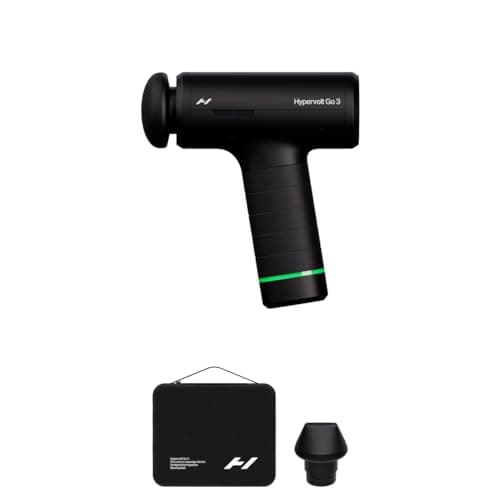
Hyperice — Hypervolt Go 2
Best lightweight everyday carry — quiet, simple, and easy to control
How much fiber do you actually need?
The widely cited targets come from national dietary guidance: about 25 grams of fiber per day for adult women and about 38 grams per day for adult men, with the numbers drifting a little lower with age. A cleaner way to remember it, and the way the reference intakes are actually built, is roughly 14 grams of fiber for every 1,000 calories you eat — so a bigger, more active person who eats more food needs proportionally more fiber. Against those targets, the average intake in many Western diets is dismal: somewhere around 15 grams a day, meaning a lot of people are getting only about half of what's recommended. This isn't a trivial shortfall. Higher fiber intake is consistently associated with better digestive regularity, improved cholesterol and blood-sugar management, and greater fullness. You don't need to obsess over hitting an exact gram count — the goal is to move decisively from "about half" toward "the recommended range," and for most people that means adding fiber-rich foods at nearly every meal rather than counting to a precise number.
Soluble vs. insoluble fiber — and why you need both
Dietary fiber comes in two broad types, and they do different jobs. Soluble fiber dissolves in water and forms a gel in your digestive tract; that gel slows digestion, which is what helps blunt blood-sugar spikes, binds cholesterol-related compounds to help lower LDL cholesterol, and firms up loose stool. You find it in oats, beans, lentils, barley, apples, citrus, and psyllium. Insoluble fiber doesn't dissolve — it adds bulk and acts like a broom, speeding the passage of material through the gut and supporting regular, easy bowel movements. It's concentrated in whole grains, wheat bran, nuts, seeds, and the skins of fruits and vegetables. Here's the part that keeps it simple: most whole plant foods contain a mix of both, so you don't need to engineer your plate around the distinction. A diet built on beans, oats, fruit, vegetables, and whole grains naturally supplies both types in reasonable proportion. The two-type framework is useful mainly for understanding why fiber does so many different things — and for choosing a supplement, where the type does matter, since a gel-forming soluble fiber like psyllium behaves differently from a coarse bran.
Whole food first: why real food beats a powder
If you take one principle from this guide, make it this: get your fiber from food before you reach for a supplement. Whole plant foods don't just deliver fiber — they bring vitamins, minerals, potassium, antioxidants, and a whole matrix of plant compounds that a purified fiber powder simply doesn't contain. A cup of lentils, a bowl of oats with berries, a handful of almonds, an apple with the skin on, or a serving of beans gives you fiber plus genuine nutrition, and the fiber comes packaged with the food's natural structure, which affects how it's digested. The best sources are the obvious ones and they're cheap: beans and lentils (among the most fiber-dense foods there are), oats and other whole grains, fruit, vegetables, and nuts and seeds. Building meals around these foods will get most people to their target without any supplement at all. That's the goal — a fiber supplement is a patch for a gap you can't close with food, not a substitute for eating plants. If your diet is already rich in beans, produce, and whole grains, you may not need a supplement in the first place.
How to add fiber without the gas and bloating
The number-one reason people give up on fiber is that they add too much, too fast, and spend a few miserable days bloated and gassy. The fix is simple and entirely about pacing. Increase your fiber gradually — over a few weeks, not overnight — so the bacteria in your gut have time to adjust to the extra fermentable material. Add one new fiber-rich food or one extra serving at a time, give it several days, then add the next. Just as important, increase your water intake as you increase fiber, especially with soluble and supplemental fiber: fiber works by absorbing water and adding bulk, and without enough fluid it can actually worsen constipation instead of relieving it. Some gas during the ramp-up is normal and usually settles as your system adapts. If you go slowly and drink enough, most people reach a much higher fiber intake comfortably. If you jump from 15 grams to 40 in a day, expect to be uncomfortable — that's not fiber being bad for you, it's just too fast a change.
When a fiber supplement actually helps — and psyllium's edge
Food first doesn't mean supplements never have a place. A fiber supplement is a sensible tool when you genuinely can't close the gap with diet — a travel-heavy schedule, a limited-variety diet, a period of low appetite, or a specific goal like managing cholesterol or regularity where a bit more soluble fiber helps. Among the options, psyllium (the husk of the plantago plant) has the strongest evidence: it's a gel-forming soluble fiber with well-documented effects on lowering LDL cholesterol, supporting blood-sugar management, and normalizing stool consistency in both directions — it can firm up loose stool and relieve constipation. Other supplemental fibers exist (methylcellulose, wheat dextrin, inulin, and various blends), and they can help too, though some fermentable ones like inulin cause more gas in sensitive people. Whatever you choose, treat it like the whole foods it's supplementing: start with a small dose, take it with plenty of water, and build up. And keep expectations honest — a supplement adds fiber, but it doesn't add the vitamins, minerals, and plant compounds you'd get from the food it's standing in for.
Fiber, fullness, and weight
One of fiber's most useful everyday effects is on appetite. High-fiber foods tend to be more filling per calorie: they take longer to chew, add physical bulk, and — in the case of soluble fiber — slow digestion so you feel satisfied longer after a meal. That greater satiety can make it easier to eat fewer calories without feeling deprived, which is part of why higher-fiber diets are consistently linked with easier weight management. It's worth being clear about the mechanism, though, because it's often oversold: fiber isn't a fat-burner or a metabolic trick, and a fiber supplement stirred into water won't melt away pounds. What it does is help you feel full, steady your blood sugar, and support the kind of eating pattern — lots of beans, vegetables, fruit, and whole grains — that naturally tends toward better body composition. The satiety benefit is real and useful; it just works by helping you eat well, not by overriding calories. If weight is your goal, lean into high-fiber whole foods for the fullness, and treat any supplement as a minor supporting player.
Who should ask a doctor first — and don't overdo it
Fiber is safe and beneficial for the vast majority of people, but a few situations call for a conversation with your doctor or a dietitian first. If you have a gastrointestinal condition — inflammatory bowel disease, irritable bowel syndrome, a history of bowel obstruction or strictures, or you're recovering from GI surgery — the right type and amount of fiber can be specific to your situation, and more isn't automatically better. Fiber can also affect the absorption and timing of some medications and minerals, so if you take prescription drugs, it's wise to separate them from a fiber supplement by a couple of hours and to check with your pharmacist or doctor. And yes, it is possible to overdo fiber: very high intakes, especially added too quickly or without enough water, can cause bloating, cramping, gas, and paradoxically worse constipation, and in extreme cases can interfere with mineral absorption. The goal is the recommended range, not the maximum possible. Here's a practical daily-target checklist: (1) Aim for about 25 grams a day if you're a woman, 38 if you're a man — roughly 14 grams per 1,000 calories. (2) Build meals around beans, lentils, oats, fruit, vegetables, whole grains, and nuts and seeds. (3) Eat both fiber types by simply eating a variety of whole plants. (4) Increase intake gradually over weeks and drink more water as you do. (5) Use a supplement (psyllium is best-studied) only to fill a gap food can't. (6) Don't chase the maximum — hit the range. (7) If you have a GI condition or take medications, talk to your doctor first.
Frequently asked questions
The common targets are about 25 grams a day for adult women and about 38 grams a day for adult men, which works out to roughly 14 grams of fiber for every 1,000 calories you eat — so larger, more active people need more. Those numbers drift a little lower with age. For context, average intake in many Western diets is only around 15 grams, so most people are getting roughly half of what's recommended. You don't need to hit an exact gram count; the meaningful move is to go from "about half" toward the recommended range by adding fiber-rich foods at most meals. If you eat plenty of beans, vegetables, fruit, and whole grains, you'll likely land in the target range without counting.
Sources
- Dietary Guidelines for Americans, 2020-2025 — dietary fiber recommendations (~14 g per 1,000 kcal; 25 g women / 38 g men) — U.S. Department of Agriculture (USDA) & U.S. Department of Health and Human Services (HHS)
- Fiber — The Nutrition Source (soluble vs. insoluble fiber, food sources, health effects) — Harvard T.H. Chan School of Public Health
- Dietary fiber: Essential for a healthy diet (targets, types, how to add fiber, water, gas/bloating) — Mayo Clinic
- Whole grains, legumes, and fiber for cholesterol, blood sugar, and satiety; psyllium as a soluble fiber — Harvard Health Publishing (Harvard Medical School)
Hyperice — Hypervolt Go 2
$149.00 · on Amazon