The Best Fiber Supplements for Women, Ranked Against the 25 g Daily Target
Short answer: the best fiber supplement for most women is Metamucil Psyllium Husk Fiber powder — psyllium is the most-studied fiber there is, the powder lets you start at a half-teaspoon and ramp up, and it is the one fiber carrying an FDA-authorized health claim linking soluble fiber from psyllium husk to reduced risk of coronary heart disease. It is for the woman whose goal is regularity, cholesterol, or simply closing a gap between what she eats and the 25 g a day the Institute of Medicine sets as the adequate intake for adult women. If psyllium has already made your stomach miserable — and for a meaningful minority it does — the pick is Sunfiber instead: a partially hydrolyzed guar gum that is flavorless, dissolves clear, and is marketed as low-FODMAP, which matters because IBS is diagnosed roughly twice as often in women as in men. Now the part worth saying out loud: there is no women's fiber. Fiber is not hormone-sensitive, the molecules do not behave differently by sex, and a pink label is a marketing decision. What is genuinely different is the context. The adequate intake for women is 25 g a day against 38 g for men, and most American adults eat around 15 g, so the gap you are closing is smaller but still real. Functional constipation and IBS are both more prevalent in women. Pregnancy brings constipation with it for many people, and bulk-forming fiber is usually the first thing a clinician reaches for. And because iron deficiency is far more common in women, the timing of a fiber dose relative to an iron supplement is a question men rarely have to think about. Those four things — dose flexibility, gut tolerance, evidence quality, and how easily a supplement fits around other things you take — are what this page ranks on. One more thing first, because it is the whole editorial position of this site: fiber supplements are a patch, not a diet. Beans, oats, berries, vegetables and whole grains deliver fiber along with potassium, magnesium and polyphenols that no capsule carries. Use the powder to close the last few grams, not to replace the vegetables.
Top pick
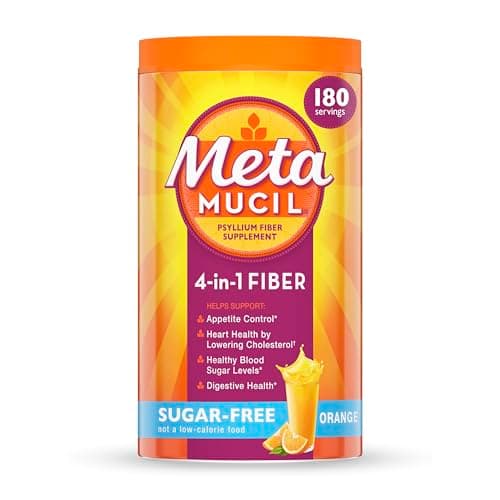
Metamucil — Metamucil Psyllium Husk Fiber (Powder)
Psyllium husk soluble fiber powder · scalable dosing by the teaspoon · flavored and sugar-free options · the psyllium brand behind much of the clinical research · mixes into water
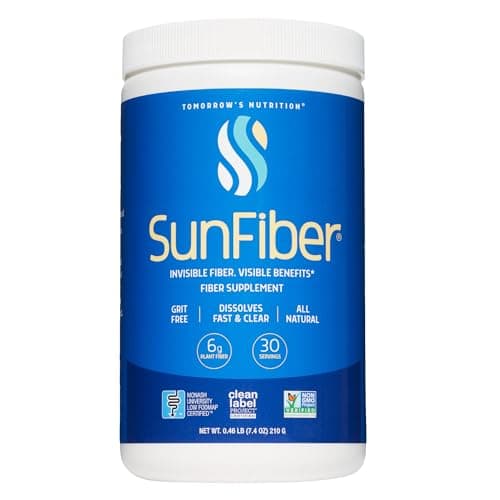
Tomorrow's Nutrition — Sunfiber (Tomorrow's Nutrition) — Partially Hydrolyzed Guar
At a glance
Tap a row to check price · tap a header to sort| # | Best for | Price | ||
|---|---|---|---|---|
| 1 | 1. Metamucil — Metamucil Psyllium Husk Fiber (Powder)Best overall | Best overall | 8.7/10 | |
| 2 | 2. Tomorrow's Nutrition — Sunfiber (Tomorrow's Nutrition) — Partially Hydrolyzed GuarBest for sensitive guts and IBS | Best for sensitive guts and IBS | 8.2/10 | |
| 3 | 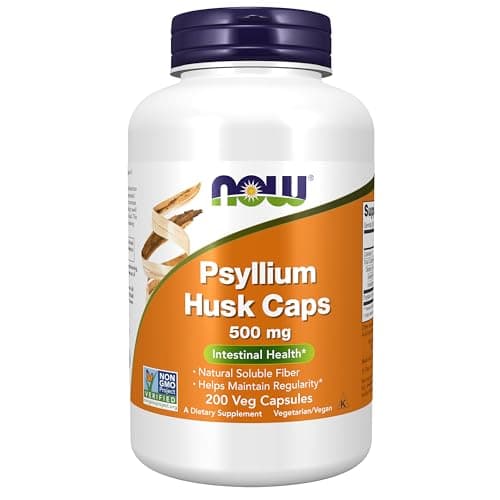 3. NOW — NOW Psyllium Husk Caps (500 mg)Best capsule | Best capsule | 8.1/10 | |
| 4 | 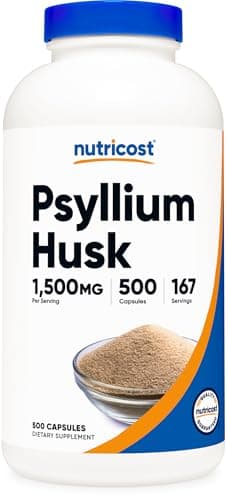 4. Nutricost — Nutricost Psyllium Husk (1,500 mg Capsules)Best value capsule | Best value capsule | 8/10 | |
| 5 | 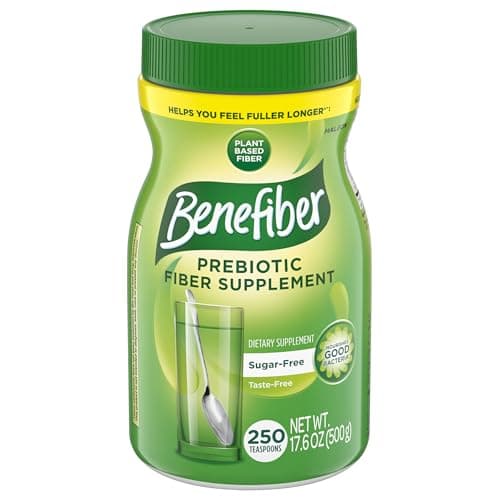 5. Benefiber — Benefiber Prebiotic Fiber (Wheat Dextrin)Best invisible mix-in | Best invisible mix-in | 7.5/10 |
Prices pulled from Amazon as of October 18, 2026 and are subject to change. The price shown on Amazon at checkout applies.
How we scored
Every product below is scored on six metrics, 0-10 each, with the weighting described on how we review. The criteria specific to this category:
- Evidence quality for the specific fiber — psyllium scores highest because it carries the deepest research base for regularity, LDL cholesterol and blood sugar, plus an FDA-authorized heart health claim
- Dose flexibility — whether you can start at a half-teaspoon and ramp up, which is the single biggest predictor of whether a fiber habit survives week one
- Gut tolerance — gentleness and low-FODMAP positioning carry extra weight here, because IBS and functional constipation are both more common in women
- Format honesty — a powder you will actually stir, a capsule you will actually carry, and a clear statement of how many capsules make a real dose
- Cost per gram of fiber against the live price, because the cheapest fiber that gets you to 25 g beats the most elegant one that does not
What to know before buying
- The Institute of Medicine's adequate intake is 25 g of fiber a day for adult women and 38 g for adult men, or about 14 g per 1,000 calories. Most US adults eat roughly 15 g, so a supplement is typically closing a gap of 5-10 g rather than supplying the whole requirement.
- There is no physiological reason for a women-specific fiber product. What differs is context: a lower daily target, a higher baseline rate of IBS and functional constipation, pregnancy-related constipation, and iron-supplement timing.
- Ramp up slowly — a half to one teaspoon of psyllium a day for the first week, then increase. Jumping straight to a full dose is why most people decide fiber supplements do not agree with them.
- Drink the water. Psyllium works by forming a gel, and taking it with too little fluid is both uncomfortable and, rarely, genuinely risky. A full glass per dose is the floor, not a suggestion.
- Separate your fiber dose from iron and from medications by one to two hours. Fiber can blunt absorption of non-heme iron and interfere with some drugs, and since iron deficiency is much more common in women, this is the interaction worth planning around.
- If you are pregnant or breastfeeding, bulk-forming fiber is commonly the first option a clinician suggests for constipation — but raise it with yours rather than starting a new supplement on an article's word.
- Soluble versus insoluble matters less than people think. Psyllium is predominantly soluble and is the best-evidenced option for both constipation and cholesterol; insoluble fiber from food adds bulk. Most people do not need to buy both.
Our picks
Metamucil — Metamucil Psyllium Husk Fiber (Powder)
Key specs: Psyllium husk soluble fiber powder · scalable dosing by the teaspoon · flavored and sugar-free options · the psyllium brand behind much of the clinical research · mixes into water
Pros
- Psyllium is the most evidence-backed fiber for regularity, LDL cholesterol and blood-sugar control, and it is the fiber behind the FDA's authorized soluble-fiber heart health claim
- Powder format lets you start small and ramp up gradually — exactly how fiber should be introduced — and reach a meaningful daily dose cheaply
- Sugar-free versions keep the label clean while staying palatable, and the plain SKU is just psyllium
- Lowest cost per gram of fiber on this page by a wide margin
Cons
- Psyllium thickens fast once mixed, so you have to drink it promptly and follow with water; the texture takes getting used to
- Flavored versions may include sweeteners you would rather avoid — choose plain or sugar-free
- Some SKUs add extra ingredients and market a multi-benefit blend; read the label if you want fiber only
Who this one is for
For most women, and especially anyone whose goal is regularity or cholesterol rather than a vague gut-health feeling. Start at half a teaspoon, build up over two weeks, and this is the cheapest route to a clinically meaningful psyllium dose.
Metamucil — Metamucil Psyllium Husk Fiber (Powder)
- Fiber evidence10/10
- Tolerability7/10
- Dose flexibility9/10
- Clean label7/10
- Value9/10
Tomorrow's Nutrition — Sunfiber (Tomorrow's Nutrition) — Partially Hydrolyzed Guar
Key specs: Partially hydrolyzed guar gum (PHGG) soluble fiber · flavorless, dissolves clear · marketed as low-FODMAP and gentle · prebiotic · mixes into any drink or food
Pros
- Genuinely well tolerated — often the answer for people whose gut rebels against psyllium's gel and bulk
- Flavorless and dissolves clear, so it stirs invisibly into water, coffee, soup or yogurt rather than becoming a drink you have to face
- Low-FODMAP positioning makes it a sensible choice for managing IBS-type sensitivity rather than aggravating it
Cons
- Does not carry psyllium's specific, deep evidence for LDL cholesterol and stool regularity — it is a gentle prebiotic soluble fiber, not a psyllium substitute for those goals
- Noticeably more expensive per gram of fiber than bulk psyllium
- Still a fermentable fiber, so ramp up over a week even though it is gentler than most
Who this one is for
For the woman psyllium has already defeated, and for anyone managing IBS — a condition diagnosed about twice as often in women. It disappears into coffee or water with no grit and no gel, which is why people actually keep taking it.
Tomorrow's Nutrition — Sunfiber (Tomorrow's Nutrition) — Partially Hydrolyzed Guar
- Fiber evidence7/10
- Tolerability10/10
- Dose flexibility9/10
- Clean label8/10
- Value6/10
NOW — NOW Psyllium Husk Caps (500 mg)
Key specs: Psyllium husk in capsules · 500 mg each · Non-GMO Project Verified · no grit or mixing · GMP-manufactured · take with a full glass of water
Pros
- Delivers evidence-backed psyllium without the gel-and-grit of a powder, which is the format most people abandon
- From a well-audited manufacturer and Non-GMO Project Verified — a short, honest label
- Easy to carry and take consistently, and consistency is what actually makes a fiber habit work
Cons
- You need several capsules to reach a meaningful psyllium dose, which raises cost per gram substantially versus powder
- Must be taken with a full glass of water — psyllium capsules with too little fluid are uncomfortable and not risk-free
- Capsule dosing is less flexible for a slow ramp-up than a powder you can measure by the half-teaspoon
Who this one is for
For the woman who will never stir a drink but will swallow capsules with her morning water, and for travel. Accept that reaching a real psyllium dose takes several capsules and costs more per gram than the powder.
NOW — NOW Psyllium Husk Caps (500 mg)
- Fiber evidence9/10
- Tolerability8/10
- Dose flexibility6/10
- Clean label9/10
- Value7/10
Nutricost — Nutricost Psyllium Husk (1,500 mg Capsules)
Key specs: Psyllium husk capsules · 1,500 mg per serving · gluten-free, non-GMO · large count (around 500 capsules) · low cost per serving · take with water
Pros
- One of the cheapest ways to get psyllium in capsule form, with a count large enough to last months
- A higher per-serving milligram amount than most capsules means fewer pills to reach your dose
- Simple, single-ingredient psyllium with nothing else on the label
Cons
- Still a capsule, so a full clinical psyllium dose takes several and costs more per gram than powder
- Value brand with less independent testing than premium options — fine for general use, less reassuring if you want certification
- Requires a full glass of water with each dose, as all psyllium does
Who this one is for
For anyone who wants psyllium in capsule form and is paying attention to cost per serving. The higher milligram count per capsule means fewer pills to swallow for the same dose.
Nutricost — Nutricost Psyllium Husk (1,500 mg Capsules)
- Fiber evidence9/10
- Tolerability8/10
- Dose flexibility6/10
- Clean label8/10
- Value9/10
Benefiber — Benefiber Prebiotic Fiber (Wheat Dextrin)
Key specs: Wheat dextrin soluble fiber · unflavored, dissolves completely and clear · prebiotic · stirs into any hot or cold drink or food · widely available
Pros
- Dissolves completely and clear with no grit, thickening or taste, so it disappears into any drink or recipe
- The easiest product here to use consistently, which is often what decides whether a fiber habit sticks
- Widely available and simple — no ramp-up drama for most people
Cons
- Wheat dextrin lacks psyllium's specific evidence for cholesterol and regularity — it is a general prebiotic fiber
- Wheat-derived, so people avoiding wheat should check the label even though gluten content is typically very low
- Costs more per gram than bulk psyllium for a fiber with a lighter evidence profile
Who this one is for
For the woman who wants to nudge a daily total upward without a dedicated fiber drink — it dissolves clear into coffee, soup or a smoothie. Not the pick if your goal is cholesterol or a stubborn constipation problem.
Benefiber — Benefiber Prebiotic Fiber (Wheat Dextrin)
- Fiber evidence6/10
- Tolerability8/10
- Dose flexibility9/10
- Clean label7/10
- Value7/10
Frequently asked questions
Metamucil Psyllium Husk Fiber powder, for most women. Psyllium has the deepest evidence base of any fiber for regularity, LDL cholesterol and blood-sugar control, it is the fiber behind the FDA's authorized soluble-fiber heart health claim, and the powder format lets you start at a half-teaspoon and build up — which is the difference between a habit that survives and one that ends in week one. If psyllium has already upset your stomach, or you are managing IBS, Sunfiber is the better pick: a flavorless, clear-dissolving partially hydrolyzed guar gum marketed as low-FODMAP. If you will only take capsules, NOW Psyllium Husk Caps deliver the same fiber with no mixing.
Related reading
Sources
- Dietary Reference Intakes for Energy, Carbohydrate, Fiber, Fat, Fatty Acids, Cholesterol, Protein, and Amino Acids — adequate intake for total fiber (25 g/day adult women, 38 g/day adult men; 14 g per 1,000 kcal) — Institute of Medicine / National Academies
- Health claims: soluble fiber from certain foods and risk of coronary heart disease (21 CFR 101.81) — the FDA-authorized psyllium husk claim — US Food and Drug Administration / eCFR
- Irritable bowel syndrome — epidemiology, including higher prevalence and diagnosis rates among women — National Institute of Diabetes and Digestive and Kidney Diseases
- Iron — Health Professional Fact Sheet (non-heme iron absorption, inhibitors including phytate and fiber, enhancement by vitamin C, higher deficiency prevalence in women) — NIH Office of Dietary Supplements
- Product titles, fiber sources, serving sizes, counts, live prices and availability for all five supplements — retrieved via the Amazon product data layer — Amazon product listing data, 2026
Last verified: October 17, 2026. See our editorial policy and how we review for details on scoring and update cadence. Canonical URL: https://trustedhealthgear.com/reviews/best-fiber-supplement-for-women.
Metamucil — Metamucil Psyllium Husk Fiber (Powder)
$34.97 · on Amazon