Best Iron Supplements, Scored on a Public Rubric
Iron is the only supplement on this site we'd tell you not to buy until a lab result says you need it. Everything else here is a low-stakes bet — take too much magnesium and you get loose stools. Iron is different in both directions. Real deficiency is genuinely disabling, and it is common: NIH's Office of Dietary Supplements flags pregnant women, women with heavy menstrual bleeding, infants and young children, frequent blood donors, and people with cancer, GI disorders, or heart failure as the groups most likely to run short. But your body has no route to excrete a surplus, which is why the Tolerable Upper Intake Level for adults is 45 mg a day and why every bottle on the shelf carries an FDA-mandated warning that accidental overdose of iron-containing products is a leading cause of fatal poisoning in children under six — between 1983 and 2000, at least 43 U.S. children died from ingesting high-dose iron supplements. That is not a reason to fear iron. It is a reason to get a ferritin and CBC before you start, and to keep the bottle where a toddler cannot reach it. Once a test says you're low, the aisle immediately gets the next two decisions wrong. The default product is 65 mg of elemental iron as 325 mg ferrous sulfate, taken once or twice daily, and that is the dose that produces the constipation and nausea that make people quit: a 2015 PLOS ONE meta-analysis of 43 trials and 6,831 adults found ferrous sulfate roughly doubled the odds of GI side effects versus placebo (OR 2.32), with 12% reporting constipation, 11% nausea, and 8% diarrhea. Worse, that big daily dose is working against your own physiology. A 60 mg dose spikes hepcidin — the hormone that shuts the absorption door — for about 24 hours, so tomorrow's tablet absorbs less. Stoffel and colleagues measured it directly in Lancet Haematology: iron-depleted women given 60 mg on alternate days absorbed 21.8% of it versus 16.3% on consecutive days, and took up 175.3 mg of total iron versus 131.0 mg. Fewer tablets, more iron. The last thing the shelf sells you is comfort at the cost of the point: "slow release" and enteric-coated tablets promise a gentler stomach by releasing iron later, but iron is absorbed in the duodenum and upper jejunum, and a 2024 Haematologica review concludes those formulations release past that window, that serious concerns have been raised about their efficacy, and that they are not recommended. So the rubric here is narrow and unglamorous: test first, then take the smallest effective elemental dose, in a form your gut will tolerate, on alternate days, on an empty stomach or with vitamin-C-rich food — and re-test rather than staying on it forever.
Top pick
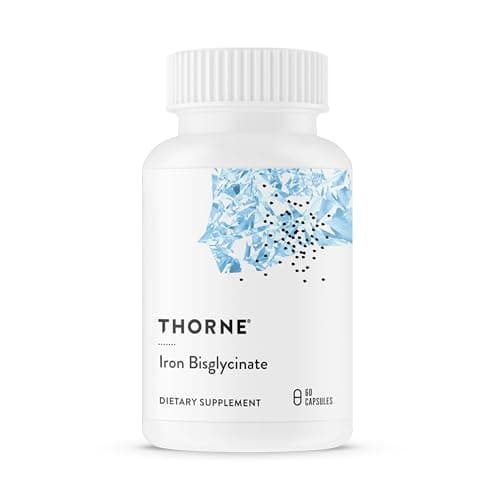
Thorne — Iron Bisglycinate 25 mg (60 servings)
Iron bisglycinate, 25 mg elemental iron per capsule, 60 servings, NSF Certified for Sport, gluten-free
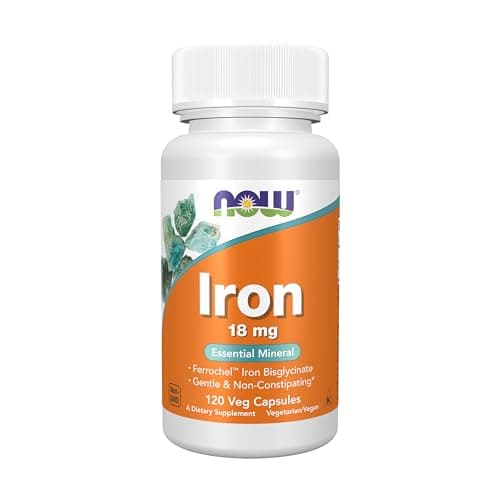
NOW Foods — Iron 18 mg, Ferrochel Ferrous Bisglycinate (120 veg capsules)
At a glance
Tap a row to check price · tap a header to sort| # | Best for | Price | ||
|---|---|---|---|---|
| 1 | 1. Thorne — Iron Bisglycinate 25 mg (60 servings)Best overall | Best overall | 8.4/10 | |
| 2 | 2. NOW Foods — Iron 18 mg, Ferrochel Ferrous Bisglycinate (120 veg capsules)Best value | Best value | 8.1/10 | |
| 3 | 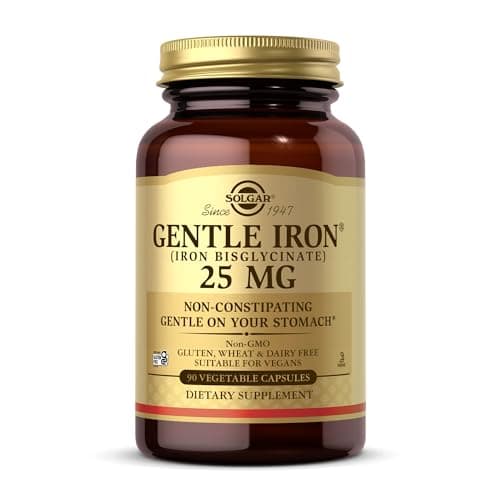 3. Solgar — Gentle Iron 25 mg (90 vegetable capsules)Best budget bisglycinate | Best budget bisglycinate | 7.8/10 | $9.65$13.5929% offCheck Price for Solgar Gentle Iron 25 mg (90 vegetable capsules) on AmazonIn Stock |
| 4 | 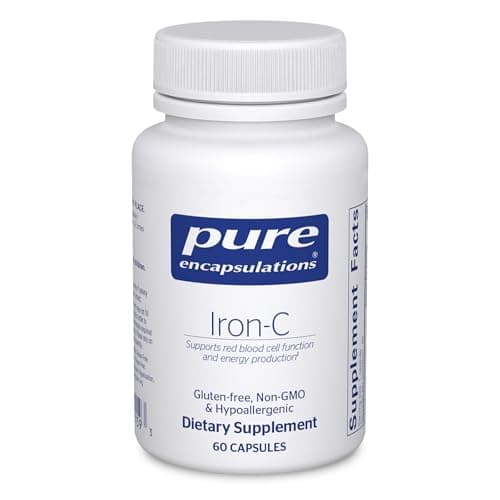 4. Pure Encapsulations — Iron-C, 15 mg Iron with 175 mg Vitamin C (60 capsules)Best low dose | Best low dose | 7.4/10 | |
| 5 | 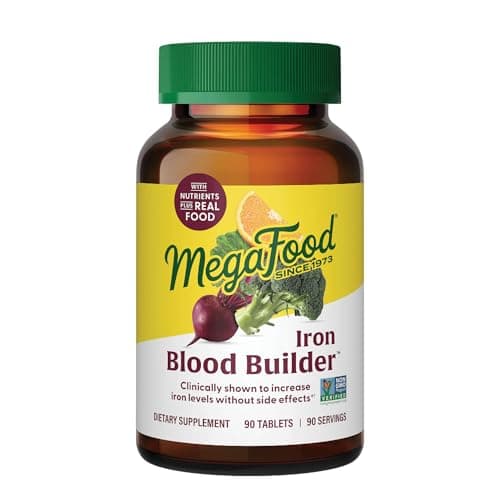 5. MegaFood — Blood Builder (90 tablets)Best whole-food-based option | Best whole-food-based option | 6.4/10 | |
| 6 | 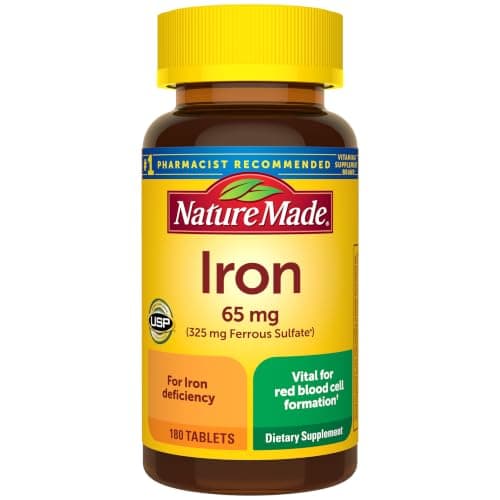 6. Nature Made — Iron 65 mg, 325 mg Ferrous Sulfate (180 tablets)The clinical-standard dose at the lowest price | The clinical-standard dose at the lowest price | 6.3/10 | $7.06$10.5933% offCheck Price for Nature Made Iron 65 mg, 325 mg Ferrous Sulfate (180 tablets) on AmazonIn Stock |
| 7 | 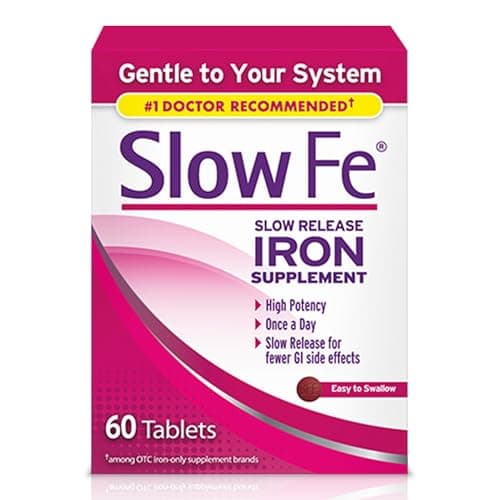 7. Slow Fe — 45 mg Slow Release Iron (60 tablets)The 'gentle' formulation that trades away the thing you're buying | The 'gentle' formulation that trades away the thing you're buying | 4.6/10 |
Prices pulled from Amazon as of October 21, 2026 and are subject to change. The price shown on Amazon at checkout applies.
How we scored
Every product below is scored on six metrics, 0-10 each, with the weighting described on how we review. The criteria specific to this category:
- A modest elemental dose you can actually stay on — 18 to 30 mg covers the 18 mg RDA for women 19-50 with headroom and sits under the 45 mg upper limit, and because hepcidin caps how much a single dose can absorb, the 65 mg tablets buy far less extra iron than the label arithmetic implies.
- A form with a tolerability record, not just a chelation buzzword — ferrous bisglycinate is the form the gentler products actually use, and it scores above plain ferrous sulfate here because the PLOS ONE meta-analysis puts sulfate's GI side-effect odds at roughly double placebo, and a supplement you stop taking in week two corrects nothing.
- Elemental iron stated plainly on the front — 325 mg of ferrous sulfate is 65 mg of iron, ferrous fumarate is 33% elemental by weight, sulfate 20%, and gluconate just 12%, so a label that leads with the salt weight instead of the elemental number is obscuring the only figure that matters.
- Third-party testing stated by the brand — iron is cheap to make and cheap to mislabel, and on a mineral where the ceiling is 45 mg, an independent identity-and-potency certificate is worth more than any marketing claim on the bottle.
- No slow-release or enteric coating — the 2024 Haematologica review is blunt that delayed liberation past the duodenum and upper jejunum undermines efficacy and that these formulations are not recommended, so paying more for a coating that trades away absorption scores down hard.
- Cost per dose you'd actually take, on the schedule the evidence supports — an alternate-day protocol halves how fast you go through a bottle, so a 120-count bottle is eight months of supply, not four, and the honest denominator is a per-dose price on that schedule.
What to know before buying
- Get the blood test before you get the bottle. This is the whole ballgame with iron. NIH sets the RDA at 8 mg/day for men and women over 50, 18 mg/day for women 19-50, and 27 mg/day in pregnancy, with a 45 mg/day upper limit for adults — and unlike most nutrients, your body has no meaningful way to dump an excess. Fatigue is a terrible diagnostic; it is the symptom of a hundred things, and iron deficiency is diagnosed with a ferritin and a complete blood count, not a hunch. The upside of testing is not just safety, it's efficacy: if you're not deficient, the supplement is doing nothing for your energy, and the joint position from the Academy of Nutrition and Dietetics, Dietitians of Canada, and ACSM is explicit that routine iron supplementation isn't recommended except on a clinician's instruction, and is only ergogenic in someone who is genuinely iron-depleted.
- Take it every other day. This is the single highest-value thing on this page and almost nobody's label says it. A 60 mg dose of iron induces hepcidin — the master regulator that closes the absorption door — for up to 24 hours, and hepcidin falls back to baseline by 48 hours. Stoffel's Lancet Haematology trials measured the consequence in iron-depleted women: alternate-day dosing produced 21.8% fractional absorption versus 16.3% on consecutive days, and 175.3 mg of cumulative iron absorbed versus 131.0 mg — more total iron from fewer tablets. The same work found splitting a dose into twice-daily is worse than taking it once, because it raises hepcidin further. One dose, every other day, is the protocol the physiology actually supports.
- 65 mg is the aisle's default and the reason people quit. The standard drugstore iron tablet is 325 mg of ferrous sulfate delivering 65 mg of elemental iron, and NIH notes that supplemental doses of 45 mg/day or more may cause nausea and constipation — worse on an empty stomach. The 2015 PLOS ONE meta-analysis of 43 randomized trials and 6,831 adults found ferrous sulfate raised the odds of GI side effects about twofold versus placebo (OR 2.32, 95% CI 1.74-3.08) and roughly threefold versus IV iron, with constipation in 12%, nausea in 11%, and diarrhea in 8%. Notably, that analysis did not find a dose-response relationship — which is a real caveat to the 'just take less' advice — but combined with the hepcidin data, a lower dose on alternate days remains the better trade: less GI burden, and no meaningful loss of absorbed iron.
- Skip the slow-release and enteric-coated tablets. This is the clearest 'don't buy the marketing' call in the category. Iron absorption is optimal in the duodenum and upper jejunum, a short window near the top of the small intestine. The 2024 Haematologica review by Kostas Pantopoulos states that delayed liberation of encapsulated iron past that window causes poor efficacy, that serious concerns have been raised about these formulations, and that they are not recommended. The gentler stomach is real; you're just buying it by delivering the iron somewhere it can't be picked up. If tolerability is the problem, change the form or the frequency — don't change the release profile.
- Vitamin C helps iron in food. It does not appear to help an iron tablet. NIH is clear that ascorbic acid enhances the bioavailability of non-heme iron, which is why 'squeeze lemon on the spinach' is genuinely good advice, and why meat, poultry, and seafood also boost absorption of the non-heme iron in the same meal. But the leap from 'vitamin C helps food iron' to 'buy the iron+C combo pill' doesn't hold up: a 2020 JAMA Network Open randomized trial of 440 adults with iron deficiency anemia compared oral iron plus vitamin C against oral iron alone and found the two equivalent — hemoglobin rose 2.00 g/dL versus 1.84 g/dL at two weeks. Buy the combo if you like the rest of the label. Don't pay a premium for the C.
- Know what blocks it, and time around your medications. NIH flags phytates in grains and legumes and certain polyphenols — the tannins in tea and coffee — as absorption inhibitors, and notes calcium may reduce the bioavailability of both non-heme and heme iron. Practically: don't take iron with your morning coffee, your calcium supplement, or a dairy-heavy meal. The drug interactions matter more. Iron reduces the absorption of levodopa, and taking iron and levothyroxine at the same time can produce a clinically significant loss of thyroid-medication efficacy — separate them. Proton pump inhibitors cut stomach acid and reduce iron absorption, which is worth raising with your doctor if you're on one long-term.
- Eat the iron before you swallow it — and know the plant-food penalty. Heme iron, the kind in meat and seafood, provides only about 10-15% of total iron intake in Western diets but is absorbed far better than the non-heme iron in plants. NIH puts absorption from mixed diets containing meat and seafood at roughly 14-18%, versus 5-12% from vegetarian diets, and states plainly that vegetarians who eat no meat, poultry, or seafood need almost twice as much iron as the listed RDA. That's the whole-food-first point with an honest caveat attached: red meat and shellfish are the most efficient dietary fix by a wide margin, and if you've taken them off the menu, you're the reader most likely to need both the blood test and the capsule.
- If you train hard, you lose more — but supplementing without a deficiency won't make you faster. NIH's exercise and athletic performance review notes that athletes of both sexes lose extra iron through inflammation, sweat, foot-strike hemolysis, and medication use, that teenage girls and premenopausal women are at particular risk, and that athletes may need 30-70% more iron than sedentary people. The performance evidence is honest about its limits: correcting iron deficiency anemia improves work capacity, but the evidence on milder iron deficiency without anemia is conflicting, and a meta-analysis found iron treatment reliably improved iron status without guaranteeing any improvement in aerobic capacity or endurance markers. Translation for a hard-training reader: get your ferritin checked once a year, fix it if it's low, and don't expect a PR from a supplement that's topping up a tank that was already full.
Our picks
Thorne — Iron Bisglycinate 25 mg (60 servings)
Key specs: Iron bisglycinate, 25 mg elemental iron per capsule, 60 servings, NSF Certified for Sport, gluten-free
Pros
- 25 mg is the sensible middle of the category — above the 18 mg RDA for menstruating women, well under the 45 mg upper limit, and small enough that an alternate-day schedule is realistic
- NSF Certified for Sport is the strictest third-party mark in common use: it verifies identity and potency and screens for banned substances, which matters if you compete and is a genuine quality signal even if you don't
- Bisglycinate is the form the gentler products actually use, and it's the reason this one is plausible as a supplement you'll still be taking in week eight
Cons
- About 27 cents a capsule — a real premium over the drugstore ferrous sulfate, though the alternate-day schedule stretches 60 servings to roughly four months
- The 'without gastrointestinal side effects' framing on the label is a marketing claim, not a guarantee; bisglycinate is better tolerated on average, not universally
Thorne — Iron Bisglycinate 25 mg (60 servings)
- Third-party testing9/10
- Bioavailability8/10
- Clinical evidence8/10
- Value6/10
- Brand transparency9/10
- Form & absorption9/10
NOW Foods — Iron 18 mg, Ferrochel Ferrous Bisglycinate (120 veg capsules)
Key specs: Ferrochel ferrous bisglycinate, 18 mg elemental iron (100% DV) per veg capsule, 120 capsules, non-GMO, vegan
Pros
- 18 mg is exactly the RDA for women 19-50 — the honest maintenance dose, not a therapeutic mega-dose — at roughly 8 cents a capsule
- Ferrochel is the branded ferrous bisglycinate most of the 'gentle iron' category is built on, so you're getting the well-tolerated form without the boutique markup
- 120 capsules is eight months of supply on an alternate-day schedule, which is the cheapest sensible way to run a long repletion protocol
Cons
- No third-party certification mark on the bottle — NOW runs its own in-house testing lab and is GMP-audited, but you're trusting the brand's program rather than an independent certificate
- At 18 mg this is a maintenance or mild-shortfall dose; if a clinician has put you on a therapeutic protocol for diagnosed anemia, they'll likely want more elemental iron than this
NOW Foods — Iron 18 mg, Ferrochel Ferrous Bisglycinate (120 veg capsules)
- Third-party testing6/10
- Bioavailability8/10
- Clinical evidence8/10
- Value10/10
- Brand transparency8/10
- Form & absorption9/10
Solgar — Gentle Iron 25 mg (90 vegetable capsules)
Key specs: Iron bisglycinate chelate, 25 mg elemental iron (139% DV) per capsule, 90 servings, non-GMO, vegan, gluten/dairy-free
Pros
- The same 25 mg bisglycinate dose as the best-overall pick for roughly a third of the price per capsule
- A genuinely short label — iron bisglycinate chelate plus microcrystalline cellulose, vegetable cellulose, and vegetable magnesium stearate — with no 'blood support blend' riding along
- 90 capsules on an alternate-day schedule is six months of supply, which makes a full repletion-and-retest cycle cost less than a single doctor's copay
Cons
- No third-party certification surfaced for this SKU; Solgar has a long manufacturing record but the bottle carries no independent mark
- 'Gentle' and 'non-constipating' are label claims about a form that is better tolerated on average — they are not a promise, and some people still get GI upset from bisglycinate
Solgar — Gentle Iron 25 mg (90 vegetable capsules)
- Third-party testing6/10
- Bioavailability8/10
- Clinical evidence8/10
- Value9/10
- Brand transparency8/10
- Form & absorption9/10
Pure Encapsulations — Iron-C, 15 mg Iron with 175 mg Vitamin C (60 capsules)
Key specs: 15 mg elemental iron (as iron glycinate and iron aspartate) plus 175 mg vitamin C per capsule, 60 capsules, vegan, gluten-free
Pros
- 15 mg is the lowest dose here and the right place to start if you've had trouble tolerating iron before — it clears the 8 mg RDA for men and post-menopausal women outright
- A short, hypoallergenic label with no dyes or unnecessary excipients, from a practitioner-channel brand with a strong transparency record
- The vitamin C is a reasonable free extra if you'd otherwise be taking one, and 175 mg is a sane amount rather than a mega-dose
Cons
- Don't buy it for the vitamin C. A 2020 JAMA Network Open trial of 440 adults with iron deficiency anemia found iron plus vitamin C equivalent to iron alone (2.00 vs 1.84 g/dL hemoglobin at two weeks) — ascorbic acid boosts the non-heme iron in your food, not the iron in the capsule beside it
- About 23 cents a capsule for 15 mg, which is the most expensive iron per milligram on this list
Pure Encapsulations — Iron-C, 15 mg Iron with 175 mg Vitamin C (60 capsules)
- Third-party testing7/10
- Bioavailability8/10
- Clinical evidence7/10
- Value6/10
- Brand transparency8/10
- Form & absorption8/10
MegaFood — Blood Builder (90 tablets)
Key specs: 26 mg iron per tablet with 125 mg beet root, 15 mg vitamin C, 680 mcg DFE folate, 30 mcg B12; 1 tablet daily, vegan, non-GMO
Pros
- The most whole-food-framed formula in the category — iron alongside beet root, orange-derived vitamin C, folate, and B12 rather than an isolated salt, which is the direction this site's philosophy leans
- 26 mg is a sensible dose that stays under the 45 mg ceiling, and the brand positions it as tolerable on an empty stomach — useful, because that's when iron absorbs best
- Folate and B12 alongside iron is a defensible pairing for anyone building red blood cells, and both are in usable amounts rather than fairy-dust traces
Cons
- About 32 cents a tablet — the most expensive pick here, and the beet root at 125 mg is a small amount doing more brand work than biological work
- The 'clinically proven' claim rests on an eight-week University of Maryland School of Medicine study that MegaFood commissioned, with no participant count, control arm, or peer-reviewed citation disclosed in the announcement — a brand-funded study with undisclosed methods is weak evidence, not strong evidence
- The label mixes 400 mcg of folic acid into its folate, which is a synthetic form some readers deliberately avoid
MegaFood — Blood Builder (90 tablets)
- Third-party testing6/10
- Bioavailability7/10
- Clinical evidence6/10
- Value4/10
- Brand transparency7/10
- Form & absorption7/10
Nature Made — Iron 65 mg, 325 mg Ferrous Sulfate (180 tablets)
Key specs: 325 mg ferrous sulfate delivering 65 mg elemental iron per tablet, 180 tablets, 180-day supply
Pros
- Ferrous sulfate at 65 mg is the formulation most clinical trials actually used, so if your doctor prescribed 'ferrous sulfate 325 mg,' this is literally it — about 4 cents a tablet
- Nature Made was the first brand accepted into USP's Dietary Supplement Verification Program and carries more USP-verified products than any other brand; check the USP mark on the bottle you buy, since it's granted per product rather than per brand
- The elemental iron figure is printed right next to the salt weight on the front of the label, which is more honesty than most of this category offers
Cons
- 65 mg is well over the 45 mg upper limit for healthy adults — appropriate only under a clinician's direction for diagnosed deficiency, which is exactly when a doctor may prescribe above the UL
- This is the dose the tolerability data indicts: the PLOS ONE meta-analysis found ferrous sulfate roughly doubled GI side effects versus placebo, with 12% constipated and 11% nauseated, and a tablet you abandon corrects nothing
- It's also the dose the hepcidin data argues against taking daily — a 60 mg dose suppresses absorption for about 24 hours, so alternate-day dosing gets you more total iron from fewer of these tablets
Nature Made — Iron 65 mg, 325 mg Ferrous Sulfate (180 tablets)
- Third-party testing7/10
- Bioavailability7/10
- Clinical evidence9/10
- Value10/10
- Brand transparency7/10
- Form & absorption4/10
Slow Fe — 45 mg Slow Release Iron (60 tablets)
Key specs: 45 mg elemental iron from ferrous sulfate in a slow-release delivery system, 60 tablets, high-potency positioning
Pros
- 45 mg is a lower elemental dose than the standard 65 mg tablet, and the slow-release design does appear to reduce the stomach upset that drives people off ferrous sulfate
- A well-known, widely stocked brand with clear elemental-iron labeling and an easy-to-swallow tablet
Cons
- The 2024 Haematologica review is explicit that slow-release and enteric-coated iron liberates past the duodenum and upper jejunum where absorption is optimal, that serious concerns have been raised about their efficacy, and that these formulations are not recommended — you're buying comfort with the absorption you came for
- About 32 cents a tablet, making it one of the most expensive picks here for the formulation with the weakest absorption case
- If ferrous sulfate is upsetting your stomach, the evidence-backed fixes are a bisglycinate form or alternate-day dosing — not a coating that moves the iron downstream
Slow Fe — 45 mg Slow Release Iron (60 tablets)
- Third-party testing5/10
- Bioavailability4/10
- Clinical evidence5/10
- Value4/10
- Brand transparency6/10
- Form & absorption3/10
Frequently asked questions
No — get tested first. Fatigue is the symptom of dozens of things, and iron is the one common supplement where guessing wrong carries real risk, because your body has no efficient way to excrete a surplus. Iron deficiency is diagnosed with a ferritin level and a complete blood count, both cheap and routine. NIH sets the adult upper limit at 45 mg/day, and the Academy of Nutrition and Dietetics, Dietitians of Canada, and ACSM jointly advise against routine iron supplementation except on a clinician's instruction, noting it only improves performance in someone who is genuinely iron-depleted. The groups most likely to actually be low are pregnant women, women with heavy periods, frequent blood donors, infants and young children, and people with GI disorders or cancer. Test, then treat.
Related reading
- → How much protein you actually need per day (and why red meat is the most efficient iron source)
- → Best supplements for runners
- → Best vitamin C (the nutrient that boosts non-heme iron in your food — but not in your capsule)
- → Best multivitamin (check whether yours already includes iron before adding a standalone)
- → Best zinc supplement (the other mineral where the upper limit matters more than the headline dose)
- → Best protein powder
- → Best supplements for energy (why iron ranks high — with a blood test)
Sources
- Iron — Fact Sheet for Health Professionals — NIH Office of Dietary Supplements, 2025
- Iron — Fact Sheet for Consumers — NIH Office of Dietary Supplements, 2025
- Iron absorption from oral iron supplements given on consecutive versus alternate days and as single morning doses versus twice-daily split dosing in iron-depleted women — The Lancet Haematology 2017;4(11):e524-e533, 2017
- Ferrous sulfate supplementation causes significant gastrointestinal side-effects in adults: a systematic review and meta-analysis (43 trials, 6,831 adults) — PLOS ONE, 2015
- The efficacy and safety of vitamin C for iron supplementation in adult patients with iron deficiency anemia: a randomized clinical trial (440 adults) — JAMA Network Open 2020;3(11):e2023644, 2020
- Oral iron supplementation: new formulations, old questions — Haematologica (Kostas Pantopoulos), 2024
- Exercise and Athletic Performance — Fact Sheet for Health Professionals (iron section) — NIH Office of Dietary Supplements, 2025
- Small Entity Compliance Guide: Label Warning Statements for Iron-Containing Supplements and Drugs — U.S. Food and Drug Administration
Last verified: July 23, 2026. See our editorial policy and how we review for details on scoring and update cadence. Canonical URL: https://trustedhealthgear.com/reviews/best-iron.
Thorne — Iron Bisglycinate 25 mg (60 servings)
$16.00 · on Amazon