Best Zinc Supplements, Scored on a Public Rubric
Zinc is the supplement most likely to be overdosed by the people trying hardest to do the right thing. It is genuinely essential — the NIH Office of Dietary Supplements notes it is required by roughly 300 enzymes and is involved in immune function, protein and DNA synthesis, wound healing, growth, and your sense of taste and smell — and a real deficiency does real damage. But the number that should govern your purchase is small and almost never printed on the front of the bottle: the adult RDA is 11 mg a day for men and 8 mg for women, and the Tolerable Upper Intake Level — the most you can take daily without expecting harm — is just 40 mg. Now walk the aisle. The category is wall-to-wall 50 mg 'immune support' caplets and 100 mg 'high potency' tablets, doses that sail past the ceiling in a single swallow. This is not a rounding error, and the harm has a specific mechanism. ODS states it plainly: doses of 50 mg of zinc or more over a period of weeks can inhibit copper absorption, reduce immune function, and lower high-density lipoprotein cholesterol. Read that against the label. The 50 mg bottle sold as daily immune support, taken as directed for a month, can quietly starve you of copper and blunt the exact immune function it advertises — the classic case reports of zinc-induced copper deficiency come with anemia and neurological damage, sensory ataxia and myelopathy, from people who overdid it for years. The second thing the labels obscure is that the fancy forms mostly don't matter. ODS reports absorption of about 61% from zinc citrate and zinc gluconate and 50% from zinc oxide in young adults — a real but modest spread, and a long way from the 'highly absorbable chelated' story that justifies most of the premiums. There is one narrow place a bigger dose earns its keep, and it is not a daily pill: the 2024 Cochrane review of 34 trials and 8,526 people found zinc lozenges started at the first sign of a cold may shorten it by about two days, while zinc did little or nothing to prevent colds and every one of those conclusions rested on low-certainty evidence. That is an acute, few-day lozenge protocol, not a bottle you take every morning. Deficiency itself is real and worth taking seriously in specific groups — vegetarians and vegans (phytates in grains and legumes bind zinc and cut absorption), people with GI disorders or bariatric surgery, heavy drinkers (30-50% have low zinc status) — and a plant-based athlete training hard is a legitimate candidate for a modest daily dose. But 'modest' means 15 to 30 mg, comfortably under the ceiling, not the 50 or 100 the shelf pushes. We scored these seven on that reality: the dose that respects the upper limit, the testing behind the label, the form that matches the job, and the copper math the marketing leaves out.
Top pick
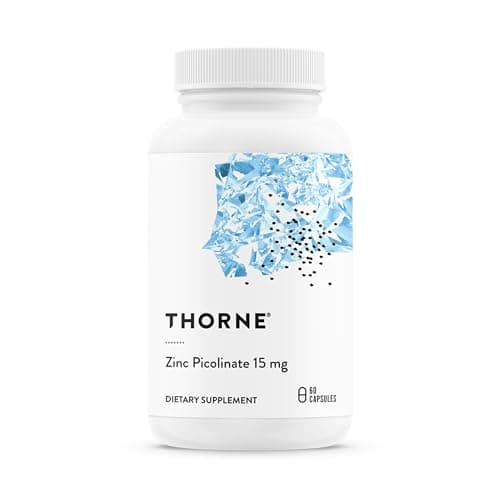
Thorne — Zinc Picolinate 15 mg (60 capsules)
Zinc picolinate 15 mg, capsule, 60 servings, third-party certified, gluten/dairy/soy-free
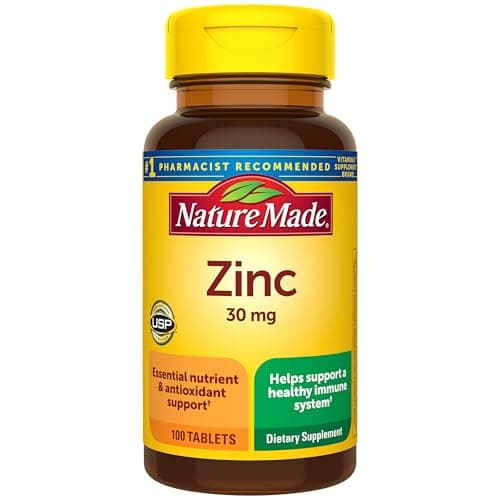
Nature Made — Zinc 30 mg (100 tablets, 100-day supply)
At a glance
Tap a row to check price · tap a header to sort| # | Best for | Price | ||
|---|---|---|---|---|
| 1 | 1. Thorne — Zinc Picolinate 15 mg (60 capsules)Best overall | Best overall | 8.3/10 | |
| 2 | 2. Nature Made — Zinc 30 mg (100 tablets, 100-day supply)Best value | Best value | 8/10 | $4.14$5.7928% offCheck Price for Nature Made Zinc 30 mg (100 tablets, 100-day supply) on AmazonIn Stock |
| 3 | 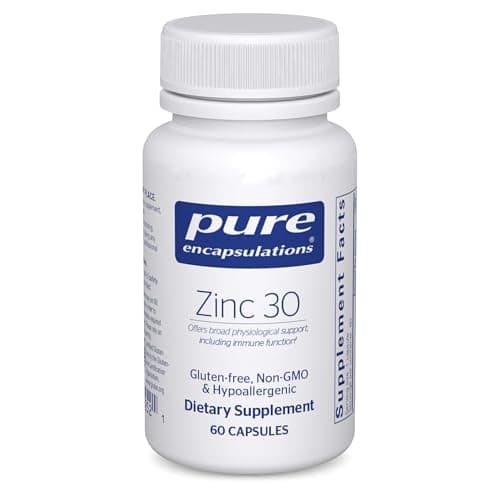 3. Pure Encapsulations — Zinc 30 mg Picolinate (60 capsules)Best clean label | Best clean label | 7.3/10 | |
| 4 | 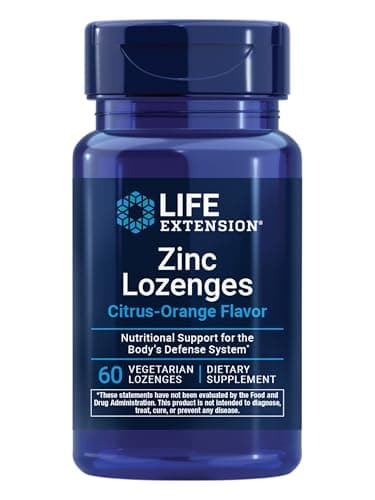 4. Life Extension — Zinc Lozenges, Citrus-Orange (60 vegetarian lozenges)Best for an actual cold | Best for an actual cold | 6.9/10 | |
| 5 | 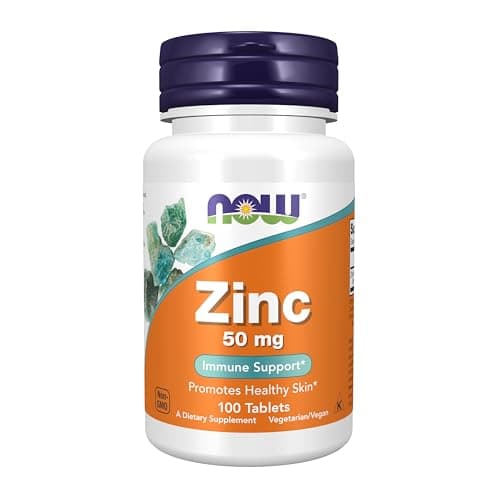 5. NOW Foods — Zinc Gluconate 50 mg (100 tablets)Reputable and cheap | Reputable and cheap | 5.9/10 | $4.49$8.9950% offCheck Price for NOW Foods Zinc Gluconate 50 mg (100 tablets) on AmazonOnly 1 left in stock - order soon. |
| 6 | 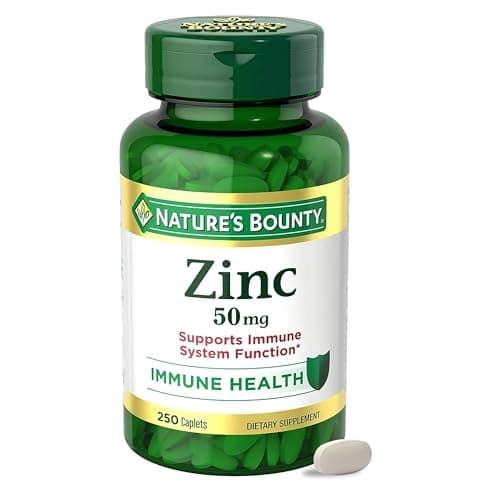 6. Nature's Bounty — Zinc 50 mg Caplets (250 count)The ubiquitous 'immune support' bottle the rubric is built to catch | The ubiquitous 'immune support' bottle the rubric is built to catch | 5.3/10 | |
| 7 | 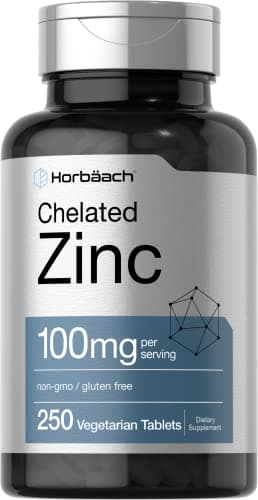 7. Horbäach — Chelated Zinc 100 mg (250 tablets)The megadose-theater pick | The megadose-theater pick | 4.3/10 |
Prices pulled from Amazon as of October 18, 2026 and are subject to change. The price shown on Amazon at checkout applies.
How we scored
Every product below is scored on six metrics, 0-10 each, with the weighting described on how we review. The criteria specific to this category:
- A dose that respects the 40 mg ceiling, not the biggest number on the bottle — the adult RDA is 11 mg (men) and 8 mg (women) and the Tolerable Upper Intake Level is 40 mg/day, so 15-30 mg daily picks score above the 50 and 100 mg products the aisle is built on.
- Third-party testing stated by the brand — a mineral is cheap to make and cheap to mislabel, and an independent identity-and-potency certificate is the only real accountability a zinc label offers.
- No premium charged for a form that performs almost identically — NIH puts citrate and gluconate at ~61% absorption and oxide at ~50%, so a price jump for 'highly absorbable chelated picolinate' scores down unless the rest of the label earns it.
- Honest positioning of the immune claim — zinc supports normal immune function, but a chronic 50 mg+ dose can reduce it via copper depletion, so an 'immune support' bottle at a dose that undermines immunity is exactly the contradiction this rubric penalizes.
- Cost per daily dose you'd actually take, not price per bottle — a 250-count 50 mg bottle is cheap only if you ignore that half the caplet is over the ceiling; the honest denominator is a sensible daily serving.
- Format matched to the job — a plain 15-30 mg capsule or tablet for daily insurance, a zinc lozenge for the narrow cold-onset use where the evidence actually lives, and no candy-format sugar delivery dressed up as a supplement.
What to know before buying
- The RDA is 11 mg and the upper limit is 40 mg — memorize both, because the whole category is priced to make you forget them. NIH's ODS sets the adult RDA at 11 mg/day for men and 8 mg/day for women and the Tolerable Upper Intake Level at 40 mg/day for adults. A 15-30 mg supplement covers the gap with headroom and stays well under the ceiling. A 50 mg caplet is already 25% over the UL before you've eaten anything, and a 100 mg tablet is two and a half times it. There is no version of the physiology where a healthy adult needs 100 mg of zinc a day.
- The 50 mg 'immune support' bottle can lower your immunity, not raise it — this is the single most important thing to understand here. ODS is explicit that doses of 50 mg or more over a period of weeks can inhibit copper absorption, reduce immune function, and lower HDL cholesterol. Zinc and copper compete for absorption; flood the system with zinc for long enough and copper falls, and copper deficiency brings its own anemia and, in documented case reports, neurological damage. The mass-market daily 50 mg immune caplet is selling you the exact dose-and-duration combination the evidence warns against.
- The expensive 'highly absorbable' forms buy you very little. ODS reports absorption of roughly 61% from zinc citrate and zinc gluconate versus 50% from zinc oxide in young adults. That's the real spread — a modest edge for citrate and gluconate over cheap oxide, and picolinate is a fine form but not a magic one. It is nowhere near large enough to justify paying several times more for a 'chelated for maximum absorption' label, especially when the dose is already above what your body will use. Buy a reasonable form at a reasonable dose; don't buy the absorption story.
- Zinc does not prevent colds, and only a lozenge shortens one. The 2024 Cochrane review pooled 34 studies and 8,526 participants and found zinc made little to no difference in preventing colds (low-certainty evidence). For a cold you already have, zinc lozenges may cut its duration by about two days — again low-certainty — and an earlier analysis found the doses that worked were lozenges above 75 mg/day, with lower doses doing nothing. Two caveats matter: it's the lozenge (dissolved in the mouth, started within a day of symptoms), not a swallowed tablet, and Cochrane found a probable increase in non-serious side effects — mostly bad taste and stomach upset — when zinc is used to treat a cold. Use it as a short acute protocol, not a daily habit.
- Whole food covers most people, and that's the honest default. ODS notes oysters contain more zinc per serving than any other food, and that red meat and poultry provide the majority of the zinc in the American diet, with beans, nuts, whole grains, and pumpkin seeds contributing more. Because the RDA is only 8-11 mg, a normal omnivorous diet with meat in it usually clears the bar without a capsule. Zinc from food ranges from 5% to more than 50% absorbed depending on how much phytate the meal carries — which is the whole-foods-first point: eat the animal protein and the seeds, and supplement the genuine gap, not the diet you already have.
- If you're plant-based, you're the reader who most likely needs it — and a soak helps. ODS explains that phytates in grains, legumes, and seeds bind zinc in the gut and form an insoluble complex that blocks absorption, so vegetarians and vegans tend to have both lower intakes and lower serum zinc. Two fixes: soaking beans, grains, and seeds for several hours before cooking releases some bound zinc, and a modest 15-30 mg daily supplement closes the rest. This is the one audience where a standing daily zinc is genuinely well-justified — and it's still a modest dose, not a mega one.
- Know whether you're actually at risk before you start. Beyond vegans, ODS flags people with GI disorders or a history of bariatric surgery (impaired absorption), pregnant and lactating women (higher needs), exclusively breastfed infants past six months, people with sickle cell disease, and those with alcohol use disorder — of whom 30-50% have low zinc status. Deficiency shows up as delayed wound healing, hair loss, frequent infections, loss of taste or smell, and in older adults changes in cognition and mood. If none of those describe you and you eat meat, your marginal capsule is doing very little.
- Time it around your medications and your other minerals. ODS notes zinc can interfere with quinolone antibiotics like ciprofloxacin and tetracyclines — take the antibiotic at least 2 hours before or 4-6 hours after the zinc — and with penicillamine (separate by at least an hour). Thiazide diuretics increase urinary zinc loss over time. And because zinc competes with copper, anyone on a standing higher-dose zinc for a real reason should make sure their diet or multivitamin supplies copper too; the copper-to-zinc balance is the thing to watch, not zinc in isolation.
Our picks
Thorne — Zinc Picolinate 15 mg (60 capsules)
Key specs: Zinc picolinate 15 mg, capsule, 60 servings, third-party certified, gluten/dairy/soy-free
Pros
- 15 mg is the sane end of the category — above the 8-11 mg RDA with room to spare, and nowhere near the 40 mg upper limit, so daily use carries no copper-depletion worry
- Third-party certified by a brand whose testing program is among the most rigorous in supplements, which is the accountability most of this cheap-to-mislabel category lacks
- Picolinate is a clean, well-absorbed form and the label is a single ingredient — no 'immune blend' filler riding along
Cons
- About 25 cents a capsule — a real premium over the drugstore tablets for a mineral where the absorption gap between forms is modest
- 60 capsules is a two-month bottle, so the per-day math looks better than the per-bottle price suggests
Thorne — Zinc Picolinate 15 mg (60 capsules)
- Third-party testing9/10
- Bioavailability8/10
- Clinical evidence8/10
- Value6/10
- Brand transparency9/10
- Form & absorption8/10
Nature Made — Zinc 30 mg (100 tablets, 100-day supply)
Key specs: Zinc 30 mg per tablet, 100 tablets, 100-day supply, no artificial flavors, no added color
Pros
- About five cents a day for a 30 mg dose that sits comfortably under the 40 mg upper limit — the rubric's honest answer for daily insurance
- Nature Made was the first brand accepted into USP's Dietary Supplement Verification Program and carries more USP-verified products than any other brand — check the USP mark on the bottle you buy, since it's granted per product, not per brand
- One tablet, once a day, 100 days per bottle — no stacking and no theatrics
Cons
- 30 mg is toward the upper end of what a healthy adult needs; if you already eat meat, 15 mg would cover you with more headroom under the ceiling
- A plain tablet with no certificate printed on the bottle — you're trusting the brand's QC record rather than a per-lot COA
Nature Made — Zinc 30 mg (100 tablets, 100-day supply)
- Third-party testing7/10
- Bioavailability8/10
- Clinical evidence8/10
- Value10/10
- Brand transparency7/10
- Form & absorption8/10
Pure Encapsulations — Zinc 30 mg Picolinate (60 capsules)
Key specs: Zinc picolinate 30 mg, hypoallergenic vegetable capsule, free from common allergens and unnecessary excipients, 60 servings
Pros
- A genuinely minimal label — zinc picolinate and a vegetable capsule, no dyes, binders, or 'proprietary immune complex' — which is exactly the clean-ingredient standard this site rewards
- Pure Encapsulations is a practitioner-channel brand with a strong transparency and testing reputation, a fair reason to pay more when the dose is sensible
- 30 mg stays under the 40 mg ceiling, so it works as an everyday supplement without the copper worry the 50 mg products carry
Cons
- Around 27 cents a capsule — you're paying a clean-label premium for a mineral whose form barely moves absorption
- Same picolinate story as the marketing implies 'better absorbed,' when NIH's numbers put citrate and gluconate in the same ~61% range
Pure Encapsulations — Zinc 30 mg Picolinate (60 capsules)
- Third-party testing7/10
- Bioavailability8/10
- Clinical evidence8/10
- Value6/10
- Brand transparency8/10
- Form & absorption8/10
Life Extension — Zinc Lozenges, Citrus-Orange (60 vegetarian lozenges)
Key specs: Zinc lozenges, citrus-orange flavor, gluten-free, non-GMO, vegetarian, 60 lozenges — for short-term use at cold onset
Pros
- The lozenge is the only zinc format Cochrane's 2024 review associates with a real effect: started at the first sign of a cold, zinc lozenges may cut its duration by about two days
- A clean, single-purpose lozenge from a reputable brand — the honest version of the 'zinc for colds' idea, without the homeopathic labeling the Cold-EEZE and Zicam products hide their dose behind
- Cheap enough to keep in the cabinet for the few days a year you'd actually use it
Cons
- This is an acute protocol, not a daily supplement — the therapeutic cold effect came from dissolving lozenges through the day (earlier analyses found the doses that worked were above 75 mg/day), which is fine for a few days but far too much to take routinely
- Cochrane found a probable increase in non-serious side effects with zinc cold treatment — mainly bad taste and stomach upset — so it's a short-term tool, not a habit
- Does nothing to prevent colds; if you're buying it to take all winter, you've misread the evidence
Life Extension — Zinc Lozenges, Citrus-Orange (60 vegetarian lozenges)
- Third-party testing6/10
- Bioavailability7/10
- Clinical evidence8/10
- Value8/10
- Brand transparency6/10
- Form & absorption7/10
NOW Foods — Zinc Gluconate 50 mg (100 tablets)
Key specs: Zinc gluconate 50 mg per tablet, 100 tablets, non-GMO, vegetarian/vegan
Pros
- Zinc gluconate is one of the better-absorbed forms in NIH's data (~61%), from a long-established, GMP-audited brand at a genuinely low price
- A clean single-ingredient label with no immune-blend filler — the problem here is the dose, not the formula
Cons
- 50 mg is 25% over the 40 mg upper limit in a single tablet, and NIH specifically warns that 50 mg or more over weeks inhibits copper absorption, reduces immune function, and lowers HDL — so this is not a daily tablet for a healthy adult
- If you take it, take it intermittently or split it, and make sure you're getting copper elsewhere — the copper balance is the real risk this dose creates
NOW Foods — Zinc Gluconate 50 mg (100 tablets)
- Third-party testing6/10
- Bioavailability7/10
- Clinical evidence6/10
- Value9/10
- Brand transparency6/10
- Form & absorption4/10
Nature's Bounty — Zinc 50 mg Caplets (250 count)
Key specs: Zinc 50 mg per caplet, immune support marketing, 1 caplet per day, gluten-free, 250 vegetarian caplets
Pros
- From a mass-market brand with a real manufacturing footprint, and cheap per caplet with a huge 250-count bottle
- The zinc itself is fine; a caplet is a reasonable, easy-to-take format
Cons
- Sold as '1 caplet per day' immune support at 50 mg — the exact daily-dose-and-duration NIH says can reduce immune function via copper depletion, which inverts the entire label promise
- 250 caplets at 50 mg is a year-plus of a dose you should not be on for a year, so the low per-caplet price is a trap, not a value
- No third-party certificate surfaced, and the marketing does the heavy lifting the testing should
Nature's Bounty — Zinc 50 mg Caplets (250 count)
- Third-party testing5/10
- Bioavailability7/10
- Clinical evidence6/10
- Value7/10
- Brand transparency4/10
- Form & absorption4/10
Horbäach — Chelated Zinc 100 mg (250 tablets)
Key specs: Chelated zinc 100 mg per tablet, marketed as high potency, 250 tablets
Pros
- Cheap per tablet, and 'chelated' is a legitimate absorption term — the form isn't the issue
- Large 250-count bottle if you were, for some reason, going to take this
Cons
- 100 mg is 250% of the 40 mg upper limit in one tablet — there is no healthy-adult scenario that calls for this, and sustained intake at this level is squarely in the copper-deficiency and lowered-immunity zone NIH describes
- 'High potency' is doing all the marketing work for a nutrient where more is actively worse past 40 mg — the headline number is the least defensible thing on the label
- No third-party certification surfaced to back a dose this far outside the guidelines
Horbäach — Chelated Zinc 100 mg (250 tablets)
- Third-party testing4/10
- Bioavailability6/10
- Clinical evidence4/10
- Value6/10
- Brand transparency4/10
- Form & absorption2/10
Frequently asked questions
For daily supplementation, 15-30 mg is the sensible range. NIH's Office of Dietary Supplements sets the adult RDA at 11 mg/day for men and 8 mg/day for women, and the Tolerable Upper Intake Level — the most you should take daily without expecting harm — at 40 mg. A 15-30 mg supplement covers the gap with headroom while staying under that ceiling. The 50 mg and 100 mg products that fill the aisle exceed the upper limit in a single dose; NIH warns that 50 mg or more over a period of weeks can inhibit copper absorption, reduce immune function, and lower HDL cholesterol. Unless a clinician has told you otherwise for a specific reason, there's no case for a healthy adult taking more than 40 mg a day.
Related reading
- → How much protein you actually need per day
- → Best multivitamin (most already include your zinc and copper)
- → Best vitamin C (the other immune-support staple, scored on the same anti-hype rubric)
- → Best vitamin D supplement
- → Best magnesium supplement (the other everyday mineral worth getting right)
- → Best supplements for immune support (where the 50 mg zinc caplet ranks)
Sources
- Zinc — Fact Sheet for Health Professionals — NIH Office of Dietary Supplements, 2025
- Zinc for preventing and treating the common cold (34 studies, 8,526 participants) — Cochrane Database of Systematic Reviews, 2024
- Copper — Fact Sheet for Health Professionals (zinc–copper antagonism) — NIH Office of Dietary Supplements, 2025
Last verified: July 20, 2026. See our editorial policy and how we review for details on scoring and update cadence. Canonical URL: https://trustedhealthgear.com/reviews/best-zinc.
Thorne — Zinc Picolinate 15 mg (60 capsules)
$15.00 · on Amazon