The Best Supplements for Runners, Ranked by What Actually Changes a Run
If you want one answer: the best supplement for most runners is a drink mix that delivers carbohydrate and sodium together during long efforts, and our pick is Skratch Labs Sport Hydration Mix — 380 mg of sodium and 20 g of sugar per serving, which is a fueling product being honest about being one. That is deliberately unglamorous. Running is the sport where the two things that most reliably wreck a session are running out of fuel and losing too much fluid and sodium, and both are solved by the cheapest category in the store. Second on this page is the one supplement worth a blood test before a purchase: iron. Iron deficiency is disproportionately a runner's problem — reported to affect roughly 3-11% of male athletes and 15-35% of female athletes, with one population of highly trained female athletes showing 46% with sub-optimal iron levels — because training drives losses through foot-strike hemolysis, sweat and gut, and menstruation adds to it. Low iron flattens your aerobic ceiling in a way no other item here can touch, and it is the one deficiency that explains a mysteriously bad training block. But iron is also a supplement you should not take blind: excess is harmful, so the sequence is ferritin test, then clinician, then supplement — not the reverse. After those two, the page gets more modest and we have ranked it honestly. Tart cherry has small trials showing less soreness and lower markers of damage around strenuous exercise, which makes it a race-week tool rather than a daily habit. Protein is not a running supplement so much as a daily total you probably are not hitting, and a whey isolate is the convenient way to close the gap. Vitamin D matters for bone, which matters to runners specifically because of stress-fracture risk in a repetitive-impact sport. Collagen with vitamin C has a small literature around connective-tissue tolerance and activity-related joint pain, including a 24-week trial in 147 athletes. What is not on this page: anything claiming to raise your VO2 max out of a bottle. Mileage progression, sleep, strength work twice a week and eating enough do that. This is general information, not medical advice — persistent fatigue, shortness of breath, recurring injuries or a sudden drop in performance deserve a clinician and a blood panel, not a bigger supplement order.
Top pick

Skratch Labs — Skratch Labs Sport Hydration Mix
380mg sodium, 40mg potassium, 20g sugar, real fruit flavorings
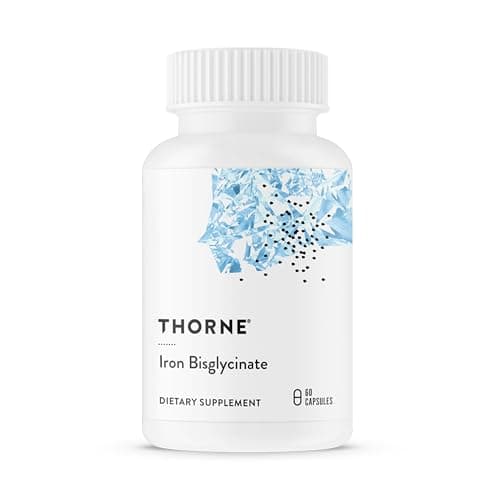
Thorne — Iron Bisglycinate 25 mg (60 servings)
At a glance
Tap a row to check price · tap a header to sort| # | Best for | Price | ||
|---|---|---|---|---|
| 1 | 1. Skratch Labs — Skratch Labs Sport Hydration MixBest overall for runners | Best overall for runners | 8.6/10 | |
| 2 | 2. Thorne — Iron Bisglycinate 25 mg (60 servings)Best iron for runners | Best iron for runners | 8.8/10 | |
| 3 | 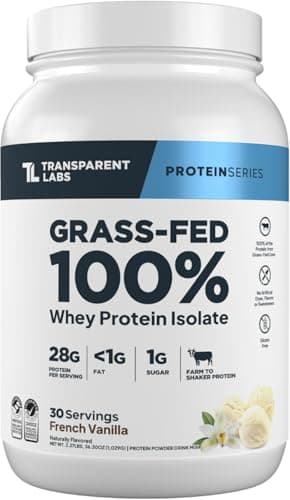 3. Transparent Labs — Whey Protein IsolateBest protein for closing a daily gap | Best protein for closing a daily gap | 8.4/10 | |
| 4 | 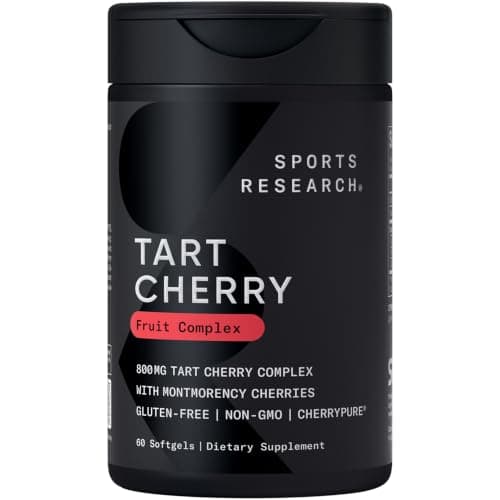 4. Sports Research — Tart Cherry Fruit Complex (800 mg, 60 Softgels)Best race-week recovery tool | Best race-week recovery tool | 8/10 | |
| 5 |  5. Sports Research — Sports Research Vitamin D3 with Coconut OilBest for the bone side of running | Best for the bone side of running | 7.8/10 | |
| 6 | 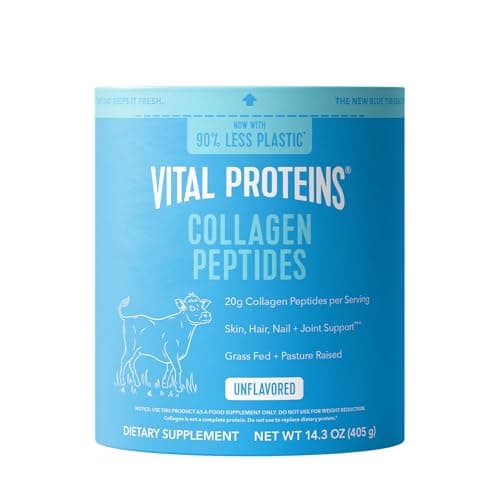 6. Vital Proteins — Collagen Peptides UnflavoredBest connective-tissue option | Best connective-tissue option | 7.7/10 |
Prices pulled from Amazon as of October 18, 2026 and are subject to change. The price shown on Amazon at checkout applies.
How we scored
Every product below is scored on six metrics, 0-10 each, with the weighting described on how we review. The criteria specific to this category:
- Does it change a run, and by what mechanism? Weighted heaviest, and it sorts this category quickly. Carbohydrate and sodium during long efforts change performance directly and reproducibly. Correcting iron deficiency restores a ceiling you had lost. Protein supports the adaptation you are training for. Those are real mechanisms with real effect sizes. Blunting soreness, supporting bone over years, or nudging connective-tissue tolerance are smaller and slower, and they are ranked accordingly rather than talked up.
- Dose and form that match the research. For hydration that means sodium in the range sweat actually loses, delivered with carbohydrate rather than as a sodium-only novelty. For iron it means a well-tolerated chelate at a sensible elemental dose, because ferrous sulfate's gastrointestinal side effects are well documented in a 43-trial systematic review. For protein it means grams of complete protein per serving, not a proprietary 'performance matrix'. For tart cherry it means the standardized concentrate used in the published trials.
- Third-party testing, which matters more for runners than for most people. If you compete in anything sanctioned, a contaminated supplement is a sanction risk, and the supplement industry is not pre-approved by the FDA. NSF Certified for Sport and Informed Sport are the certifications that mean something here, and we weight them heavily. For a product you will take daily for years, a published certificate of analysis is the minimum.
- Label honesty and no proprietary blends. The endurance shelf is full of 'electrolyte complexes' that hide sodium content, and 'recovery formulas' that bundle fifteen ingredients into one declared weight. We reward labels that print sodium in milligrams, carbohydrate in grams, protein in grams and elemental iron in milligrams, and we mark down anything that forces you to guess.
- Value at a real training dose, and whether food does it better. Drink mixes get used by the scoop on long runs, so cost per serving is the number that matters, not cost per tub. And for several items here the honest answer is that food wins: a bagel with jam and a pinch of salt fuels a long run perfectly well, and dinner closes a protein gap better than a shake. We say that where it is true, then rank on what the product costs today.
What to know before buying
- Fuel and fluid first, because they are the only things on this page that reliably change a run this week. The practical version: for efforts beyond roughly 60-90 minutes, take carbohydrate during the run, and replace sodium as well as water when you are sweating heavily or running in heat. The ACSM's position stand on exercise and fluid replacement is the reference point, and sweat sodium losses vary enormously between individuals — the published range across athletes is wide enough that a one-size dose is a guess. Start with a standard drink mix, practice your fueling in training rather than on race day, and adjust from how you actually feel and what you weigh before and after long runs.
- Test iron before you supplement it, and know which groups should test. This is the only item on the page we would gate behind a blood test. Iron deficiency is common in runners — reported in roughly 3-11% of male and 15-35% of female athletes, with much higher rates in some trained female populations — and it genuinely limits aerobic performance. But iron is also the supplement where taking it unnecessarily does harm, and the warning label about accidental overdose in children exists for good reason. Ask for ferritin alongside a full blood count, discuss the result with your clinician, and if you do supplement, note the absorption research: alternate-day dosing and single morning doses absorb better than split daily dosing, vitamin C helps, and chelated forms are much easier on the gut than ferrous sulfate.
- Protein is a daily total, not a post-run event — and most runners undershoot it. Endurance athletes often eat protein like sedentary people and carbohydrate like athletes. The fix is boring: hit a daily target across meals, and use a shake only when real food is inconvenient. A whey isolate is the most efficient way to add 25-30 g without much else attached, which is why one is on this page. If you are plant-based, our plant protein roundup covers the equivalent options. And if your weekly mileage is high and your bodyweight is drifting down, the problem is probably total calories rather than protein specifically.
- Treat tart cherry as a race-week tool, and understand the trade-off. The Montmorency cherry trials cluster around strenuous exercise and show less soreness and lower markers of muscle damage, typically dosed for several days before and after the hard effort. That makes it genuinely useful in a taper, a race week, or a block with back-to-back long efforts. The honest caveat is the one the marketing never mentions: the inflammatory response after hard training is part of how you adapt, and chronically high-dose antioxidants around every session may blunt some of that adaptation. Use it around the events that matter, not every day of the year.
- Bone and tendons are the runner-specific risk, and they are slow projects. Running is repetitive impact, which makes stress fractures the injury that ends seasons, and vitamin D and calcium status are part of that picture — NIH's Office of Dietary Supplements is the right reference for intakes and for what the evidence does and does not support. Collagen with vitamin C has a small literature on connective-tissue tolerance and activity-related joint pain, including a 24-week randomized trial in 147 varsity and club athletes. Both are months-long propositions, neither replaces sensible mileage progression and strength training twice a week, and if you have had a stress fracture, that is a conversation with a sports physician about bone health, energy availability and training load — not a supplement decision.
Our picks
Skratch Labs — Skratch Labs Sport Hydration Mix
Key specs: 380mg sodium, 40mg potassium, 20g sugar, real fruit flavorings
Pros
- Delivers carbohydrate and sodium together, which is what the ACSM's fluid-replacement guidance points toward for prolonged exercise rather than electrolytes alone
- 380 mg sodium and 20 g sugar per serving are printed plainly — no proprietary 'hydration complex' hiding the actual amounts
- Real fruit flavoring and a light taste, which matters more than it sounds: a mix you dislike at mile 16 is a mix you stop drinking
- Made for exactly this use case by a brand built around endurance fueling rather than general wellness
Cons
- It contains sugar by design, so it is a fueling product and not a zero-calorie daily drink
- Sodium needs vary hugely between individuals, so heavy, salty sweaters may need more than one serving provides
- Cheaper to replicate roughly at home with sugar, salt and juice — you are paying for convenience and consistency
Who this one is for
For any runner doing efforts beyond about an hour, which is most people reading this. The combination is the point: 380 mg of sodium with 20 g of sugar per serving means it fuels and rehydrates at the same time, which is what a long run actually needs. Skip it for a 30-minute easy jog, where water is fine and the calories are unnecessary — this is a long-run and race-day product.
Skratch Labs — Skratch Labs Sport Hydration Mix
- Changes a run10/10
- Dose & form9/10
- Label honesty9/10
- Third-party testing6/10
- Value per serving8/10
Thorne — Iron Bisglycinate 25 mg (60 servings)
Key specs: Iron bisglycinate, 25 mg elemental iron per capsule, 60 servings, NSF Certified for Sport, gluten-free
Pros
- Correcting genuine iron deficiency restores an aerobic ceiling, which no other supplement on this page can do
- Iron bisglycinate is far better tolerated than ferrous sulfate, whose gastrointestinal side effects are documented across a 43-trial systematic review
- NSF Certified for Sport — the certification that actually matters if you compete in anything tested
- 25 mg elemental iron per capsule is stated as elemental, not compound weight, so the dose is unambiguous
Cons
- Should not be taken without a blood test — iron overload is a real harm, and 'I feel tired' is not a diagnosis
- Absorption is finicky: alternate-day or single morning dosing beats split daily doses, and coffee, tea, calcium and some medications interfere
- Accidental overdose of iron-containing products is a leading cause of fatal poisoning in children under six, so storage matters
Who this one is for
For the runner with a confirmed low ferritin, which is the condition that should gate this purchase. If you have had a mysteriously flat training block, run high mileage, are female, or are vegetarian, this is the test to ask for. Iron bisglycinate is dramatically easier on the gut than ferrous sulfate, and NSF Certified for Sport matters if you compete. Do not take iron speculatively — excess is harmful.
Thorne — Iron Bisglycinate 25 mg (60 servings)
- Changes a run9/10
- Dose & form10/10
- Label honesty10/10
- Third-party testing10/10
- Value per serving8/10
Transparent Labs — Whey Protein Isolate
Key specs: 28g protein / 120cal, grass-fed whey isolate, stevia-sweetened
Pros
- 28 g of complete protein for about 120 calories — the most efficient way here to close a daily gap without excess calories
- Isolate is lower in lactose than concentrate, which matters for the runners whose guts object to dairy before training
- Fully disclosed label with no proprietary matrix, no amino spiking and no filler creatine blend
- Grass-fed sourcing and stevia sweetening, so no artificial sweetener if that is a preference
Cons
- Dinner does this better — a shake is a convenience product, not a nutritional upgrade on real food
- Expensive per gram of protein compared with a plain whey concentrate, if cost is the binding constraint
- Stevia is divisive, and nobody should buy a tub this size without trying the flavor first
Who this one is for
For the runner whose daily protein intake is quietly too low, which is most endurance athletes. 28 g of protein for 120 calories is about as efficient as this gets, and an isolate is the right pick if dairy sits badly with you. Not a magic post-run product — the value is hitting a daily total across meals, and this is the convenient way to do it when cooking is not happening.
Transparent Labs — Whey Protein Isolate
- Changes a run7/10
- Dose & form10/10
- Label honesty10/10
- Third-party testing7/10
- Value per serving7/10
Sports Research — Tart Cherry Fruit Complex (800 mg, 60 Softgels)
Key specs: 800 mg tart cherry complex per softgel · made with Montmorency cherries · contains CherryPURE, the standardized concentrate used in the recovery research · 60 softgels per bottle · gluten-free, non-GMO · softgel format, no added sugar
Pros
- The Montmorency cherry trials around strenuous exercise showed reduced soreness and lower markers of muscle damage — directly relevant to a hard race week
- Uses CherryPURE, the standardized concentrate from the published research, rather than an unspecified house extract
- Doubles as a mild sleep aid, which is the other half of recovery and the reason we rank it above its trial strength alone
- Short label, no added sugar, no proprietary 'recovery blend' padding
Cons
- Modest effect size — this takes the edge off soreness, it does not remove it
- Not a year-round product: chronic high-dose antioxidants around every session may blunt training adaptation
- Capsules and softgels are not the same dose vehicle as the juice used in several trials, so the translation is imperfect
Who this one is for
For the runner in a race week, a taper, or a block with back-to-back long efforts. It contains CherryPURE, the standardized Montmorency concentrate that appears in several published recovery studies, and it has the useful side effect of being a mild sleep aid. Use it for a short course around hard efforts rather than every day — year-round antioxidant loading may blunt some of the adaptation you are training for.
Sports Research — Tart Cherry Fruit Complex (800 mg, 60 Softgels)
- Changes a run6/10
- Dose & form9/10
- Label honesty9/10
- Third-party testing7/10
- Value per serving9/10
Sports Research — Sports Research Vitamin D3 with Coconut Oil
Key specs: 5,000 IU D3 in organic coconut oil softgel, 360-count
Pros
- Bone health is the runner-specific risk that matters most over a career, and vitamin D status is part of that picture
- Delivered in a coconut-oil softgel, which suits a fat-soluble vitamin far better than a dry powder capsule
- 360-count bottle makes the cost per day negligible, and D3 is the better-absorbed form compared with D2 in head-to-head work
- Single-ingredient label from a brand with a consistent testing record
Cons
- 5,000 IU is more than many people need — vitamin D is fat-soluble and accumulates, so this is best matched to a tested deficiency
- Does nothing for a run today; the benefit is structural and measured in seasons
- Vitamin D alone does not prevent stress fractures — training load, energy availability and calcium all matter at least as much
Who this one is for
For the runner who trains indoors or in a northern winter, covers up outdoors, or has had a bone-stress injury and been told to look at vitamin D. Running is repetitive impact and bone health is the runner-specific long game. The 5,000 IU dose is higher than most people need as a baseline, so this is a correct-a-gap product rather than a default — check your level if you can.
Sports Research — Sports Research Vitamin D3 with Coconut Oil
- Changes a run5/10
- Dose & form8/10
- Label honesty9/10
- Third-party testing7/10
- Value per serving10/10
Vital Proteins — Collagen Peptides Unflavored
Key specs: 20g collagen per 2-scoop serving, grass-fed pasture-raised bovine, unflavored dissolves easily
Pros
- Has its own randomized trial in athletes with activity-related joint pain — a 24-week study in 147 varsity and club athletes
- 20 g per serving is in the range used in the connective-tissue literature, not a token few grams
- Unflavored and dissolves cleanly, so it disappears into coffee or a shake and gets taken consistently
- Grass-fed, pasture-raised sourcing with a single-ingredient label
Cons
- Collagen is not a complete protein and should not count toward your protein target — it is a targeted add-on, not a protein source
- The evidence base is small and the effects are slow; expect months, and expect modest
- Load management, strength work and sensible mileage progression do far more for tendons than any powder
Who this one is for
For the runner who keeps getting stopped by tendon and joint niggles rather than by fitness. The relevant evidence is small but real: a 24-week randomized trial in 147 varsity and club athletes with activity-related joint pain found statistically significant improvements on several parameters. Take it with a vitamin C source, give it months, and understand it is an adjunct to load management rather than a replacement for it.
Vital Proteins — Collagen Peptides Unflavored
- Changes a run5/10
- Dose & form9/10
- Label honesty9/10
- Third-party testing7/10
- Value per serving8/10
Frequently asked questions
For most runners, two things matter and the rest is optional. First, a drink mix that supplies carbohydrate and sodium during efforts longer than about 60-90 minutes — our pick is Skratch Labs Sport Hydration at 380 mg sodium and 20 g sugar per serving, because fueling and fluid are the two variables that reliably ruin or rescue a long run. Second, iron, but only after a ferritin test: iron deficiency is reported in roughly 3-11% of male and 15-35% of female athletes and genuinely limits aerobic performance, while supplementing without need is harmful. Protein, vitamin D, tart cherry and collagen are reasonable add-ons in that order, and none of them substitutes for sleep, mileage progression and strength work twice a week.
Related reading
- → Daily protein requirements
- → Do electrolyte powders actually work?
- → How to choose a protein powder
- → Is collagen worth it?
- → Electrolyte tablets vs powder
- → Whey isolate vs concentrate
- → Tart cherry vs melatonin
- → Best electrolyte powders
- → Best iron supplements
- → Best protein powders
- → Best tart cherry supplements
- → Best vitamin D supplements
- → Best collagen peptides
- → Best supplements for recovery
- → Best supplements for CrossFit
Sources
- American College of Sports Medicine position stand: Exercise and fluid replacement (fluid and electrolyte replacement for the physically active) — Medicine & Science in Sports & Exercise
- Sweat sodium losses in elite athletes — wide inter-individual variation in sodium concentration — PubMed / U.S. National Library of Medicine
- High Prevalence of Iron Deficiency Exhibited in Internationally Competitive, Non-Professional Female Endurance Athletes (iron deficiency reported in ~3-11% of male and 15-35% of female athletes; 46% sub-optimal in the studied cohort) — International Journal of Environmental Research and Public Health, 2022
- Iron — Fact Sheet for Health Professionals (requirements, athlete considerations, upper limits and overload risk) — NIH Office of Dietary Supplements
- Iron absorption from oral iron supplements given on consecutive versus alternate days and as single morning doses versus twice-daily split dosing — PubMed / U.S. National Library of Medicine
- Ferrous sulfate supplementation causes significant gastrointestinal side-effects in adults: a systematic review and meta-analysis (43 trials) — PLOS ONE / PubMed Central
- Exercise and Athletic Performance — Fact Sheet for Health Professionals (iron, protein and ergogenic aid evidence) — NIH Office of Dietary Supplements
- Montmorency tart cherry and exercise recovery — reduced muscle soreness and markers of damage/inflammation around strenuous exercise (Howatson and colleagues) — PubMed / peer-reviewed sports-nutrition literature
- Vitamin D — Fact Sheet for Health Professionals (intakes, bone health, upper limits) — NIH Office of Dietary Supplements
- 24-Week study on the use of collagen hydrolysate as a dietary supplement in athletes with activity-related joint pain — 147 varsity/club athletes, 6 parameters statistically significant vs placebo — Current Medical Research and Opinion (Clark KL et al., Penn State), 2008
- Product titles, serving sizes, stated nutrition panels, certifications, live prices and availability for all six ranked products — retrieved via the Amazon product data layer — Amazon product listing data, 2026
Last verified: October 11, 2026. See our editorial policy and how we review for details on scoring and update cadence. Canonical URL: https://trustedhealthgear.com/reviews/best-supplements-for-runners.
Skratch Labs — Skratch Labs Sport Hydration Mix
$57.95 · on Amazon