Is Collagen Worth It? The Honest Answer Depends On What You Want From It
Collagen is worth it for two specific goals and genuinely not worth it for a third. It is worth it if you have joint pain — a meta-analysis of four randomized trials in 507 people with knee osteoarthritis found a significant reduction in pain versus placebo, and a systematic review of 15 trials in mostly recreational athletes concluded that collagen's clearest effect is improving joint function and reducing joint pain. It is worth it if your target is skin hydration and elasticity, where a meta-analysis of 26 randomized trials in 1,721 people found significant improvements on both. It is not worth it as a protein supplement. Collagen lacks tryptophan entirely, which gives it a Protein Digestibility-Corrected Amino Acid Score of 0 against whey's 1, and in a head-to-head trial muscle protein synthesis after exercise was 0.173% with whey versus 0.020% with collagen at the same nitrogen intake. If you are training hard and buying one powder, buy whey. Buy collagen as a connective-tissue supplement on top of a protein-adequate diet — 5-15 g a day, taken about an hour before training, and give it three months before judging it, because that is how long the trials ran.
Affiliate disclosure: Trusted Health Gear is an Amazon Associate. If you buy through links on this page, we may earn a commission at no extra cost to you. Commission does not influence our rankings. Full policy.
What collagen is, and what happens when you swallow it
Collagen makes up about a third of the total protein in the human body and is the most abundant structural protein you have. It is the principal component of the extracellular matrix, it contributes roughly 65-80% of the dry weight of tendons, and it accounts for about 80% of the dry weight of skin. Structurally it is a triple helix built from a repeating pattern dominated by three amino acids — glycine, proline and hydroxyproline — and that composition is both why it works as a structural material and why it is a poor dietary protein. Supplement collagen is hydrolyzed: the intact protein is enzymatically broken into short bioactive peptides, which is what makes the powder dissolve in cold water instead of setting into gelatin, and what lets it be absorbed in the digestive tract. The interesting part is that some of those peptides survive digestion intact. Specific di- and tripeptides containing hydroxyproline — alanine-hydroxyproline-glycine and serine-hydroxyproline-glycine among them — have been detected in human blood an hour after oral collagen ingestion, and tracked to deposition in skin. That is the proposed mechanism for why eating a structural protein might influence structural tissue: not that you absorb collagen and install it, but that these peptide fragments act as signals to the cells that build connective tissue. It is a plausible mechanism with real human data behind it, and it is the reason this category is not pure marketing.
Where the evidence is reasonable: skin
This is the best-studied endpoint, and the result is positive with honest caveats. A 2023 systematic review and meta-analysis in Nutrients pooled 26 randomized controlled trials covering 1,721 participants and found that hydrolyzed collagen supplementation significantly improved both skin hydration (test for overall effect Z = 4.94, p < 0.00001) and skin elasticity (Z = 4.49, p < 0.00001) compared with placebo. The review was deliberately strict in one useful way: it excluded trials that combined collagen with another supplement, which is the single biggest confounder in this literature — plenty of 'collagen' products are collagen plus vitamin C, vitamin E, zinc and hyaluronic acid, and a result from that bottle cannot be attributed to the collagen. Supplementation in the included trials ran from 2 to 12 weeks, and the authors found longer use produced more favorable effects than short use. The foundational trials used modest doses: Proksch and colleagues used 2.5 g and 5 g of porcine collagen peptides over 8 and 12 weeks. Now the caveats, because they matter. Fourteen of the 26 trials used fish collagen and nine did not report the source at all. Several trials enrolled fewer than 40 people. The authors identified several biases across the included studies and noted heterogeneity in measurement units and supplement composition. Their own conclusion was that collagen can have positive effects on skin but that large-scale randomized trials are still needed to confirm them. Read that as a real effect of modest size, not a transformation.
Where the evidence is reasonable: joints and tendons
If anything, the joint evidence is more interesting than the skin evidence, because the outcome is something you feel rather than something a corneometer measures. A 2023 meta-analysis in the Journal of Orthopaedic Surgery and Research pooled four randomized controlled trials in 507 patients with knee osteoarthritis and found significantly greater pain relief with collagen peptides than placebo — standardized mean difference −0.58, 95% confidence interval −0.98 to −0.18, p = 0.004 — graded as moderate-quality evidence. Adverse events did not differ significantly from placebo. The authors were blunt that all four included trials carried a high risk of bias, so treat the effect size as indicative rather than precise. The athletic side comes from a 2021 systematic review in Amino Acids covering 15 randomized trials, 12 of them in recreational athletes, that examined collagen combined with exercise. Its conclusion was that collagen is most beneficial for improving joint functionality and reducing joint pain, with smaller and less consistent effects on body composition, strength and muscle recovery. It also found collagen synthesis markers elevated at a 15 g daily dose, though not at all doses or in all trials. The mechanism is credible: mechanical loading of tendon during exercise triggers a signaling cascade that increases matrix protein production, so supplying peptide substrate around training is biologically coherent. The practical protocol that review landed on is specific — 5-15 g a day, taken at least an hour before exercise, for longer than three months. Compliance is the hard part, and the reason most people conclude it did nothing.
Where it does not work: building muscle
This is where we part company with most of the category's marketing, and the data are not close. Collagen is an incomplete protein — it contains no tryptophan — which gives it a Protein Digestibility-Corrected Amino Acid Score of 0. Whey and lactalbumin score 1. That is not a nuance about optimization; it is a statement that collagen cannot serve as a sole protein source. The functional consequence shows up in muscle protein synthesis. In trials summarized by the same 2021 systematic review, 30 g a day of whey protein versus 30 g a day of collagen produced a far greater increase in muscle protein synthesis with whey (0.173% ± 0.104% versus 0.020% ± 0.034% after exercise), and 60 g a day of lactalbumin beat 60 g a day of collagen by 13% ± 5%. The supplements were matched for nitrogen, so this is not a dose artifact — it is amino acid profile. Plasma leucine was 5.5 times higher after whey than after collagen, and leucine is the trigger for the muscle-building signal. The review's own practical conclusion was that other higher-quality protein sources such as whey may be more beneficial for muscle protein synthesis and therefore hypertrophy. One honest nuance in collagen's favor: in that same work, collagen and whey did not differ for muscle collagen protein synthesis specifically, and exercise raised it regardless of which protein was consumed. So collagen is not useless around training — it is simply not a hypertrophy supplement, and counting its grams toward your daily protein target is a mistake that will cost you muscle.
Dose, timing, and the vitamin C detail most labels skip
The useful dose range across the trials is narrow and low: 2.5-5 g a day is where the skin studies clustered, 5-15 g a day is what the exercise and joint literature used, and 15 g a day is the dose at which collagen synthesis markers moved in the one trial that saw them move. There is no evidence that a 20 g scoop beats a 10 g one for these endpoints, so a bigger tub at the same price per gram is value, not potency. Timing matters more here than it does for most supplements: the joint and tendon protocol in the literature is dosing at least an hour before loading the tissue, because the point is having peptide substrate circulating while mechanical signaling is happening. And then the detail that belongs on every label and appears on almost none — collagen synthesis requires vitamin C. Vitamin C is the cofactor for the hydroxylation of proline and lysine, both of which are required to form the collagen helix and its cross-links, which is why the tendon trials in this literature commonly dosed gelatin or collagen alongside vitamin C rather than alone. You do not need a special product for this; you need adequate vitamin C in your diet or a cheap separate tablet, and taking your collagen with fruit is enough for most people. On safety, the record is good: none of the 15 trials in the Amino Acids review reported adverse effects, even at doses as high as 60 g a day, and the knee osteoarthritis meta-analysis found no significant difference in adverse events versus placebo. Give any honest trial of it three months, since that is the timeframe at which the reviewed benefits appeared.
What we'd actually buy
Every pick below is already reviewed and scored in our roundups — same products, same specs, with live Amazon prices.
| Attribute | Vital Proteins Collagen Peptides UnflavoredOur pick | Great Lakes Wellness Great Lakes Wellness Collagen Peptides | Nature Made Vitamin C 500 mg Tablets (100 count) | Optimum Nutrition Gold Standard 100% Whey |
|---|---|---|---|---|
| Best for | Best overall bovine hydrolyzed peptides | Best bulk value | Best value — the $6 bottle that does the same physiological job | Best mainstream whey concentrate + isolate blend |
| Who it's for | For most people buying collagen for joints or skin: unflavored bovine hydrolyzed peptides, dissolves in anything, and the 10 g scoop lands inside the dose range the trials actually used. | For the reader committing to a full three-month trial — bulk value matters when the protocol is daily dosing for 90-plus days, which is exactly when most people quit. | The cofactor the collagen label leaves out: vitamin C is required to hydroxylate proline and lysine for the collagen helix, and the tendon trials dosed it alongside collagen rather than on its own. | If your actual goal is muscle, this is the purchase instead of collagen — whey scores 1 on protein quality against collagen's 0, and drove roughly 8x the post-exercise muscle protein synthesis at matched intake. |
| Key specs | 20g collagen per 2-scoop serving, grass-fed pasture-raised bovine, unflavored dissolves easily | 11g collagen per scoop, grass-fed Brazilian bovine, Kosher | Vitamin C 500 mg per tablet, 100 tablets, 100-day supply, no artificial flavors, no added color, no preservatives, gluten free | 24g protein / 120cal, 5.5g BCAAs, Informed Choice certified on listed batches |
| Our score | 8/10 | 8/10 | 8.1/10 | 8/10 |
| Where to buy |
Prices pulled from Amazon as of October 18, 2026 and are subject to change. The price shown on Amazon at checkout applies.
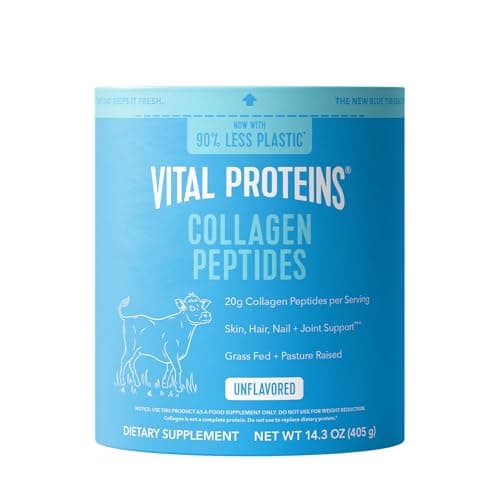
Vital Proteins — Collagen Peptides Unflavored
For most people buying collagen for joints or skin: unflavored bovine hydrolyzed peptides, dissolves in anything, and the 10 g scoop lands inside the dose range the trials actually used.

Great Lakes Wellness — Great Lakes Wellness Collagen Peptides
For the reader committing to a full three-month trial — bulk value matters when the protocol is daily dosing for 90-plus days, which is exactly when most people quit.
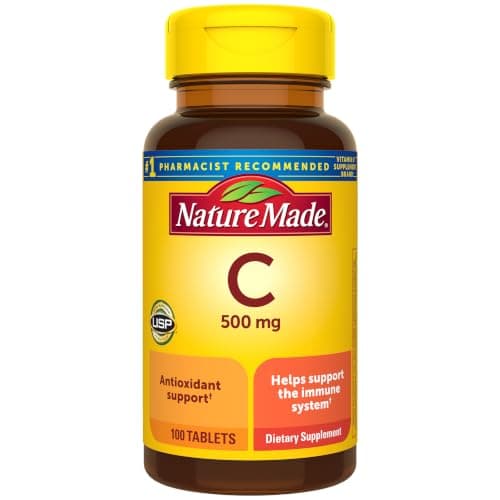
Nature Made — Vitamin C 500 mg Tablets (100 count)
The cofactor the collagen label leaves out: vitamin C is required to hydroxylate proline and lysine for the collagen helix, and the tendon trials dosed it alongside collagen rather than on its own.
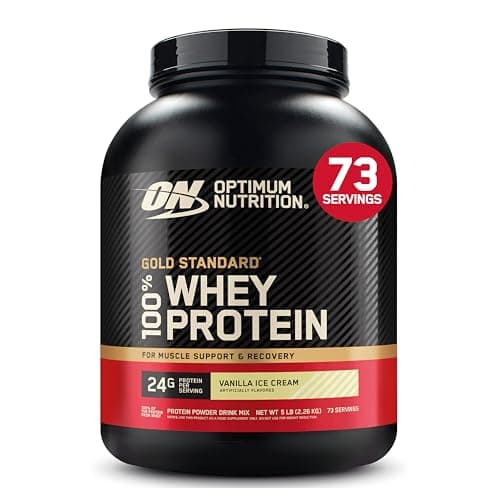
Optimum Nutrition — Gold Standard 100% Whey
If your actual goal is muscle, this is the purchase instead of collagen — whey scores 1 on protein quality against collagen's 0, and drove roughly 8x the post-exercise muscle protein synthesis at matched intake.
Who should skip it
Four groups, and we would rather say so than sell you a tub. Anyone whose total protein intake is not already adequate: a 10 g scoop of collagen in your coffee is a worse use of ten dollars than hitting your protein target with food and whey, and it actively confuses the problem if you count it toward protein. Anyone chasing muscle growth specifically — see the section above; whey wins on every measure that matters there. Anyone unwilling to take it daily for three months, because every protocol with a positive result ran that long or longer, and a two-week trial tells you nothing except that you spent the money. And anyone expecting it to replace treatment for a real joint problem: the knee osteoarthritis evidence is a modest pain reduction on top of normal care, in trials the authors themselves rated as high risk of bias, not a substitute for seeing someone about a knee that is getting worse. Two more notes worth having. Vegan collagen products synthesized from genetically modified yeast and bacteria are now on the market, but none of them appeared in the trials reviewed above, so their efficacy is genuinely unknown rather than assumed — if you avoid animal products, that is an honest reason to skip the category until the research catches up. And women are underrepresented in this literature despite being more prone to connective tissue injury, which is a real gap in what we can tell you with confidence.
Bottom line
Collagen is one of the few supplements in the wellness aisle where the skeptical read and the evidence-based read land in roughly the same place: a real but modest effect on two specific things, and nothing at all on the thing it is most often implied to do. If your knees ache when you squat, if you are loading tendons hard in CrossFit or heavy lifting, or if skin hydration and elasticity are what you are buying for, 5-15 g a day with some vitamin C, an hour before you train, for at least three months, is a defensible purchase with published trials behind it. If you want to build muscle, buy whey, eat protein, and spend nothing on collagen. And keep the frame we apply to every supplement on this site: the structural tissue you care about is built out of a diet with enough total protein, training that loads the tissue progressively, and sleep that lets you recover from it. Collagen is a small accelerator on a system that has to be working first. The tub is not the intervention.
Frequently asked questions
It depends entirely on the goal. For joint pain, yes with reservations: a 2023 meta-analysis of four randomized trials in 507 people with knee osteoarthritis found significantly greater pain relief than placebo (standardized mean difference −0.58, p = 0.004, moderate-quality evidence), though all four trials carried a high risk of bias. For skin, yes with similar caveats: a meta-analysis of 26 trials in 1,721 people found significant improvements in hydration and elasticity, with longer supplementation working better than short. For building muscle, no — collagen contains no tryptophan, scores 0 on the Protein Digestibility-Corrected Amino Acid Score against whey's 1, and produced roughly a tenth of whey's post-exercise muscle protein synthesis at matched nitrogen intake. The honest summary is that collagen is a connective-tissue supplement with modest published effects, worth 5-15 g a day for three months if joints, tendons or skin are the target, and worth nothing if you are trying to add muscle.
Related reading
- → Best collagen peptides, scored on a public rubric
- → Best protein powders (what to buy if muscle is the goal)
- → Best joint supplements
- → Best vitamin C supplements (the collagen-synthesis cofactor)
- → Daily protein requirements
- → How to choose a protein powder
- → Best supplements for recovery
- → How to read a supplement label
Sources
- Effects of oral collagen for skin anti-aging: a systematic review and meta-analysis (26 RCTs, 1,721 participants; significant improvement in skin hydration, Z = 4.94, p < 0.00001, and elasticity, Z = 4.49, p < 0.00001; supplementation 2-12 weeks; trials combining collagen with other supplements excluded; no significant difference between collagen sources for elasticity, p = 0.21; limitations include heterogeneity, small samples and identified risk of bias) — Nutrients, 15(9):2080, 2023
- Analgesic efficacy of collagen peptide in knee osteoarthritis: a meta-analysis of randomized controlled trials (4 trials, 507 patients; pain relief standardized mean difference −0.58, 95% CI −0.98 to −0.18, p = 0.004, I² = 68%, moderate quality of evidence; no significant difference in adverse events; all included trials at high risk of bias) — Journal of Orthopaedic Surgery and Research, 2023
- The effects of collagen peptide supplementation on body composition, collagen synthesis, and recovery from joint injury and exercise: a systematic review (15 RCTs; collagen most beneficial for joint functionality and joint pain; collagen synthesis elevated at 15 g/day; no significant effect on muscle protein synthesis versus isonitrogenous higher-quality protein — whey 0.173% vs collagen 0.020% post-exercise, plasma leucine 5.5x higher with whey; collagen PDCAAS of 0 because it lacks tryptophan; 5-15 g/day at least 1 h pre-exercise for over 3 months; no adverse effects reported even at 60 g/day; vitamin C required for hydroxylation of proline and lysine; collagen is ~65-80% of tendon dry weight) — Amino Acids, 2021
- Product titles, sources, peptide specifications, live prices and availability for the collagen, vitamin C and whey products referenced — retrieved via the Amazon product data layer — Amazon product listing data, 2026
Vital Proteins — Collagen Peptides Unflavored
$22.86 · on Amazon