How to Choose a Protein Powder
Choosing a protein powder comes down to five things, in order: pick the protein type that fits your diet and budget (whey concentrate for most people, isolate if dairy bothers you, casein for slow release, a multi-source plant blend if you're plant-based), check the grams of actual protein per serving and work out the cost per 30g of protein, buy third-party-tested if you're a drug-tested athlete or just want heavy-metal screening (look for NSF Certified for Sport or Informed Sport), skip powders loaded with added sugar, fillers, or vague 'proprietary blends,' and remember that whole food should still be your main protein source — powder just fills the gaps. Get those right and flavor and mixability are the fun tiebreakers.
Affiliate disclosure: Trusted Health Gear is an Amazon Associate. If you buy through links on this page, we may earn a commission at no extra cost to you. Commission does not influence our rankings. Full policy.
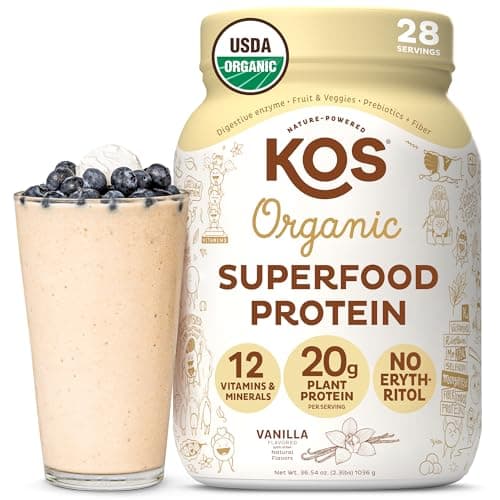
KOS — Pure Pea Protein (Plant Option)
Best plant-based pick for a deficit
Step 1: Pick the protein type
The label 'protein powder' hides several different products. Whey concentrate is the sensible default for most people — it's roughly 70-80% protein, complete, leucine-rich, mixes well, and it's the cheapest quality protein per gram. Whey isolate is more refined (usually 90%+ protein, very low lactose, a bit pricier) and is the better pick if dairy gives you trouble or you want maximum protein per scoop with minimal carbs and fat. Casein is milk protein's slow-digesting fraction — a niche tool for a pre-bed dose or a thick, filling snack, not a daily driver. Plant protein is the choice if you're vegan, lactose-intolerant, or simply prefer it; single-source pea or rice is fine for general intake, but for muscle-focused use choose a multi-source blend (pea + rice, or pea + legumes) so the amino-acid profile is complete. Collagen is its own thing — good for skin and connective-tissue goals, but low in leucine and incomplete, so it's a poor choice as your main muscle-building protein.
Step 2: Check grams per serving — and cost per 30g of protein
The number that matters is grams of actual protein per serving, not the scoop size or the tub's front-of-label claims. Most quality powders deliver 20-30g of protein per scoop, which lines up with the 20-40g per meal that research supports for stimulating muscle protein synthesis. Do the value math the same way every time: take the price of the tub, divide by the number of servings, then divide by the grams of protein per serving to get your cost per gram — or just compare cost per 30g of protein across products. This one calculation cuts through almost all marketing. A 'premium' tub with a big price and a small scoop often costs far more per gram of protein than a plain commodity whey, and you're usually paying for the label, not more protein. Watch for tiny serving sizes that make the per-scoop price look low while quietly requiring two scoops to hit a real dose.
Step 3: Third-party testing — who needs it and what to look for
Supplements aren't tightly regulated before they hit the shelf, so independent testing is how you verify what's actually in the tub. Two certifications matter most. NSF Certified for Sport screens every lot against roughly 290 substances banned by major sports organizations (the NFL, MLB, NHL, WADA, and others), audits the label for accuracy, and tests for heavy metals, pesticides, and microbial contamination. Informed Sport runs a similar batch-level banned-substance program covering 285-plus substances. If you're a drug-tested athlete — collegiate, professional, or competitive — one of these seals is close to non-negotiable, because a contaminated supplement is your problem, not the brand's. Even if you'll never take a drug test, these certifications are the best available proxy that a powder is what it says and has been screened for heavy metals like lead and cadmium, which independent testing has repeatedly found in some protein products. If a brand won't show any third-party testing, treat that as a mark against it.
Step 4: Read the ingredients — and the red flags
A good protein powder has a short, boring ingredient list: the protein source, maybe a natural or artificial flavor, an emulsifier like sunflower or soy lecithin for mixability, and a sweetener. The red flags are where marketing hides. Added sugar bulks up the calorie count for no benefit — check the sugar line and prefer powders sweetened lightly with stevia, monk fruit, or sucralose if you're watching intake. 'Proprietary blends' that lump multiple ingredients under one undisclosed total let a brand hide how little of the good stuff is actually present, and this site's default is to skip them. The sneakiest trick is amino spiking (also called nitrogen spiking): brands add cheap free-form amino acids like glycine, taurine, or creatine so the protein content looks higher on a nitrogen test than the actual whole-protein content justifies. Defend against it by favoring products that show a full amino-acid profile and don't pad the ingredient list with free-form aminos dumped in to game the number. Long lists of thickeners, gums, and 'digestive enzyme complexes' are usually solving a problem a simpler powder didn't have.
Step 5: Whole food first — powder fills the gaps
The most important framing on this whole page: protein powder is a convenience, not a requirement, and it isn't superior to food. Whole-food protein — chicken, beef, fish, eggs, Greek yogurt, cottage cheese, tofu, tempeh, dairy — delivers the same amino acids plus micronutrients, fiber (in plant sources), and far more satiety per calorie, and it's usually cheaper per gram of protein than a fancy tub. Powder earns its place in specific situations: hitting a high daily target when your appetite or schedule won't cooperate, a quick post-training option, travel, or budget protein when meat is expensive. Think of it as topping up the gap between what you eat and what you need, not as the foundation. If you're building meals around shakes because it's easier than cooking, that's a diet problem a powder won't fix — build the plate first, then let powder cover the remainder.
Step 6: Flavor, mixability, and the boring tiebreakers
Once type, dose, testing, and label are sorted, the practical stuff decides which tub you'll actually finish. Flavor and mixability matter more than people admit — the best powder is the one you'll drink daily, and a chalky or overly sweet one ends up shoved in a cupboard. Whey generally mixes thin and smooth; plant proteins can be grittier, and casein turns thick and pudding-like, which some people love and others don't. If you can, buy a single-serving packet or the smallest tub of a new flavor before committing to a five-pound bag. Consider what you'll mix it with (water is the honest test of a powder; milk masks a lot), whether you want unflavored for cooking and smoothies, and how it sits with your stomach — lactose in whey concentrate, or certain plant sources, causes bloating in some people. These are tiebreakers, not deal-makers, but they're the difference between a tub you use up and one you regret.
Do you even need a protein powder?
Be honest about this before you buy. If you comfortably hit your daily protein target from food — roughly 1.4-2.0 g per kg of body weight for active adults, per the sports-nutrition literature — you may not need powder at all, and there's no health penalty for skipping it. You most benefit from a powder if you're training hard and struggling to eat enough protein from meals, if your schedule makes whole-food protein inconvenient at key times, if you're older and fighting a smaller appetite while needing more protein, or if it's simply your cheapest reliable protein source. Those are good reasons. 'Everyone at the gym has one' isn't. Buy a powder to solve a specific gap in your day, choose it on the five criteria above, and keep it in its lane: a convenient supplement to a whole-food-first diet, not a replacement for one.
Frequently asked questions
For most beginners, a plain whey concentrate is the best starting point: it's complete, leucine-rich, mixes easily, and it's the cheapest quality protein per gram. If dairy bothers you, step up to whey isolate (very low lactose); if you're plant-based, choose a multi-source blend like pea + rice. Don't overthink brand or exotic ingredients at the start — pick something third-party tested with a short ingredient list, a real 20-30g of protein per scoop, and a flavor you'll actually drink.
Sources
- International Society of Sports Nutrition Position Stand: Protein and Exercise (daily targets, per-meal dose, protein quality) — Journal of the International Society of Sports Nutrition, 2017
- Certified for Sport Program (banned-substance screening ~290 substances, label accuracy, heavy-metal and contaminant testing) — NSF
- Informed Sport — batch-level banned-substance testing for supplements — Informed Sport (LGC)
- Whey protein — evidence summary (protein quality, isolate vs concentrate, amino-acid profile) — Examine.com
KOS — Pure Pea Protein (Plant Option)
$54.99 · on Amazon