Best Joint Supplements, Ranked by How Good the Evidence Actually Is
The joint-supplement aisle has a problem it doesn't advertise: its single best-selling ingredient is the one major rheumatology guidelines now tell people not to bother with. In 2019 the American College of Rheumatology and the Arthritis Foundation issued a strong recommendation against glucosamine for hand, hip, and knee osteoarthritis, on the grounds that it doesn't improve outcomes in studies without industry funding, and gave chondroitin, fish oil, and vitamin D conditional recommendations against as well. The NIH-funded GAIT trial had already found no difference in joint-space narrowing between glucosamine, chondroitin, the combination, and placebo. Yet walk down the aisle and roughly nine of every ten bottles are still glucosamine and chondroitin, usually stacked with MSM, hyaluronic acid, turmeric, and boswellia at doses too small to match anything that was ever tested. That is the category's real business model: bundle six ingredients so the label looks complete, and charge for the bundle rather than for a studied dose of anything. So this roundup does something different from most 'best joint supplement' lists. Instead of ranking twelve versions of the same glucosamine combo, we ranked seven products across five distinct ingredient classes — undenatured type II collagen (UC-II), omega-3s, curcumin, boswellia, hydrolyzed collagen peptides, and yes, one glucosamine-and-chondroitin pick — and scored each on how strong the joint-specific evidence is, not on how loud the bottle is. The honest summary: UC-II has the single best head-to-head trial in the category (with a funding caveat we spell out), omega-3s have a modest but real pain signal, curcumin and boswellia are promising-but-preliminary, collagen peptides have one much-cited 24-week study in athletes with heavy dropout, and glucosamine sits at the bottom for a reason. And before any of that: the two interventions with the strongest evidence for joint pain are exercise and losing about 5% of your body weight, and both are free. That fits this site's whole position — training, food, and sleep first, supplements as a supplement. If you lift heavy or train hard, most of what you call a bad knee or a cranky shoulder is load management, technique, and recovery, not a missing molecule. Buy one ingredient at the dose that was actually studied, give it eight to twelve weeks, track whether anything changes, and stop if it doesn't. And get real joint pain diagnosed — a supplement is not a substitute for finding out what's wrong.
Top pick
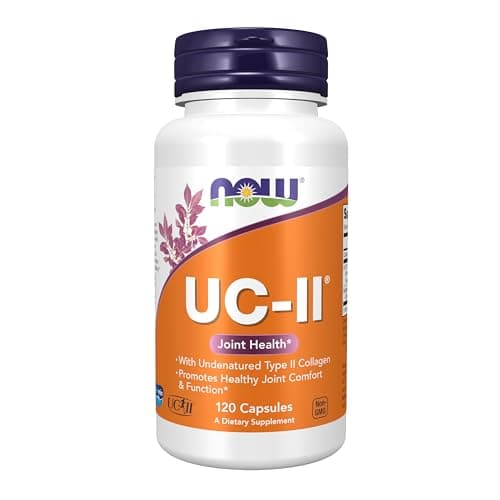
NOW Foods — UC-II Type II Collagen, 120 Veg Capsules
40 mg UC-II standardized chicken-cartilage collagen (providing 10 mg total collagen) plus 80 mg calcium from Aquamin, one capsule daily, 120 capsules (~4 months)
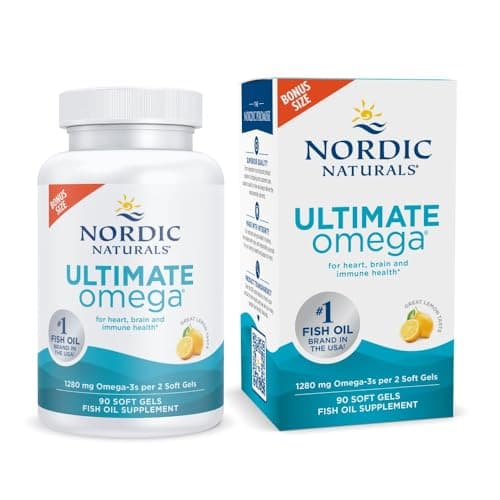
Nordic Naturals — Ultimate Omega (1,280 mg EPA+DHA per serving)
At a glance
Tap a row to check price · tap a header to sort| # | Best for | Price | ||
|---|---|---|---|---|
| 1 | 1. NOW Foods — UC-II Type II Collagen, 120 Veg CapsulesBest overall | Best overall | 8.7/10 | $32.49$34.295% offCheck Price for NOW Foods UC-II Type II Collagen, 120 Veg Capsules on AmazonIn Stock |
| 2 | 2. Nordic Naturals — Ultimate Omega (1,280 mg EPA+DHA per serving)Best pick if your joint pain is inflammatory rather than mechanical | Best pick if your joint pain is inflammatory rather than mechanical | 8.5/10 | |
| 3 | 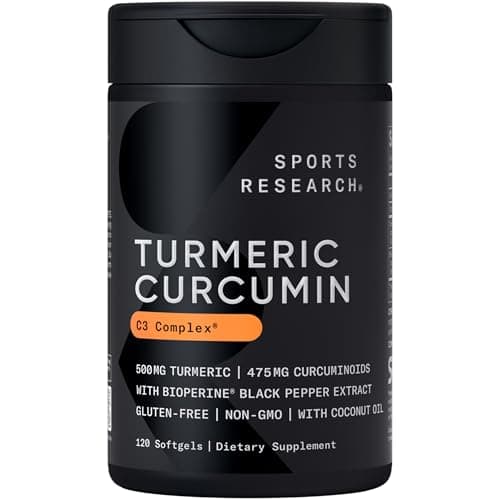 3. Sports Research — Turmeric Curcumin with Coconut Oil & BioPerine (120 softgels)Best curcumin | Best curcumin | 7.7/10 | |
| 4 | 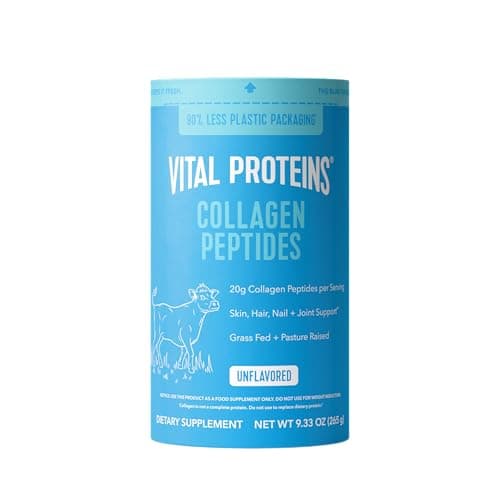 4. Vital Proteins — Collagen Peptides Powder, Unflavored (9.33 oz)Best for activity-related joint pain in people who train hard | Best for activity-related joint pain in people who train hard | 7.5/10 | |
| 5 | 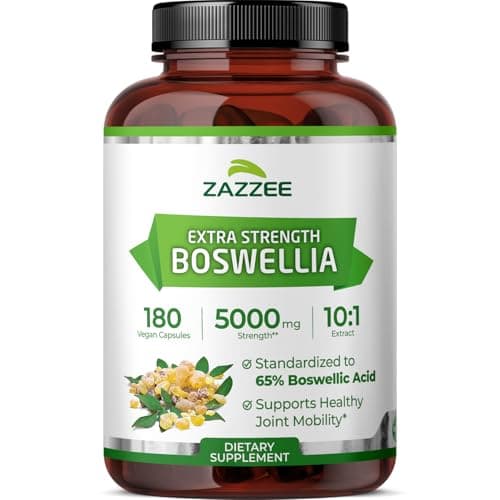 5. Zazzee — Extra Strength Boswellia 10:1 Extract, 180 CapsulesCheapest way to run a real 8-to-12-week trial of a standardized botanical | Cheapest way to run a real 8-to-12-week trial of a standardized botanical | 7.2/10 | |
| 6 | 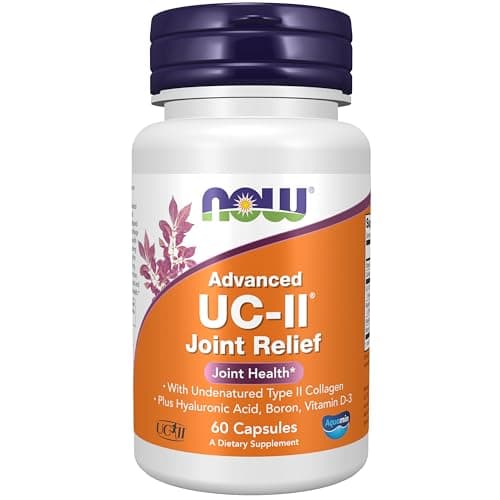 6. NOW Foods — UC-II Advanced Joint Relief (with Hyaluronic Acid, Boron, Vitamin D-3), 60 Veg CapsulesThe clearest example of what the add-ons do and don't buy you | The clearest example of what the add-ons do and don't buy you | 7.2/10 | |
| 7 | 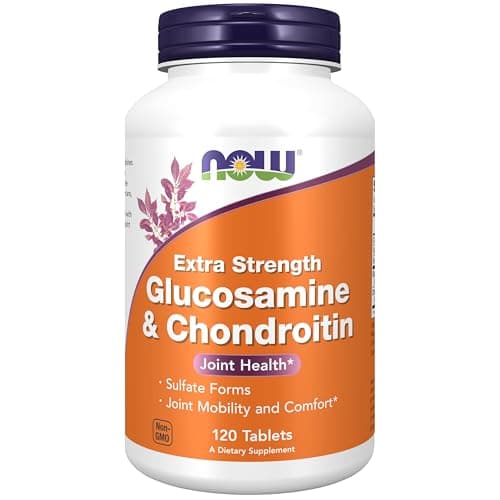 7. NOW Foods — Glucosamine & Chondroitin Extra Strength (Sulfate Forms), 120 TabletsIf you're set on glucosamine anyway | If you're set on glucosamine anyway | 6.5/10 | $19.99$28.9031% offCheck Price for NOW Foods Glucosamine & Chondroitin Extra Strength (Sulfate Forms), 120 Tablets on AmazonIn Stock |
Prices pulled from Amazon as of October 18, 2026 and are subject to change. The price shown on Amazon at checkout applies.
How we scored
Every product below is scored on six metrics, 0-10 each, with the weighting described on how we review. The criteria specific to this category:
- Joint-specific clinical evidence — our 'clinical' score reflects the strength of the research for joints specifically, not the ingredient's overall reputation. An omega-3 that scores 10 for heart health can score 7 here.
- A studied dose of a single ingredient, on the label, in plain numbers — not a six-ingredient 'joint matrix' that hides how much of anything you're actually getting.
- Standardization where it matters: UC-II at the 40 mg dose used in trials, curcumin from a 95% curcuminoid extract, boswellia standardized to its boswellic acid content.
- Third-party testing or a manufacturer with a real, auditable in-house testing program — this category is full of small brands with no published verification at all.
- Cost per day at the studied dose, because an 8-to-12-week trial is the only way to find out if an ingredient does anything for you, and that has to be affordable.
- Honest labeling — we score down extract-equivalence math ('5,000 mg strength' printed on a 500 mg capsule), 'triple strength' marketing tiers, and add-ons priced like actives.
What to know before buying
- Test one ingredient at a time, for 8 to 12 weeks, and write down what you're tracking before you start — morning stiffness, pain climbing stairs, how a specific lift feels. Nothing in this category produces an unmistakable effect, so if you start three supplements at once you will never know which one (if any) earned the money. Stop the ones that change nothing. This is an experiment, not a treatment.
- Ignore the number on the front of a botanical bottle and read the extract ratio. A capsule labeled '5,000 mg strength' boswellia usually contains 500 mg of a 10:1 concentrated extract — the 5,000 mg is what that extract is claimed to be equivalent to in raw resin. That's not a lie, but it's a marketing number, and it makes a modest dose look enormous. The figures that matter are the actual milligrams in the capsule and the standardization percentage.
- The megablend is the category's core upsell. Stacking glucosamine, chondroitin, MSM, turmeric, boswellia, hyaluronic acid, and collagen into one tablet sounds comprehensive and prices like a premium, but each ingredient ends up at a fraction of the dose used in its own research. GAIT found the glucosamine-plus-chondroitin combination no better than placebo, and a 2018 analysis found the same for global pain. Bundling weak evidence does not add up to strong evidence.
- Safety is not a formality here. NCCIH links glucosamine and chondroitin to increased bleeding risk in people taking warfarin, and glucosamine may raise blood glucose, which matters if you have diabetes or prediabetes; most glucosamine is shellfish-derived. High-absorption curcumin formulations have been associated with reports of liver damage — watch for fatigue, nausea, poor appetite, dark urine, or jaundice. Fish oil warrants a conversation if you're on blood thinners. And persistent joint pain deserves a diagnosis from a clinician, not a supplement subscription.
- Do the free stuff first, because it outperforms everything on this page. The 2019 ACR/Arthritis Foundation guideline gives its strongest recommendations to exercise and weight loss — even a 5% reduction in body weight produces notable improvement in knee and hip pain. For a hard-training audience, add the training-side fixes: deload when a joint is talking to you, fix the positions that hurt, sleep enough for tissue to repair, and eat enough protein to support it. A supplement layered on top of that can be worth trying. A supplement instead of it is money burned.
Our picks
NOW Foods — UC-II Type II Collagen, 120 Veg Capsules
Key specs: 40 mg UC-II standardized chicken-cartilage collagen (providing 10 mg total collagen) plus 80 mg calcium from Aquamin, one capsule daily, 120 capsules (~4 months)
Pros
- Delivers exactly the 40 mg daily dose used in the 180-day trial that beat both placebo and a full 1,500 mg glucosamine / 1,200 mg chondroitin regimen on WOMAC score — the only head-to-head win in this category
- One capsule a day at roughly 30 cents, so an honest 8-to-12-week trial costs about $25 rather than a subscription commitment
- NOW manufactures in its own GMP-audited facilities and publishes in-house and third-party testing, which is more verification than most joint brands offer
Cons
- The pivotal UC-II research was sponsored by InterHealth Nutraceuticals, the company that makes the UC-II ingredient, with two of the three authors employed there — a real conflict that should temper how much weight you give it
- Includes 80 mg of calcium from Aquamin that you didn't necessarily ask for; harmless for most people, but it's an added ingredient rather than a pure single-actor capsule
NOW Foods — UC-II Type II Collagen, 120 Veg Capsules
- Third-party testing8/10
- Bioavailability8/10
- Clinical evidence9/10
- Value9/10
- Brand transparency9/10
- Form & absorption9/10
Nordic Naturals — Ultimate Omega (1,280 mg EPA+DHA per serving)
Key specs: 1,280 mg combined EPA+DHA per 2-softgel serving, triglyceride form, IFOS 5-star tested, 90 softgels (45 servings)
Pros
- Omega-3s have the most credible pain evidence of anything here for inflammatory joint disease — NCCIH cites a 2017 review of 22 studies and 956 participants finding a favorable effect on pain in rheumatoid arthritis
- Triglyceride form with a genuine 1,280 mg EPA+DHA per serving, so you're not swallowing six softgels to reach a real dose the way you are with cheap 1,000 mg 'fish oil' capsules
- IFOS 5-star certification covers potency, purity, and oxidation — the last of which is the failure mode most fish oil brands never test for or disclose
Cons
- The 2019 ACR/Arthritis Foundation guideline conditionally recommends against fish oil for hand, hip, and knee osteoarthritis — the RA evidence does not transfer to wear-and-tear OA
- About 75 cents a day, the most expensive per-serving pick here, and it warrants a conversation with your doctor if you take blood thinners
Nordic Naturals — Ultimate Omega (1,280 mg EPA+DHA per serving)
- Third-party testing10/10
- Bioavailability9/10
- Clinical evidence7/10
- Value6/10
- Brand transparency10/10
- Form & absorption9/10
Sports Research — Turmeric Curcumin with Coconut Oil & BioPerine (120 softgels)
Key specs: 500 mg curcumin from a 95% standardized curcuminoids extract, with organic coconut oil and 5 mg BioPerine, 120 liquid softgels, non-GMO verified
Pros
- A 95% standardized curcuminoid extract paired with piperine, which is the variable that actually moves the needle — plain turmeric powder is poorly absorbed and most cheap bottles skip the enhancer entirely
- NCCIH's read on oral turmeric for knee pain, stiffness, and joint mobility is that 'the initial evidence is positive,' which is a better place to start than the glucosamine literature
- Non-GMO Project verified with third-party testing behind the potency claim, at about 27 cents a softgel
Cons
- NCCIH is explicit that 'higher-quality evidence is needed to reach definitive conclusions' — positive preliminary data is not a proven treatment
- The real safety flag in this category: liver damage has been reported in people taking high-bioavailability curcumin formulations. Stop and see a doctor if you notice fatigue, nausea, poor appetite, dark urine, or jaundice
Sports Research — Turmeric Curcumin with Coconut Oil & BioPerine (120 softgels)
- Third-party testing7/10
- Bioavailability8/10
- Clinical evidence7/10
- Value8/10
- Brand transparency8/10
- Form & absorption8/10
Vital Proteins — Collagen Peptides Powder, Unflavored (9.33 oz)
Key specs: Hydrolyzed bovine collagen peptides, unflavored powder, grass-fed pasture-raised sourcing, dissolves in hot or cold liquid
Pros
- The most relevant study in this whole roundup for a training audience: a 24-week Penn State trial in 147 varsity and club athletes with activity-related joint pain found significant changes on six measures versus placebo using 10 g of collagen hydrolysate daily
- Unlike a capsule, this is food-shaped — it stirs into coffee or a shake and adds protein to the day, which fits a whole-food-first approach better than another pill
- Dissolves cleanly hot or cold, and NSF Contents Tested on listed lots
Cons
- That headline study is weaker than it looks: only 97 of the 147 enrolled subjects could be statistically evaluated, which is a large dropout for a 24-week trial
- Collagen peptides are not a complete protein — treat this as a joint experiment on top of your protein target, not as part of hitting it, and expect to pay a premium per gram over bulk brands
Vital Proteins — Collagen Peptides Powder, Unflavored (9.33 oz)
- Third-party testing8/10
- Bioavailability8/10
- Clinical evidence6/10
- Value7/10
- Brand transparency8/10
- Form & absorption8/10
Zazzee — Extra Strength Boswellia 10:1 Extract, 180 Capsules
Key specs: 500 mg of a 10:1 Boswellia serrata extract standardized to 65% boswellic acids (labeled as '5,000 mg strength'), 180 vegan capsules, one daily
Pros
- Standardized to 65% boswellic acids — the compounds the research is actually about — rather than an unquantified 'boswellia extract' with no percentage on the panel
- A 2020 systematic review and meta-analysis of 7 trials and 545 patients found Boswellia and its extract may relieve pain and stiffness and improve joint function, which is a better showing than glucosamine manages
- About 14 cents a day and 180 capsules per bottle, so a full three-month trial costs roughly $12 of the bottle — by far the cheapest honest experiment on this page
Cons
- The '5,000 mg strength' on the front is extract-equivalence math, not what's in the capsule. The capsule holds 500 mg of a 10:1 extract; we scored the label down for leading with the bigger number
- Zazzee is a small brand with no published third-party certification, so you're trusting the standardization claim without an independent seal behind it — the weakest verification of anything here
Zazzee — Extra Strength Boswellia 10:1 Extract, 180 Capsules
- Third-party testing5/10
- Bioavailability7/10
- Clinical evidence7/10
- Value9/10
- Brand transparency7/10
- Form & absorption8/10
NOW Foods — UC-II Advanced Joint Relief (with Hyaluronic Acid, Boron, Vitamin D-3), 60 Veg Capsules
Key specs: UC-II undenatured type II collagen plus hyaluronic acid, boron, and vitamin D-3, 60 veg capsules
Pros
- Built on the same UC-II ingredient as our top pick, from the same manufacturer with the same GMP-audited testing program behind it
- If you want the one-capsule-does-everything format, this is the honest version of it — NOW lists what's in it rather than hiding the amounts inside a proprietary 'joint matrix'
Cons
- This is the megablend pattern in miniature. The hyaluronic acid, boron, and D3 are along for the ride; the 2019 ACR/AF guideline conditionally recommends against vitamin D for osteoarthritis, and the joint case for oral hyaluronic acid and boron is thin
- Costs more per day than the plain 120-capsule UC-II and gives you a third as many capsules, so you pay a premium for ingredients that aren't carrying the result
NOW Foods — UC-II Advanced Joint Relief (with Hyaluronic Acid, Boron, Vitamin D-3), 60 Veg Capsules
- Third-party testing8/10
- Bioavailability8/10
- Clinical evidence7/10
- Value6/10
- Brand transparency7/10
- Form & absorption7/10
NOW Foods — Glucosamine & Chondroitin Extra Strength (Sulfate Forms), 120 Tablets
Key specs: Glucosamine sulfate + chondroitin sulfate (extra strength), 120 tablets, made in a GMP-audited facility, no proprietary blend
Pros
- Uses the sulfate form of both ingredients rather than the hydrochloride form the null GAIT trial used, so if you're running this experiment you're running it on the least-bad data available
- A clean two-ingredient label with no turmeric, boswellia, or 'joint shield' padding inflating the price, from a manufacturer that publishes its testing
Cons
- The 2019 ACR/Arthritis Foundation guideline strongly recommends against glucosamine, noting it doesn't improve knee and hip OA in studies without industry funding — no brand choice fixes that
- NCCIH flags increased bleeding risk with warfarin and possible increases in blood glucose, and most glucosamine is shellfish-derived — the only pick here with meaningful interaction warnings attached
NOW Foods — Glucosamine & Chondroitin Extra Strength (Sulfate Forms), 120 Tablets
- Third-party testing8/10
- Bioavailability6/10
- Clinical evidence4/10
- Value6/10
- Brand transparency8/10
- Form & absorption7/10
Frequently asked questions
On the evidence, undenatured type II collagen (UC-II) at 40 mg a day has the strongest single result in the category: a 180-day randomized trial in 191 people with knee osteoarthritis found it beat both placebo and a full 1,500 mg glucosamine plus 1,200 mg chondroitin regimen on total WOMAC score. The important caveat is that the study was sponsored by the company that makes the UC-II ingredient, and two of its three authors worked there. Omega-3s are the next-best bet if your pain is inflammatory, curcumin and boswellia are promising but preliminary, and glucosamine ranks last because rheumatology guidelines now recommend against it. None of these is dramatic. Exercise and losing about 5% of your body weight beat all of them.
Related reading
- → How to read a supplement label (spotting extract-equivalence math and proprietary blends)
- → How to warm up before lifting — the free intervention that outperforms this whole aisle
- → How to use a foam roller
- → Turmeric vs fish oil — which anti-inflammatory is worth your money
- → Fish oil vs krill oil
- → Best supplements for inflammation
- → Best glucosamine supplements (the full breakdown of the aisle's default ingredient)
- → Best collagen peptides (bulk hydrolyzed collagen, compared)
- → Best fish oil supplements (EPA+DHA per dollar, oxidation testing)
- → Best tart cherry supplement for inflammation (Montmorency extracts and capsules, honestly ranked)
- → Best turmeric and curcumin supplements (absorption is the whole game)
Sources
- Osteoarthritis Management: Updated Guidelines from the American College of Rheumatology and Arthritis Foundation (strong recommendations for exercise and weight loss — 5% weight loss gives notable improvement; strong recommendation against glucosamine because it does not improve knee and hip OA in studies without industry funding; chondroitin, fish oil, and vitamin D conditionally recommended against) — American Family Physician (summary of the 2019 ACR/Arthritis Foundation guideline), 2021
- Glucosamine and Chondroitin for Osteoarthritis: What You Need To Know (GAIT — no difference in joint-space width vs placebo over 2 years in 572 participants; inconsistent results across studies; ACR strongly recommended against glucosamine in 2019; blood-glucose and warfarin-bleeding cautions) — National Center for Complementary and Integrative Health (NIH)
- Efficacy and tolerability of an undenatured type II collagen supplement in modulating knee osteoarthritis symptoms — 191 volunteers randomized to UC-II 40 mg/day, glucosamine 1,500 mg + chondroitin 1,200 mg, or placebo for 180 days; UC-II reduced total WOMAC vs placebo (p = 0.002) and vs glucosamine+chondroitin (p = 0.04). Competing interests: study sponsored by InterHealth Nutraceuticals, maker of UC-II; two authors were InterHealth employees and one consulted for the company — Nutrition Journal (Lugo JP, Saiyed ZM, Lane NE), 2016
- 24-Week study on the use of collagen hydrolysate as a dietary supplement in athletes with activity-related joint pain — 147 varsity/club athletes randomized to 10 g collagen hydrolysate or placebo; 6 parameters showed statistically significant changes, though only 97 of 147 subjects were evaluable — Current Medical Research and Opinion (Clark KL et al., Penn State), 2008
- Turmeric (oral turmeric/curcumin studied for knee pain, stiffness, joint strength and mobility — 'the initial evidence is positive; higher-quality evidence is needed to reach definitive conclusions'; liver damage reported with high-bioavailability formulations) — National Center for Complementary and Integrative Health (NIH)
- Rheumatoid Arthritis: In Depth — a 2017 review of 22 studies (956 participants) of long-chain omega-3 supplements found a favorable effect on pain in patients with RA — National Center for Complementary and Integrative Health (NIH)
- Effectiveness of Boswellia and Boswellia extract for osteoarthritis patients: a systematic review and meta-analysis — 7 trials, 545 patients; Boswellia and its extract may relieve pain and stiffness and improve joint function — BMC Complementary Medicine and Therapies (Yu G et al.), 2020
- Meta-analysis of the related nutritional supplements dimethyl sulfoxide and methylsulfonylmethane in the treatment of osteoarthritis of the knee — pain reduction was neither statistically nor clinically significant; current evidence does not support MSM as clinically effective for OA pain — Evidence-Based Complementary and Alternative Medicine (Brien S et al.)
Last verified: August 13, 2026. See our editorial policy and how we review for details on scoring and update cadence. Canonical URL: https://trustedhealthgear.com/reviews/best-joint-supplement.
NOW Foods — UC-II Type II Collagen, 120 Veg Capsules
$32.49 · on Amazon