How to Use a Foam Roller
Foam rolling is a simple self-massage tool for mobility and comfort — not a medical treatment. To use one, place the roller under a muscle, support your weight on it, and roll slowly along the muscle's length for about 30 to 60 seconds per area, pausing a few seconds on tender spots and breathing rather than grinding. Roll the big muscles — calves, quads, hamstrings, glutes, and upper back — but keep off your lower spine and directly off bony joints. The honest evidence: rolling reliably gives a short-term boost in range of motion and can reduce how sore you feel, but it doesn't meaningfully change tissue or speed true recovery. It should never be sharply painful. If you're managing an injury, check with a professional first.
Affiliate disclosure: Trusted Health Gear is an Amazon Associate. If you buy through links on this page, we may earn a commission at no extra cost to you. Commission does not influence our rankings. Full policy.
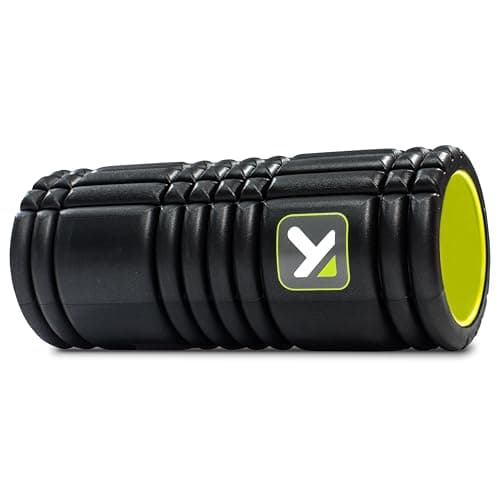
TriggerPoint — GRID 1.0 Foam Roller
Best overall — firm, durable, and the right size for most lifters
What foam rolling actually does (the honest evidence)
Let's be straight about the evidence, because foam rolling is surrounded by big claims. Two benefits hold up reasonably well in the research. First, rolling a muscle before you train produces a short-term increase in range of motion and flexibility, without the strength drop that long static stretching can cause — handy in a warm-up. Second, rolling after hard training tends to reduce how sore you feel over the next day or two; people report less perceived soreness, the muscle ache often labeled DOMS. Those are real, if modest, effects. Now the parts that get oversold: claims that foam rolling 'breaks up' scar tissue, 'releases fascia,' flushes out toxins, or physically remodels muscle are not well supported — the more likely explanation for why it helps is neural and sensory, essentially turning down your nervous system's sensitivity for a while. And evidence that rolling actually speeds true recovery — restoring strength and power faster — is limited and mixed. So the honest summary: foam rolling is a cheap, low-risk tool that can improve short-term mobility and make you feel less sore, but it is not a deep-tissue cure and won't fix the underlying cause of tight or painful muscles.
The basic technique: how to roll without wrecking yourself
The mechanics are simple, but a few habits make rolling more useful and less miserable. Position the roller under the muscle you want to work and let your bodyweight press into it, using your arms and free leg to control how much pressure you apply. Roll slowly along the length of the muscle — think an inch or two per second, not frantic sawing back and forth. When you hit a tender spot, pause and hold there for a few seconds while you keep breathing steadily; the goal is a tolerable 'good ache,' roughly a 6 or 7 out of 10, never a sharp or breath-holding pain. Cover about 30 to 60 seconds per muscle group, then move on. Keep the pressure adjustable: reduce it by supporting more weight on your hands or the opposite leg, and increase it by stacking one leg on the other. Don't camp on a single painful point for minutes at a time, and don't roll directly over a joint, bone, or an area that's bruised, inflamed, or recently injured. If a spot produces numbness, tingling, or shooting pain, back off — that's a signal to move on, not to push harder.
Rolling the big muscles: calves, quads, hamstrings, glutes
Start with the large, meaty muscles, where rolling is safest and most comfortable. Calves: sit with the roller under one calf, the other leg crossed on top for extra pressure, and roll from just above the ankle to below the knee, turning the leg slightly in and out to reach both sides. Quads: lie face down with the roller under the front of your thighs, propped on your forearms, and roll from above the knee to the hip; do one leg at a time for more pressure. Hamstrings: sit with the roller under the back of your thighs, hands behind you for support, and roll from behind the knee up toward the glutes. Glutes: sit on the roller, cross one ankle over the opposite knee, lean slightly toward the crossed side, and roll the meat of the glute — this is one of the most useful areas for people who sit a lot. In every case, move slowly, keep off the back of the knee joint itself, and pause on tender spots rather than blasting through them. A minute per area is plenty; you're priming tissue, not trying to flatten it.
Trickier spots: IT band, lats, upper back — and what to avoid
A few areas need more care. The IT band — the thick band down the outside of the thigh — is a classic target, but it's tough connective tissue, not a muscle you can 'loosen,' and rolling directly on it is often intensely painful for little benefit. If the outer thigh feels tight, you'll usually get more from rolling the nearby muscles — the quads, the glutes, and the outer hip — than from grinding on the band itself. The lats and upper back respond well: lie back with the roller under your shoulder blades, roll the mid and upper back, and you can gently extend over it to open the chest. But stop at the bottom of the rib cage. Do not roll your lower back directly over the spine: there's no large muscle mass there to cushion the vertebrae, and pressing the lumbar spine over a hard roller is a good way to aggravate it. If your lower back is the problem, roll the glutes and hips instead, and see the professional-care note below. Also skip rolling directly on bony joints — knees, elbows, the front of the shin, or the neck.
When to roll and how long: warm-up vs recovery
Timing depends on what you want out of it. As part of a warm-up, a brief roll — 30 to 60 seconds on the muscles you're about to train — can nudge up your range of motion without the temporary strength dip that long static stretching causes, which makes it a reasonable addition before mobility-limited lifts like squats. Follow it with dynamic movement and ramp-up sets rather than treating rolling as the whole warm-up. After a session, or on off days, rolling is more about comfort: a few minutes over the muscles you worked can reduce the soreness you feel over the next day or two and simply feels good as a wind-down. There's no need to overdo it — the research doesn't reward marathon rolling sessions, and a total of a few minutes across the areas you care about is plenty. A practical routine is 30 to 60 seconds per muscle group, one or two passes, slow and controlled. If you're using it before training for mobility, keep it short so you don't fatigue yourself; if you're using it afterward for comfort, roll at whatever gentle pressure feels good.
Picking a roller (soft, firm, vibrating) and the honest limits
Rollers vary mostly in firmness, texture, and whether they vibrate. A softer, smooth roller is gentler and a good starting point, especially if you're new or sensitive; a firmer, higher-density roller delivers more intense pressure and holds its shape longer, which experienced users often prefer. Textured rollers with ridges or knobs concentrate pressure into smaller areas — some people love them, others find them needlessly harsh, so it's personal preference rather than a necessity. Vibrating rollers add a motor: early evidence suggests the vibration may make rolling feel more comfortable and could slightly improve the short-term range-of-motion effect, but it's an incremental upgrade, not a different category of results — a plain roller does the core job. Length matters too: a long (about 36-inch) roller works for the back and larger muscles, while shorter rollers travel easily. Whatever you choose, keep the honest limits in mind: foam rolling is a comfort-and-mobility tool, not a cure. It won't fix a real injury, correct posture on its own, or replace strength work, and it should never be sharply painful. If you have persistent pain, numbness, or a known injury, talk to a doctor or physical therapist before rolling over the area.
Frequently asked questions
Yes, but less dramatically than the marketing suggests. The best-supported benefits are a short-term increase in range of motion when you roll before training, and reduced perceived soreness when you roll afterward. Claims that it breaks up scar tissue, releases fascia, or flushes out toxins aren't well supported — the effect is more likely neural, temporarily reducing your nervous system's sensitivity. It's a cheap, low-risk mobility and comfort tool, not a deep-tissue treatment or a fix for the underlying cause of tightness.
Related reading
Sources
- A Meta-Analysis of the Effects of Foam Rolling on Performance and Recovery — Frontiers in Physiology, 2019
- A Comparison of the Effects of Foam Rolling and Stretching on Physical Performance: A Systematic Review and Meta-Analysis — Frontiers in Physiology, 2021
- Delayed Onset Muscle Soreness (DOMS) — Cleveland Clinic
- ACE Exercise Library (foam rolling and mobility drills) — American Council on Exercise
TriggerPoint — GRID 1.0 Foam Roller
$27.99 · on Amazon