How to Use a Massage Gun: A Practical, Safe Guide
Recovery is a performance pillar, and a massage gun is one of the simplest tools to support it. Glide the device slowly over the muscle belly — not the bone, joint, spine, or front and sides of your neck — for roughly 30 to 120 seconds per muscle, letting the device's weight do the work rather than pressing hard. Use a lighter pressure and longer, sweeping passes before a workout to warm tissue, and slower, more static work after training to ease soreness. The research shows percussive therapy reliably reduces short-term muscle soreness and stiffness and can improve range of motion; it is not a proven substitute for sleep, nutrition, or progressive load management. If something sharp, numb, or radiating happens, stop — that is not the tool working.
Affiliate disclosure: Trusted Health Gear is an Amazon Associate. If you buy through links on this page, we may earn a commission at no extra cost to you. Commission does not influence our rankings. Full policy.
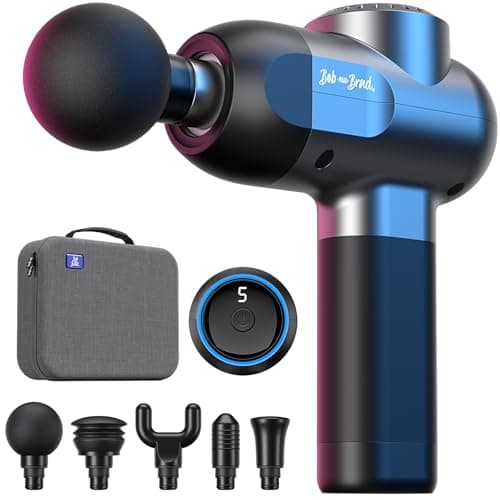
Bob and Brad — Bob and Brad C2
Best budget — the most gun you can buy for the money for general recovery
Before vs after a workout
Both are valid, but you use the tool differently. Before training, treat it as part of a warm-up: lighter pressure, higher speed, and quick sweeping passes of 15-30 seconds per muscle to increase blood flow and short-term range of motion without dampening power output. The evidence suggests brief percussion before activity improves flexibility without the strength loss that long static stretching can cause. After training, slow down — lower speed, slightly more pressure, and 1-2 minutes per worked muscle to reduce delayed-onset muscle soreness (DOMS) and that next-day stiffness. A reasonable rule: pre-workout is about waking tissue up, post-workout is about calming it down.
How long to spend per muscle
Aim for roughly 30 to 120 seconds per muscle group, and treat that as a ceiling rather than a target to chase. Most of the measured benefit for soreness and range of motion shows up within the first one to two minutes; grinding away for five or ten minutes on one spot adds little and raises your risk of bruising or irritating the tissue. Keep the head moving the whole time — slow, continuous glides along the length of the muscle rather than jackhammering a single point. If a knot feels tender, you can pause on it for 10-15 seconds, but back off if the tenderness sharpens instead of easing.
Which attachment for what
Most massage guns ship with a handful of heads, and the differences are practical, not magic. The large round ball or foam ball is the everyday default — broad, comfortable, good for big muscles like quads, hamstrings, and glutes. The flat head is firmer and works well on denser muscle and general use, including the chest and pecs. The bullet (cone) head concentrates force into a small area for targeted trigger points and the soles of the feet — use it gently, it is the easiest head to overdo. The fork (U-shaped) head is designed to straddle a tendon or the spine so you can work the muscles on either side without hitting the bone or vertebrae directly; it is useful around the Achilles, the forearm, and the muscles running alongside (not on) the spine. When in doubt, the ball head is the safe choice.
Pressure and speed
Let the device's own weight set most of the pressure and add only light hand force on top. You should feel a deep, tolerable buzz, not a wince — pain is a signal to ease off, not push through. Higher speeds (more percussions per minute) suit warm-ups and large, robust muscle; lower speeds suit tender areas, smaller muscles, and post-workout calming. If the muscle tenses up or your breath catches, you are pressing too hard or moving too fast. Bony, thin-skinned, or bruise-prone areas always get the lightest setting and the softest head.
Areas to avoid
This is the part that keeps the tool safe. Do NOT use a massage gun directly on the spine (bones and vertebrae), the front or sides of the neck (where the carotid artery, windpipe, and major nerves sit), or directly on joints, the kneecap, elbow point, or other bony prominences. Avoid the kidneys and lower back flanks at high intensity, the abdomen over organs, and any area with a recent injury, acute strain, sprain, fracture, open wound, rash, varicose veins, or a known blood clot. Skip it during pregnancy unless a clinician has cleared it, and avoid areas of numbness, inflammation, or infection. Percussing an artery or nerve, or a fresh injury, can do real harm — when an area is on this list, choose a different recovery method instead.
By muscle group
Quads and hamstrings: sit or stand, glide the ball head slowly from just above the knee up toward the hip, staying on the muscle belly and off the kneecap and hip bone. Calves: work the meaty part of the calf with the muscle relaxed (foot unweighted), avoiding the bony shin and the back of the knee. Glutes: a robust area that tolerates firmer pressure and the ball or flat head; keep off the tailbone. Back: only the muscles either side of the spine — the upper traps and the broad lats and erectors — never on the spine itself; the fork head helps you straddle the vertebrae. Shoulders and neck: work the upper trap and the meat of the shoulder gently, stay on the back of the shoulder, and keep entirely off the front and sides of the neck. Feet and forearms tolerate the bullet head but only at low intensity.
Common mistakes
The frequent errors are easy to fix: pressing too hard (let the weight work), parking on one spot too long instead of gliding, using it on bone or joints, and treating soreness from an actual injury as something to massage out — if it is a strain, sprain, or anything sharp, the gun is the wrong tool. People also overuse it, expecting percussion to replace sleep, protein, and sensible training load; it complements those, it does not replace them. Finally, running it over the front of the neck or the spine because that is where tension feels worst — that is exactly where it does not belong. Slow down, stay on muscle, and stop the moment you feel anything sharp, numb, tingling, or radiating.
Frequently asked questions
About 30 to 120 seconds per muscle group, keeping the head moving the whole time. Most of the soreness and mobility benefit appears within the first minute or two, so there's little reason to exceed a couple of minutes on any single area.
Related reading
Sources
- The Effects of Percussive Therapy on Musculoskeletal Performance and Experiences of Pain: A Systematic Literature Review — International Journal of Sports Physical Therapy, 2023
- Acute Effects of Percussive Massage Therapy on Range of Motion and Performance: A Systematic Review and Meta-Analysis — Journal of Sports Science & Medicine, 2022
- Comparison of Vibration Rolling, Nonvibration Rolling, and Static Stretching on Flexibility and Muscle Performance — Journal of Sport Rehabilitation, 2019
- Delayed Onset Muscle Soreness (DOMS) — StatPearls / NCBI Bookshelf, 2023
Bob and Brad — Bob and Brad C2
$69.99 · on Amazon