Foam Roller vs Massage Gun: Which Recovery Tool Should You Buy?
Treat recovery as a training pillar, not an afterthought — but be honest about what these tools do. The research on both foam rolling and percussion (massage-gun) therapy points the same direction: a modest reduction in delayed-onset muscle soreness (DOMS) and a short-term boost in range of motion (ROM) that doesn't hurt performance. A foam roller is cheap, covers large muscle groups efficiently, and doubles as a pre-workout warm-up tool. A massage gun is more targeted, takes less effort, and is more portable. For most serious trainees these are complementary, not an either/or — a roller for big-area warm-ups and a gun for pinpoint spots is a reasonable setup.
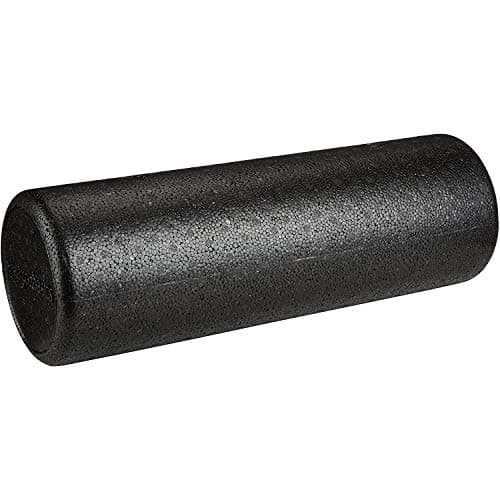
Amazon Basics — High-Density Round Foam Roller
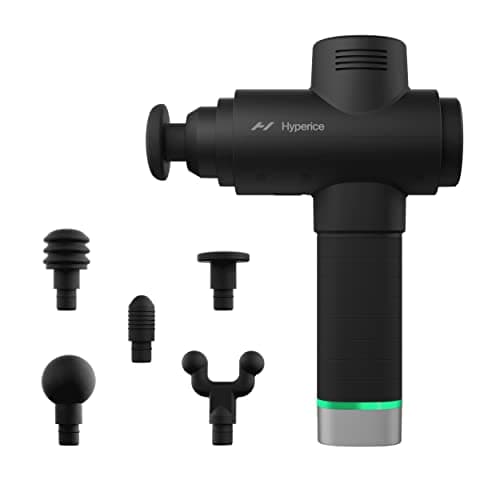
The verdict
Pick a foam roller if you want the most evidence-backed recovery and warm-up value per dollar and don't mind a little effort. Pick a massage gun if you want low-effort, targeted, portable relief and budget isn't the constraint. If you train seriously and can afford both, get both — they cover different jobs.
Side-by-side
| Attribute | Foam roller | Massage gun |
|---|---|---|
| Typical cost | Low — roughly $15-40 for a quality high-density roller | Higher — roughly $80-300 depending on brand and motor |
| Coverage of large muscles | Excellent — bodyweight pressure covers quads, back, glutes fast | Slower — you trace a small head across a large area |
| Targeting / precision | Limited — hard to isolate a single knot | Excellent — pinpoint a specific spot or trigger point |
| Pre-workout warm-up | Strong — well-studied for short-term ROM gains before training | Workable but less established for full-body warm-up |
| Portability | Bulky — awkward to pack for travel | Compact — fits in a gym bag or carry-on |
| Effort required | Higher — you position your bodyweight and move yourself | Lower — the motor does the work; just hold it in place |
| Learning curve | Low — but bony/spine areas need care | Low — avoid bone, joints, and nerves; don't over-press |
| Durability / maintenance | Very high — no electronics, no battery to fail | Moderate — battery, motor, and charging to maintain |
| Where to buy |
Prices pulled from Amazon as of Sep 24, 2026 and are subject to change. The price shown on Amazon at checkout applies.
Who should pick which
Pick Foam roller
- Budget-conscious beginners who want one cheap tool that also works as a warm-up.
- People who train large muscle groups (quads, glutes, back, calves) and want fast, broad coverage.
- Anyone wanting a pre-workout mobility routine — rolling before lifting briefly improves ROM without hurting output.
Pick Massage gun
- Trainees who want targeted relief on a specific knot or sore spot with minimal effort.
- Travelers and desk workers who need something portable and quick to use anywhere.
What the evidence actually shows
Both tools are recovery aids with real but modest effects — not magic. A 2019 systematic review and meta-analysis in Frontiers in Physiology found foam rolling before exercise slightly improves sprint performance and flexibility, while rolling after exercise modestly reduces perceived muscle soreness. Percussion (massage-gun) therapy shows a similar pattern: reviews report short-term gains in range of motion and reductions in DOMS without harming strength or power. The honest takeaway is that neither tool dramatically changes outcomes, but both reliably make you feel better and move a little freer — which is enough to justify recovery as a deliberate part of training.
Foam roller: cheap, broad, and a genuine warm-up tool
The roller's biggest strengths are price and surface area. For the cost of a couple of protein tubs you get a tool that covers quads, hamstrings, glutes, lats, and calves with nothing more than your own bodyweight for pressure. It shines as a pre-workout warm-up: a few minutes of rolling produces a short-term bump in range of motion that doesn't blunt strength or power, unlike prolonged static stretching. The trade-offs are effort (you move your own body over it) and precision (it's poor at isolating one stubborn knot). A high-density EVA roller lasts essentially forever — no battery, no motor.
Massage gun: targeted, low-effort, portable
A percussion device trades coverage for precision and convenience. You hold it on one spot and the motor does the work, which makes it ideal for a specific sore calf, a tight forearm, or a knot you can't reach with a roller. It's compact enough to live in a gym bag and quick to deploy at a desk or on the road. The downsides: it's far more expensive, covering a large muscle is slower than rolling, and there's a small safety floor — keep it off bone, joints, the front of the neck, and nerve-dense areas, and don't press hard enough to bruise. The battery and motor also mean it can eventually wear out or need charging at the wrong moment.
Why most serious trainees end up with both
These tools solve different problems, so they pair well rather than compete. A practical setup: foam-roll big muscle groups as part of your warm-up and after leg or back day, then use the massage gun to chase down a specific tight spot the roller can't reach. If you can only buy one, start with the foam roller — it's cheaper, doubles as warm-up equipment, and has the broader evidence base. Add the gun later when you find yourself wanting targeted, low-effort relief or you travel and the roller won't fit in the bag.
Safety and technique notes
For the roller, never roll directly on your lower spine or other bony landmarks — roll the muscles around them, and ease off if you feel sharp (not just uncomfortable) pain. For the massage gun, start on the lowest speed, keep the head moving slowly over the muscle belly, and avoid bones, joints, the spine, the front and sides of the neck, and any area with numbness or tingling. Neither tool should ever produce bruising. If you have a circulatory condition, a recent injury, blood-clot risk, or are pregnant, check with a clinician before using a percussion device.
Frequently asked questions
Neither is strictly better — they do different jobs. The massage gun is more targeted, lower-effort, and portable; the foam roller is far cheaper, covers large muscles faster, and is a better pre-workout warm-up tool. The research shows both produce similar, modest benefits for soreness and short-term range of motion. Choose based on budget, the muscles you target, and whether you value precision or coverage.
Related reading
Sources
- Foam Rolling for Delayed-Onset Muscle Soreness and Recovery of Dynamic Performance Measures — Journal of Athletic Training, 2015
- Acute Effects of Foam Rolling, Static Stretching, and Dynamic Stretching During Warm-ups on Muscular Flexibility and Strength — Journal of Sport Rehabilitation, 2019
- Foam Rolling Prescription: A Clinical Commentary (effects on ROM, performance, and recovery) — Journal of Strength and Conditioning Research, 2020
- The Effects of Percussive Massage Treatment on Recovery and Range of Motion — Journal of Sports Science & Medicine, 2020
Amazon Basics — High-Density Round Foam Roller
$15.29 · on Amazon