The Best Recovery Tools, Ranked by What Each One Is Actually For
The verdict first. If you buy one recovery tool, buy the TriggerPoint GRID 1.0 foam roller: firm enough to do something on quads and lats, 13 inches so it fits in a bag and under a shoulder, a hollow rigid core that does not pack down after a season, and a 300 lb weight rating. It is for anyone who trains hard three or more times a week and wants the one tool with the broadest coverage. If you buy two, make the second a pair of Kieba lacrosse balls — the cheapest item on this page and the only one that reaches a glute, a pec or the arch of a foot properly. The budget pick overall is the Amazon Basics high-density roller, which does the fundamentals for a fraction of the price and lasts. And if you want reach without floor time, the Bob and Brad C2 massage gun is the pick: a brushless motor, published specs and about a pound and a half in a gym bag. Here is the honest frame for this whole category, because it is sold badly. None of these tools repair tissue, flush lactic acid or shorten the time your body needs. What the evidence supports is narrower and still worth having: self-massage with a roller or a ball, and percussion, reliably reduce the sensation of soreness in the days after hard training and temporarily improve range of motion, which makes your next session better and your warm-ups easier. Sleep, protein and sane training load do the actual recovering. Pick tools on that basis and this is a cheap, genuinely useful category; pick them on marketing and you end up with a drawer of gadgets. Each pick below says who it is for, with the trade-offs named. Prices are pulled live from Amazon with an as-of date — most of this page is inexpensive, so buy the right shape rather than the biggest discount.
Top pick
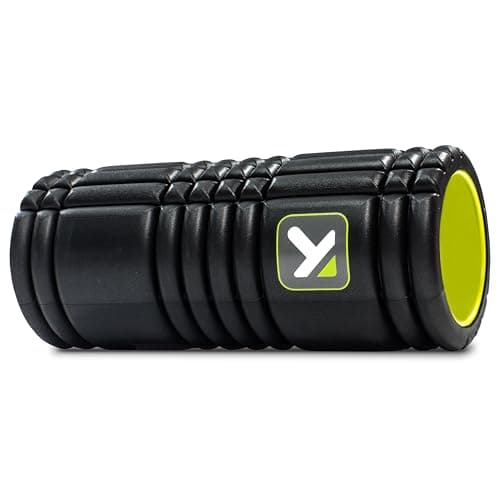
TriggerPoint — GRID 1.0 Foam Roller
13" length x 5.5" diameter · multi-density EVA foam over a hollow rigid core · patented Distrodensity grid texture with firm, tubular and flat zones · up to 300 lb weight rating · 1-year warranty · ~1.3 lbs
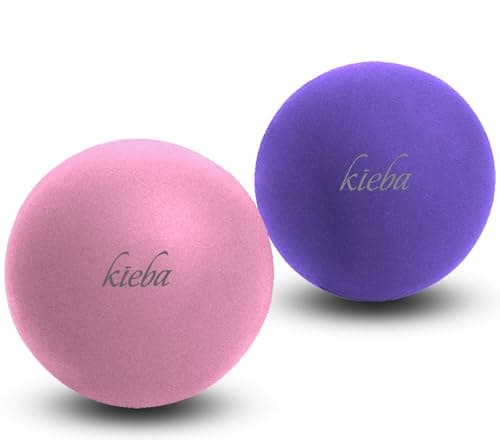
Kieba — Kieba Massage Lacrosse Balls (Set of 2)
At a glance
Tap a row to check price · tap a header to sort| # | Best for | Price | ||
|---|---|---|---|---|
| 1 | 1. TriggerPoint — GRID 1.0 Foam RollerBest overall | Best overall | 8.7/10 | |
| 2 | 2. Kieba — Kieba Massage Lacrosse Balls (Set of 2)Best second tool and best value | Best second tool and best value | 8.5/10 | |
| 3 | 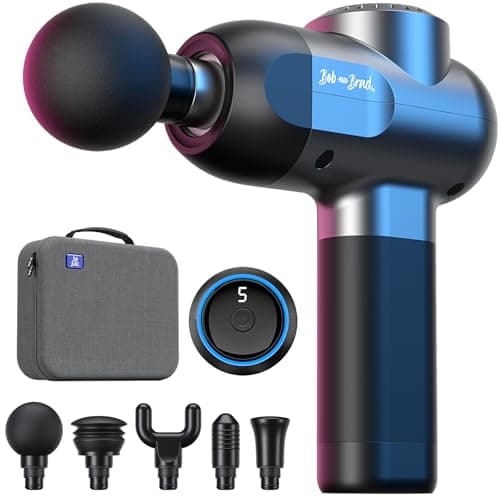 3. Bob and Brad — C2 Massage GunBest percussion pick | Best percussion pick | 7.9/10 | |
| 4 | 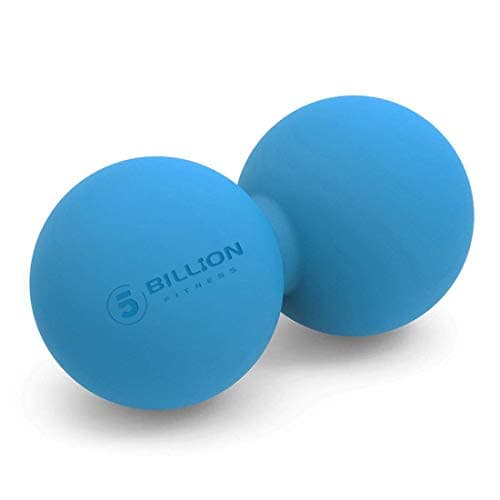 4. 5BILLION FITNESS — 5BILLION FITNESS Peanut Massage BallBest for the mid-back and calves | Best for the mid-back and calves | 7.8/10 | $15.29$16.9910% offCheck Price for 5BILLION FITNESS 5BILLION FITNESS Peanut Massage Ball on AmazonIn Stock |
| 5 | 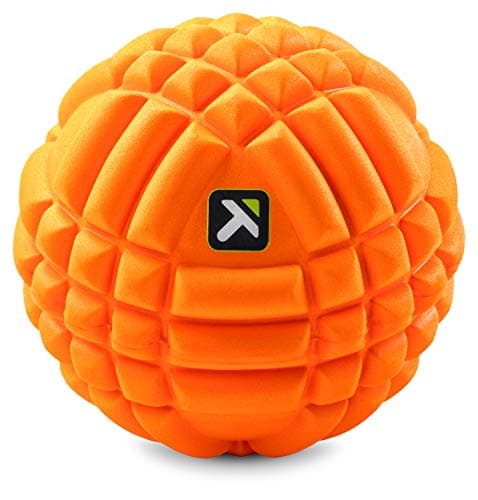 5. TriggerPoint — TriggerPoint GRID Ball Foam Massage Ball (5-inch)Best gentler ball | Best gentler ball | 7.4/10 | |
| 6 | 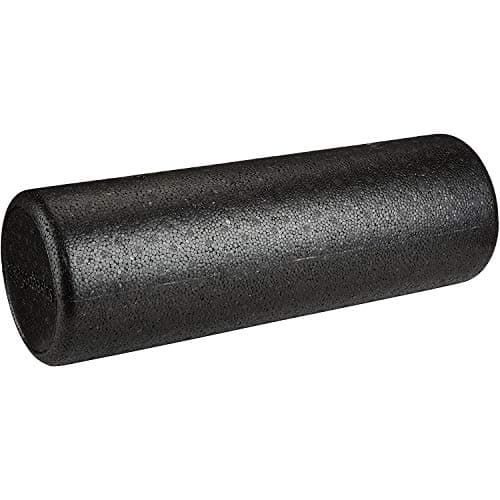 6. Amazon Basics — High-Density Round Foam RollerBudget pick | Budget pick | 7.3/10 |
Prices pulled from Amazon as of November 12, 2026 and are subject to change. The price shown on Amazon at checkout applies.
How we scored
Every product below is scored on six metrics, 0-10 each, with the weighting described on how we review. The criteria specific to this category:
- What it actually reaches — broad surfaces like quads and lats, concentrated trigger points like glutes and feet, or hard-to-reach spots like your own upper back. This decides the ranking more than anything else
- Firmness and whether it is appropriate — a roller too soft does nothing, a ball too aggressive just hurts, and the right answer depends on how much soft tissue you are working through
- Durability — closed-cell or molded foam that keeps its shape, a core that does not collapse, and rubber that does not go slick after a year
- Portability — whether it travels to the gym, which is the difference between a tool you use and a tool you own
- Setup time and floor space, because a tool that needs ten minutes on the floor gets used less than one you can hold against a shoulder at a desk
- Evidence fit — we rank tools with a credible claim about soreness and short-term range of motion over tools whose marketing promises tissue repair or detoxification
- Value at the live price, which in this category means asking what the next tool up actually adds
What to know before buying
- A roller and a ball cover 90% of this category. The roller handles broad surfaces — quads, hamstrings, lats, calves — and the ball handles the spots a roller cannot press into: glutes, pecs, shoulder blades, the arch of the foot. Everything else on this page is a refinement of those two shapes.
- Firm beats soft once you train seriously. A soft roller feels pleasant and does very little on a thick quad. Buy firm, and if firm is too much at first, reduce the load by taking weight onto your hands rather than buying a softer tool you will outgrow in a month.
- Do not roll directly on a joint, a bone or an injury. Stay on muscle. The IT band, the front of the knee, the lower back over the spine and any acute injury are places to leave alone — the peanut-shaped ball exists precisely so pressure lands on the muscles either side of the spine instead of the spine itself.
- Thirty to ninety seconds per spot is plenty. The effect on soreness and range of motion is short-term and does not scale with punishment. Longer, harder sessions do not produce better recovery; they just make you sore from the rolling as well as the training.
- A vibrating tool is a comfort upgrade, not a different mechanism. Vibration makes deep pressure more tolerable, which is why vibrating rollers and balls exist. It is a real benefit if firm rolling is unpleasant enough that you skip it, and a waste of money if it is not.
- A percussion gun is for reach and convenience, not depth of effect. Its advantage over a roller is that you can use it on a calf while sitting at a desk, and apply it to spots you cannot get a bodyweight tool onto. Its disadvantage is that it is the most expensive item here and needs charging.
- Recovery tools do not replace recovery. Sleep, total protein, sensible training load and time are what let you adapt to training. These tools make soreness more tolerable and warm-ups easier. If you are sore all the time, the answer is in the training plan and the sleep schedule, not in a drawer of foam.
Our picks
TriggerPoint — GRID 1.0 Foam Roller
Key specs: 13" length x 5.5" diameter · multi-density EVA foam over a hollow rigid core · patented Distrodensity grid texture with firm, tubular and flat zones · up to 300 lb weight rating · 1-year warranty · ~1.3 lbs
Pros
- Firm enough to be useful on big muscle through a season of hard training, which the cheap soft rollers are not
- A hollow rigid core and multi-density foam means it keeps its shape instead of flattening into a cylinder of nothing
- 13 inches and ~1.3 lbs — the roller most likely to actually travel to the gym with you
- The textured zones give you a choice of pressure without buying a second roller
Cons
- Costs several times the Amazon Basics roller for an improvement in texture and longevity rather than in mechanism
- Too short for lying lengthways along the spine, which the 36-inch rollers do better
- A roller cannot reach a glute, a pec or an arch properly — that is a ball's job
Who this one is for
For the lifter, runner or CrossFitter who wants one recovery tool and no decisions. It is firm enough to do real work on quads, hamstrings, lats and calves, the 13-inch length fits in a gym bag and sits neatly under one shoulder, and the hollow rigid core means it will not pack flat after a season of use. Skip it only if you specifically need the point pressure of a ball, or a longer roller for lying along your whole spine.
TriggerPoint — GRID 1.0 Foam Roller
- Coverage9/10
- Firmness & control9/10
- Durability9/10
- Portability9/10
- Value8/10
Kieba — Kieba Massage Lacrosse Balls (Set of 2)
Key specs: Set of two firm rubber lacrosse-style balls · standard lacrosse-ball diameter for a concentrated pressure point · high-density rubber that grips wall and floor · for myofascial release, trigger-point work and yoga therapy · small enough to live in a gym bag · sold as a pair
Pros
- Reaches the places a roller physically cannot — glutes, pecs, around the scapula, the plantar surface of the foot
- The cheapest item on this page by a distance, and sold as a pair so one can live in a gym bag and one at home
- High-density rubber grips the wall instead of skating away mid-session
- Nothing to charge, nothing to break, no storage problem
Cons
- Genuinely intense on an untrained area — the most common mistake is going too hard, too long
- Too small and too firm for broad work on quads or lats, where a roller is faster and more comfortable
- Hard to control precisely on the floor until you have done it a few times
Who this one is for
For everyone, honestly. A firm rubber ball is the only cheap way to get concentrated pressure into a glute, a pec, the muscles around a shoulder blade or the arch of a foot, and a pair costs less than a protein shake. Pin one against a wall or lie on it on the floor, find the spot, breathe, hold. It is intense at first — if that is too much, use the softer 5-inch GRID ball below instead.
Kieba — Kieba Massage Lacrosse Balls (Set of 2)
- Coverage7/10
- Firmness & control8/10
- Durability9/10
- Portability10/10
- Value10/10
Bob and Brad — C2 Massage Gun
Key specs: 8mm amplitude · 5 speeds (2,000-3,200 ppm) · ~35 lb stall force · brushless motor · USB-C quick charge · ~1.5 lbs
Pros
- Works on muscles you cannot get bodyweight onto, and works sitting down — the two things a roller cannot do
- Publishes amplitude and stall force rather than hiding behind percussions-per-minute claims
- Brushless motor and USB-C at a price where brushed motors and barrel plugs are still normal
- Comes from a physio-founded brand with a large free library on where and how to use it
Cons
- The most expensive tool on this page, and the only one that needs charging
- 8mm amplitude and ~35 lb stall force is surface-level work — it bogs down if you press hard into a quad
- Easy to overuse because it is comfortable; the same thirty-to-ninety-second rule applies
Who this one is for
For the person whose problem is reach and time rather than pressure: calves and shoulders while sitting at a desk, a quad between sets, a trapezius you cannot get a ball onto. It publishes both amplitude and stall force, which almost nothing cheap does, and the brushless motor and USB-C charging make it a reasonable long-term buy. If you want to lean hard into a big muscle, a roller or a ball gives you more pressure for far less money.
Bob and Brad — C2 Massage Gun
- Coverage8/10
- Firmness & control6/10
- Durability7/10
- Portability9/10
- Value7/10
5BILLION FITNESS — 5BILLION FITNESS Peanut Massage Ball
Key specs: Peanut-shaped double massage ball — two balls fused with a central groove · designed to straddle the spine so pressure lands on muscle rather than bone · firm rubber construction · for myofascial release and mobility work · compact and travel-friendly
Pros
- Solves a real problem: thoracic work without pressing on the spine
- Excellent on calves and the Achilles region, where the groove sits either side of the tendon
- Firm rubber and no moving parts — it will outlast most of this category
- Small and light enough to travel, like the lacrosse balls
Cons
- A specialist shape rather than a first purchase; a roller and a pair of balls cover more ground
- Firm enough to be uncomfortable on an untrained upper back
- Awkward to position on your own the first few times
Who this one is for
For the desk-bound lifter with a stiff mid-back, and for anyone whose calves and Achilles take a beating from running or jump rope. The peanut shape has a central groove, so when you lie on it the pressure lands on the muscles either side of the spine rather than on the spine itself — which is the one place a single ball or a roller is genuinely risky. It is a specialist shape; buy it after a roller and a ball, not before.
5BILLION FITNESS — 5BILLION FITNESS Peanut Massage Ball
- Coverage7/10
- Firmness & control8/10
- Durability9/10
- Portability9/10
- Value9/10
TriggerPoint — TriggerPoint GRID Ball Foam Massage Ball (5-inch)
Key specs: 5-inch (12.7 cm) GRID-patterned foam massage ball · larger and softer than a lacrosse ball · multi-density surface designed to grip and mimic a hands-on feel · for broader muscle groups and deep-tissue self-massage · single ball
Pros
- Much more tolerable than a lacrosse ball while still applying real pressure
- Five inches covers broad areas a small ball skips over, like the outside of a hip
- The GRID surface grips the floor and the body rather than sliding
- A sensible entry point for anyone new to self-massage or coming back from a layoff
Cons
- Too large and too soft to dig into a specific trigger point — that is what the lacrosse ball is for
- Costs several times a pair of rubber balls for a comfort difference, not a mechanism difference
- Foam will wear faster than solid rubber under heavy use
Who this one is for
For the reader who tried a lacrosse ball, found it brutal, and gave up. At five inches with a multi-density GRID surface it spreads pressure over a wider area, which makes glute and shoulder work tolerable while still doing something — and it is the better tool for broad areas like the upper back or the side of a hip. If you can handle a lacrosse ball, you do not need this.
TriggerPoint — TriggerPoint GRID Ball Foam Massage Ball (5-inch)
- Coverage8/10
- Firmness & control6/10
- Durability7/10
- Portability8/10
- Value7/10
Amazon Basics — High-Density Round Foam Roller
Key specs: Firm molded polypropylene (EPP) foam · ~6" diameter · length options 12", 18", 24" and 36" · smooth surface with molded edges · lightweight
Pros
- Firm molded foam rather than the soft cheap foam that compresses to uselessness in a month
- The 36-inch option lets you lie lengthways along your spine for thoracic extension work — something no 13-inch roller can do
- Cheap enough to own two: one at home, one in the car or at the gym
- No texture means even, predictable pressure, which some people prefer for calves and lats
Cons
- Smooth surface offers none of the varied pressure zones of a GRID or a textured roller
- Plainer, lighter build — it is a commodity product, not a ten-year tool
- Only one firmness, with no softer option if the pressure is too much at first
Who this one is for
For the person who is not sure they will use a roller, or who needs a second one to leave at the gym or the office. Molded high-density foam with a smooth surface does the basic job on quads, hamstrings and lats, and the 12-to-36-inch length options mean you can buy the long one for spine-length work — which the premium 13-inch rollers cannot do at any price. You give up texture and refinement, not function.
Amazon Basics — High-Density Round Foam Roller
- Coverage8/10
- Firmness & control7/10
- Durability7/10
- Portability6/10
- Value10/10
Frequently asked questions
A firm foam roller and a pair of lacrosse balls, in that order. The TriggerPoint GRID 1.0 is our top pick because it is firm enough to matter, short enough to travel and built around a rigid core that will not pack down; the Kieba lacrosse balls cost almost nothing and reach the glutes, pecs, shoulder blades and feet that no roller can press into. Between them they cover nearly everything people buy this category for. Add a percussion gun third if your problem is reach and convenience rather than pressure, and buy the Amazon Basics roller instead if you want the fundamentals at the lowest price.
Related reading
Sources
- TriggerPoint GRID 1.0 foam roller — official specifications — TriggerPoint (Implus), 2026
- Effects of Percussive Massage Treatment on Range of Motion and Muscle Soreness: A Systematic Review — International Journal of Environmental Research and Public Health, 2023
- Product titles, dimensions, materials, weight ratings, live prices and availability for all six ranked tools — Amazon product listing data, 2026
Last verified: November 8, 2026. See our editorial policy and how we review for details on scoring and update cadence. Canonical URL: https://trustedhealthgear.com/reviews/best-recovery-tools.
TriggerPoint — GRID 1.0 Foam Roller
$39.95 · on Amazon