The Best Foam Rollers for Athletes and Heavy Lifters
A foam roller is the cheapest, most durable recovery tool you can own, and for breaking up tight quads, glutes, lats, and a beat-up upper back between heavy sessions it earns its place better than most gadgets twice the price. It won't replace sleep, protein, or sane training volume, and the research on it is honest about that. What it does do well is improve how loose and mobile you feel before and after lifting. The picks below are real, widely available rollers, and we weighted them on what actually matters for hard training: firmness and density, texture, durability, size options, and value. We left the marketing out.
Top pick
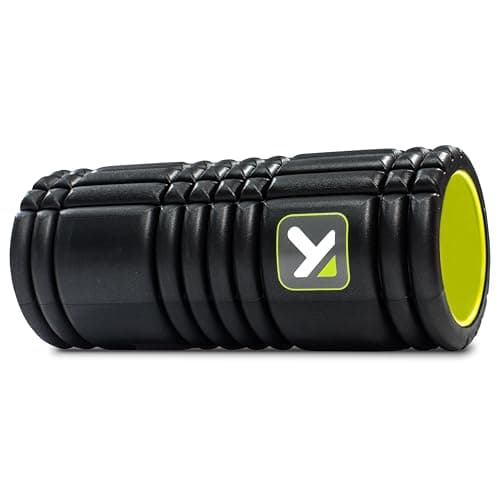
TriggerPoint — GRID 1.0 Foam Roller
13" length x 5.5" diameter · multi-density EVA foam over a hollow rigid core · patented Distrodensity grid texture (firm, tubular, and flat zones) · up to 300 lb weight rating · 1-year warranty · ~1.3 lbs
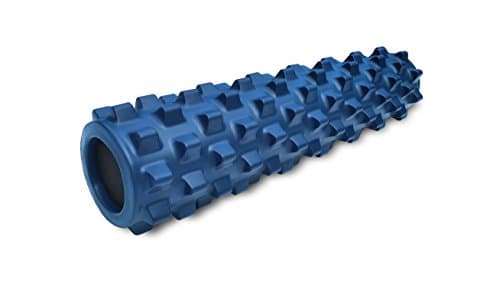
RumbleRoller — Original Textured Foam Roller
At a glance
Tap a row to check price · tap a header to sort| # | Best for | Price | ||
|---|---|---|---|---|
| 1 | 1. TriggerPoint — GRID 1.0 Foam RollerBest overall | Best overall | 9/10 | |
| 2 | 2. RumbleRoller — Original Textured Foam RollerBest for deep tissue | Best for deep tissue | 8.5/10 | |
| 3 | 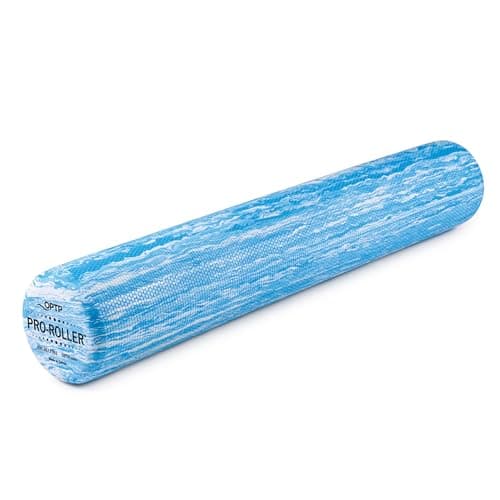 3. OPTP — PRO-ROLLER Standard DensityBest smooth roller | Best smooth roller | 8.2/10 | |
| 4 | 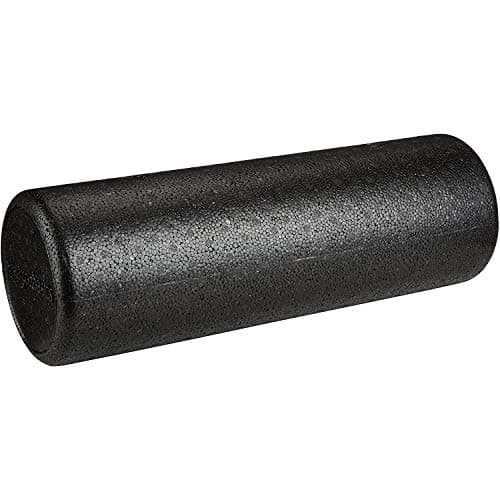 4. Amazon Basics — High-Density Round Foam RollerBest budget | Best budget | 7.8/10 | |
| 5 | 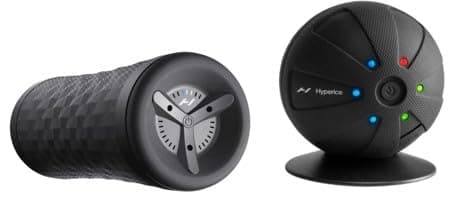 5. Hyperice — Vyper 3Best vibrating roller | Best vibrating roller | 7.9/10 |
Prices pulled from Amazon as of Sep 24, 2026 and are subject to change. The price shown on Amazon at checkout applies.
How we scored
Every product below is scored on six metrics, 0-10 each, with the weighting described on how we review. The criteria specific to this category:
- Firmness and density — how much pressure the roller delivers and whether it holds its shape under a heavy lifter; firmer rollers reach denser, well-trained muscle.
- Texture and grip — smooth versus grid or knobbed surfaces, and how the pattern targets tissue without slipping or biting too hard.
- Durability and core construction — closed-cell EVA, molded EPP, or a hollow plastic core that won't collapse, deform, or absorb sweat over years of use.
- Size and diameter options — length (12" travel up to 36" full-back) and the standard ~5.5-6" diameter, so you can match the roller to your body and use case.
- Weight capacity and build — a rated load that comfortably holds a heavy athlete without bottoming out.
- Value — durability and performance per dollar, factoring in how long the roller lasts, not just the sticker price.
What to know before buying
- Density and firmness is the first decision. Soft/low-density foam is forgiving and good for beginners, rehab, and tender tissue; firm and extra-firm rollers reach dense, well-trained muscle but can be brutal if you're new to rolling. If in doubt, start firm-but-not-extreme and work up.
- Smooth versus textured changes the feel, not the rules. A smooth roller (like the OPTP) gives broad, even pressure and is the safe default. Grid-textured rollers (TriggerPoint) add channels that target tissue more aggressively; knobbed rollers (RumbleRoller) mimic thumb pressure and dig deepest — great for stubborn knots, overkill for a warm-up.
- Length matters for what you're rolling. A 36" roller spans the whole back and is the most versatile for thoracic extension and lying-down work; 18-24" is a good all-rounder; 12-13" is compact and travel-friendly but trickier to balance on for back work.
- EVA versus EPP versus hollow-core is a durability question. Molded EPP and high-density polypropylene (Amazon Basics) are cheap and tough; closed-cell EVA (OPTP, TriggerPoint) wipes clean, resists sweat, and holds shape longer; a hollow plastic core (TriggerPoint GRID) adds firmness and a high weight rating without adding much foam.
- Vibrating rollers are a luxury, not a requirement. A vibrating roller (Hyperice Vyper) can make rolling more tolerable and may help mobility, but a $30 firm roller covers the fundamentals. Buy vibration because you'll actually use it more, not because it's a different recovery mechanism.
Our picks
TriggerPoint — GRID 1.0 Foam Roller
Key specs: 13" length x 5.5" diameter · multi-density EVA foam over a hollow rigid core · patented Distrodensity grid texture (firm, tubular, and flat zones) · up to 300 lb weight rating · 1-year warranty · ~1.3 lbs
Pros
- Hollow rigid core gives firm, consistent pressure that holds its shape for years without softening or deforming
- Multi-density grid texture targets tissue in three patterns — broad strips, channels, and fingertip-style knobs — in one surface
- Closed-cell EVA wipes clean and shrugs off sweat, unlike cheap open-cell foam
- 13" length and ~5.5" diameter is the versatile sweet spot for quads, glutes, lats, and upper back
Cons
- 13" is a bit short for spanning the entire back at once; some prefer a 36" roller for thoracic work
- Firmer and more textured than a beginner may want — tender or new tissue can find it sharp
- Costs several times more than a plain high-density round roller of similar length
TriggerPoint — GRID 1.0 Foam Roller
- Firmness/density8/10
- Texture/grip9/10
- Durability9/10
- Size options7/10
- Value8/10
RumbleRoller — Original Textured Foam Roller
Key specs: Mid-size 22" length x 5.5" diameter (also 13" compact and 31" full-size) · firm bump-textured surface · Original (blue, moderate firmness) and Xtra Firm (black, ~36% firmer) versions · flexible knobs designed to mimic thumb pressure
Pros
- Tall, flexible knobs penetrate deeper than a flat roller and bend with the body to mimic a thumb working into tissue
- Original (blue) firmness suits most trained athletes; Xtra Firm (black) exists for especially dense, unresponsive muscle
- Genuinely effective on stubborn knots and trigger points that a smooth roller glides past
- Multiple lengths (13", 22", 31") cover travel through full-back use
Cons
- The knobbed surface is intense — beginners and tender tissue should start with the Original, not the Xtra Firm
- Too aggressive for a quick warm-up or gentle flushing; it's a deep-tissue tool, not an everyday default
- Bumps can feel uneven on bonier areas and the surface is harder to clean than a smooth roller
RumbleRoller — Original Textured Foam Roller
- Firmness/density9/10
- Texture/grip10/10
- Durability8/10
- Size options8/10
- Value7/10
OPTP — PRO-ROLLER Standard Density
Key specs: 36" length x 6" diameter · closed-cell, heat-molded EVA foam · smooth (non-textured) surface · standard (firm) density; also sold in Soft and Super Soft · physical-therapy clinic staple
Pros
- Full 36" length spans the entire spine — ideal for thoracic extension, lying-down work, and balance drills
- Smooth surface delivers broad, even pressure that's predictable and easy to control
- Heat-molded closed-cell EVA holds its shape and outlasts cheap open-cell rollers; a long-standing clinic standard
- Density options (Soft, Standard, Super Soft) let you match firmness to your tolerance
Cons
- Smooth surface can't target knots the way a textured or knobbed roller does
- 36" length is bulky and not travel-friendly
- Standard density is firm but won't reach the deepest dense tissue like a RumbleRoller or hollow-core grid
OPTP — PRO-ROLLER Standard Density
- Firmness/density7/10
- Texture/grip6/10
- Durability9/10
- Size options9/10
- Value8/10
Amazon Basics — High-Density Round Foam Roller
Key specs: Firm molded polypropylene (EPP) foam · ~6" diameter · length options 12", 18", 24", and 36" · smooth surface with molded edges · lightweight
Pros
- Firm high-density EPP foam covers the rolling fundamentals at a fraction of the price of branded rollers
- Molded polypropylene won't absorb sweat and resists deforming better than soft open-cell foam
- Four length options (12-36") mean you can pick travel size or full-back without overpaying
- Light, simple, and effectively indestructible for the money
Cons
- Smooth surface offers no targeted texture for knots or trigger points
- Firmness is fixed — no soft option for tender tissue or beginners
- Plain finish and basic build; it works, but there's nothing premium about it
Amazon Basics — High-Density Round Foam Roller
- Firmness/density7/10
- Texture/grip5/10
- Durability8/10
- Size options9/10
- Value10/10
Hyperice — Vyper 3
Key specs: 13" length x 5.4" diameter · 3 vibration speeds · 34W high-torque motor · 2,400 mAh lithium-ion, ~2 hr battery · Bluetooth (Hyperice app) · TSA carry-on approved · ~2.7 lbs
Pros
- Three vibration speeds make firm rolling more tolerable and can help loosen tissue before training
- Strong 34W motor delivers real vibration through a firm roller, not a faint buzz
- Compact 13" size and TSA approval make it genuinely travel-friendly
- Rechargeable with a ~2-hour battery and optional app-controlled speed
Cons
- Far more expensive than any non-vibrating roller — you're paying a large premium for the motor
- Heaviest pick here at ~2.7 lbs, and the battery needs charging
- Vibration is a comfort and adherence feature, not a separate recovery mechanism — a $30 firm roller covers the basics
Hyperice — Vyper 3
- Firmness/density8/10
- Texture/grip7/10
- Durability8/10
- Size options5/10
- Value6/10
Frequently asked questions
The evidence is modest but real. Foam rolling can reduce perceived muscle soreness and short-term stiffness and reliably improves range of motion right after use, which makes it genuinely useful for warming up and feeling looser between sessions. What it does not do is 'break up scar tissue,' lengthen muscle permanently, or replace sleep, protein, and sane training volume. Treat it as a low-cost tool for comfort and mobility, not a magic recovery accelerator.
Related reading
Sources
- TriggerPoint GRID 1.0 Foam Roller — Official Specifications — TriggerPoint (Implus), 2026
- RumbleRoller Original Textured Foam Roller — Specifications & Firmness Levels — RumbleRoller, 2026
- OPTP PRO-ROLLER Standard Density Foam Roller — Product Page — OPTP, 2026
- Amazon Basics High-Density Round Foam Roller — Product Listing (12", 18", 24", 36") — Amazon Basics, 2026
- Hyperice Vyper 3 Vibrating Foam Roller — Specifications — Hyperice, 2026
Last verified: June 18, 2026. See our editorial policy and how we review for details on scoring and update cadence. Canonical URL: https://trustedhealthgear.com/reviews/best-foam-roller.
TriggerPoint — GRID 1.0 Foam Roller
$39.95 · on Amazon