The Best Foam Rollers for Lower-Back Relief (Done Safely)
Lower-back tightness after heavy deadlifts, squats, or a brutal CrossFit metcon usually isn't a problem with your lumbar spine itself — it's the muscles that load and protect it: the glutes, lats, mid-back (thoracic), QL (quadratus lumborum), and hips. That's an important distinction, because the single most common foam-rolling mistake is grinding a hard roller straight up and down the small of your back. You should not foam roll the lumbar spine directly: it has no rib cage or strong bony arch to protect it, so a firm roller can push your lower back into extension and aggravate the very tissue you're trying to calm. Recovery is a performance pillar, not an afterthought — but it has to be done in a way that actually helps. We ranked these tools on how precisely they let you target the muscles around the lower back (not the spine), how firm and how textured they are, how well they hold up, and whether they're worth the money. None of this replaces sleep, whole-food protein, and sane training volume; it's a way to manage tightness so you can keep training.
Top pick
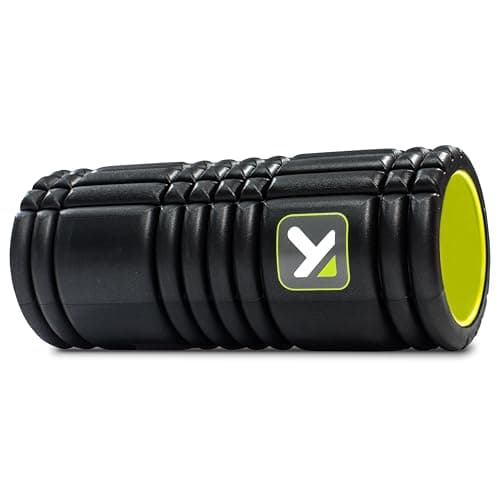
TriggerPoint — TriggerPoint GRID 1.0 Foam Roller
13" length x 5.5" diameter · rigid hollow ABS core wrapped in multi-density EVA foam · patented Distrodensity surface (firm ridges, tubular, and flat zones) · tested to 500 lb · ~1.3 lb · also offered in a 26" GRID 2.0
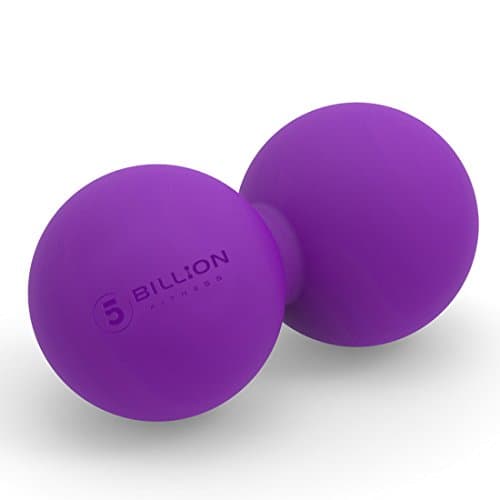
5BILLION Fitness — 5BILLION Peanut Massage Ball
At a glance
Tap a row to check price · tap a header to sort| # | Best for | Price | ||
|---|---|---|---|---|
| 1 | 1. TriggerPoint — TriggerPoint GRID 1.0 Foam RollerBest overall | Best overall | 8.5/10 | |
| 2 | 2. 5BILLION Fitness — 5BILLION Peanut Massage BallBest targeted trigger-point tool | Best targeted trigger-point tool | 8.1/10 | |
| 3 | 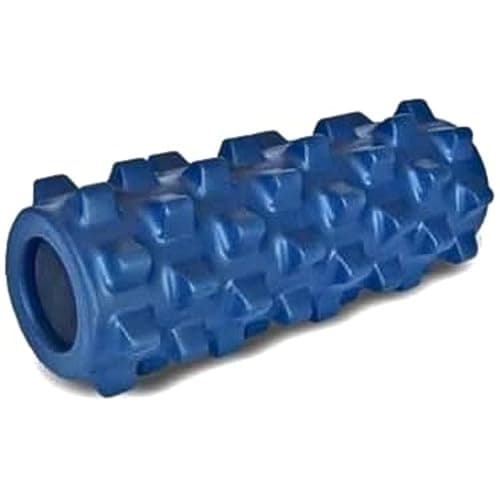 3. RumbleRoller — RumbleRoller (Original, Compact 13")Best deep-tissue option | Best deep-tissue option | 8.3/10 | |
| 4 | 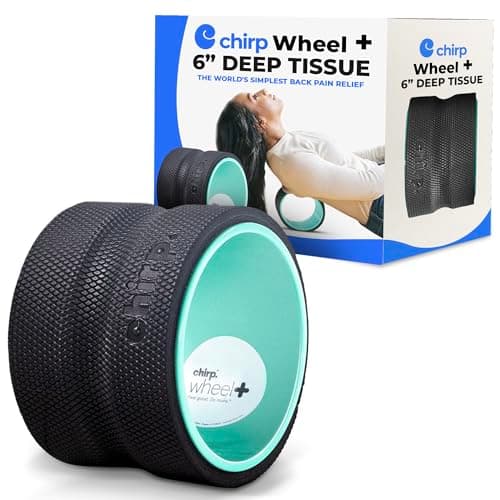 4. Chirp — Chirp Wheel+ (Back Roller Wheel)Best for thoracic mobility | Best for thoracic mobility | 7.6/10 | |
| 5 | 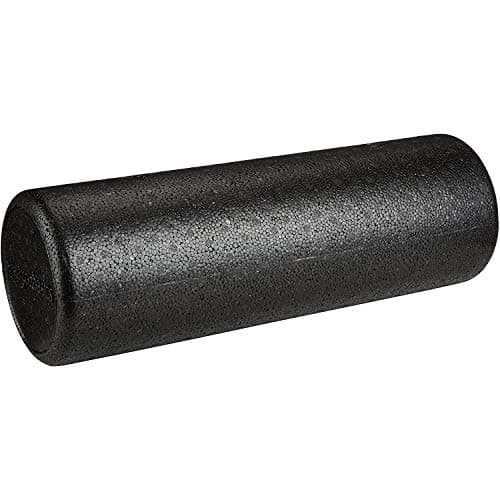 5. Amazon Basics — Amazon Basics High-Density Foam RollerBest budget | Best budget | 7.2/10 |
Prices pulled from Amazon as of Sep 24, 2026 and are subject to change. The price shown on Amazon at checkout applies.
How we scored
Every product below is scored on six metrics, 0-10 each, with the weighting described on how we review. The criteria specific to this category:
- Targeted relief — how precisely the tool lets you work the glutes, lats, QL, hips, and thoracic spine without forcing pressure onto the lumbar vertebrae.
- Firmness — how much deep-tissue pressure it delivers; dense, well-trained muscle needs a firmer surface, but firmer also means you must be more careful about placement.
- Texture — smooth vs. multi-density ridges vs. aggressive bumps; texture changes how much it digs into knots versus glides over tissue.
- Durability — foam density, core construction (hollow rigid core vs. solid EVA/molded), and whether it holds shape under a 200+ lb lifter session after session.
- Value — performance and versatility per dollar, including size options and how many areas the tool actually covers.
- Form factor — a long roller, a peanut/double ball, and a back wheel each suit different jobs; the best pick depends on which muscles you're targeting.
What to know before buying
- Do NOT foam roll the lumbar (lower) spine directly. The small of your back has no rib cage to protect it, and pressing a firm roller into it can force lumbar extension and aggravate the area. Instead, target the muscles that drive lower-back tightness: glutes, lats, mid-back/thoracic spine, QL (the muscle on the side of your waist), and hips.
- For the QL and erector spinae, a peanut/double ball is far safer and more precise than a wide roller — the central groove straddles the spine so pressure lands on the muscles beside it, not on the vertebrae themselves.
- Start softer than you think. A smooth, firm roller (like the TriggerPoint GRID) covers most lifters; only graduate to an aggressively textured roller (RumbleRoller) once you know how your tissue responds. Pain that sharpens or radiates is a signal to stop, not push.
- A back-roller wheel supports the spine in a controlled arch and is used to mobilize the thoracic (mid-back) region, not to crush the lumbar spine. Larger-diameter wheels apply gentler pressure; smaller wheels dig deeper — beginners should start large.
- If lower-back pain is sharp, persistent, radiates into the legs, or follows a specific injury, stop self-treating and see a clinician. Foam rolling is for managing muscular tightness, not diagnosing or fixing back injuries.
Our picks
TriggerPoint — TriggerPoint GRID 1.0 Foam Roller
Key specs: 13" length x 5.5" diameter · rigid hollow ABS core wrapped in multi-density EVA foam · patented Distrodensity surface (firm ridges, tubular, and flat zones) · tested to 500 lb · ~1.3 lb · also offered in a 26" GRID 2.0
Pros
- Multi-density surface lets you choose firm ridges for knots or flatter zones for broad strokes — ideal for glutes, lats, and the thoracic spine
- Rigid hollow core keeps its shape under heavy lifters where cheap solid rollers compress and go soft
- Firm but not punishing, so it's the right default for working around the lower back without overdoing pressure
- Compact 13" length is easy to position precisely on one glute or under the lats
Cons
- Pricier than a plain EVA roller for what is still, fundamentally, a roller
- 13" length is short for rolling the full length of the back or both legs at once (the 26" 2.0 fixes this)
- Texture is moderate — very dense tissue may want something more aggressive
TriggerPoint — TriggerPoint GRID 1.0 Foam Roller
- Targeted relief8/10
- Firmness7/10
- Texture8/10
- Durability9/10
- Value8/10
5BILLION Fitness — 5BILLION Peanut Massage Ball
Key specs: Two firm lacrosse-ball-sized spheres fused into a "peanut" shape · central groove straddles the spine so pressure lands on the muscles beside it, not the vertebrae · marketed for deep-tissue myofascial release, trigger-point/acupoint work, and physical therapy · dense, firm rubber construction
Pros
- The groove between the two balls straddles your spine, so pressure lands on the erectors and QL — the safest way to work tissue near the lower back
- Firm and precise enough to pin a single trigger point in the glutes, QL, or between the shoulder blades against the floor or a wall for deep myofascial release
- Tiny and travel-friendly — fits in a gym bag for pre- or post-session mobility work anywhere
- Inexpensive and, as fused solid rubber balls, far more durable than a foam roller
Cons
- Very firm and very focused — it can feel intense on a sensitive QL, so ease into the pressure
- A narrow, single-job tool — it can't cover broad areas like the lats or quads the way a long roller does
- Fused peanut balls can eventually separate at the joint under hard, repeated use
5BILLION Fitness — 5BILLION Peanut Massage Ball
- Targeted relief10/10
- Firmness8/10
- Texture6/10
- Durability7/10
- Value9/10
RumbleRoller — RumbleRoller (Original, Compact 13")
Key specs: Compact: ~13" length x 5" diameter (also 22" and 31" full-size) · firm-but-flexible molded bumps that knead tissue like thumbs · Original (blue) density; Xtra Firm (black) ~36% firmer for advanced users · solid molded construction
Pros
- Flexible bumps knead into the glutes, lats, and hips far more aggressively than a smooth roller — genuinely deep-tissue feel
- Original (blue) density is described as mimicking thumb pressure; works on most body parts for experienced rollers
- Solid molded build holds up to heavy, repeated use without flattening
- Multiple sizes — the compact 13" is easy to target one muscle at a time
Cons
- Too aggressive for beginners; start with a smoother roller before graduating to this
- The Xtra Firm (black) version can be painful and is only sensible for very dense tissue that doesn't respond to normal pressure
- The deep bumps make it easy to stray onto bone or spine — be deliberate about placement and keep it off the lumbar spine
RumbleRoller — RumbleRoller (Original, Compact 13")
- Targeted relief8/10
- Firmness9/10
- Texture10/10
- Durability9/10
- Value7/10
Chirp — Chirp Wheel+ (Back Roller Wheel)
Key specs: Wheel-shaped back roller · 5" width designed to fit between the shoulder blades on either side of the spine · three diameters: 12" (gentle), 10" (medium), 6" (deep tissue) · larger wheel = gentler, smaller wheel = deeper · grooved center channel for the spine
Pros
- The 5" width and center groove let it mobilize the muscles either side of the spine while the spinous processes sit in the channel
- Excellent for opening up a stiff thoracic (mid-back) region — often the real driver of lower-back tightness in lifters
- Diameter system lets you scale pressure: start with the 12" gentle wheel, progress to the 6" for deeper work
- More controlled than a flat roller for guided back extension and mobility drills
Cons
- It's a mobility/extension tool for the mid-back — do not use it to grind the lumbar spine, and ease off if you feel pinching low down
- Single-purpose compared with a roller that also does legs, glutes, and lats
- The 6" deep-tissue wheel is intense and easy to overdo for beginners
Chirp — Chirp Wheel+ (Back Roller Wheel)
- Targeted relief8/10
- Firmness7/10
- Texture7/10
- Durability8/10
- Value6/10
Amazon Basics — Amazon Basics High-Density Foam Roller
Key specs: High-density molded polypropylene foam (solid core) · sizes 12", 18", 24", 36" · 36" model is ~6" diameter, ~14 oz · smooth surface · supports body-weight rolling
Pros
- Cheap, firm, and does the basic job — flush the glutes, lats, and quads with broad, smooth strokes
- Solid high-density foam holds its shape better than soft hollow EVA rollers in this price range
- Size options: a 36" length is great for supported back-extension drills and bilateral leg rolling
- Smooth surface is forgiving, making it a reasonable first roller for newcomers
Cons
- No multi-density zones or texture — it can't dig into knots the way a GRID or RumbleRoller does
- Smooth solid foam can feel either too soft (short term) or, in high density, unyieldingly hard for some users
- No groove to protect the spine, so it's a tool for the glutes/lats/legs — not for rolling near the lumbar spine
Amazon Basics — Amazon Basics High-Density Foam Roller
- Targeted relief6/10
- Firmness7/10
- Texture4/10
- Durability7/10
- Value10/10
Frequently asked questions
Not directly — and this is the most important thing to get right. You should never roll a foam roller up and down your lumbar spine (the small of your back). Unlike your mid-back, the lower back isn't protected by a rib cage, so pressing a firm roller into it can force your spine into extension and aggravate the tissue. What is safe and effective is targeting the muscles that cause lower-back tightness: the glutes, lats, mid-back (thoracic spine), QL (the muscle on the side of your waist), and hips. For the muscles right beside the spine, use a peanut/double ball whose central groove straddles the spine, so pressure stays on the muscle and off the bone.
Related reading
Sources
- TriggerPoint GRID 1.0 Foam Roller — Official Product Page (dimensions, multi-density EVA, 500 lb rating) — TriggerPoint, 2026
- RumbleRoller — Original vs. Xtra Firm density and sizing (Education page) — RumbleRoller, 2026
- What Size Chirp Wheel+ Is Right for You? (6"/10"/12" pressure and 5" spine channel) — Chirp, 2026
- 5BILLION Fitness Peanut Massage Ball (Double Lacrosse Ball for Myofascial Release) — Product Page — Amazon / 5BILLION Fitness, 2026
- Amazon Basics High-Density Foam Roller — Product Listing (sizes 12"/18"/24"/36") — Amazon Basics, 2026
Last verified: June 18, 2026. See our editorial policy and how we review for details on scoring and update cadence. Canonical URL: https://trustedhealthgear.com/reviews/best-foam-roller-lower-back.
TriggerPoint — TriggerPoint GRID 1.0 Foam Roller
$39.95 · on Amazon