The Best Back Stretchers — An Honest Buyer's Guide
A back stretcher is a simple arched board or foam wedge you lie back over so your spine gently extends while gravity does the work. Let's be straight about what it is: a low-cost comfort-and-mobility gadget, not a treatment. Some people find that a few minutes draped over one feels good and leaves them feeling looser; others feel nothing, and a few find it plain uncomfortable — and none of that is a substitute for seeing a clinician about back pain. So we judged these the way you'd judge any piece of gear, not as medicine: how many arch levels they offer so you can start gentle, how firm or forgiving the material is, how well the frame fits an adult's lower back, how solid it feels, and what you pay for all that. We'll tell you honestly where a rigid board earns its keep, where a softer foam model is the smarter first buy, and when the sensible move is to skip the gadget entirely and stop if anything hurts.
Top pick
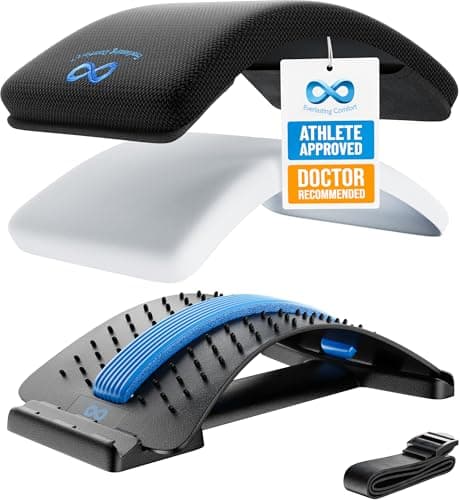
Everlasting Comfort — Everlasting Comfort Adjustable Back Stretcher
Rigid arched board with multiple adjustable arch heights · 88 raised nodes across the surface · includes a strap to secure it to a chair for seated use · wide supportive frame · lightweight plastic construction · from a large, established home-comfort brand
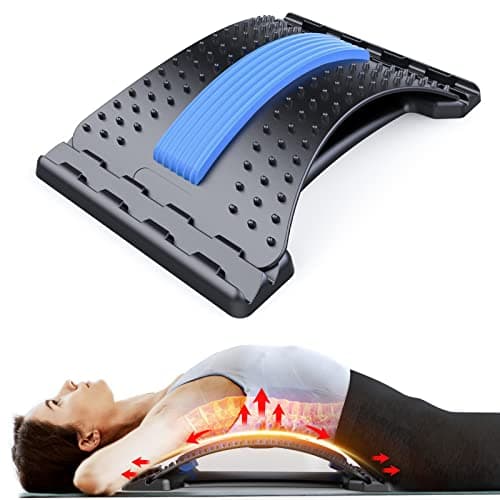
MINOLL — MINOLL Multi-Level Adjustable Back Stretcher
At a glance
Tap a row to check price · tap a header to sort| # | Best for | Price | ||
|---|---|---|---|---|
| 1 | | Best overall | 8.1/10 | $37.99 |
| 2 | | Best multi-level arch | 7.8/10 | $27.54$28.99 |
| 3 | 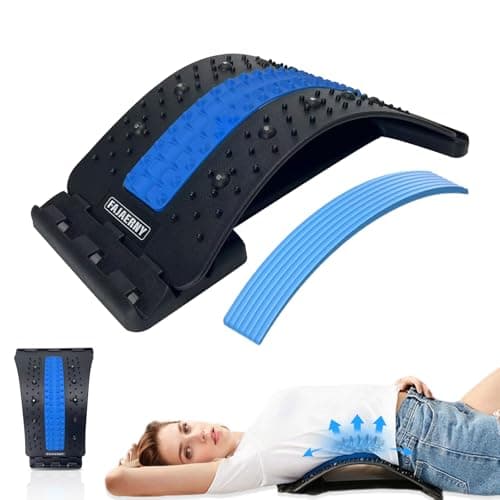 | Best padded surface | 7.5/10 | $14.85$16.88 |
| 4 | 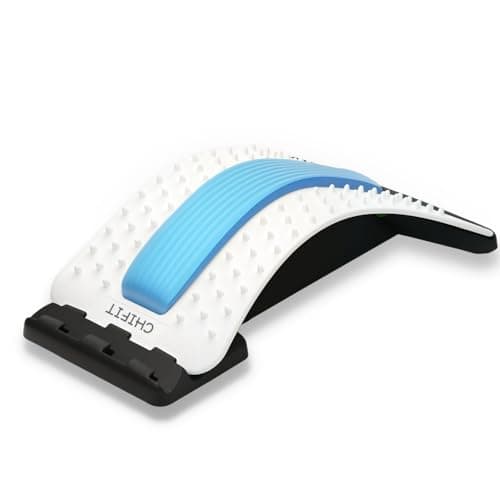 | Best classic design | 7.4/10 | $15.99 |
| 5 | 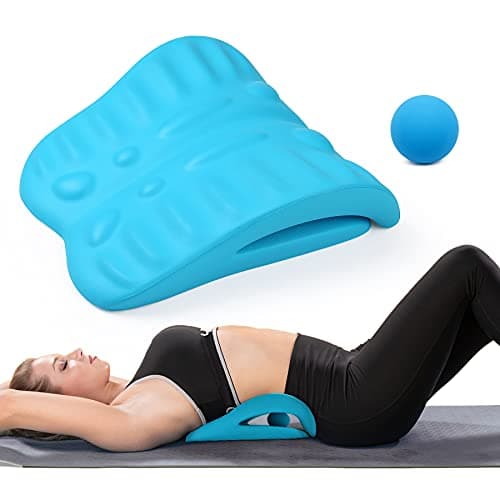 | Best gentle option | 7.3/10 | $45.99 |
| 6 | 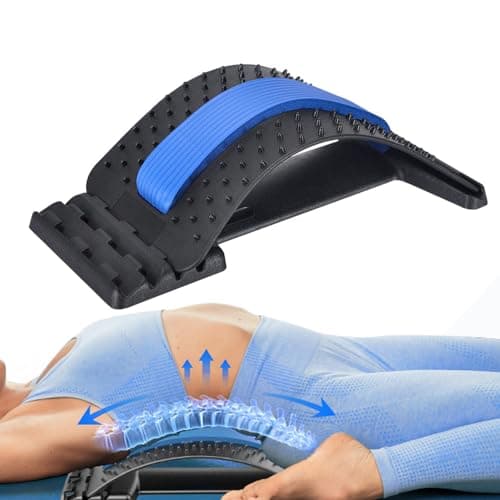 | Best budget | 7.2/10 | $11.99 |
Prices pulled from Amazon as of Sep 16, 2026 and are subject to change. The price shown on Amazon at checkout applies.
How we scored
Every product below is scored on six metrics, 0-10 each, with the weighting described on how we review. The criteria specific to this category:
- Adjustable arch levels — most rigid stretchers snap between two and four curve heights, and more levels let you start shallow and only progress if it actually feels good, which matters a lot for a passive device you should never force.
- Material and firmness — hard ABS plastic gives a deep, aggressive arch, while foam and EVA-topped models are gentler and more forgiving, and for most first-time buyers the gentler option is the smarter starting point.
- Size and width — the frame needs to span your lower back comfortably; too narrow and it digs into the spine, too wide and it wastes the curve, so it's worth checking the length against your own torso.
- Surface and nodes — some boards add raised 'acupressure' bumps, a padded strip, or magnets, but treat those as a comfort-and-feel preference, not a feature that does anything clinical.
- Build and stability — a stretcher that flexes, creaks, or slides across the floor feels cheap and unsafe, so a solid frame and a wide, grippy base genuinely matter for something you put your bodyweight on.
- Value — what you pay for adjustability, comfort, and build quality, remembering that a back stretcher is an inexpensive comfort-and-mobility gadget and not a medical device.
What to know before buying
- Set expectations honestly. A passive arched stretcher gently extends your spine while you lie on it. Some people find it feels good and helps them feel looser and more mobile; others feel nothing at all, and some find it uncomfortable. It is not a treatment for any back condition and it won't fix a structural problem — think of it as a stretch you can't do on your own, not a cure.
- Start on the lowest arch. The single biggest mistake is cranking a rigid board to its deepest setting on day one. Start on the shallowest arch, keep the first sessions short (a couple of minutes), and only step up if a lower setting feels too easy. If it hurts, causes pain that shoots or radiates, or leaves you sore afterward, stop using it.
- Hard plastic vs foam. Rigid ABS boards give the most dramatic arch and the loudest 'crack,' which people either love or hate. Foam and EVA-topped models are gentler, quieter, and far more forgiving, which makes them the better first buy for most people. Buy the deep, hard board only if you already know you like an aggressive extension stretch.
- Who should skip it or ask first. Sharp, radiating, or persistent back pain, numbness, tingling, weakness, or pain that follows an injury are reasons to see a doctor or physical therapist — not to buy a gadget. If you're pregnant, have osteoporosis, have had recent spine surgery, or have any diagnosed spine condition, ask a clinician before using one at all.
- It's a mobility tool, not a fix. Whatever a stretcher does for you, pair it with the boring things that actually help most backs over time: regular movement, walking, general strengthening, and not sitting hunched for hours. The stretcher is a nice-to-have that can feel good in the moment, not the thing that fixes the underlying problem.
Our picks
Everlasting Comfort — Everlasting Comfort Adjustable Back Stretcher
Key specs: Rigid arched board with multiple adjustable arch heights · 88 raised nodes across the surface · includes a strap to secure it to a chair for seated use · wide supportive frame · lightweight plastic construction · from a large, established home-comfort brand
Pros
- Comes from one of the better-known brands in this category, with a broad review base and consistent build quality — reassuring in a sea of anonymous boards
- Multiple arch heights let you start shallow and progress only if a deeper curve feels comfortable
- The included chair strap is a genuinely useful extra, letting you use it as a seated lumbar support as well as a floor stretcher
- Wide frame and padded node surface feel more supportive and less harsh than a bare hard-plastic board
Cons
- Priciest pick here, and much of the premium is the brand and the chair strap rather than a fundamentally different device
- The 88 raised nodes feel pleasant to some people and too pointed to others — a personal preference you can't judge until you lie on it
- Still a rigid board; even the lowest setting is firmer than a foam model, so it isn't the gentlest possible starting point
Everlasting Comfort — Everlasting Comfort Adjustable Back Stretcher
- Arch adjustability8/10
- Comfort / material8/10
- Build quality8/10
- Portability7/10
- Value7/10
MINOLL — MINOLL Multi-Level Adjustable Back Stretcher
Key specs: Rigid arched plastic frame · three adjustable arch levels (shallow to deep) · contoured surface with raised support ridges · compact, lightweight, and portable · arch level changes by repositioning the base arms · widely reviewed
Pros
- Three distinct arch heights make it easy to start gentle and step up only when a shallower curve feels too easy
- Firm, stable frame gives a supportive, even arch across the lower back rather than a flimsy flex
- Light and compact enough to slide under a bed or into a closet between uses
- Broadly available and well-reviewed, at a price that sits in the sensible middle of the range
Cons
- Hard plastic delivers an aggressive arch — the deepest setting is a lot for a beginner, so ease into it
- The raised ridges can feel pointed through a thin shirt; some users lay a towel over it
- Changing the arch level means repositioning the frame, which is fiddlier than a flip-lever design
MINOLL — MINOLL Multi-Level Adjustable Back Stretcher
- Arch adjustability8/10
- Comfort / material7/10
- Build quality8/10
- Portability8/10
- Value8/10
FAJAERNY — FAJAERNY 3-Level Adjustable Back Stretcher
Key specs: Rigid arched frame with three adjustable levels · 84 raised massage points plus 10 magnetic nodes on the surface · includes both a softer NBR foam pad and a firmer silicone pad · compact and lightweight
Pros
- Comes with both a softer NBR foam pad and a firmer silicone pad, so you can tune how the surface feels against your back
- Three adjustable arch levels cover a useful range from gentle to deep
- The padded strip makes it more comfortable than a bare hard-plastic board for most people
- Inexpensive for the number of features on offer, and easy to store and carry
Cons
- The '84 massage points and 10 magnetic nodes' are a feel-and-comfort preference — treat the magnets as marketing, not function
- Smaller, newer brand with a shorter track record than the established boards
- Still a rigid arch underneath the padding, so the deepest level is aggressive for a beginner
FAJAERNY — FAJAERNY 3-Level Adjustable Back Stretcher
- Arch adjustability8/10
- Comfort / material7/10
- Build quality7/10
- Portability8/10
- Value8/10
ChiFit — ChiFit Multi-Level Back Stretching Device
Key specs: Rigid arched plastic frame · three adjustable arch settings · raised central ridge with side support points · compact and lightweight · one of the longer-standing designs in the category
Pros
- One of the original widely sold multi-level boards, with a long review history you can sanity-check against
- Three arch settings cover a useful range from gentle to deep
- Simple, rigid, and light — nothing to break, easy to store and travel with
- Typically cheaper than the premium branded boards while offering the same basic function
Cons
- Older, no-frills design with a harder, less padded surface than newer node-topped boards
- The step between arch levels is fairly large, so moving up a setting can feel abrupt
- Bare hard plastic can feel harsh on a bony lower back — start slow and consider a towel
ChiFit — ChiFit Multi-Level Back Stretching Device
- Arch adjustability7/10
- Comfort / material6/10
- Build quality7/10
- Portability8/10
- Value8/10
RESTCLOUD — RESTCLOUD Foam Back Stretcher
Key specs: Firm high-density foam arch (not rigid plastic) · fixed gentle curve rather than adjustable levels · smooth padded surface · lightweight and silent in use · larger footprint than the folding plastic boards
Pros
- Firm foam gives a gentle, forgiving arch — the most beginner-friendly choice here and a good first back stretcher for the cautious
- No hard edges or pointed nodes, so it's comfortable to relax on for a few minutes
- Quiet and simple: no clicking mechanism, nothing to adjust, nothing to break
- Popular and well-reviewed specifically as a gentler alternative to rigid boards
Cons
- Fixed curve with no adjustable levels, so you can't dial the arch deeper as you get used to it
- Foam is bulkier and less packable than the folding plastic boards and takes up more storage space
- The gentle arch will feel like 'not enough' to anyone who specifically wants the deep stretch and crack of a hard board
RESTCLOUD — RESTCLOUD Foam Back Stretcher
- Arch adjustability5/10
- Comfort / material9/10
- Build quality8/10
- Portability6/10
- Value7/10
YooYuan — YooYuan 4-Level Adjustable Back Stretcher
Key specs: Rigid arched plastic frame · four adjustable arch levels · contoured surface with raised support points · compact, lightweight, foldable base · budget price
Pros
- Four arch levels — one more than most boards in this price range — give a finer progression from shallow to deep
- About as cheap as a usable adjustable board gets, which makes it a low-risk way to try the format
- Light, compact, and foldable for easy storage under a bed or couch
- Straightforward to adjust and use, with the same basic function as pricier boards
Cons
- Value-line plastic and finish; the build feels less solid than the MINOLL or Everlasting Comfort boards
- Bare hard surface can feel harsh, and there's no included padded strip or chair strap
- Little-known brand with limited long-term durability data
YooYuan — YooYuan 4-Level Adjustable Back Stretcher
- Arch adjustability8/10
- Comfort / material6/10
- Build quality6/10
- Portability8/10
- Value9/10
Frequently asked questions
It depends what you mean by 'work.' A passive arched stretcher gently extends your spine, and plenty of people say a few minutes on one feels good and leaves them feeling looser and more mobile. But it isn't a treatment, and the evidence for these gadgets fixing anything is thin — some people feel nothing, and a few find it uncomfortable. The honest way to think about it is as a stretch aid and a comfort tool, not a cure. If you have real back pain, that's a conversation for a clinician, not a purchase.
Related reading
Sources
- Low back pain — self-care, staying active, and when to see a doctor — Mayo Clinic
- Back pain — causes, self-care, and the limits of passive gadgets — Cleveland Clinic
- Exercise, stretching, and movement for a healthier back — Harvard Health Publishing
Last verified: August 1, 2026. See our editorial policy and how we review for details on scoring and update cadence. Canonical URL: https://trustedhealthgear.com/reviews/best-back-stretcher.
Everlasting Comfort — Everlasting Comfort Adjustable Back Stretcher
$37.99 · on Amazon