Inversion Table vs Back Stretcher: Which Stretching Tool Fits You?
An inversion table and a back stretcher are both passive stretching gadgets, not medical devices, and the honest way to choose between them is to compare them as gear — size, price, setup, and how big a commitment each is — rather than as treatments. An inversion table is the big, expensive option: a folding steel frame that clamps your ankles and tilts your whole body backward so gravity does the stretching. It takes floor space, costs the most, has a real learning curve, and carries genuine cautions — people with high blood pressure, heart or circulatory conditions, glaucoma or other eye conditions, or who are pregnant are generally advised not to use one, and everyone should check with a physician first. A back stretcher is the small, cheap option: an arched board or foam wedge you simply lie back over for a passive stretch, with no straps, no tilting, and almost nothing to learn. It stores in a closet and costs a fraction as much. Neither is proven to fix anything — the evidence for both is limited and mixed — so treat them as comfort-and-mobility tools, talk to a doctor before you start, and stop if anything hurts.
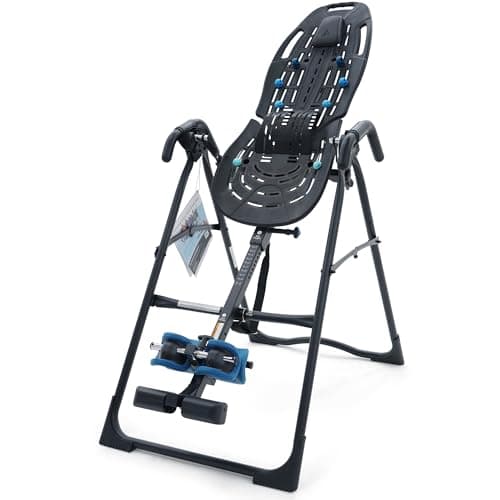
Teeter — Teeter EP-560 Ltd. Inversion Table
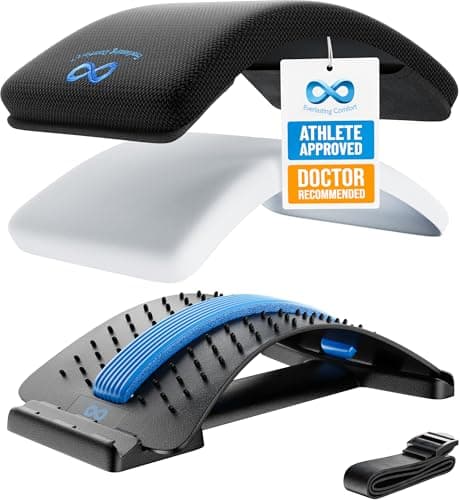
Everlasting Comfort — Everlasting Comfort Adjustable Back Stretcher
The verdict
If you want the lowest-cost, lowest-commitment way to lie back and feel a gentle stretch, the back stretcher is the easy pick — it's cheap, tiny, stores anywhere, and there's essentially nothing to set up or learn. The inversion table is a much bigger buy in every sense: more money, more floor space, a real setup and learning curve, and a list of cautions that rule it out for a lot of people, including anyone with high blood pressure, a heart or circulatory condition, glaucoma or other eye conditions, or who is pregnant. Choose it only if you specifically want the full-body inverted position and have cleared it with a physician first. For most people weighing the two, start small and simple with a back stretcher. Whichever you pick, remember both are comfort-and-stretching gadgets, not medical devices — talk to your doctor before using either, and stop immediately if anything hurts.
Side-by-side
| Attribute | Inversion Table | Back Stretcher |
|---|---|---|
| Best for | People who want an adjustable, full-body inverted stretch and don't mind the commitment | People who want a cheap, simple, low-commitment passive stretch |
| Typical price | Highest here — a substantial piece of equipment | Low — one of the cheapest stretching gadgets |
| Footprint / storage | Large steel frame; folds but stays bulky and heavy | Small board or foam wedge; slides under a bed or into a closet |
| Setup | Clamp your ankles, set the tilt angle, ease back — a real routine | Lie back over the arch — essentially no setup |
| Learning curve | Meaningful — inverting takes getting used to and care | Minimal — little to learn |
| Adjustability | Adjustable tilt angle, from a slight lean to fully inverted | Fixed foam curve, or a board with a few arch heights |
| Cautions | Notable — generally advised against for high blood pressure, heart/circulatory conditions, glaucoma/eye conditions, or pregnancy; ask a physician first | Fewer, but still check with a doctor first and stop if it hurts |
| Portability | Heavy and awkward to move; tends to stay put | Light and easy to carry or travel with |
Who should pick which
Pick Inversion Table
- People who specifically want the full-body inverted position and the sensation of tilting back, and who have cleared it with a physician first.
- Buyers who don't mind a bigger footprint, a higher price, and a real setup and learning curve in exchange for an adjustable tilt angle.
Pick Back Stretcher
- Anyone on a tight budget or trying passive stretching for the first time — a back stretcher costs a fraction of an inversion table and asks almost nothing of you.
- Apartment dwellers and anyone short on floor space, since a back stretcher slides under a bed or into a closet while an inversion table stays out as a large piece of equipment.
- People who want the simplest possible routine — lie back for a couple of minutes, with no straps, no tilting, and nothing to adjust.
- Anyone with high blood pressure, a heart or circulatory condition, glaucoma or other eye conditions, or who is pregnant — an inversion table is generally advised against for these groups, so the gentler back stretcher (or neither) is the safer thing to discuss with a doctor.
What each one actually is
Strip away the marketing and these are two very different pieces of hardware. An inversion table is a folding steel frame with a padded backrest and ankle clamps. You lock your feet in at the bottom, lean back, and the table pivots so your body tilts head-down at an angle you set; the idea is that your own bodyweight and gravity create a stretch as you hang back. It's a full-body apparatus you commit to using. A back stretcher is far simpler: a curved rigid board — usually with a few adjustable arch heights — or a fixed foam wedge that sits on the floor. You lie back over the arch so your spine drapes across it for a passive stretch, then get up. There are no straps, no pivot, and nothing holding you in place, so you can slide off it at any moment. One is a large machine you strap into; the other is a small prop you rest on. That basic difference in form drives every practical trade-off that follows, from price to storage to how careful you need to be.
Price, size, and storage
This is the most clear-cut gap between them. A back stretcher is one of the cheapest fitness gadgets you can buy, while an inversion table is a substantial purchase that costs many times more — it's a piece of equipment, not an accessory. Size follows price. An inversion table is a large steel frame; even the folding models stay bulky and heavy, and most people leave them standing in a corner because breaking them down and setting them back up every session is a chore. A back stretcher, by contrast, disappears when you're done: the foam wedges are light, and the rigid boards fold flat enough to slide under a bed, behind a door, or into a closet. If you live in an apartment, share a room, or simply don't want a machine on permanent display, that footprint difference matters as much as the price. For a lot of buyers, the back stretcher wins on practicality before the conversation even reaches how each one feels to use.
Setup, learning curve, and ease of use
A back stretcher has essentially no learning curve. You lie back over it, rest for a short while, and stand up; the only real decision is which arch height to start on, and the sensible answer is always the gentlest one. An inversion table asks more of you at every step. You have to fit and lock the ankle clamps correctly, set the tilt angle, and then ease back into an inverted position that feels strange and slightly unnerving the first several times — many people start with only a shallow tilt and work up gradually as they get used to the sensation. Getting in and out, and returning yourself upright, is a small skill in itself. None of that is hard, exactly, but it's a routine you have to learn and stay attentive to, whereas the back stretcher is close to foolproof. If you want something you'll actually use without fuss, the simpler tool tends to win; if you specifically want the inverted position and don't mind the ritual, the table's extra steps are the price of admission.
Cautions and who should be careful
Here's the part to take seriously, and the reason to loop in a professional. An inversion table tilts your whole body head-down, and that position isn't appropriate for everyone: people with high blood pressure, heart or circulatory conditions, glaucoma or other eye conditions, or who are pregnant are generally advised not to use one, and anyone considering it should check with a physician first. A back stretcher is a gentler, lower-commitment device, but it isn't automatically right for every back either — if you have a diagnosed spine condition, osteoporosis, recent surgery, or pain that's sharp, radiating, or lingering, that's a conversation for a doctor or physical therapist, not a purchase. It's also worth being honest about what these gadgets are: comfort-and-stretching tools, not medical devices, and the evidence that either one does much beyond feeling like a stretch is limited and mixed. Whichever you're drawn to, start gently, keep sessions short, talk to a clinician before you begin if you have any of the concerns above, and stop immediately if anything hurts.
Which to pick — and how to think about both
For most people choosing between the two, the back stretcher is the sensible place to start: it's cheap enough to try without much risk to your wallet, it stores out of sight, there's almost nothing to learn, and it doesn't carry the same list of cautions as being inverted. The inversion table makes sense for a narrower group — people who specifically want the full-body, tilted-back sensation, who have the floor space and budget for a real piece of equipment, and who have cleared it with a physician first. Neither choice is a treatment, and neither will fix an underlying problem, so it helps to set expectations before you buy: think of both as optional comfort-and-mobility gadgets that some people enjoy and others feel nothing from. Pair whichever you choose with the unglamorous basics that tend to help backs over time — regular movement, walking, and general strengthening — and treat the gadget as a nice-to-have, not the centerpiece. And again: check with a doctor before starting either, and stop if it hurts.
Frequently asked questions
They're built and used completely differently. An inversion table is a large folding steel frame that clamps your ankles and tilts your whole body head-down so gravity creates a stretch as you hang back — a real piece of equipment you strap into. A back stretcher is a small rigid board or foam wedge you simply lie back over on the floor for a passive stretch, with no straps and nothing holding you. The table is bigger, pricier, and more involved; the stretcher is cheap, tiny, and close to foolproof. Both are comfort-and-stretching gadgets, not medical devices.
Sources
- Inversion therapy: Can it relieve back pain? (general overview and safety cautions, including who should avoid inverting) — Mayo Clinic
- Can Inversion Tables Really Relieve Back Pain? (how inversion tables work, mixed evidence, and safety considerations) — Cleveland Clinic
- Relieve low back pain with stretching (general guidance on gentle stretching and back care) — Harvard Health Publishing
- Spine-health — patient education on back care, stretching, and traction-style devices (general context) — Spine-health (Veritas Health)
Teeter — Teeter EP-560 Ltd. Inversion Table
$269.99 · on Amazon