The Best Posture Correctors — An Honest Buyer's Guide (2026)
Let's be honest about what a posture corrector is and isn't. None of these devices permanently "fix" your posture, and no strap or sensor is a treatment for a medical back problem — if you have back pain or a diagnosed spine condition, talk to your doctor or a physical therapist before you buy anything here. What a good corrector actually does is act as a cue. An elastic brace gently pulls your shoulders back so you notice when you've slumped; a wearable sensor buzzes when you round forward at your desk. The evidence on passive braces is limited: they can add short-term comfort and a useful reminder, but lasting change comes from strengthening your upper back and simply moving more, not from wearing a strap all day. So we ranked these the way a skeptic would — on comfort and wearability, fit and adjustability, how strong and genuinely useful the reminder is, how discreet it is under a shirt, and value. Here's what's worth buying, and why we'd keep expectations modest for every one of them.
Top pick
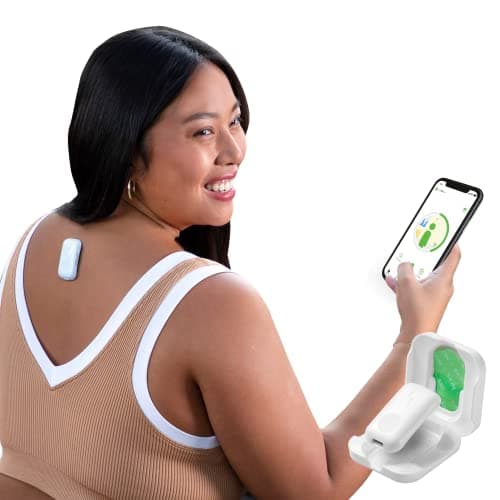
Upright — Upright GO 2 Premium Posture Trainer
Small wearable sensor that sits between the shoulder blades · attaches with reusable adhesive pads or the included magnetic necklace · vibrates when you slouch past your set threshold · pairs with a smartphone app for training-mode sessions and posture tracking · rechargeable battery · far more discreet under clothing than any strap
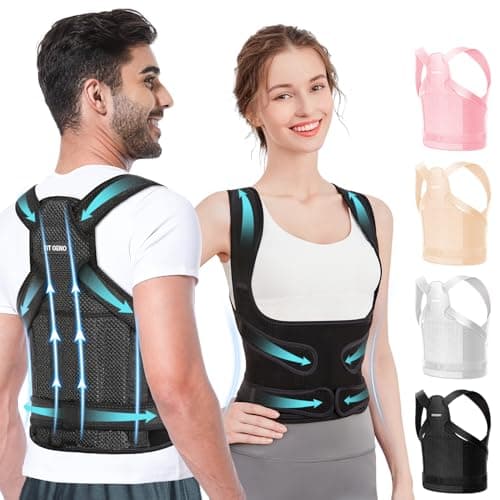
Fit Geno — Fit Geno Posture Corrector
At a glance
Tap a row to check price · tap a header to sort| # | Best for | Price | ||
|---|---|---|---|---|
| 1 | | Best wearable posture trainer | 7.9/10 | $79.80$84.00 |
| 2 | | Best everyday brace | 7.5/10 | $34.99$39.99 |
| 3 | 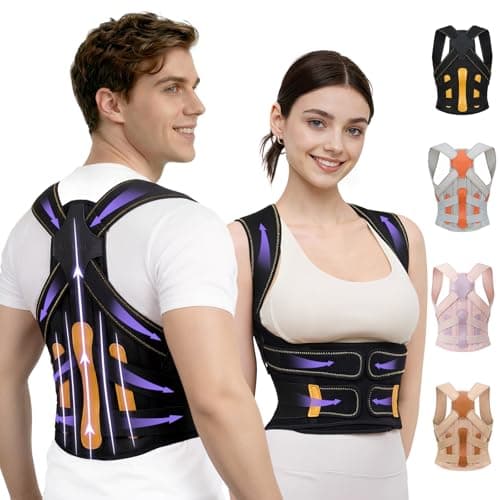 | Best full-back coverage | 7.3/10 | $34.99 |
| 4 | 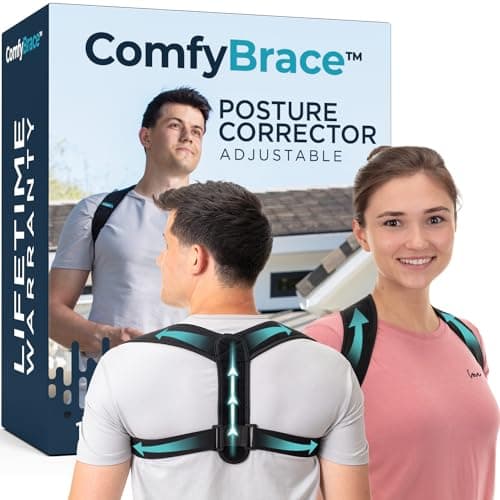 | Best simple clavicle brace | 7.1/10 | $26.97 |
| 5 | 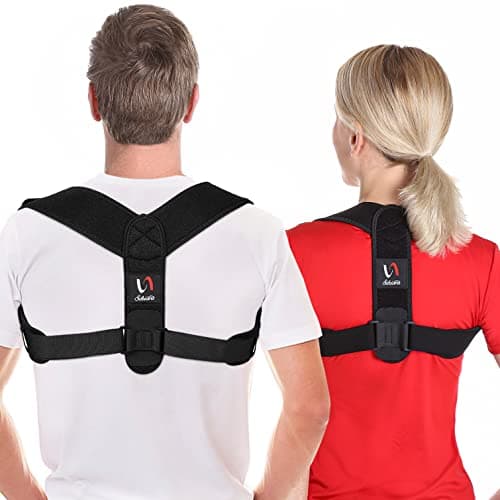 | Best budget figure-8 | 6.9/10 | $18.99$21.99 |
| 6 | 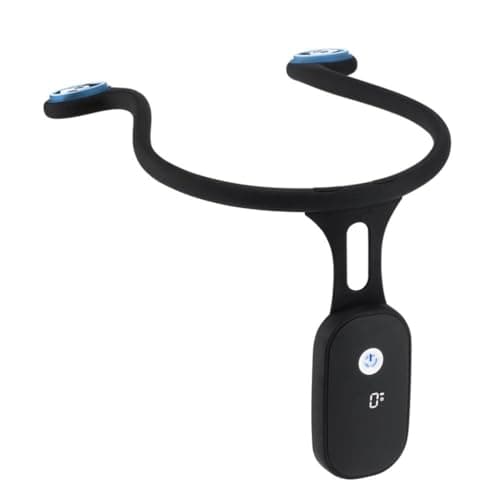 | Best budget smart reminder | 6.8/10 | $24.62 |
Prices pulled from Amazon as of Sep 16, 2026 and are subject to change. The price shown on Amazon at checkout applies.
How we scored
Every product below is scored on six metrics, 0-10 each, with the weighting described on how we review. The criteria specific to this category:
- Comfort and wearability — this is the single most important factor, because a corrector only does anything if you actually keep it on; anything that digs into your armpits or shoulders comes off in ten minutes and helps no one.
- Fit and adjustability — straps that adjust across a wide range, breathable padding, and clear sizing matter more than marketing, since a brace that doesn't fit your torso can't sit where it needs to.
- Reminder / cue strength — the entire mechanism is the reminder, whether it's the passive tension of an elastic brace pulling your shoulders back or the active buzz of a wearable sensor when you slouch.
- Discreetness under clothing — a low-profile brace or a tiny sensor you can wear at the office gets used far more than a bulky full-back rig you only put on at home.
- Build quality and materials — stitching, buckle and strap durability, breathable fabric, and (for sensors) battery life and a sane app decide whether the thing survives daily use.
- Value — honest performance and durability per dollar, factoring in that an $18 elastic brace and an $84 wearable trainer are doing genuinely different jobs.
What to know before buying
- Set expectations first. A posture corrector is a reminder tool, not a cure. Research on passive braces is thin, and the consensus among physical therapists is that any benefit is mostly short-term comfort and a cue to sit up — the durable fix is strengthening the mid-back and moving more often. Treat a brace as training wheels, not a permanent crutch.
- Don't wear it all day. Leaning on a brace for hours can let the muscles that should hold you upright switch off, which is the opposite of the goal. Most people do best wearing a corrector for short, deliberate sessions (say 20-40 minutes) while working or standing, then taking it off. Wearable buzz sensors sidestep this because they cue your own muscles to do the work instead of holding you in place.
- Match the form factor to the problem. Elastic figure-8 clavicle braces are the cheap, simple default for rounded shoulders. Full-back braces add rigid stays and a lumbar band for more coverage and a firmer cue, at the cost of bulk. Small wearable sensors sit between the shoulder blades and vibrate when you slouch — the most "active" and discreet option, and the one that actually trains a habit rather than propping you up.
- Fit and sizing are everything. A corrector that's too loose won't cue you and too tight becomes unbearable. Measure per the brand's chart (usually chest or waist), start on a looser setting, and expect a break-in period — new braces feel aggressive for the first few days. Padding under the straps is the difference between wearing it and abandoning it.
- This is still Your-Money-or-Your-Life territory. Persistent back or neck pain, numbness, tingling, or pain that radiates down a limb are reasons to see a clinician, not to buy a stronger brace. Nothing on this page treats a medical condition — use these as comfort and habit tools alongside professional advice, not instead of it.
Our picks
Upright — Upright GO 2 Premium Posture Trainer
Key specs: Small wearable sensor that sits between the shoulder blades · attaches with reusable adhesive pads or the included magnetic necklace · vibrates when you slouch past your set threshold · pairs with a smartphone app for training-mode sessions and posture tracking · rechargeable battery · far more discreet under clothing than any strap
Pros
- The active vibration cue is the strongest, most useful reminder here — instead of physically pulling you upright, it nudges you to correct yourself, which is closer to how you actually build a posture habit
- Very discreet: a coin-sized sensor between the shoulder blades disappears under a shirt in a way no elastic brace can, so people wear it at the office and actually keep using it
- The app's training mode lets you build up wear time gradually and see when you tend to slump, which turns a vague goal into something you can track
- Rechargeable and reusable — no straps to wear out, and the magnetic necklace option avoids the adhesive pads entirely
Cons
- Easily the most expensive option here, and it does nothing physical — you're paying for the reminder and the tracking, not support
- Adhesive pads wear out and need replacing, and some people never love sticking a device to their skin every day; the necklace helps but changes the feel
- It only works if you charge it, wear it, and respond to the buzz — it's a habit tool, and like any habit tool it's useless in a drawer
Upright — Upright GO 2 Premium Posture Trainer
- Comfort8/10
- Fit & adjustability7/10
- Cue strength9/10
- Discreetness9/10
- Value6/10
Fit Geno — Fit Geno Posture Corrector
Key specs: Elastic figure-8 clavicle-style brace that draws the shoulders back · wide padded straps to spread pressure across the shoulders · adjustable straps to fit a range of torso sizes · breathable fabric intended for wear over or under clothing · unisex sizing · one of the more comfortable straps in the budget-to-midrange band
Pros
- The padded, wider straps are noticeably kinder to the armpits and shoulders than bargain braces — the main reason people keep it on long enough for it to matter
- Adjustable across a good range, so it's easy to dial in a firm-but-tolerable amount of tension and loosen it as you break it in
- Simple figure-8 design is easy to put on solo and gives a clear, consistent "sit up" cue without rigid stays poking your back
- Reasonably priced for a comfortable brace, and light enough to wear under a loose shirt at home
Cons
- It's still a passive brace — it reminds and gently pulls, but it won't build the mid-back strength that actually changes posture over time
- Bulkier than a wearable sensor and visible under fitted clothing, so it's more of a home/desk tool than an all-day office option
- Like all elastic braces, it loosens as the fabric relaxes over a long session and needs re-cinching
Fit Geno — Fit Geno Posture Corrector
- Comfort8/10
- Fit & adjustability8/10
- Cue strength7/10
- Discreetness5/10
- Value8/10
Kepwaa — Kepwaa Full-Back Posture Corrector with Support Rods
Key specs: Full-back brace with multiple removable rigid support rods along the spine · adjustable shoulder straps plus a wider lumbar/waist band · more coverage and a firmer cue than a simple figure-8 · sized by chest/waist measurement · designed to be cinched down for a structured, upright feel
Pros
- The rigid stays and lumbar band deliver a firmer, more structured reminder than an elastic-only brace, which some people find easier to notice
- Covers both the upper back and the lower-back/waist area, so the cue isn't limited to just pulling the shoulders back
- Removable rods let you tune how stiff it feels, and the wide waist band spreads the load rather than concentrating it on the shoulders
- Adjustable across a broad size range, and the structured build holds its shape better than a thin elastic strap over a long session
Cons
- The bulkiest option here — it's a home or standing-desk tool, not something you'll wear discreetly under work clothes
- A firmer, more supportive brace makes it easier to over-rely on it; wear it in short sessions so your own muscles keep working
- More straps and rods mean a longer learning curve to get it comfortable, and the rigid stays can feel aggressive until it's dialed in
Kepwaa — Kepwaa Full-Back Posture Corrector with Support Rods
- Comfort7/10
- Fit & adjustability8/10
- Cue strength8/10
- Discreetness4/10
- Value7/10
ComfyBrace — ComfyBrace Posture Corrector
Key specs: Classic figure-8 clavicle brace that loops over both shoulders and draws them back · adjustable straps for a range of sizes · lightweight, low-profile design meant to be worn over or under a shirt · one of the most widely bought braces on Amazon · unisex fit
Pros
- Dead simple and hugely popular — it does one thing (pull the shoulders back) and gives a clear, consistent cue to stand tall
- Light and low-profile compared with a full-back rig, so it's easier to wear at a desk without feeling like you're in a harness
- Adjustable straps make it easy to set a comfortable amount of tension and loosen off as you get used to it
- Inexpensive and easy to restock, making it a low-risk way to see whether a passive brace helps you at all
Cons
- Thin straps can dig into the armpits if you crank the tension too high — go easy at first and pad if needed
- Purely passive, so it's a reminder and nothing more; it won't strengthen anything or change posture on its own
- Elastic relaxes over a long wear session, so you'll re-tighten it, and it's visible under fitted clothing
ComfyBrace — ComfyBrace Posture Corrector
- Comfort7/10
- Fit & adjustability7/10
- Cue strength7/10
- Discreetness6/10
- Value7/10
Schiara — Schiara Posture Corrector
Key specs: Basic elastic figure-8 upper-back brace · adjustable shoulder straps · lightweight and packable · aimed at the budget end of the market · unisex sizing · a low-cost entry point into the passive-brace category
Pros
- Cheapest way in the roundup to try the concept — if a passive brace doesn't do it for you, you're out very little
- Simple, light, and packable; easy to toss in a bag and use for short desk sessions
- Straps adjust enough to find a workable tension, and the figure-8 shape is intuitive to put on
- Perfectly serviceable as an occasional reminder for someone who just wants an inexpensive nudge to sit up
Cons
- Budget materials and thinner straps mean less padding, so comfort during longer wear trails the pricier braces
- No structure and no lumbar support — it's the most minimal cue here, which is fine if that's all you want
- As with every passive brace, it reminds but doesn't train; the real work is still strengthening and moving
Schiara — Schiara Posture Corrector
- Comfort6/10
- Fit & adjustability7/10
- Cue strength7/10
- Discreetness6/10
- Value9/10
Jenivaint — Jenivaint Smart Posture Monitor
Key specs: Small rechargeable wearable that vibrates when you slouch past its threshold · silicone body worn between the shoulder blades · USB rechargeable · automatic-alert design meant as a low-cost active reminder · far cheaper than established sensor brands
Pros
- Delivers the active buzz-when-you-slouch cue at a fraction of the price of premium posture trainers
- Small and discreet like other sensors, so it's easier to wear at a desk than a bulky brace
- Rechargeable over USB with no straps or adhesive pads to wear out, and nothing to re-tighten mid-session
- A low-risk way to try the wearable-sensor approach before committing to a pricier system
Cons
- It's a generic budget device — build quality, app support (if any), and long-term reliability are a real question mark next to established brands
- Threshold and sensitivity tuning tend to be cruder than premium trainers, so the buzz can feel hit-or-miss
- Same core caveat as every sensor: it only works if you charge it, wear it, and act on the buzz
Jenivaint — Jenivaint Smart Posture Monitor
- Comfort7/10
- Fit & adjustability6/10
- Cue strength8/10
- Discreetness8/10
- Value6/10
Frequently asked questions
They work as a reminder, not a cure. A brace gives your shoulders a gentle pull and your body a cue to sit up; a wearable sensor buzzes when you slouch. What the research does not strongly support is the idea that wearing a strap permanently changes your posture. The evidence on passive braces is limited, and physical therapists generally agree that lasting improvement comes from strengthening your mid-back and moving more often. Think of a corrector as a helpful nudge and a short-term comfort tool, and pair it with actual movement and strengthening rather than expecting the device to do the work for you.
Related reading
Sources
- Do Posture Correctors Actually Work? (they cue and remind, but strengthening and movement drive lasting change) — Cleveland Clinic, 2026
- Back pain — causes, prevention, and the role of posture and movement — Mayo Clinic, 2026
- Why good posture matters and how to improve it through strength and habit — Harvard Health Publishing, 2026
- Exercises and coaching to build postural strength (upper back and core) — American Council on Exercise (ACE), 2026
Last verified: August 1, 2026. See our editorial policy and how we review for details on scoring and update cadence. Canonical URL: https://trustedhealthgear.com/reviews/best-posture-corrector.
Upright — Upright GO 2 Premium Posture Trainer
$79.80 · on Amazon