The Best Inversion Tables — A Safety-First Buyer's Guide
An inversion table is a padded frame that clamps your ankles and lets you tilt backward — partway or fully upside down — so gravity pulls the opposite way from how you spend most of your day. Let's be clear about what it is and isn't: this is comfort-and-stretching hardware, not a medical device and not a treatment. Some people say a few minutes of gentle inversion feels good and leaves them feeling decompressed, but the research on inversion and traction for back symptoms is limited and mixed, so we won't pretend it fixes anything. It also isn't for everyone — tilting head-down raises pressure in the head and eyes, which makes it a bad idea for some people, and that's a conversation to have with a doctor first. So we judged these the way you'd judge any gear that holds your full bodyweight: how solid and stable the frame is, how secure the ankle locks feel, the rated weight capacity, how easy it is to assemble and use, and what you pay for it.
Top pick
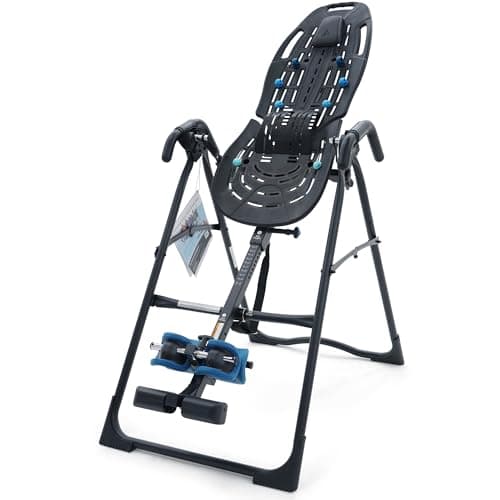
Teeter — Teeter EP-560 Ltd. Inversion Table
Heavy-duty steel frame · registered with the FDA as a device manufacturer and independently UL safety-certified · rated to 300 lb · ergonomic ankle-lock system with an extended reach handle · adjustable, padded bed with a preset roller hinge · tether-strap angle control · long-standing, widely reviewed brand
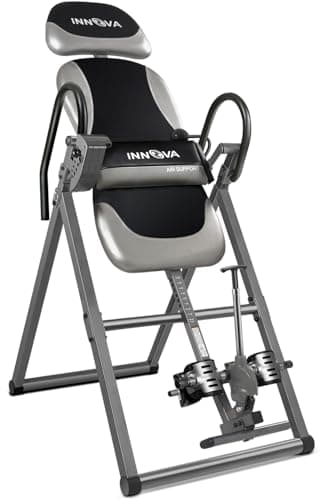
Innova — Innova ITX9900 Inversion Table
At a glance
Tap a row to check price · tap a header to sort| # | Best for | Price | ||
|---|---|---|---|---|
| 1 | | Best overall | 8.5/10 | $269.99$299.00 |
| 2 | | Best with adjustable lumbar support | 8.1/10 | $169.99 |
| 3 | 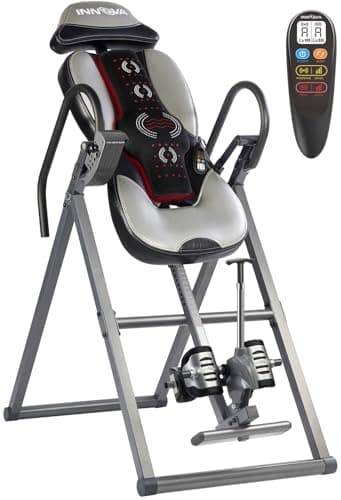 | Best with a heat and massage pad | 7.8/10 | $207.14 |
| 4 | 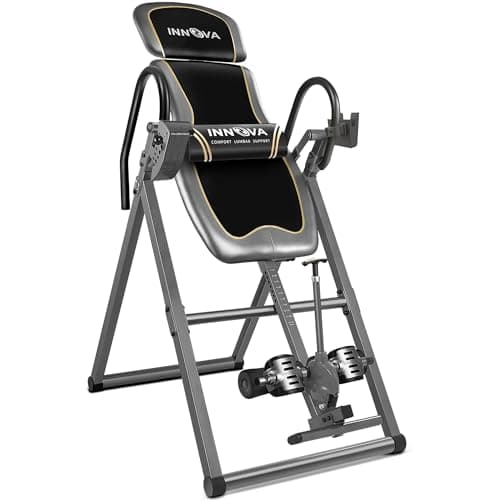 | Best mid-price value | 7.5/10 | $175.93 |
| 5 | 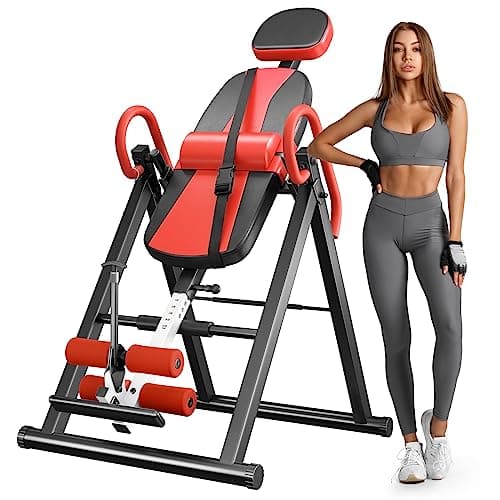 | Best budget | 7.2/10 | $132.99 |
| 6 | 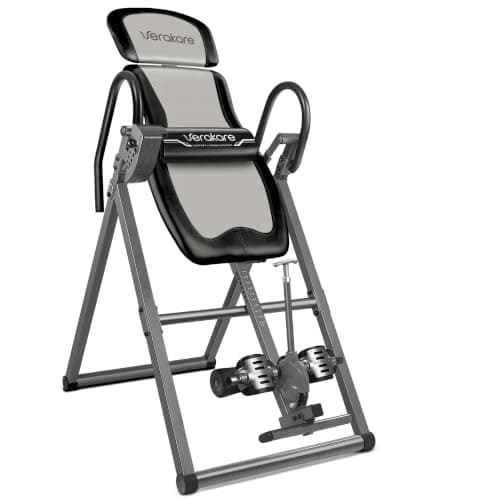 | Alternate budget | 7/10 | $117.99 |
Prices pulled from Amazon as of Sep 16, 2026 and are subject to change. The price shown on Amazon at checkout applies.
How we scored
Every product below is scored on six metrics, 0-10 each, with the weighting described on how we review. The criteria specific to this category:
- Build quality and stability — this is a device that holds your entire bodyweight, often upside down, so the frame is the first thing to scrutinize. Look for heavy-gauge steel, clean welds, a wide non-slip base footprint, and no flex, wobble, or creak when you climb on. A cheap frame is not the place to save money.
- Ankle-lock security — the ankle cups are the only thing holding you to the table, so how confidently they clamp and how easily you can reach the release lever matter more than any other feature. Ratchet-style and spring-loaded locks, ergonomic foam cups, and a long reachable handle all make the difference between feeling secure and feeling nervous.
- Weight capacity and height range — most quality tables are rated around 300 lb, and an adjustable height bar sets how the table balances for your size. Confirm the rated capacity has real margin over your weight and that your height falls inside the listed range, because a poorly sized setup tilts unpredictably.
- Rotation control and ease of use — some tables use a tether strap to cap the angle, others rely on arm position or a locking pin to control the tilt. The best let you stop partway, move smoothly, and come back up without a fight. Being able to limit yourself to a gentle angle is a usability and comfort feature, not an afterthought.
- Comfort and padding — a backrest with real padding, an adjustable or removable headrest, a supportive lumbar bridge or air bladder, and cushioned ankle cups decide whether a few minutes on the table feels pleasant or like a chore. Comfort is subjective, so we weigh padding quality and adjustability rather than any wellness claim.
- Certifications, assembly, and value — third-party safety certification (such as UL testing) and manufacturer registration are useful proxies for quality control and testing rigor, not evidence that inversion does anything medical. We also weigh how much assembly is required, the warranty, and what the overall build costs you.
What to know before buying
- Inversion is not for everyone — check with a doctor before you buy. Tilting head-down raises pressure in your head and eyes and changes how your heart works against gravity. People with high blood pressure, heart or circulatory conditions, glaucoma or other eye conditions, and anyone who is pregnant are generally advised not to use inversion tables and should talk to a physician first. Honestly, anyone should clear it with their doctor before starting and then follow the product manual to the letter.
- Set expectations honestly. An inversion table gently stretches you out and lets gravity work in the other direction for a few minutes. Some people find that feels good and leaves them feeling looser; others feel nothing, and a few dislike the sensation entirely. The evidence for inversion and traction helping back symptoms is limited and mixed, so treat this as comfort-and-stretching hardware, not a cure or a substitute for professional care.
- Start shallow and short — do not go fully upside down on day one. Use the tether or angle limiter to begin at a mild tilt, keep the first sessions to a minute or two, come back up slowly to avoid a head rush, and stop immediately if you feel dizzy, get a headache, feel pressure in your eyes or head, or feel any pain. More angle and more time are not better; gentle and brief is the sensible way to begin.
- The ankle lock is the thing to double-check every single time. Adjust the height bar precisely to your height, wear lace-up shoes for a snug hold, seat your ankles fully in the cups, and confirm the lock is fully engaged before you lean back — never rush this step. A properly set height bar makes the table easy to rotate; a wrong setting makes it tip too fast or refuse to tilt at all.
- Assemble it fully and correctly, and mind the space. These are large, heavy machines that must be built exactly per the manual — check every bolt, place the table on a hard, level floor with clearance all around, and have someone nearby the first few times you use it. Buy on build quality, stability, ankle-lock security, weight capacity, ease of assembly and use, and value — never on any promised health outcome.
Our picks
Teeter — Teeter EP-560 Ltd. Inversion Table
Key specs: Heavy-duty steel frame · registered with the FDA as a device manufacturer and independently UL safety-certified · rated to 300 lb · ergonomic ankle-lock system with an extended reach handle · adjustable, padded bed with a preset roller hinge · tether-strap angle control · long-standing, widely reviewed brand
Pros
- The only pick here that pairs FDA manufacturer registration with independent UL safety certification — a real quality-control and safety-testing signal (not a claim that inversion treats anything), and the reason it tops the list
- Teeter is the most established name in inversion, with a long track record, strong support, and a warranty behind the frame
- The ankle-lock system and extended reach handle are among the most secure and easiest to operate, which is the feature that matters most on a bodyweight device
- Solid, stable steel frame with a smooth, controllable rotation and a genuinely helpful assembly and setup process
Cons
- Clearly the most expensive table here — you are paying a premium for the brand, certifications, and support
- Large and heavy; it needs dedicated floor space and is not something you fold away easily between uses
- Some assembly and careful height-bar setup are still required before the first session, as with any inversion table
Teeter — Teeter EP-560 Ltd. Inversion Table
- Build / stability9/10
- Ease of use9/10
- Comfort / ankle support8/10
- Adjustability8/10
- Value7/10
Innova — Innova ITX9900 Inversion Table
Key specs: Steel frame with a padded backrest · adjustable air lumbar support bladder · adjustable headrest · multi-position ankle holders · locking pin and strap-based angle control · a popular mid-to-upper value option from a well-known inversion brand
Pros
- The adjustable air lumbar bladder lets you dial in how firmly the lower-back area is supported, which is a genuine comfort advantage over a flat bed
- Adjustable headrest and padded backrest make longer, gentler sessions more comfortable for a range of body sizes
- Innova is an established, widely reviewed inversion brand, so parts, support, and a track record are easy to find
- Multi-position ankle holders and clear angle controls make setup and operation straightforward
Cons
- The air bladder is one more component that can wear or leak over years of use compared with a simple padded bed
- Frame and finish feel a step below the Teeter in overall solidity and refinement
- As with all of these, it is bulky and takes real floor space
Innova — Innova ITX9900 Inversion Table
- Build / stability8/10
- Ease of use8/10
- Comfort / ankle support8/10
- Adjustability8/10
- Value8/10
Innova — Innova ITM5900 Inversion Table
Key specs: Steel frame with a padded bed · removable backrest pad with heat and vibration massage functions · adjustable headrest · multi-position ankle holders · strap and pin angle control · a comfort-focused model from Innova
Pros
- The removable heat-and-massage backrest pad adds a comfort feature none of the other picks include, and it lifts out when you don't want it
- Padded bed, adjustable headrest, and multi-position ankle holders cover the comfort basics well
- Backed by Innova's established presence in the category, with a broad review base to sanity-check against
- The controllable angle system makes it easy to keep sessions gentle while you get used to the table
Cons
- The heat-and-vibration pad is a comfort-and-feel extra, not a therapeutic function — treat it as a nice-to-have, not a reason it does anything clinical
- The powered pad is another component that can fail over time and adds cost over a plain padded model
- Overall frame refinement sits below the Teeter, and it remains large and heavy to house
Innova — Innova ITM5900 Inversion Table
- Build / stability8/10
- Ease of use7/10
- Comfort / ankle support8/10
- Adjustability7/10
- Value7/10
Innova — Innova Inversion Table (Adjustable Headrest, 300 lb)
Key specs: Steel frame rated to 300 lb · adjustable headrest · reversible, multi-position ankle holders · padded backrest · strap-based angle control · a straightforward, widely sold Innova model without the air bladder or powered pad
Pros
- Delivers the core Innova experience — solid frame, adjustable headrest, reversible ankle holders, 300 lb rating — without paying for a bladder or a heat pad you may not want
- Fewer powered or inflatable components means fewer things to fail over the long run
- Sits at a sensible mid-range price, making it a strong value for a name-brand table
- Reversible ankle holders and a simple strap-based angle limiter keep setup and operation easy
Cons
- No lumbar bladder, heat, or massage — it is the plain version, so comfort extras are absent by design
- Padding and finish are functional rather than plush, and less refined than the pricier models
- Still a full-size, heavy inversion table that needs dedicated space
Innova — Innova Inversion Table (Adjustable Headrest, 300 lb)
- Build / stability7/10
- Ease of use8/10
- Comfort / ankle support7/10
- Adjustability7/10
- Value8/10
YOLEO — YOLEO Gravity Heavy-Duty Inversion Table
Key specs: Heavy-duty steel tube frame · padded backrest with headrest · adjustable safety belt to cap the tilt angle · foam-cushioned ankle holders · foldable frame for storage · budget pricing from a value-focused brand
Pros
- About as affordable as a usable full-size inversion table gets, which lowers the risk of trying the format
- The adjustable safety belt lets you cap the angle and keep sessions gentle, which is exactly what a beginner should do
- Foldable frame stores more easily than some bulkier tables when you're short on space
- Padded backrest, headrest, and foam ankle holders cover the basics for the price
Cons
- Value-line materials and finish; the frame and hardware feel a clear step below Teeter and Innova
- Lesser-known brand with a shorter track record and less long-term durability data
- No safety certification like the Teeter's, so inspect assembly and hardware especially carefully before use
YOLEO — YOLEO Gravity Heavy-Duty Inversion Table
- Build / stability7/10
- Ease of use7/10
- Comfort / ankle support6/10
- Adjustability6/10
- Value9/10
Verakare — Verakare ITX9550 Heavy-Duty Inversion Table
Key specs: Heavy-duty steel frame · padded backrest · multi-position ankle holders · strap-based angle control · a budget-tier heavy-duty model that serves as a fallback to the YOLEO at a similar price
Pros
- A reasonable second budget option that covers the essentials — steel frame, padded backrest, angle strap — when the YOLEO is out of stock
- Multi-position ankle holders and a strap limiter let you keep the tilt gentle while you learn the table
- Priced in budget territory, so it's an accessible way to try inversion without a big outlay
- Straightforward, no-frills design with fewer components that can fail
Cons
- Least-known brand here, with the thinnest track record and least long-term durability data
- No third-party safety certification, so assembly and hardware need extra scrutiny before every use
- Materials and refinement are basic, and comfort padding is minimal compared with the pricier models
Verakare — Verakare ITX9550 Heavy-Duty Inversion Table
- Build / stability7/10
- Ease of use7/10
- Comfort / ankle support6/10
- Adjustability6/10
- Value8/10
Frequently asked questions
Inversion isn't suitable for everyone, and some people should avoid it entirely. Tilting head-down raises pressure in the head and eyes and changes how your circulation works against gravity, so people with high blood pressure, heart or circulatory conditions, glaucoma or other eye conditions, and anyone who is pregnant are generally advised not to use inversion tables. If any of that applies to you, don't buy one before speaking with a physician. Honestly, anyone should clear inversion with their own doctor first, then follow the product manual exactly.
Related reading
Sources
- Inversion therapy and traction for back pain — what the evidence does and doesn't show — Mayo Clinic, 2026
- Low back pain — self-care, staying active, and when to see a doctor — Cleveland Clinic, 2026
- Exercise, movement, and a healthier back — Harvard Health Publishing, 2026
- Teeter inversion tables — safety certification, weight capacity, and setup guidance — Teeter, 2026
Last verified: August 1, 2026. See our editorial policy and how we review for details on scoring and update cadence. Canonical URL: https://trustedhealthgear.com/reviews/best-inversion-table.
Teeter — Teeter EP-560 Ltd. Inversion Table
$269.99 · on Amazon