The Best Equipment for Lower Back Pain, Ranked Against What the Guidelines Actually Recommend
If you want one answer: the best piece of equipment for ordinary lower back pain is a large heating pad, and our pick is the Pure Enrichment PureRelief XL. That is not a hedge or a cheap recommendation — it is the one item on this page with real clinical-guideline support behind it. The American College of Physicians' guideline on noninvasive treatment of low back pain, published in Annals of Internal Medicine, recommends that people with acute or subacute low back pain be treated first with nonpharmacologic options, and superficial heat is the one it backs with moderate-quality evidence, alongside massage, acupuncture and spinal manipulation at low-quality evidence. Nothing else in this category can point to a sentence like that. Here is the honest hierarchy you are buying into, because the back-pain aisle is built to sell you the opposite order. The single most effective thing for a painful lower back is movement: staying active rather than resting in bed, and then building the capacity to tolerate load. Mayo Clinic, Cleveland Clinic and Harvard Health all point the same direction, and the strongest recommendations in the osteoarthritis and back-pain literature are for exercise rather than for devices. Equipment is a comfort and self-management layer on top of that — it makes the painful week more bearable and makes it easier to keep moving, which is a genuinely useful thing to buy. What it does not do is fix the underlying problem, and no board, roller, table or stimulator on this page is a treatment for a disc, a nerve or an arthritic joint. We ranked six products on guideline and evidence support for the specific thing they do, build quality and safety certification, how usable they are when your back actually hurts, how much space they take, and value at the live price. We have also been blunt about the two items whose evidence is weakest — inversion and passive stretching boards — because an honest ranking is more useful than six enthusiastic ones. This is general information, not medical advice. Back pain with numbness or weakness in a leg, loss of bladder or bowel control, fever, unexplained weight loss, pain after a significant fall or crash, or pain that wakes you at night needs a clinician promptly rather than a purchase.
Top pick
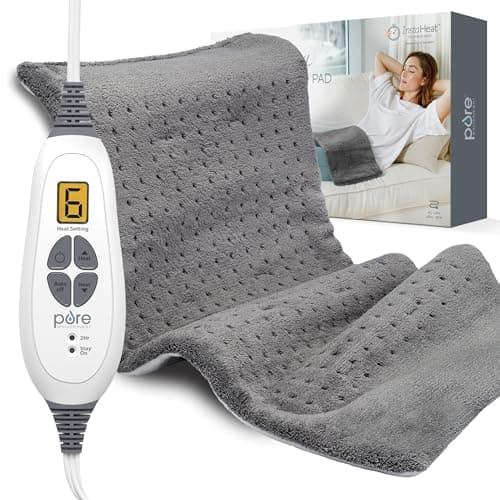
Pure Enrichment — Pure Enrichment PureRelief XL Heating Pad (12 x 24)
12-by-24-inch coverage · 6 heat settings · dry or moist-heat option · auto shut-off (about 2 hours) · soft, machine-washable fabric cover · long power cord · from Pure Enrichment, a well-known consumer wellness brand
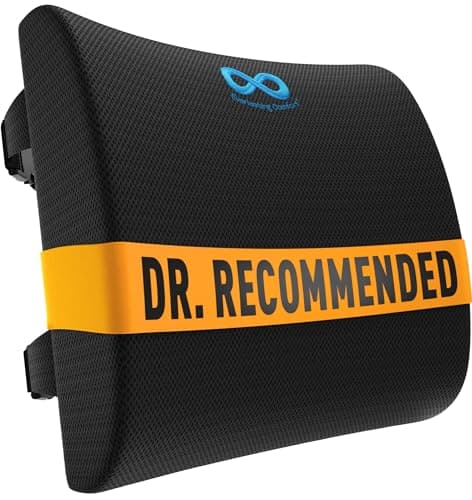
Everlasting Comfort — Everlasting Comfort Lumbar Support Pillow
At a glance
Tap a row to check price · tap a header to sort| # | Best for | Price | ||
|---|---|---|---|---|
| 1 | 1. Pure Enrichment — Pure Enrichment PureRelief XL Heating Pad (12 x 24)Best overall | Best overall | 9/10 | |
| 2 | 2. Everlasting Comfort — Everlasting Comfort Lumbar Support PillowBest for desk workers | Best for desk workers | 8.5/10 | |
| 3 | 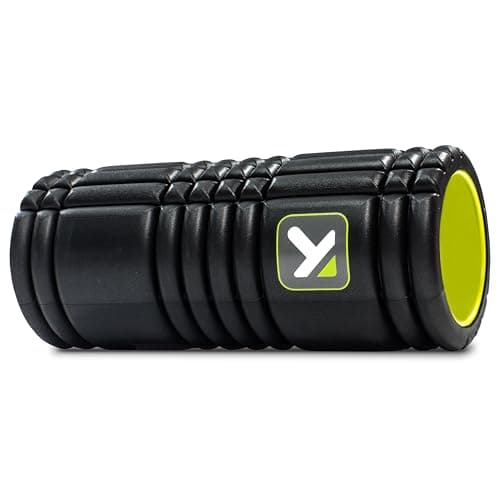 3. TriggerPoint — TriggerPoint GRID 1.0 Foam RollerBest for the muscles around the problem | Best for the muscles around the problem | 8.2/10 | |
| 4 | 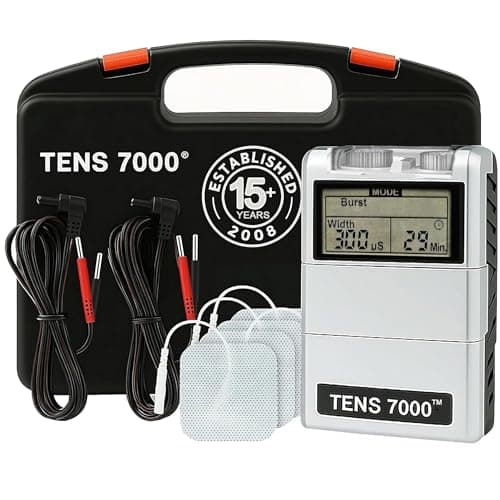 4. TENS 7000 — TENS 7000 Digital TENS UnitBest drug-free pain modulation | Best drug-free pain modulation | 8/10 | |
| 5 | 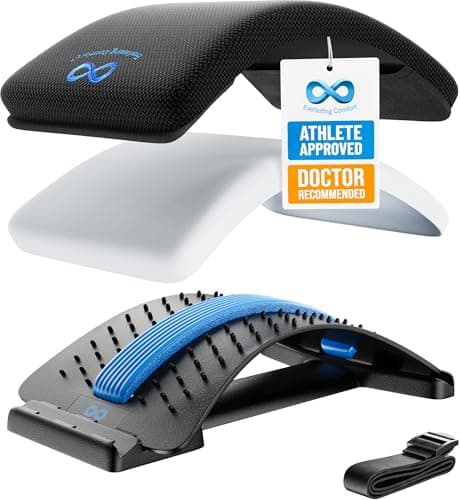 5. Everlasting Comfort — Everlasting Comfort Adjustable Back StretcherBest passive extension option | Best passive extension option | 7.3/10 | |
| 6 | 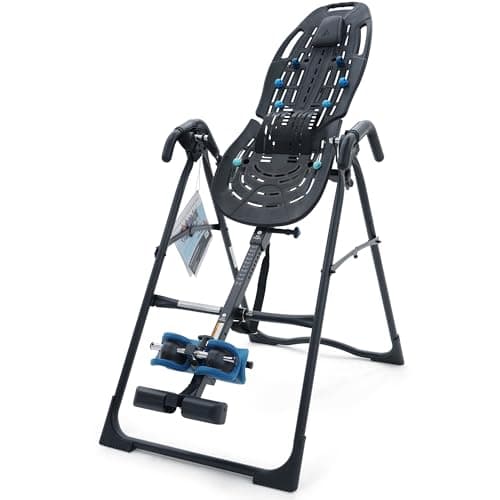 6. Teeter — Teeter EP-560 Ltd. Inversion TableBest inversion table if you want one | Best inversion table if you want one | 7/10 |
Prices pulled from Amazon as of October 18, 2026 and are subject to change. The price shown on Amazon at checkout applies.
How we scored
Every product below is scored on six metrics, 0-10 each, with the weighting described on how we review. The criteria specific to this category:
- Guideline and evidence support for the specific thing the device does, weighted heaviest. This is the metric that reorders the whole category. Superficial heat is explicitly recommended for acute and subacute low back pain in the ACP's clinical guideline with moderate-quality evidence, which is why a heating pad tops a page full of more impressive-looking hardware. Traction and inversion, by contrast, have been studied repeatedly without convincing benefit, and we mark that down rather than hiding it in a 'cons' line.
- Does it help you keep moving, or does it replace moving? Staying active is the intervention with the best support for ordinary low back pain, so we score equipment on whether it supports that. A heating pad before a walk, a lumbar cushion that makes a workday tolerable, or a roller that loosens a hip before training all earn points. A device whose implicit promise is that you can lie still and be fixed scores badly, because that is the opposite of what the evidence asks for.
- Build quality, safety and certification. Heat and electrical stimulation both have real safety considerations, and a table that tips you upside down has more. We look for auto shut-off and a washable cover on heating pads, genuine FDA device registration and independent safety certification on an inversion table, published weight ratings, and whether a TENS unit is an over-the-counter device with physical, legible controls rather than an app-driven novelty.
- Usability when your back actually hurts. This is the metric most buying guides omit and it changes the ranking. A device you cannot get into position without bending, twisting or asking someone for help is worthless in exactly the week you bought it for. Cord length, strap systems, whether you can place it while seated, and how heavy the thing is to move all matter more than feature counts.
- Footprint, and value at the live price. These products range from something that lives in a desk chair to something that occupies a corner of a room permanently. We score storage honestly, then rank on what the item costs today against what it plausibly delivers — which is why the two cheapest items on this page outrank the two most expensive.
What to know before buying
- Start with heat and movement, in that order, because that is what the guideline says. The ACP recommendation for acute and subacute low back pain is nonpharmacologic treatment first, with superficial heat the option carrying moderate-quality evidence. Practically, that means a large pad on the lower back for fifteen to twenty minutes, then getting up and walking — using the comfortable window to move rather than to stay still. Buy the heat source before the gadgets, use it as a door-opener for activity rather than a substitute, and give it a fair run before spending more.
- Size and placement beat features on a heating pad. The lower back is a wide area, so a 12-by-24-inch pad covers it where a small one leaves half the painful region cold and you end up chasing the ache around. The features that matter are auto shut-off, a machine-washable cover, a cord long enough to reach from where you sit or lie, and a moist-heat option if you prefer it. The safety rules are not optional: never sleep on a heating pad, do not use it on broken or numb skin, put a layer of fabric between the pad and bare skin, and be cautious if you have diabetes, neuropathy or reduced sensation — contact burns happen at surprisingly low temperatures over long exposures.
- A lumbar cushion is a sitting intervention, not a therapy — and it is the highest-value item here for desk workers. If your back hurts most after hours in a chair, the cheapest meaningful change is supporting the lumbar curve so the spine is not held in sustained flexion, which is exactly what OSHA's workstation guidance and the standard ergonomics advice describe. Strap it so it sits at belt height rather than mid-back, set your chair and screen height to match, and then do the thing no cushion can do for you: get up every half hour. A cushion makes sitting less bad; it does not make sitting good.
- Be skeptical about inversion tables and stretching boards, and we will be specific about why. Mayo Clinic's position on inversion therapy is that it has not been shown to provide lasting relief, and traction for low back pain has been studied without convincing benefit. Some people do report short-term relief from both, which is why they are on this page at all rather than excluded — but you should buy them knowing you are buying temporary comfort and not a fix. If you do buy an inversion table, buy one with real safety certification and a stated weight rating, start at a shallow angle for a minute or two, and skip it entirely if you have high blood pressure, glaucoma, retinal problems, heart disease, or are pregnant, because inverting raises pressure in the head and eyes.
- This is YMYL territory and some back pain is urgent. None of this equipment treats a cause. Numbness, tingling or weakness running into a leg or foot, any loss of bladder or bowel control, saddle numbness, fever with back pain, unexplained weight loss, a history of cancer, pain following a fall or car crash, or night pain that wakes you are all reasons to be assessed promptly rather than to order something. TENS has specific contraindications — do not use it over the front of the neck, over the eyes, across the chest if you have a pacemaker or implanted electrical device, on broken skin, or during pregnancy without clinical advice. If you are managing a diagnosed spine condition, ask your clinician or physio which of these is appropriate before you buy; several of them are things they will have an opinion about.
Our picks
Pure Enrichment — Pure Enrichment PureRelief XL Heating Pad (12 x 24)
Key specs: 12-by-24-inch coverage · 6 heat settings · dry or moist-heat option · auto shut-off (about 2 hours) · soft, machine-washable fabric cover · long power cord · from Pure Enrichment, a well-known consumer wellness brand
Pros
- Superficial heat is the nonpharmacologic treatment the ACP guideline backs with moderate-quality evidence for acute and subacute low back pain — no other product here has that
- 12 by 24 inches actually covers the lower back, where small pads leave part of the painful area cold
- Auto shut-off after about two hours and a machine-washable cover — the two features that matter for safety and for long-term use
- Long cord and six settings make it usable sitting at a desk, in a chair or lying down, which is the practical test
- Cheapest meaningful intervention on the page by a wide margin
Cons
- Relief is temporary by nature — it is a comfort window you should use to move, not a treatment
- Burn risk is real with long exposures and impaired sensation; it needs a fabric layer and is a poor fit for anyone with neuropathy
- Corded, so it tethers you to an outlet exactly when walking around is what you should be doing
Who this one is for
For essentially anyone with ordinary, non-alarming lower back pain, and the first thing we would buy. Superficial heat is the nonpharmacologic option the ACP's low back pain guideline backs with moderate-quality evidence, and the 12-by-24-inch footprint is the detail that matters: it covers the whole lumbar region instead of half of it. Use it to open a comfortable window and then go for a walk. Not for broken or numb skin, and never to sleep on.
Pure Enrichment — Pure Enrichment PureRelief XL Heating Pad (12 x 24)
- Evidence support9/10
- Build quality9/10
- Usability in pain9/10
- Footprint9/10
- Value10/10
Everlasting Comfort — Everlasting Comfort Lumbar Support Pillow
Key specs: Pure memory-foam core · ergonomic contoured shape for the lower back · dual adjustable straps to secure it to a chair · breathable mesh cover · designed primarily for office chairs · from a large, established home-comfort brand with a broad review base
Pros
- Targets the specific mechanism most desk-related back pain complains about — hours of sustained lumbar flexion in a chair
- Dual adjustable straps keep it at the right height, which is the difference between a working cushion and one that slides to the seat
- Matches standard ergonomics guidance on backrest and lumbar support rather than claiming a therapeutic effect it cannot deliver
- Memory foam holds its shape through a working day, and the mesh cover keeps it from getting clammy
- Portable between office chair, car seat and home desk, which multiplies its usefulness
Cons
- Does nothing for pain that is worst while standing, walking or lifting
- Not a therapy — it reduces an aggravator, and no cushion substitutes for getting out of the chair every half hour
- Fit depends on your chair; deeply contoured or mesh-backed chairs sometimes leave no room for it
Who this one is for
For the reader whose lower back hurts most at the end of a workday or a long drive. If sitting is the aggravator, supporting the lumbar curve is the intervention that matches the problem, and the dual straps are the feature that makes it work — an unstrapped cushion slides down and ends up supporting nothing. Strap it at belt height, not mid-back. Not a fix if your pain is worst when standing or walking.
Everlasting Comfort — Everlasting Comfort Lumbar Support Pillow
- Evidence support7/10
- Build quality8/10
- Usability in pain10/10
- Footprint10/10
- Value9/10
TriggerPoint — TriggerPoint GRID 1.0 Foam Roller
Key specs: 13" length x 5.5" diameter · rigid hollow ABS core wrapped in multi-density EVA foam · patented Distrodensity surface (firm ridges, tubular, and flat zones) · tested to 500 lb · ~1.3 lb · also offered in a 26" GRID 2.0
Pros
- Addresses the muscles that commonly refer pain into the lower back — glutes, hip flexors and lats — rather than the spine itself
- Rigid hollow ABS core tested to 500 lb keeps its shape for years, where cheap solid foam goes soft and stops doing anything
- Multi-density surface gives you a firmer ridge and a flatter zone on the same roller, so one tool covers sensitive and tolerant areas
- 13 inches and about 1.3 lb — it stores anywhere and travels, which is why it gets used
- Supports the thing that actually helps: warming up and staying active
Cons
- Must not be rolled directly over the lumbar spine, which is exactly what most buyers instinctively do
- Getting down to the floor and back up is the hard part during an acute flare, so this is better between flares than during one
- Effects on soreness and range are short-lived; it is a warm-up and comfort tool, not a treatment
Who this one is for
For the reader who trains and whose back complains when hips and glutes are tight. The important instruction is where not to use it: roll the glutes, hip flexors, quads, hamstrings and lats, and do not roll directly up and down the lumbar spine, which has no rib cage to protect it and extends under pressure. The rigid ABS core and multi-density surface are why this one lasts where soft foam collapses.
TriggerPoint — TriggerPoint GRID 1.0 Foam Roller
- Evidence support6/10
- Build quality10/10
- Usability in pain6/10
- Footprint10/10
- Value9/10
TENS 7000 — TENS 7000 Digital TENS Unit
Key specs: Dual channel (drives up to four electrode pads) · five modes including burst, normal, and modulation · adjustable pulse width and rate with a physical intensity dial for each channel · runs on a standard 9-volt battery · ships with lead wires and reusable electrode pads · simple, rugged controls with a belt clip
Pros
- Drug-free symptom relief that is easy to self-administer, which makes it a useful adjunct when you want to avoid more medication
- Dual channels and four pads cover a broad lumbar area rather than one spot
- Physical per-channel intensity dials and a 9-volt battery — simpler, more durable and more predictable than app-controlled units
- An established over-the-counter device line with a long track record and cheap, widely available replacement pads
- Belt clip means you can walk around with it, which fits the stay-active advice rather than fighting it
Cons
- Evidence for TENS in low back pain is mixed and the effects are short-lived — it modulates symptoms rather than changing the problem
- Real contraindications: not over the front of the neck or eyes, not across the chest with a pacemaker or implanted device, not on broken skin, not in pregnancy without advice
- Reusable pads lose adhesion and are a recurring cost, and the lead wires are the usual failure point
Who this one is for
For the reader who wants a non-drug way to turn the volume down on pain for an hour, and who would rather have real knobs than a phone app. Dual channels drive four pads, which is enough to cover a wide lumbar area, and the physical intensity dial per channel is genuinely easier to manage mid-session than a touchscreen. Read the contraindications before buying — this is the one item here with a list of places it must never go.
TENS 7000 — TENS 7000 Digital TENS Unit
- Evidence support6/10
- Build quality9/10
- Usability in pain8/10
- Footprint9/10
- Value8/10
Everlasting Comfort — Everlasting Comfort Adjustable Back Stretcher
Key specs: Rigid arched board with multiple adjustable arch heights · 88 raised nodes across the surface · includes a strap to secure it to a chair for seated use · wide supportive frame · lightweight plastic construction · from a large, established home-comfort brand
Pros
- Adjustable arch heights mean you can start at the lowest setting, which is the only sensible way to try passive extension
- The chair strap is the genuinely useful feature — it turns a floor device into something you can use at a desk
- Cheap and light enough to keep in a cupboard and pull out during a bad week
- Many people find gentle extension relieving, and this is a more controllable way to get it than improvising with cushions
Cons
- Passive stretching devices have thin evidence — this is comfort, not treatment, and we would rather say so plainly
- Getting down onto it and back up again is unpleasant in an acute flare
- Wrong tool if extension aggravates your pain, which is true for a meaningful share of people
- The 88 nodes are a comfort-and-marketing feature rather than a mechanism
Who this one is for
For the reader who finds that gentle extension feels good and wants a cheap way to get there without lying on a rolled towel. Three arch heights let you start shallow, which is the right way in. We rank it below the heat, the cushion and the roller because passive stretching gadgets have thin evidence behind them — buy it as comfort, not as a cure, and skip it if extension is what provokes your pain.
Everlasting Comfort — Everlasting Comfort Adjustable Back Stretcher
- Evidence support4/10
- Build quality7/10
- Usability in pain6/10
- Footprint9/10
- Value9/10
Teeter — Teeter EP-560 Ltd. Inversion Table
Key specs: Heavy-duty steel frame · registered with the FDA as a device manufacturer and independently UL safety-certified · rated to 300 lb · ergonomic ankle-lock system with an extended reach handle · adjustable, padded bed with a preset roller hinge · tether-strap angle control · long-standing, widely reviewed brand
Pros
- The one inversion table here with both FDA device-manufacturer registration and independent UL safety certification — in a category where that is rare
- Tether-strap angle control lets you start at a shallow angle rather than committing to full inversion on day one
- Extended-reach ankle-lock handle is the detail that matters: you can secure and release your ankles without folding over a painful back
- Stated 300 lb capacity and a genuinely heavy-duty steel frame, with a long and well-documented track record
Cons
- The evidence is the problem, not the product: Mayo Clinic's position is that inversion therapy has not been shown to provide lasting relief, and traction has been studied without convincing benefit
- Clear contraindications — high blood pressure, glaucoma or retinal conditions, heart disease and pregnancy all rule it out, because inverting raises pressure in the head and eyes
- Most expensive item on the page, and it occupies a permanent corner of a room
- Encourages a passive model of recovery when the best-supported advice is to stay active
Who this one is for
For the reader who has tried inversion, finds it relieving, and wants the version least likely to fail. We rank it last on evidence and first on construction: Teeter is registered with the FDA as a device manufacturer and the table is independently UL safety-certified, with a stated 300 lb rating and an ankle lock you can reach. It is not for anyone with high blood pressure, glaucoma, retinal problems, heart disease or pregnancy.
Teeter — Teeter EP-560 Ltd. Inversion Table
- Evidence support3/10
- Build quality10/10
- Usability in pain6/10
- Footprint3/10
- Value5/10
Frequently asked questions
A large heating pad, for most people — our pick is the Pure Enrichment PureRelief XL at 12 by 24 inches. It is not the most impressive-looking item in this category, but it is the only one with clinical-guideline support: the American College of Physicians' guideline on noninvasive treatment of low back pain recommends nonpharmacologic treatment first for acute and subacute cases, with superficial heat carrying moderate-quality evidence. If your pain is worst after sitting, a strapped lumbar cushion is the better-matched purchase. Use either one to create a comfortable window and then move — activity is the intervention with the strongest support, and no device replaces it.
Related reading
- → How to use a foam roller
- → How to warm up before lifting
- → When to use a lifting belt
- → Inversion table vs back stretcher
- → Foam roller vs massage gun
- → Best heating pads
- → Best lumbar support pillows
- → Best foam rollers for lower back
- → Best TENS units
- → Best back stretchers
- → Best inversion tables
- → Best posture correctors
Sources
- Noninvasive Treatments for Acute, Subacute, and Chronic Low Back Pain: A Clinical Practice Guideline from the American College of Physicians (superficial heat recommended for acute/subacute low back pain, moderate-quality evidence) — Annals of Internal Medicine (Qaseem A et al.), 2017
- American College of Physicians issues guideline for treating nonradicular low back pain — nonpharmacologic treatment first: superficial heat, massage, acupuncture or spinal manipulation — American College of Physicians, 2017
- Inversion therapy and traction for back pain — what the evidence does and doesn't show — Mayo Clinic
- Low back pain — self-care, staying active, and when to see a doctor — Cleveland Clinic
- Exercise, movement, and a healthier back — Harvard Health Publishing
- Computer workstations eTool — chair, backrest, and lumbar support guidance — OSHA
- Office ergonomics and sitting posture — setting up a supportive workstation — Mayo Clinic
- TENS units and powered muscle stimulators: consumer device information and OTC vs. prescription status — U.S. Food & Drug Administration (FDA)
- TriggerPoint GRID 1.0 Foam Roller — official product page (dimensions, multi-density EVA, 500 lb rating) — TriggerPoint
- Teeter inversion tables — safety certification, weight capacity, and setup guidance — Teeter
- Product titles, dimensions, stated capacities, features, live prices and availability for all six ranked products — retrieved via the Amazon product data layer — Amazon product listing data, 2026
Last verified: October 11, 2026. See our editorial policy and how we review for details on scoring and update cadence. Canonical URL: https://trustedhealthgear.com/reviews/best-equipment-for-lower-back-pain.
Pure Enrichment — Pure Enrichment PureRelief XL Heating Pad (12 x 24)
$37.99 · on Amazon