The Best Vibrating Foam Rollers for Mobility and Recovery
A vibrating foam roller is a regular foam roller with a motor inside, adding a layer of vibration to the pressure you already get from rolling. Let's be honest about what that buys you before we rank anything. The research on foam rolling — vibrating or not — is reasonably consistent on two modest points: it can improve short-term range of motion and reduce perceived muscle soreness after hard training, and it feels good. It's much weaker and more mixed on the bigger claims, like speeding tissue recovery, changing performance, or breaking up scar tissue. Vibration seems to help mainly by making pressure more tolerable, so you can relax into a tight spot more than you would on a plain roller. This is a mobility, warm-up, and comfort tool, not a medical device or a treatment. The differences between rollers are practical: how much vibration power they deliver, how firm the surface is, how long the battery lasts, how comfortable they are to use, and what you pay. We ranked these six on exactly those five things.
Top pick
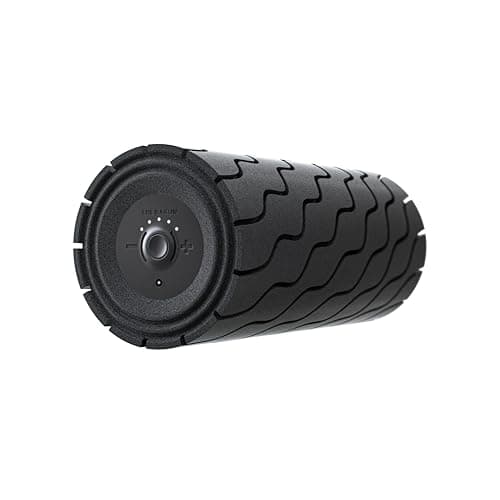
Therabody — Therabody WaveRoller
Bluetooth app-enabled · 5 vibration frequencies · firm textured surface with wave pattern · rechargeable · from the Theragun maker · guided in-app routines · premium build and finish
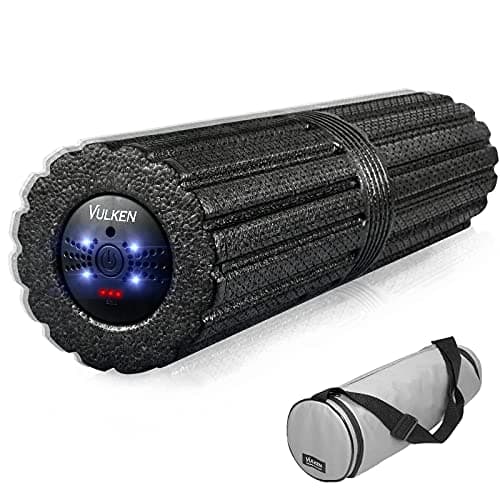
Vulken — Vulken Extra Long 17" Vibrating Foam Roller
At a glance
Tap a row to check price · tap a header to sort| # | Best for | Price | ||
|---|---|---|---|---|
| 1 | | Best premium | 8.5/10 | $179.99 |
| 2 | | Best overall value | 8.2/10 | Check price |
| 3 | 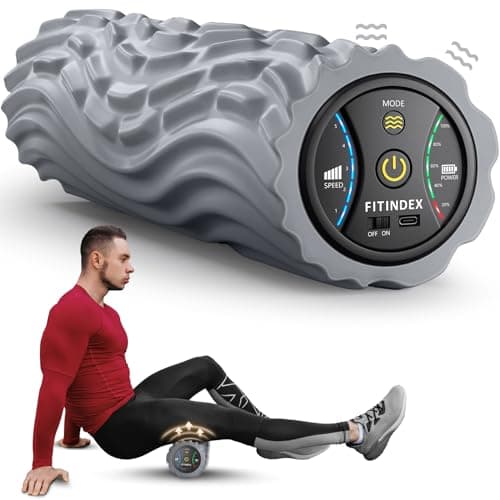 | Alt all-rounder | 7.9/10 | $79.99$99.99 |
| 4 | 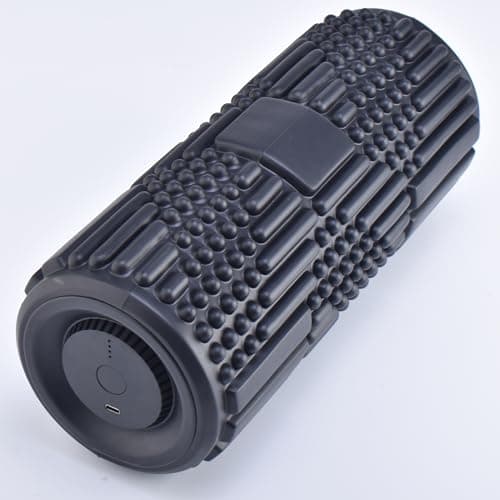 | Best high-intensity | 7.6/10 | $99.99 |
| 5 | 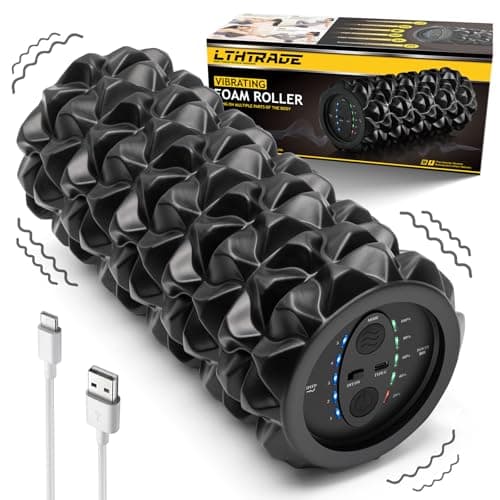 | Best mid-price value | 7.3/10 | $56.99$59.99 |
| 6 | 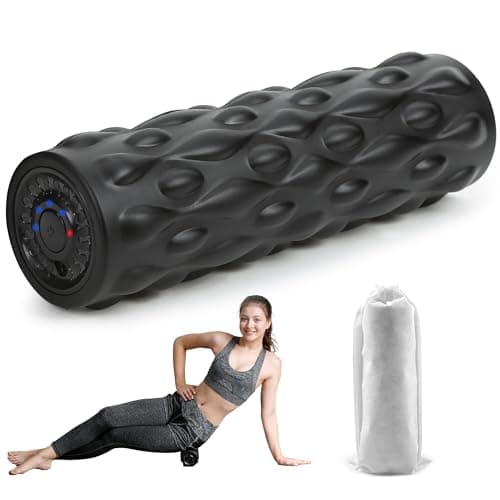 | Cheapest budget | 7/10 | $49.99 |
Prices pulled from Amazon as of Sep 16, 2026 and are subject to change. The price shown on Amazon at checkout applies.
How we scored
Every product below is scored on six metrics, 0-10 each, with the weighting described on how we review. The criteria specific to this category:
- Vibration power — how strong the motor feels and whether the speed settings offer a genuine range from gentle to intense. More power lets you use vibration as a warm-up buzz or a deep, pressure-tolerating setting; weak motors feel like a novelty. We valued a real spread of usable frequencies over a big number on the box.
- Firmness and density — the roller surface itself still does most of the work, so density matters as much as the motor. A firmer, high-density core delivers deeper pressure for experienced users; a softer surface is gentler for beginners or sensitive areas. Neither is universally better, so we judged density against who the roller is for.
- Battery life and charging — a vibrating roller is only useful when it's charged, so runtime per charge and how it recharges matter. Rechargeable USB models are the norm; longer runtime means fewer interruptions, and quick, standard charging beats a proprietary brick. We noted where battery life is a genuine strength or a weak point.
- Ergonomics and portability — length, diameter, weight, and surface texture decide how usable a roller is for legs, back, and travel. A full-length roller supports the whole back and lets you roll hamstrings comfortably; a shorter, lighter unit is easier to pack. Grippy but not abrasive texture and an easy power control round out day-to-day usability.
- Noise and controls — motors buzz, and a loud roller is unpleasant to use in a shared space or apartment. Quieter operation, simple speed cycling, and an intuitive button make a roller you'll actually reach for. Fiddly controls or an app requirement can add friction, so we weighed how easy each unit is to turn on and adjust mid-session.
- Value — vibrating rollers span a wide price range, from budget rechargeables to premium app-connected models. Value is about matching real features — power, density, battery, build — to your needs and budget, not chasing the most modes. A capable mid-price roller often beats both the cheapest novelty and the priciest gadget for most users.
What to know before buying
- Set expectations from the evidence, not the marketing. Foam rolling, with or without vibration, has decent support for two things: a short-term boost in range of motion and a reduction in how sore you feel after hard training (delayed-onset muscle soreness). The evidence that it speeds actual tissue recovery, improves performance, or 'breaks up' knots and scar tissue is limited and mixed. Buy a vibrating roller because it helps you warm up, move a little better, and feel less sore and more relaxed — not because it will fix an injury or replace real recovery basics like sleep, food, and sensible training loads.
- Vibration's main job is to make pressure more tolerable. The most consistent practical benefit over a plain roller is that the buzz seems to help you relax into a tight, tender spot and tolerate deeper pressure for a bit longer. If you already find plain rolling comfortable and effective, a vibrating model is a nice-to-have, not a necessity. If you tend to tense up and brace against a hard roller, the vibration can help you ease off and actually let the muscle relax — which is where these earn their keep for a lot of people.
- Match the firmness to your experience and the body part. A firm, high-density roller delivers deeper pressure that experienced users like on big muscles such as quads and glutes, but it can be too intense on sensitive or bony areas and for beginners. A softer roller is more forgiving for newcomers, calves, and the mid-back. Many people are best served by a medium-firm roller they can use everywhere, turning to vibration to soften the sensation on tender spots rather than buying a bone-hard roller they'll avoid.
- Pick length and portability for how you'll use it. A full-length roller (roughly 15 to 18 inches) supports your whole back, lets you roll both hamstrings at once, and is more stable for balance drills — the better all-rounder for home use. A shorter, lighter roller packs into a gym bag or suitcase easily and targets one limb at a time, which suits travel and small spaces. Decide whether home coverage or portability matters more before you choose a size.
- Skip vibration rolling directly over injuries, and check with a professional if in doubt. Rolling should feel like firm, tolerable pressure, not sharp pain, and it's not a treatment for an acute injury. Avoid rolling directly over a fresh strain, an inflamed joint, a suspected stress fracture, varicose veins, or any area a clinician has told you to protect, and keep it off the lower back's bony spine and the back of the knee. If you have a medical condition or an unresolved pain, talk to a physical therapist or doctor before using a roller as part of your routine.
Our picks
Therabody — Therabody WaveRoller
Key specs: Bluetooth app-enabled · 5 vibration frequencies · firm textured surface with wave pattern · rechargeable · from the Theragun maker · guided in-app routines · premium build and finish
Pros
- Five well-tuned vibration frequencies give a genuine range from gentle warm-up to deep, pressure-tolerating intensity
- Textured wave surface plus firm density delivers targeted, deep pressure that experienced users appreciate
- Bluetooth app offers guided routines and speed control, which helps beginners learn where and how to roll
- Premium build quality and finish from an established recovery-tool brand, with a solid, durable feel
Cons
- The most expensive roller here by a wide margin, and much of that premium is brand and app polish
- The app is a nice-to-have that some users will never open, so you may be paying for features you skip
- Firm, aggressive texture can be too intense for beginners or sensitive areas
Therabody — Therabody WaveRoller
- Vibration power9/10
- Firmness/density9/10
- Battery life8/10
- Ergonomics8/10
- Value6/10
Vulken — Vulken Extra Long 17" Vibrating Foam Roller
Key specs: Extra-long 17-inch full-length body · 4 vibration speeds · high-density firm surface · rechargeable · covers the whole back and both hamstrings · popular, well-reviewed value pick
Pros
- Full 17-inch length supports the entire back and lets you roll both hamstrings at once — more versatile than short units
- Four usable vibration speeds cover warm-up through deeper pressure without needing an app
- Firm, high-density surface delivers real pressure and holds its shape over time
- Strong price-to-features balance makes it the best all-round value here for home use
Cons
- The full length makes it bulkier and less travel-friendly than a compact roller
- No app or guided routines — you'll need to know your own rolling technique
- Firm density can feel intense for beginners on sensitive areas
Vulken — Vulken Extra Long 17" Vibrating Foam Roller
- Vibration power8/10
- Firmness/density8/10
- Battery life8/10
- Ergonomics9/10
- Value9/10
FITINDEX — FITINDEX Vibrating Foam Roller
Key specs: 5 vibration speeds · rechargeable USB battery · medium-firm textured surface · mid-length body · balanced power and portability · widely stocked value brand
Pros
- Five speed settings offer a good spread from gentle to firm for different body parts and tolerances
- Rechargeable battery with reasonable runtime keeps it usable across multiple sessions per charge
- Medium-firm textured surface is versatile — usable on most muscle groups without being punishing
- Balanced mid-size design works well for both home use and occasional travel
Cons
- Neither the most powerful nor the firmest roller here, so it's a jack-of-all-trades rather than a specialist
- Mid-length body doesn't support the full back as well as a 17-inch roller
- No app or guided routines for beginners who want technique cues
FITINDEX — FITINDEX Vibrating Foam Roller
- Vibration power7/10
- Firmness/density7/10
- Battery life8/10
- Ergonomics8/10
- Value8/10
VibePro — VibePro Flow Vibrating Foam Roller
Key specs: 5 vibration modes · high-intensity motor · firm high-density surface · rechargeable · tuned toward stronger vibration than typical value rollers · aimed at experienced users
Pros
- High-intensity motor delivers the strongest vibration here for users who want a deep, pressure-tolerating buzz
- Five modes let you dial from a warm-up level up to the aggressive high-intensity setting
- Firm, high-density surface pairs with the strong motor for deep work on big muscle groups
- A specialist pick for experienced rollers who find weaker units underwhelming
Cons
- The strong vibration and firm surface are too intense for beginners and sensitive areas
- High-power motor can drain the battery faster on the top settings
- Stronger motors tend to be louder, which is worth considering in a shared or quiet space
VibePro — VibePro Flow Vibrating Foam Roller
- Vibration power9/10
- Firmness/density8/10
- Battery life7/10
- Ergonomics7/10
- Value7/10
LTHTRADE — LTHTRADE Vibrating Foam Roller
Key specs: 5-speed vibration · rechargeable USB battery · medium-firm surface · compact-to-mid length · budget-conscious price · straightforward controls
Pros
- Five speeds and a rechargeable battery at a price below the name-brand and high-intensity units
- Medium-firm surface is approachable and works across most muscle groups
- Simple, no-app controls make it easy to turn on and adjust mid-session
- Solid value for someone who wants adjustable vibration without paying premium prices
Cons
- Build and finish aren't as refined as the premium options
- Vibration is capable but not as strong as the dedicated high-intensity models
- Battery life and long-term durability are middling rather than standout
LTHTRADE — LTHTRADE Vibrating Foam Roller
- Vibration power7/10
- Firmness/density7/10
- Battery life7/10
- Ergonomics7/10
- Value8/10
Generic — High-Density 4-Speed Vibrating Foam Roller
Key specs: 4 vibration speeds · high-density firm surface · rechargeable battery · includes a carry bag · lowest price in this roundup · basic no-frills feature set
Pros
- Lowest price here — the cheapest way to try vibration rolling with a rechargeable unit
- High-density surface still delivers real, firm pressure despite the budget price
- Four speeds cover the basics from a warm-up buzz to a firmer setting
- Included carry bag makes it easy to pack for the gym or travel
Cons
- Budget build and motor won't match the power or refinement of premium rollers
- Fewer speeds and no app, so it's a basic tool rather than a feature-rich one
- Battery life and durability are the weakest here — expect to replace it sooner
Generic — High-Density 4-Speed Vibrating Foam Roller
- Vibration power6/10
- Firmness/density7/10
- Battery life6/10
- Ergonomics7/10
- Value8/10
Frequently asked questions
They do a couple of modest, well-supported things and not much more. Research on foam rolling, vibrating or not, fairly consistently shows a short-term improvement in range of motion and a reduction in how sore you feel after hard training. The evidence is weaker and more mixed on speeding actual tissue recovery, improving performance, or breaking up knots. Vibration's main added benefit seems to be making pressure more tolerable so you can relax into a tight spot. Treat a vibrating roller as a useful mobility, warm-up, and comfort tool — not a cure for injuries or a replacement for sleep, nutrition, and sensible training.
Related reading
Sources
- Foam Rolling: Effects on Range of Motion and Muscle Soreness (review) — PubMed / U.S. National Library of Medicine, 2019
- Is Foam Rolling Good for You? What the Evidence Shows — Cleveland Clinic, 2026
- Foam Rolling and Self-Myofascial Release for Mobility — American Council on Exercise, 2026
- Best Vibrating Foam Rollers Tested and Compared — Garage Gym Reviews, 2026
Last verified: August 1, 2026. See our editorial policy and how we review for details on scoring and update cadence. Canonical URL: https://trustedhealthgear.com/reviews/best-vibrating-foam-roller.
Therabody — Therabody WaveRoller
$179.99 · on Amazon