Fish Oil vs Krill Oil: Which Omega-3 Is Worth It?
Both fish oil and krill oil deliver the two omega-3 fatty acids that matter — EPA and DHA — but they package them very differently, and the marketing has drifted a long way from the math. Fish oil is the workhorse: cheap, concentrated, and capable of putting a full gram or two of EPA+DHA into a couple of softgels for a few cents a dose. Krill oil is the premium story: its omega-3s ride on phospholipids rather than triglycerides, it comes with a dose of the antioxidant astaxanthin, and it's marketed as 'better absorbed' so you supposedly need less. The problem is that the human evidence for that absorption edge is inconsistent, and krill doses are typically small and expensive — often a fraction of the EPA+DHA of a fish oil capsule at several times the price. When you compare the only number that really matters — cost per gram of EPA+DHA — fish oil wins for most people by a wide margin. Krill has real, narrow appeal (smaller pills, no fishy reflux for some, the astaxanthin bonus), but it is not the upgrade the price implies. Vegans and vegetarians should skip both and use an algae-derived omega-3 instead.
The verdict
For most people, a quality fish oil wins — it delivers far more EPA and DHA per dollar, and hitting an effective dose is the single biggest driver of any omega-3 benefit. Choose krill oil only if you specifically value its smaller softgels, tolerate it better than fish oil (less reflux or aftertaste for some), or want the astaxanthin, and you're willing to pay a premium for less omega-3 per capsule. Vegans and vegetarians should use algae oil, which supplies the same EPA and DHA from the source fish get it from. Whatever you pick, buy a third-party-tested product (IFOS, NSF, or USP) and read the EPA+DHA line, not the total 'fish oil' number.
Side-by-side
| Attribute | Fish Oil | Krill Oil |
|---|---|---|
| Omega-3 carrier | Triglyceride or ethyl-ester bound EPA/DHA | Phospholipid-bound EPA/DHA plus astaxanthin |
| EPA+DHA per capsule | High — concentrates hit 500-1,000+ mg per softgel | Low — often ~100-300 mg per softgel |
| Cost per gram of EPA+DHA | Low — the value leader by a wide margin | High — you pay a premium for less omega-3 |
| Absorption claim | Well absorbed; TG/free-fatty-acid forms edge out ethyl esters | Marketed as better absorbed; human evidence is mixed |
| Extra ingredients | Usually none; some add vitamin D or lemon flavor | Astaxanthin (antioxidant), naturally present |
| Digestive tolerance | Can cause fishy reflux/aftertaste in some | Often less reflux for those it bothers |
| Best for | Hitting an effective dose cheaply; higher-dose needs | Small pills, better tolerance, astaxanthin bonus |
| Vegan option | No — use algae oil instead | No — krill is a crustacean; shellfish allergy risk |
Who should pick which
Pick Fish Oil
- Anyone who wants the most EPA and DHA per dollar, or who needs a higher dose (e.g., for elevated triglycerides) without swallowing a handful of pills.
- Value-focused buyers who read the EPA+DHA line and want a concentrated, third-party-tested formula.
- Budget-conscious households buying for the whole family, where cost-per-gram compounds quickly.
Pick Krill Oil
- People who get fishy burps or aftertaste from standard fish oil and tolerate krill better.
- Those who prefer smaller softgels and want the bundled astaxanthin, and don't mind paying more for less omega-3 per pill.
The only number that matters: EPA and DHA per dollar
Strip away the marketing and an omega-3 supplement is a delivery vehicle for two fatty acids, EPA and DHA. The NIH Office of Dietary Supplements lists fish oil, krill oil, cod liver oil, and algal oil as the main supplement sources, and what separates them in practice is how much EPA+DHA you get and what you pay for it. Fish oil is the value champion: concentrated formulas commonly pack 500 to over 1,000 mg of EPA+DHA into a single softgel for a few cents. Krill oil typically delivers far less per capsule — often in the low hundreds of milligrams — at several times the price. That gap is the whole ballgame, because the benefits associated with omega-3s (like lowering triglycerides) are dose-dependent. If you have to take four expensive krill softgels to match one cheap fish oil capsule, the 'premium' form is quietly the worse deal. Always compare the EPA+DHA line, not the total oil weight on the front of the bottle.
Is krill oil really better absorbed?
This is krill's central selling point, and the honest answer is: maybe a little, maybe not, and probably not enough to matter. Krill's omega-3s are bound to phospholipids rather than the triglycerides in fish oil, and the theory is that phospholipids integrate into cell membranes more readily. But the NIH is careful here: 'Some studies suggest that these phospholipids have somewhat higher bioavailability than the omega-3s in fish oil, whereas other studies do not.' Some head-to-head trials have found krill raised blood omega-3 levels slightly more per gram than fish oil — but critical reexaminations of that literature argue the apparent edge is inconsistent, often compared krill against the least-absorbable ethyl-ester fish oil rather than a triglyceride form, and shrinks or disappears against a fair comparator. Even if krill absorbs modestly better gram-for-gram, that advantage is easily erased by how little EPA+DHA a krill capsule contains in the first place.
Where krill oil genuinely earns its place
Krill isn't a scam — it has real, narrow advantages worth naming. First, tolerance: people who get fishy burps, reflux, or an oily aftertaste from standard fish oil often find krill sits better, and a supplement you'll actually keep taking beats a cheaper one you abandon. Second, pill size: krill softgels tend to be smaller, which some people strongly prefer. Third, the astaxanthin: krill oil naturally contains this reddish antioxidant, which also helps keep the oil from oxidizing on the shelf. None of these change the core value math, but if fishy reflux has made you quit fish oil twice, krill's better tolerance can be the deciding factor. Just go in knowing you're paying more for less omega-3, in exchange for a formula you'll stick with.
Dose, triglycerides, and hitting an effective amount
The clearest, best-supported effect of EPA+DHA is lowering triglycerides: the NIH notes that each additional gram per day of long-chain omega-3s reduces triglyceride levels by roughly 5.9 mg/dL, and concludes fish oil and other omega-3 supplements 'lower triglyceride levels and might reduce the risk of some cardiovascular endpoints.' The catch is that meaningful triglyceride lowering takes real doses — often 2 to 4 grams of EPA+DHA per day, which is prescription territory and should be done under a doctor's guidance. Reaching those amounts with fish oil concentrates is straightforward and affordable; reaching them with krill would mean swallowing a small fortune in low-dose softgels. For anyone whose goal is a therapeutic dose, fish oil (or a prescription omega-3) is the practical choice, and this is a conversation to have with your clinician rather than a DIY project.
Quality, sustainability, and the vegan option
Whichever you choose, quality control matters more than the fish-versus-krill debate. Omega-3 oils can oxidize (go rancid), and potency can drift, so buy a product with third-party testing — IFOS, NSF, or USP — that verifies EPA+DHA content and screens for oxidation and contaminants like mercury and PCBs. On sustainability, krill are harvested from Antarctic waters that are a keystone of that food web, so look for MSC-certified krill if you go that route; for fish oil, look for responsibly sourced small fish (anchovy, sardine). And if you don't eat animal products, skip both: algae oil supplies EPA and DHA directly from the microalgae that fish eat to make it in the first place, which makes it the only omega-3 that's both vegan and a true source of the long-chain fatty acids — flax and chia give you ALA, which the body converts to EPA/DHA only poorly.
Frequently asked questions
Not for most people. Krill oil's phospholipid-bound omega-3s and astaxanthin make a nice marketing story, and it may absorb slightly better gram-for-gram, but the human evidence for that edge is inconsistent — the NIH says some studies show higher bioavailability and others don't. Meanwhile, krill capsules typically contain far less EPA+DHA than fish oil at a much higher price, so fish oil wins decisively on cost per gram of actual omega-3. Krill is 'better' only in narrow ways: smaller pills, less fishy reflux for some people, and a bundled antioxidant.
Related reading
Sources
- Omega-3 Fatty Acids — Fact Sheet for Health Professionals (supplement sources include fish oil, krill oil, and algal oil; phospholipid bioavailability 'somewhat higher ... whereas other studies do not'; ~5.9 mg/dL triglyceride drop per 1 g/day; supplements lower triglycerides and might reduce some cardiovascular endpoints) — NIH Office of Dietary Supplements, 2024
- A reexamination of krill oil bioavailability studies (argues krill's apparent absorption advantage over fish oil is inconsistent and often overstated by comparator choice) — Lipids in Health and Disease, 2014
- Incorporation of EPA and DHA into plasma phospholipids in response to different omega-3 fatty acid formulations — a comparative bioavailability study of fish oil vs. krill oil — Lipids in Health and Disease (Schuchardt et al.), 2011
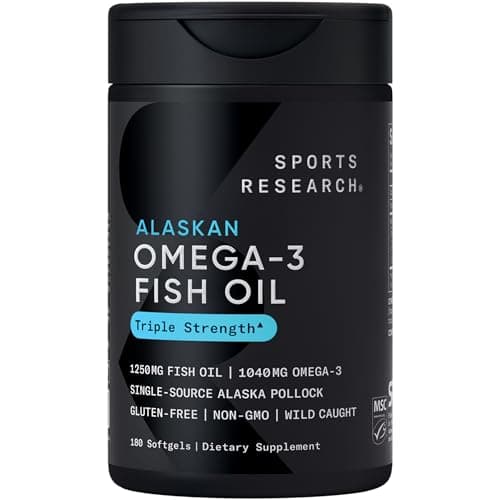
Sports Research — Triple Strength Omega-3 Fish Oil
$55.33 · on Amazon