Best Turmeric Supplements, Scored on a Public Rubric
Turmeric is the spice; curcumin is the fraction people actually want, and the gap between the two is where most of the money in this aisle gets wasted. Whole turmeric root is only about 2-5% curcuminoids by weight, so the useful compounds are a small slice of the powder — which is why any serious supplement uses a standardized extract (usually '95% curcuminoids') rather than plain ground root. The bigger problem is that curcumin is notoriously hard to absorb: taken by itself it is poorly soluble, gets chewed up in the gut and liver, and clears the body fast, so a large fraction of a plain curcumin capsule never reaches your bloodstream in a meaningful form. That single fact reshapes the whole category. The real story is not the milligram number on the front of the bottle — it is the formulation designed to get curcumin past your digestion: black pepper extract (piperine, sold as BioPerine), which the NCCIH notes is 'one way to improve the bioavailability of curcumin,' or a phospholipid/phytosome complex like Meriva, or a liposomal delivery. Buy a plain 500 mg turmeric with no absorption strategy and you are mostly buying an expensive way to pass curcumin through unchanged. The second thing to keep straight is the evidence, because turmeric is sold with a confidence the science does not support. The NCCIH is blunt: 'We don't know enough to definitively conclude if turmeric or curcumin is beneficial for any health purposes.' The most-studied use is knee osteoarthritis, where several meta-analyses of randomized trials have found curcuminoids reduce pain and stiffness scores versus placebo — a genuinely promising signal — but the NCCIH still frames it as 'the initial evidence is positive; higher-quality evidence is needed to reach definitive conclusions,' and many of those trials are small, short, and industry-funded. So treat curcumin as a reasonable, low-risk thing to try for joint comfort, not as a proven treatment for anything, and never as a substitute for a real anti-inflammatory diet, training, and sleep. There is also a real safety wrinkle the marketing skips: the NCCIH warns that 'highly bioavailable formulations of curcumin ... may harm your liver,' and rare cases of liver injury have been reported — which means 'more absorption' is not a free upgrade. This site's take is unglamorous. Buy a standardized 95% curcuminoid extract paired with a genuine absorption enhancer, from a brand that publishes third-party testing, at an honest price. Skip the disease claims, skip the unearned 'proprietary blend' padding, and if you take blood thinners, are pregnant, or have gallbladder or liver issues, talk to your doctor before starting.
Top pick
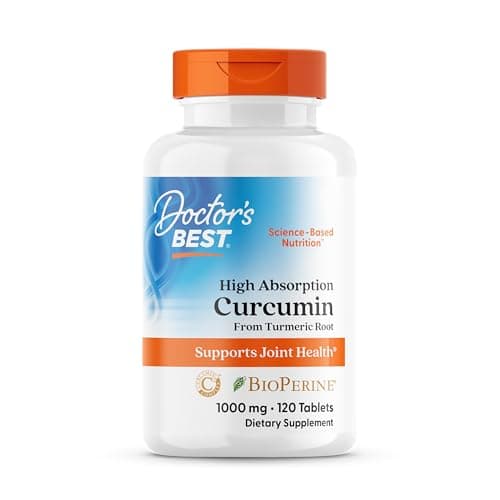
Doctor's Best — High Absorption Curcumin C3 Complex with BioPerine, 1000 mg (120 tablets)
1000 mg Curcumin C3 Complex (standardized to 95% curcuminoids) plus 5 mg BioPerine per serving, 120 tablets, non-GMO, gluten-free, soy-free
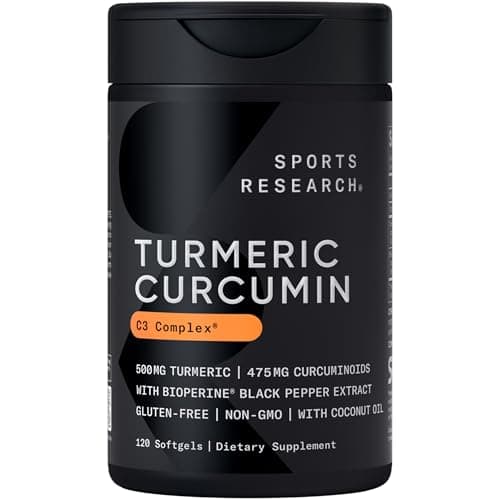
Sports Research — Turmeric Curcumin with Coconut Oil & BioPerine (120 softgels)
At a glance
Tap a row to check price · tap a header to sort| # | Best for | Price | ||
|---|---|---|---|---|
| 1 | | Best overall | 8.2/10 | Check price |
| 2 | | Best mainstream pick | 8/10 | $32.95 |
| 3 | 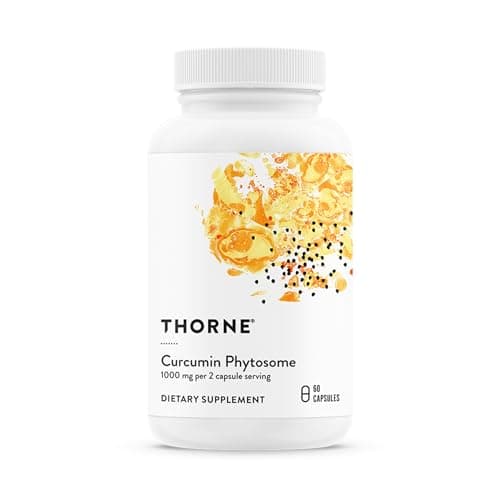 | Best absorption formulation | 7.8/10 | $36.00 |
| 4 | 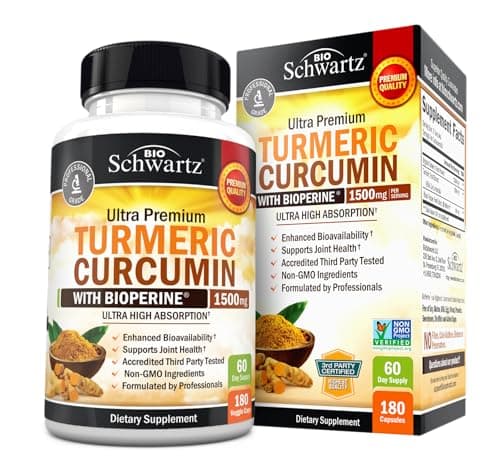 | Best budget bulk | 7.4/10 | $29.95$32.99 |
| 5 | 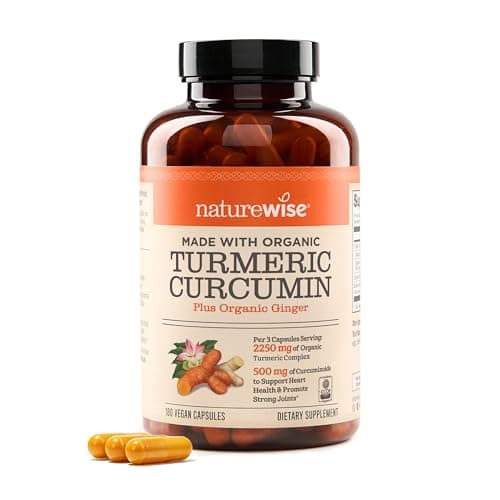 | Best vegan value | 7.2/10 | $21.49 |
| 6 | 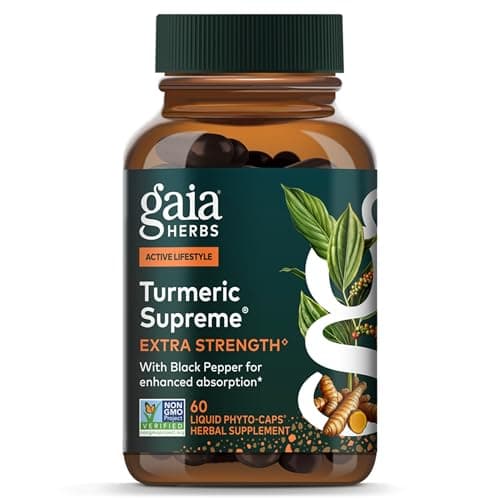 | Best whole-herb option | 6.6/10 | $29.69 |
| 7 | 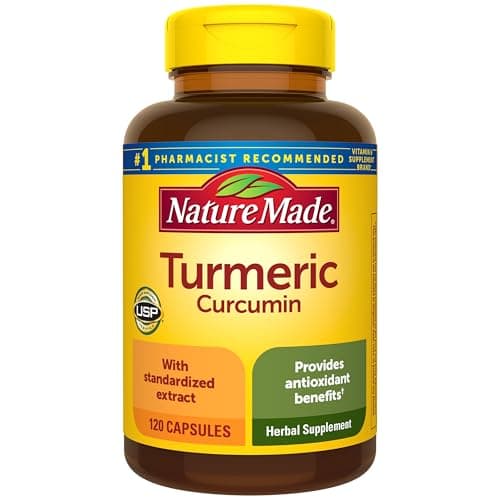 | Most available | 6.2/10 | $13.79$27.99 |
Prices pulled from Amazon as of Sep 16, 2026 and are subject to change. The price shown on Amazon at checkout applies.
How we scored
Every product below is scored on six metrics, 0-10 each, with the weighting described on how we review. The criteria specific to this category:
- A standardized curcuminoid extract, not just 'turmeric' — plain turmeric root is only 2-5% curcuminoids, so a supplement built on a 95% standardized extract (Curcumin C3 Complex, Meriva, or an equivalent) delivers many times the active compound of the same milligrams of raw powder. We score up products that tell you the curcuminoid percentage and score down ones that hide behind a big 'turmeric' number with no standardization.
- A real absorption strategy — because unformulated curcumin barely reaches the bloodstream, the formulation is the product. We reward a genuine enhancer the NCCIH acknowledges (black pepper/piperine as BioPerine, a phospholipid phytosome like Meriva, or a liposomal delivery) and we don't credit vague 'high absorption' badges with nothing behind them. We also note the trade-off: the NCCIH warns highly bioavailable formulations may stress the liver, so absorption is a tool, not a virtue in itself.
- Third-party testing you can point to — turmeric extracts have a documented history of adulteration (cheaper synthetic curcumin, undeclared fillers, even lead chromate coloring in some cheap raw material), so an independent NSF, USP, or brand-published third-party check on identity, potency, and contaminants matters more here than in most categories. A seal beats a slogan.
- An honest, clean label — a single-purpose turmeric-plus-enhancer beats a kitchen-sink 'joint complex' padded with glucosamine, ginger, and a proprietary blend you can't dose. Per this site's minimal-label bias, we want to see exactly how much curcuminoid you're getting and how much piperine is driving absorption, not a blur of ingredients priced like a premium.
- Claims that match the evidence — the NCCIH says turmeric has not been shown to treat any disease, and the best signal (knee OA joint comfort) is promising but low-quality. We score down labels that imply detox, immune cures, or anti-cancer benefits, and score up brands that keep their claims to 'joint support' or structure/function language the science can actually stand behind.
- Value measured in curcuminoids, not capsules — the right way to compare price is cost per gram of actual curcuminoids delivered (dose x curcuminoid percentage x count), not the sticker or the pill count. A cheap 'high absorption' bottle that's mostly filler can cost more per real dose than a pricier standardized extract, so we normalize on the active compound.
What to know before buying
- Formulation beats milligrams — read the back, not the front. A 1,000 mg 'turmeric' capsule with no standardization and no absorption enhancer can deliver less usable curcumin than a 500 mg 95%-standardized extract paired with BioPerine. The front-of-bottle number is close to meaningless on its own; what matters is the curcuminoid percentage and whether there's a real strategy to get it absorbed. If a label won't tell you both, it's not built for results.
- Black pepper (piperine) is the cheapest, best-established enhancer. The NCCIH notes that combining curcumin with piperine improves its bioavailability, and it's the enhancer with the longest track record in the trials. Most sensible turmeric products include about 5-10 mg of BioPerine for exactly this reason. It's not magic — the headline 'increases absorption up to 2000%' comes from a small early study and shouldn't be read as a guarantee — but a curcumin product without piperine or another delivery system is fighting its own chemistry.
- Phytosome and liposomal forms absorb better — and cost more, with a caveat. Meriva (a curcumin-phospholipid phytosome) and liposomal curcumin are engineered to raise blood levels well above plain extract, and the data behind them is reasonable. But the NCCIH explicitly warns that 'highly bioavailable formulations of curcumin ... may harm your liver,' and rare liver-injury cases have been linked to concentrated products. So these forms can be worth it if you want the most absorption per dose, but 'more bioavailable' is a reason to be conservative on dose and to skip them entirely if you have liver concerns or take other liver-taxing medications.
- The evidence is real but narrow — buy it for joint comfort, not as a cure. The strongest human data is for knee osteoarthritis: multiple meta-analyses of randomized trials report curcuminoids reduce pain and WOMAC scores versus placebo, which is a legitimate reason to try it if your knees ache. Everything beyond that — 'detox,' immunity, cancer prevention, 'reduces inflammation' as a blanket promise — outruns the science. The NCCIH's bottom line is that we don't yet know enough to say turmeric is beneficial for any health purpose, so keep your expectations honest.
- Adulteration is a genuine risk in this category. Turmeric has been a repeat target for economically motivated adulteration: cheaper synthetic curcumin swapped for the natural extract, undeclared starch fillers, and — in some low-grade raw material sourced overseas — lead chromate added as a yellow colorant. That's exactly why third-party testing isn't optional here. A brand that publishes independent identity, potency, and heavy-metal results is worth paying a little more for; an anonymous mega-cheap bottle with no testing is where the corners get cut.
- 'Turmeric and ginger,' gummies, and 'joint complexes' usually dilute the point. A gummy can't hold much standardized extract and adds sugar; a 'turmeric + ginger + glucosamine + 12 more things' blend rarely tells you how much of anything you're getting. If you want ginger, buy ginger; if you want glucosamine, buy that separately at a studied dose. For turmeric, the cleanest path is a standardized curcuminoid extract with an absorption enhancer and nothing else riding along.
- Talk to your doctor first if you're on blood thinners, pregnant, or have gallbladder or liver issues. Curcumin can have mild antiplatelet effects and may interact with anticoagulants like warfarin; it can stimulate gallbladder contraction (a problem if you have gallstones); high-absorption formulas have been tied to rare liver injury; and it isn't recommended in medicinal doses during pregnancy. None of this makes turmeric dangerous for most healthy people at normal doses — but this is YMYL territory, so if any of those apply to you, clear it with a clinician before you start.
Our picks
Doctor's Best — High Absorption Curcumin C3 Complex with BioPerine, 1000 mg (120 tablets)
Key specs: 1000 mg Curcumin C3 Complex (standardized to 95% curcuminoids) plus 5 mg BioPerine per serving, 120 tablets, non-GMO, gluten-free, soy-free
Pros
- Built on Curcumin C3 Complex — the standardized 95%-curcuminoid extract used in a large share of the published human trials, so you're taking the material the evidence was actually generated on, not a generic powder
- Pairs the extract with BioPerine black pepper, the absorption enhancer the NCCIH acknowledges, at a full 1000 mg curcuminoid dose per serving
- Clean, single-purpose label — curcumin and piperine, no glucosamine-and-ginger padding or unquantified proprietary blend
Cons
- Tablets are large and some people find turmeric tablets harder on the stomach than capsules — take with food
- No NSF or USP seal; Doctor's Best relies on the branded C3 Complex ingredient's testing and its own program rather than an independent consumer certification
Doctor's Best — High Absorption Curcumin C3 Complex with BioPerine, 1000 mg (120 tablets)
- Third-party testing7/10
- Bioavailability8/10
- Clinical evidence8/10
- Value7/10
- Brand transparency8/10
- Form & absorption8/10
Sports Research — Turmeric Curcumin with Coconut Oil & BioPerine (120 softgels)
Key specs: 500 mg curcumin from a 95% standardized curcuminoids extract, with organic coconut oil and 5 mg BioPerine, 120 liquid softgels, non-GMO verified
Pros
- A 95% standardized curcuminoid extract with BioPerine in an easy-to-swallow softgel — the coconut oil carrier is a reasonable (if modest) fat base for a fat-loving compound
- Sports Research is non-GMO Project verified and runs third-party testing, so the identity and potency claims have something behind them
- Widely stocked and sensibly priced for a standardized-plus-enhancer formula, which makes it the low-friction default for most shoppers
Cons
- 500 mg curcumin per softgel is a moderate dose — fine for maintenance, but you may want two for the doses used in joint-pain trials
- The coconut-oil angle is marketed harder than the evidence supports; the piperine is doing most of the real absorption work, not the oil
Sports Research — Turmeric Curcumin with Coconut Oil & BioPerine (120 softgels)
- Third-party testing7/10
- Bioavailability8/10
- Clinical evidence7/10
- Value8/10
- Brand transparency8/10
- Form & absorption8/10
Thorne — Curcumin Phytosome (Meriva), 1000 mg (60 capsules)
Key specs: 1000 mg Meriva curcumin phytosome (curcumin bound to phospholipids for enhanced uptake) per two capsules, 60 capsules, third-party tested, gluten/dairy/soy-free
Pros
- Uses Meriva, a curcumin-phospholipid phytosome designed to raise blood curcumin far above plain extract — the delivery system with some of the better bioavailability data in the category
- Thorne's third-party testing and NSF Certified for Sport pedigree is the most defensible reason to pay up for any supplement, and it's the brand's whole identity
- Clean single-ingredient label with no filler blends, from a brand many clinicians actually recommend
Cons
- By a wide margin the most expensive pick per dose, and only 60 capsules per bottle — you're paying for the phytosome and the testing, not a bigger curcumin number
- This is exactly the kind of 'highly bioavailable' formulation the NCCIH cautions may stress the liver, so it's the one to be conservative with and to avoid if you have liver concerns
Thorne — Curcumin Phytosome (Meriva), 1000 mg (60 capsules)
- Third-party testing10/10
- Bioavailability9/10
- Clinical evidence7/10
- Value4/10
- Brand transparency9/10
- Form & absorption9/10
BioSchwartz — Turmeric Curcumin 1500 mg with BioPerine & 95% Curcuminoids (180 capsules)
Key specs: 1500 mg turmeric with 95% standardized curcuminoids plus 10 mg BioPerine per serving, 180 capsules, non-GMO, gluten-free, third-party tested
Pros
- Delivers a standardized 95%-curcuminoid extract with a full 10 mg of BioPerine at a high daily amount, and 180 capsules keeps the cost per dose low
- Third-party tested and made to GMP standards, which is more assurance than most bargain turmeric bottles offer
- One of the most-reviewed turmeric products on the market — a safe, widely available default if you want volume on a budget
Cons
- The 'increases absorption up to 2000%' style marketing overstates what a small early piperine study showed — treat it as a talking point, not a promise
- A generic, mega-selling formula with no independent NSF/USP seal; the 1500 mg figure blends turmeric and extract, so read the curcuminoid content rather than the headline number
BioSchwartz — Turmeric Curcumin 1500 mg with BioPerine & 95% Curcuminoids (180 capsules)
- Third-party testing6/10
- Bioavailability8/10
- Clinical evidence7/10
- Value8/10
- Brand transparency7/10
- Form & absorption7/10
NatureWise — Curcumin Turmeric 2250 mg with 95% Curcuminoids & BioPerine (180 count)
Key specs: 2250 mg turmeric with 95% curcuminoids and BioPerine black pepper per serving, 180 vegan capsules (about a 60-day supply), non-GMO
Pros
- A 95% standardized curcuminoid extract with BioPerine in a vegan capsule, at a cost per serving that undercuts most premium picks
- 180-count bottle is a genuine two-month supply at three capsules a day, so the effective price stays reasonable
- Non-GMO and free of common fillers, a sensible everyday option for plant-based readers
Cons
- The 2250 mg figure is a turmeric-plus-extract blend number, so read the actual curcuminoid milligrams rather than the big front-of-bottle total
- Leans on broad 'immune and joint health' marketing, and there's no independent NSF/USP seal — you're trusting the brand's own testing
NatureWise — Curcumin Turmeric 2250 mg with 95% Curcuminoids & BioPerine (180 count)
- Third-party testing6/10
- Bioavailability8/10
- Clinical evidence7/10
- Value8/10
- Brand transparency6/10
- Form & absorption7/10
Gaia Herbs — Turmeric Supreme Extra Strength (60 liquid phyto-caps)
Key specs: 616 mg organic turmeric supercritical and water extracts with black pepper, 60 vegan liquid phyto-capsules, organic, gluten-free
Pros
- A whole-plant, organic turmeric extract with black pepper for readers who prefer a herbalist, food-adjacent approach over an isolated 95% curcuminoid extract
- Gaia's Meet-Your-Herbs traceability lets you look up the batch and its testing, which is unusually transparent for the herbal aisle
- Vegan liquid phyto-caps and a clean, certified-organic label fit a whole-food-first pantry
Cons
- A whole-turmeric extract delivers far less standardized curcumin than a 95% extract, so the cost per gram of actual curcuminoids is high
- The 'occasional discomfort from normal wear and tear' framing is classic supplement hedging, and the potency won't match a dedicated high-curcuminoid product for joint trials
Gaia Herbs — Turmeric Supreme Extra Strength (60 liquid phyto-caps)
- Third-party testing6/10
- Bioavailability6/10
- Clinical evidence6/10
- Value5/10
- Brand transparency7/10
- Form & absorption7/10
Nature Made — Turmeric Curcumin 500 mg (120 capsules)
Key specs: 500 mg turmeric per capsule, 120 capsules, gluten-free, from a mainstream brand with USP-verified products in its lineup
Pros
- Cheap, everywhere, and from a reputable mainstream brand — a fine entry point if you just want to try turmeric without overthinking it
- Simple single-ingredient capsule with no proprietary blend riding along
- Nature Made carries USP verification across much of its range, so brand-level quality control is better than the bargain-bin average (check the specific bottle for the seal)
Cons
- This base version has no black pepper or phytosome delivery, so a large share of the curcumin likely passes through unabsorbed — the exact problem this category exists to solve
- '500 mg turmeric' without a stated curcuminoid percentage tells you little about actual curcumin content; if you want results, Nature Made's own 'with black pepper' extra-strength version or a standardized extract is the better buy
Nature Made — Turmeric Curcumin 500 mg (120 capsules)
- Third-party testing7/10
- Bioavailability4/10
- Clinical evidence6/10
- Value6/10
- Brand transparency7/10
- Form & absorption6/10
Frequently asked questions
It's somewhere in between, and the honest answer depends on what you're taking it for. The NCCIH's position is that we don't yet know enough to conclude turmeric or curcumin is beneficial for any specific health purpose. The one place the evidence is reasonably encouraging is knee osteoarthritis: several meta-analyses of randomized trials have found curcuminoids reduce pain and stiffness scores versus placebo. So it's a fair, low-risk thing to try for joint comfort — but it is not a proven treatment for inflammation in general, immunity, detox, or any disease, and the trials behind even the joint signal are mostly small and short. Buy it with realistic expectations, not as a cure.
Related reading
- → Turmeric vs fish oil for inflammation (both are sold for 'inflammation' — which one has the stronger evidence?)
- → Best joint supplements (curcumin ranked head-to-head against UC-II, omega-3s, boswellia and glucosamine)
- → Best fish oil (the other 'anti-inflammatory' staple — with broader, stronger human evidence than curcumin)
- → Best multivitamin (cover your bases with food-derived nutrients before chasing a single botanical)
- → Best berberine (another heavily-hyped botanical — where the evidence is real and where it's oversold)
Sources
- Turmeric (bioavailability improved by piperine, 'we don't know enough to definitively conclude if turmeric or curcumin is beneficial for any health purposes,' knee OA evidence positive but low-quality, highly bioavailable formulations may harm the liver) — NIH National Center for Complementary and Integrative Health (NCCIH), 2020
- Effectiveness of curcuminoids in the treatment of knee osteoarthritis: a systematic review and meta-analysis of randomized clinical trials (curcuminoids reduced pain and WOMAC scores vs placebo) — PubMed / U.S. National Library of Medicine
- Efficacy and safety of curcuminoids alone in alleviating pain and dysfunction for knee osteoarthritis (systematic review and meta-analysis of randomized controlled trials) — Frontiers in Pharmacology, 2022
Last verified: August 1, 2026. See our editorial policy and how we review for details on scoring and update cadence. Canonical URL: https://trustedhealthgear.com/reviews/best-turmeric-supplement.
Doctor's Best — High Absorption Curcumin C3 Complex with BioPerine, 1000 mg (120 tablets)
on Amazon