The Best Supplements for CrossFit, Ranked for Repeatable High-Intensity Work
The verdict up front: the best supplement for CrossFit is creatine monohydrate, and our pick is Optimum Nutrition Micronized Creatine Monohydrate — 5 g a day of the form the research actually used, single-ingredient, pennies per session. The second pick is less obvious and more specific to this sport: a high-sodium electrolyte mix, and ours is LMNT Recharge, because a CrossFit class is a sweat event and the thing that falls apart in the back half of a long chipper is usually hydration, not muscle. What makes CrossFit different from the generic 'best supplements for lifting' list is the demand profile. You are not asked for one maximal effort with ten minutes of rest. You are asked for repeated near-maximal efforts across mixed modalities — barbell cycling into rowing into gymnastics — then asked to do it again tomorrow. That shifts what matters. Phosphocreatine recovery between efforts matters enormously, which is creatine's exact mechanism. Buffering acidity in efforts of roughly one to four minutes matters, which is beta-alanine's exact mechanism: the ISSN's beta-alanine position stand puts the effective dose at 3.2-6.4 g per day and the performance benefit squarely in that one-to-four-minute window, which is most of the metcons you will ever do. Sodium and fluid matter, because the American College of Sports Medicine's exercise-and-fluid-replacement position stand notes sweat sodium losses vary widely between individuals and that replacing sodium alongside fluid is what actually maintains plasma volume. Protein matters for the same reason it matters in any strength sport — the ISSN position stand points at roughly 1.4-2.0 g/kg/day, from food first. Magnesium and omega-3 are on the page as durability picks rather than performance ones, and we say so plainly. What you will not find here is a proprietary pre-workout matrix, a BCAA tub, or anything marketed as a 'WOD destroyer'. The CrossFit market is a magnet for proprietary-blend fairy dust, and a fourteen-ingredient label with one combined milligram figure is a brand telling you it does not want you to know the doses. One more thing specific to this sport: if you compete in anything sanctioned and drug-tested, third-party certification is not optional, and it is weighted heavily in this ranking for that reason. This is general information, not medical advice.
Top pick
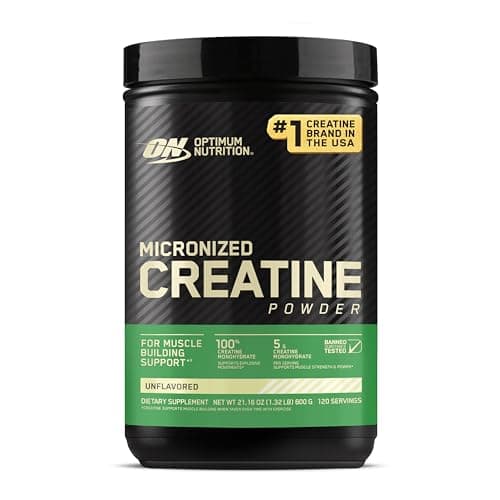
Optimum Nutrition — Creatine Monohydrate Powder (Micronized)
5 g creatine monohydrate per serving · 600 g tub · Creapure-grade micronized monohydrate · single ingredient · no loading phase required · unflavored, mixes into anything
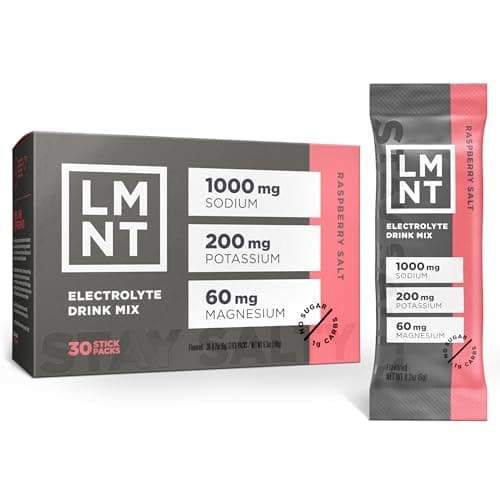
LMNT — LMNT Recharge Electrolyte Drink Mix
At a glance
Tap a row to check price · tap a header to sort| # | Best for | Price | ||
|---|---|---|---|---|
| 1 | 1. Optimum Nutrition — Creatine Monohydrate Powder (Micronized)Best overall for CrossFit | Best overall for CrossFit | 9.3/10 | |
| 2 | 2. LMNT — LMNT Recharge Electrolyte Drink MixBest electrolyte mix for heavy sweaters | Best electrolyte mix for heavy sweaters | 8.5/10 | |
| 3 | 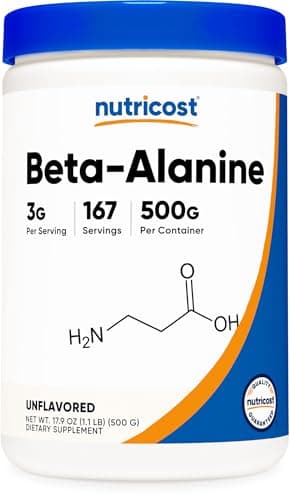 3. Nutricost — Beta-Alanine Powder (500 g)Best for metcon capacity | Best for metcon capacity | 8.4/10 | |
| 4 | 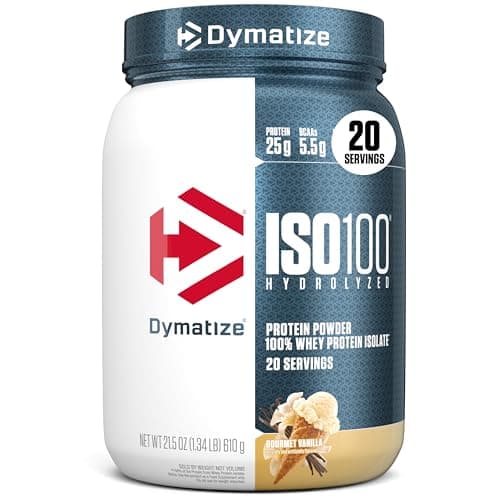 4. Dymatize — ISO100 HydrolyzedBest protein for a two-session day | Best protein for a two-session day | 8.3/10 | |
| 5 |  5. Doctor's Best — High Absorption Magnesium Glycinate/MalateBest durability pick | Best durability pick | 7.6/10 | |
| 6 | 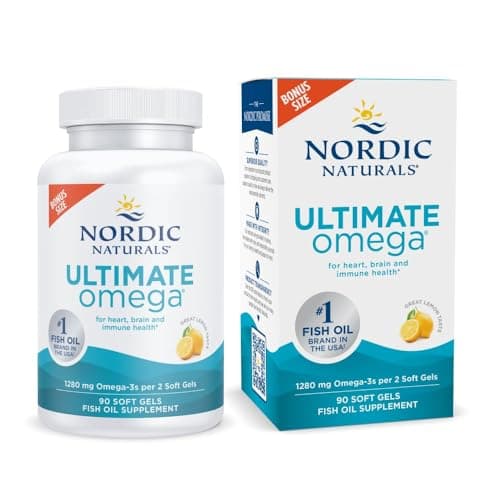 6. Nordic Naturals — Ultimate OmegaBest joint and tissue pick | Best joint and tissue pick | 7.4/10 |
Prices pulled from Amazon as of October 18, 2026 and are subject to change. The price shown on Amazon at checkout applies.
How we scored
Every product below is scored on six metrics, 0-10 each, with the weighting described on how we review. The criteria specific to this category:
- Evidence for repeatable high-intensity work. The heaviest-weighted metric, and deliberately narrower than general performance. The question is whether controlled trials show a benefit to the thing CrossFit actually demands: recovering between near-maximal efforts, sustaining output in the one-to-four-minute range, and doing it again the next day. A supplement can be good for one-rep-max strength or for endurance and still score moderately here.
- Dose and form that match the studies. 5 g per day of creatine MONOHYDRATE, not an upcharge form; 3.2-6.4 g daily of beta-alanine, split to limit tingling; 20-40 g of complete protein per serving; a sodium dose in an electrolyte mix that actually reflects sweat losses rather than a token 200 mg. We mark down undersized servings and anything where the effective amount hides inside a blend.
- Label honesty and no proprietary blends. The functional-fitness shelf is the worst offender in supplements for long ingredient lists under a single combined milligram total. We reward single-ingredient products and fully disclosed amounts, and we mark down blends, filler aminos, added sugar, and 'destroy your WOD' marketing language that implies results the product has not earned.
- Third-party testing, weighted heavily because this sport tests. Supplements are not pre-approved by the FDA, and a contaminated tub is an anti-doping finding, not an inconvenience. NSF Certified for Sport, Informed Sport and Informed Choice are the only practical defense. If you compete in sanctioned competition, treat a missing certification as disqualifying regardless of how good the rest of the label looks.
- Value per training week. We cost out what a genuinely effective weekly protocol costs, not the cheapest serving printed on the label. Creatine monohydrate and beta-alanine score at the ceiling — a few cents a day for the two best-supported options in this sport — while premium electrolyte sachets and hydrolyzed isolates have to justify a much higher weekly spend.
- Does it earn its place over food, salt, and sleep? The final check. If the same result comes from salting your food properly, eating another meal with protein in it, or going to bed an hour earlier, we say so instead of selling you a tub. Two products on this page are ranked below their own category-page score precisely because they fail this test for CrossFit specifically.
What to know before buying
- Creatine is the single highest-value purchase in this sport, and it is cheap. Five grams of monohydrate daily, timing irrelevant, no loading phase required, no cycling off. The mechanism is exactly what mixed-modal training stresses: faster phosphocreatine resynthesis between hard efforts, which is the difference between holding your pace on round four and falling apart. Skip the HCl, buffered, liquid and 'advanced' creatines — none has beaten plain monohydrate head to head and all cost more per effective gram. Expect one to three pounds of water inside the muscle in the first weeks; that is the mechanism, not fat.
- Take hydration seriously and get your sodium honest. The ACSM's position stand on exercise and fluid replacement is explicit that sweat sodium concentration varies substantially between people, and that replacing sodium with fluid is what maintains plasma volume and thirst drive during prolonged sweating. If you train in a hot garage gym, sweat through a shirt in twenty minutes, leave salt crust on your skin, or train twice a day, a high-sodium mix is doing real work. If you train in an air-conditioned box for 45 minutes and salt your food normally, plain water plus a decent diet covers it and the sachets are a luxury. Be honest about which one you are before committing to a subscription.
- Beta-alanine is the most CrossFit-specific supplement here, and it needs patience. It raises muscle carnosine, which buffers the acidity that builds in efforts lasting roughly one to four minutes — which describes an enormous share of programmed metcons. The dose is 3.2-6.4 g daily for several weeks to saturate, timing is irrelevant, and there is nothing to feel on day one. Split the dose if the harmless skin tingling bothers you. Buy an unflavored tub of pure powder rather than a pre-workout that hides 1.5 g of it inside a blend at four times the price.
- Protein target first, powder second, real food before both. The ISSN position stand lands on roughly 1.4-2.0 g/kg/day for building and maintaining muscle in active people, in servings of about 20-40 g. For an 82 kg athlete that is 115-165 g a day. Hit it with meat, fish, eggs and dairy, and use a shake when the alternative is missing the target — that is the only honest reason to own one. The whole-food-first position is not an aesthetic preference here; a meal brings everything else food contains, and a scoop brings protein.
- This is YMYL territory, and the pre-workout aisle is where this sport gets hurt. Be sceptical of proprietary stimulant blends with undisclosed caffeine totals, anything marketed as a legal anabolic or testosterone booster, and SARMs sold as research chemicals — the FDA has repeatedly issued notifications about body-building products containing undeclared or hidden drug ingredients. Rhabdomyolysis, heat illness and overuse injury are the real risks in high-intensity training, and no supplement protects against any of them; scaling the workout and sleeping enough do. If you are pregnant, nursing, under 18, taking medication, or managing a health condition — kidney disease especially, since creatine raises serum creatinine readings without harming healthy kidneys — talk to your doctor first.
Our picks
Optimum Nutrition — Creatine Monohydrate Powder (Micronized)
Key specs: 5 g creatine monohydrate per serving · 600 g tub · Creapure-grade micronized monohydrate · single ingredient · no loading phase required · unflavored, mixes into anything
Pros
- The ISSN creatine position stand calls monohydrate the most effective ergogenic nutritional supplement available to athletes for increasing high-intensity exercise capacity and lean body mass
- Its mechanism is a direct match for mixed-modal training: restoring phosphocreatine between repeated short, hard efforts
- Single-ingredient label, 5 g fully disclosed, no blend and nothing to decode
- A few cents per training day, which makes it the best cost-to-benefit purchase in this entire sport
- Timing-independent, so adherence is trivial even on a two-session day
Cons
- No sport-level third-party certification at this price point — a problem if you compete in tested competition
- Micronized monohydrate still settles in water more than pricier soluble forms, which is texture, not performance
- The first-weeks water-weight gain inside muscle bothers athletes who are watching a weight class
Who this one is for
For every CrossFit athlete, from someone three months into on-ramp to a regionals-level competitor. The mechanism — faster phosphocreatine resynthesis between near-maximal efforts — maps directly onto repeated rounds and barbell cycling. The only readers who should pause are those with kidney disease, who should talk to a doctor first, and sanctioned competitors, who should buy the NSF Certified for Sport option in our creatine roundup instead.
Optimum Nutrition — Creatine Monohydrate Powder (Micronized)
- High-intensity evidence10/10
- Dose & form10/10
- Label honesty10/10
- Third-party testing6/10
- Value10/10
LMNT — LMNT Recharge Electrolyte Drink Mix
Key specs: 1,000 mg sodium, 200 mg potassium, 60 mg magnesium per packet · zero sugar · 30-packet box · no proprietary blend — all three minerals disclosed by amount
Pros
- 1,000 mg of sodium per packet is a dose that actually reflects what a heavy sweater loses, rather than the token 200 mg most sports drinks carry
- Zero sugar, which makes it usable on a low-carb or keto approach where most sports drinks are not
- All three mineral amounts are stated on the label — no 'hydration complex' hiding the doses
- Directly addresses the thing the ACSM position stand identifies as maintaining plasma volume during prolonged sweating: sodium replaced alongside fluid
Cons
- Easily the most expensive way to buy sodium — table salt and a glass of water deliver the same mineral for a rounding error of the cost
- The sodium dose is genuinely too high for light sweaters, short sessions, or anyone managing blood pressure without medical advice
- The salty-sweet flavor profile is divisive and worth buying a small box to test before subscribing
Who this one is for
For the athlete who trains in a hot garage or non-air-conditioned box, sweats through a shirt, leaves salt crust on their skin, or trains twice a day. The 1,000 mg sodium dose is also the right fit on a low-carb or keto approach, where sodium needs genuinely run higher. If you train 45 minutes in air conditioning and salt your food normally, water does the job and this is a luxury.
LMNT — LMNT Recharge Electrolyte Drink Mix
- High-intensity evidence8/10
- Dose & form10/10
- Label honesty10/10
- Third-party testing5/10
- Value4/10
Nutricost — Beta-Alanine Powder (500 g)
Key specs: Pure beta-alanine powder · 500 g tub · roughly 2-3 g per scoop · unflavored · single ingredient · GMP facility · months of servings per tub at the full 3.2-6.4 g daily dose
Pros
- The ISSN beta-alanine position stand places the performance benefit squarely in efforts of roughly one to four minutes, which describes a large share of programmed metcons
- A 500 g tub makes the genuinely effective 3.2-6.4 g daily dose affordable — the exact point where capsule and pre-workout formats fall apart on cost
- Single-ingredient and unflavored, so you can split the dose across the day to reduce tingling and stack it into anything
- No stimulants, so it does not interfere with evening training or sleep the way a pre-workout does
Cons
- Needs several weeks of daily dosing to saturate muscle carnosine — there is nothing to feel in the first session, which is why people abandon it
- Harmless skin tingling (paraesthesia) at larger single doses is off-putting until you learn to split the dose
- No sport-level third-party certification at this price point
Who this one is for
For the athlete whose rounds die at the two-minute mark: thrusters, rowing intervals, high-rep barbell cycling, anything where the burn arrives and output falls off a cliff. This is the most CrossFit-specific pick on the page. It is the wrong purchase if your training is all heavy singles with long rests, or if you want something you can feel on day one.
Nutricost — Beta-Alanine Powder (500 g)
- High-intensity evidence9/10
- Dose & form10/10
- Label honesty10/10
- Third-party testing6/10
- Value10/10
Dymatize — ISO100 Hydrolyzed
Key specs: 25 g protein / 110 cal per scoop · hydrolyzed whey protein isolate · very low lactose and fat · Informed Choice certified on listed batches
Pros
- 25 g per scoop lands inside the 20-40 g per-serving range the ISSN position stand points at for maximizing muscle protein synthesis
- Informed Choice certification on listed batches is genuine third-party assurance — the one protein here a tested competitor can defend
- Hydrolyzed isolate strips most lactose and fat, which is why it sits lightly enough to use between sessions on a double day
- Complete protein with all nine essential amino acids and high leucine, which is what separates it from any BCAA product
Cons
- Noticeably more expensive per gram of protein than a concentrate blend, and the hydrolysis buys tolerance rather than extra adaptation
- Dairy-derived, so it is out for anyone avoiding dairy — see our plant protein coverage
- A convenience, not a performance supplement: meat, eggs and fish do the identical job for growth and recovery
Who this one is for
For the athlete doing doubles, or anyone who finishes a 6am class with no appetite and then under-eats protein for the rest of the day. The hydrolyzed isolate is specifically the pick if whey concentrate leaves you bloated going into a workout. If you comfortably hit 1.6 g/kg from food, you do not need this, and we would rather say so.
Dymatize — ISO100 Hydrolyzed
- High-intensity evidence8/10
- Dose & form10/10
- Label honesty9/10
- Third-party testing8/10
- Value7/10
Doctor's Best — High Absorption Magnesium Glycinate/Malate
Key specs: 100 mg elemental magnesium per 2-tablet serving as glycinate/lysinate chelate (Albion TRAACS) · 240-tablet bottle · elemental dose stated on the label, not compound weight
Pros
- States the ELEMENTAL magnesium dose, which most of the shelf hides behind the much larger compound weight
- Chelated glycinate/lysinate is well absorbed and gentle on the gut at doses where citrate and oxide become a laxative
- 240 tablets at this price is the best value per elemental milligram we track, which matters for something taken daily and indefinitely
- Addresses the sleep half of recovery, and sleep is the highest-leverage recovery variable any athlete has
Cons
- A gap-filler, not an ergogenic — nobody's performance improves from magnesium unless they were genuinely short
- 100 mg elemental per 2-tablet serving means two tablets, twice, for some people to reach a useful evening dose
- No third-party sport certification, and tablets include binders a capsule would not
Who this one is for
For the athlete training five or six days a week who sleeps badly and cramps. Magnesium is lost in sweat and under-consumed by a lot of adults, so this is gap-filling rather than performance enhancement — and the honest benefit is more likely to show up in sleep quality than in your Fran time. Skip it if you eat a lot of leafy greens, nuts and seeds and sleep fine.
Doctor's Best — High Absorption Magnesium Glycinate/Malate
- High-intensity evidence5/10
- Dose & form8/10
- Label honesty9/10
- Third-party testing6/10
- Value10/10
Nordic Naturals — Ultimate Omega
Key specs: 1,280 mg combined EPA+DHA per 2-softgel serving · triglyceride form · IFOS 5-star certified for purity and freshness · lemon-flavored to limit reflux
Pros
- 1,280 mg of combined EPA+DHA per serving is a genuinely research-relevant dose, where most cheap fish oils deliver a few hundred milligrams
- Triglyceride form rather than the cheaper ethyl ester, and IFOS 5-star certification covers purity, potency and oxidation — the spec that actually separates fish oils
- The most defensible pick here for anyone who does not eat oily fish twice a week, which is most people
- Transparent labelling of EPA and DHA separately, rather than a large 'fish oil' number that tells you nothing
Cons
- No credible performance benefit — this is health and tissue durability, and we are not going to pretend otherwise
- Expensive per gram of EPA+DHA compared with eating sardines, which is the whole-food-first answer
- Fish oil causes reflux and fishy aftertaste in some people even in a flavored triglyceride form
Who this one is for
For the athlete over 35, anyone whose elbows and shoulders complain after a heavy week, and anyone who simply does not eat oily fish twice a week. This is a general-health and tissue-durability purchase that happens to matter in a sport that beats on connective tissue. It is not going to change your performance, and any product telling you otherwise is overselling.
Nordic Naturals — Ultimate Omega
- High-intensity evidence4/10
- Dose & form10/10
- Label honesty9/10
- Third-party testing9/10
- Value6/10
Frequently asked questions
Creatine monohydrate first, then enough protein, then a sensible electrolyte approach — and for most people that is the whole list. Creatine is the clear top pick because its mechanism is a direct match for the sport: it speeds phosphocreatine resynthesis between repeated near-maximal efforts, which is exactly what rounds and barbell cycling demand. Five grams a day, timing irrelevant, for pennies. Protein is a target rather than a product: roughly 1.4-2.0 g/kg/day per the ISSN position stand, hit from food first with a shake as a convenience. Electrolytes are conditional — genuinely important if you train hot, sweat heavily, or train twice a day, and a luxury if you train 45 minutes in air conditioning. After those, beta-alanine is the most sport-specific addition because it buffers the one-to-four-minute efforts that make up most metcons. Magnesium and omega-3 are durability and general-health picks, not performance ones. Everything else being marketed to this community — proprietary pre-workouts, BCAA tubs, 'WOD' blends — is noise.
Related reading
- → How to take creatine
- → Does beta-alanine actually work?
- → Do electrolyte powders actually work?
- → How much protein do you need per day?
- → How to warm up before lifting
- → Creatine vs pre-workout
- → Pre-workout vs coffee
- → LMNT vs Liquid I.V.
- → Creatine vs BCAA
- → Best creatine supplements
- → Best electrolyte powders
- → Best beta-alanine supplements
- → Best supplements for muscle growth
- → Best supplements for muscle recovery
- → Best jump ropes for double-unders
Sources
- International Society of Sports Nutrition Position Stand: Safety and Efficacy of Creatine Supplementation in Exercise, Sport, and Medicine — Journal of the International Society of Sports Nutrition, 2017
- International Society of Sports Nutrition Position Stand: Beta-Alanine (3.2-6.4 g/day; benefit in 1-4 minute efforts) — Journal of the International Society of Sports Nutrition, 2015
- International Society of Sports Nutrition Position Stand: Protein and Exercise (1.4-2.0 g/kg/day; 20-40 g per serving) — Journal of the International Society of Sports Nutrition, 2017
- ACSM Position Stand: Exercise and Fluid Replacement (sweat sodium variability; sodium with fluid and plasma volume) — Medicine & Science in Sports & Exercise (American College of Sports Medicine), 2007
- Magnesium — Health Professional Fact Sheet (RDA, food sources, supplement forms) — NIH Office of Dietary Supplements, 2022
- Tainted Body Building Products — public notifications on muscle-building supplements containing undeclared or hidden drug ingredients — U.S. Food and Drug Administration
- Product titles, serving sizes, stated doses, live prices and availability for all six ranked products — retrieved via the Amazon product data layer — Amazon product listing data, 2026
Last verified: October 5, 2026. See our editorial policy and how we review for details on scoring and update cadence. Canonical URL: https://trustedhealthgear.com/reviews/best-supplements-for-crossfit.
Optimum Nutrition — Creatine Monohydrate Powder (Micronized)
$27.00 · on Amazon