Pre-Workout vs Coffee: Which Should You Take Before Training?
For most people, the honest starting point is uncomfortable for the supplement industry: the one ingredient in a pre-workout that reliably improves training performance is caffeine, and a cup of coffee delivers caffeine for a few cents with no proprietary blend, no artificial sweeteners, and no mystery. A typical cup of coffee gives you roughly 80-100 mg of caffeine, while a scoop of pre-workout usually stacks 150-300 mg alongside extras like L-citrulline (aimed at blood flow and 'pump') and beta-alanine (a buffer for high-intensity work). Some of those extras are genuinely evidence-backed at the right dose — but a lot of pre-workouts underdose them, bury them inside a 'proprietary blend' that hides the amounts, or lean on tingles and flavoring to feel like they're doing something. So the real question isn't 'is caffeine useful before a workout?' (it clearly is), it's 'am I paying for anything coffee can't already give me?' If you just want cheap, clean energy and focus, coffee wins outright. A pre-workout earns its place only when it's fully transparent about its doses and includes the specific ergogenics you actually want in amounts that match the research.
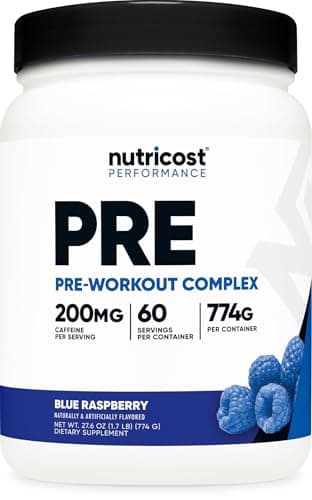
Nutricost — Pre-Workout Complex Powder (Blue Raspberry, 60 servings)
The verdict
For a simple, cheap energy and focus boost before training, coffee wins — it's caffeine, the best-evidenced ingredient in the category, without the fillers, sweeteners, or hidden 'proprietary blend' amounts. Choose a pre-workout only if it's fully transparent about every dose and includes the specific extras you want — most commonly properly dosed L-citrulline and beta-alanine — in amounts that actually match the research, not a fairy-dusted trace. Either way, respect caffeine: keep your total daily intake in a sensible range, know that many pre-workouts pack a big dose per scoop, and don't take either one late in the day, because afternoon and evening caffeine measurably hurts sleep — and sleep does more for your training than any powder. If you have a heart condition, high blood pressure, anxiety, or you're pregnant, talk to your doctor before using high-caffeine products.
Side-by-side
| Attribute | Pre-Workout | Coffee |
|---|---|---|
| Main performance active | Caffeine (plus optional extras) | Caffeine |
| Typical caffeine dose | Often 150-300 mg per scoop | Roughly 80-100 mg per cup |
| Extra ergogenics | Often citrulline, beta-alanine, others | None — just caffeine |
| Dose transparency | Varies; many hide amounts in blends | Well known and consistent |
| Cost | Higher per serving | Pennies per cup |
| Added sweeteners/dyes | Common | None (black) |
| Best for | Adding real, dosed extras to caffeine | Cheap, clean energy and focus |
| Main caution | Mega-caffeine and hidden blends | Overdoing total daily caffeine |
Who should pick which
Pick Pre-Workout
- Lifters who want properly dosed citrulline and beta-alanine plus caffeine in one convenient scoop — and who read supplement labels.
- Those doing high-volume or high-intensity training who value the extra ergogenics, and only buy fully transparent, third-party-tested products.
Pick Coffee
- Most people who just want a cheap, clean, reliable energy and focus boost before training — caffeine is the active that matters, and coffee delivers it.
- Anyone caffeine-sensitive or on a budget, who wants a known dose per cup rather than a big, variable scoop full of extras.
- People who dislike proprietary blends, artificial sweeteners, and dyes, and prefer a single, familiar ingredient.
The active ingredient is usually just caffeine
Strip a typical pre-workout down to what has the strongest evidence for improving a training session, and you're left mostly with caffeine. That isn't a knock on caffeine — it's one of the best-studied ergogenic aids there is. The International Society of Sports Nutrition's position stand on caffeine concludes it can meaningfully improve endurance, muscular endurance, strength, and high-intensity performance, typically in the range of about 3-6 mg per kilogram of bodyweight taken before exercise. The NIH Office of Dietary Supplements similarly lists caffeine among the few sports-nutrition ingredients with solid evidence behind it. The catch for the supplement industry is that coffee is caffeine. A cup delivers roughly 80-100 mg, it costs pennies, and there's no proprietary blend, no artificial sweetener, and no dye involved. So before you pay a premium for a scoop, it's worth asking the sharp question: what am I actually buying that a coffee can't already give me? If the answer is 'energy and focus,' the honest answer is that coffee already covers it.
What coffee gets right
Coffee's advantages are boring, which is exactly why they matter. You know the dose: a cup lands around 80-100 mg of caffeine, so it's easy to dial your total intake and avoid stacking yourself into a jittery, heart-pounding mess. It's cheap enough that cost is a non-issue. There's nothing else in it (if you drink it black) — no beta-alanine tingles standing in for effect, no fruit-punch flavoring, no sucralose, no coloring. For a huge number of people whose goal is simply to feel alert and focused before a lift or a run, that single, familiar ingredient is the whole job. Coffee is also easy to titrate: caffeine-sensitive people can use a smaller cup or a half-caf, which is far harder to do with a fixed pre-workout scoop that may pack 200 mg or more whether you wanted that much or not. None of this makes coffee magic — it's just a clean, honest, inexpensive caffeine delivery system, and for most gym-goers that's all a 'pre-workout' ever needed to be.
When a pre-workout actually earns its price
A pre-workout justifies itself only when it adds ingredients you genuinely want, at doses that match the research, and tells you exactly how much of each you're getting. Two extras have real support. L-citrulline is used to raise nitric oxide and blood flow — the source of the 'pump' — and the evidence, while modest, points to potential benefits for training volume and reduced soreness when it's dosed in the several-grams range rather than a token sprinkle. Beta-alanine is better established: the ISSN position stand on beta-alanine supports its use for high-intensity exercise lasting roughly one to four minutes, by raising muscle carnosine to buffer acidity, but that benefit depends on taking a few grams per day consistently over weeks — the single-scoop tingle you feel pre-workout is not the mechanism. So a pre-workout is worth it if you specifically want caffeine plus properly dosed citrulline and beta-alanine bundled into one convenient scoop, and the label proves the amounts. If those extras aren't there in real doses, you're paying extra for flavored caffeine.
The red flags: mega-caffeine, proprietary blends, and sleep
Three things should make you skeptical of a given pre-workout. First, mega-doses of caffeine: some scoops push 300 mg or more, and combined with your coffee, energy drinks, and soda, it's easy to blow past a sensible daily ceiling. Mayo Clinic notes that up to about 400 mg of caffeine a day appears safe for most healthy adults, but pre-workouts make it very easy to overshoot — and more caffeine doesn't mean more performance, just more jitters, a racing heart, and anxiety. Second, proprietary blends: when a label lists a 'blend' with a single total weight instead of the amount of each ingredient, you cannot tell whether the citrulline and beta-alanine are dosed to work or fairy-dusted for the label. Skip those; buy only fully disclosed formulas. Third, and most important, timing: caffeine has a long half-life, and afternoon or evening doses measurably reduce sleep quality and duration. Since sleep drives recovery and performance more than any powder, a late-day pre-workout that wrecks your night is a net loss. If you train in the evening, that's a strong argument for less caffeine, not more.
How to choose
Match the tool to the goal. If you want a cheap, clean, reliable lift in energy and focus before training, coffee is the default winner — it's the best-evidenced ingredient in the whole category, minus the fillers and the markup, and you control the dose. Choose a pre-workout only when you actively want the extra ergogenics: caffeine plus real, disclosed doses of citrulline and/or beta-alanine, from a brand that lists every amount and ideally carries third-party testing (NSF Certified for Sport, Informed Sport). Read the label like a skeptic — if it hides doses in a blend, walk away. And remember two things no product can fix: sleep and consistent training do more for your results than any pre-workout, and caffeine tolerance builds, so cycling off periodically restores the effect. This is also YMYL territory — if you have a heart condition, high blood pressure, an anxiety disorder, or you're pregnant or breastfeeding, talk to your doctor before using high-caffeine pre-workouts or heavy coffee intake.
Frequently asked questions
Not for most people. The ingredient that reliably improves a workout in a typical pre-workout is caffeine, and coffee delivers caffeine for pennies with no proprietary blend and no artificial sweeteners. A pre-workout is only 'better' if it adds extras you actually want — most commonly properly dosed L-citrulline and beta-alanine — in transparent amounts that match the research. If it hides its doses in a blend or under-doses those ingredients, you're essentially paying more for flavored caffeine. For a simple energy and focus boost, coffee wins; for a genuine, well-dosed stack of caffeine plus ergogenics in one scoop, a transparent pre-workout can be worth it.
Sources
- Dietary Supplements for Exercise and Athletic Performance — Fact Sheet for Health Professionals (caffeine, beta-alanine, and citrulline among ingredients reviewed for exercise performance, with evidence and typical doses) — NIH Office of Dietary Supplements, 2023
- International Society of Sports Nutrition position stand: caffeine and exercise performance (caffeine improves endurance, strength, and high-intensity performance, typically around 3-6 mg/kg pre-exercise) — Journal of the International Society of Sports Nutrition (jissn.biomedcentral.com), 2021
- International Society of Sports Nutrition position stand: Beta-Alanine (supports high-intensity exercise ~1-4 minutes via raised muscle carnosine; requires several grams daily over weeks) — Journal of the International Society of Sports Nutrition (jissn.biomedcentral.com), 2015
- Caffeine: How much is too much? (up to about 400 mg/day appears safe for most healthy adults; caffeine can disrupt sleep when taken later in the day) — Mayo Clinic
Nutricost — Pre-Workout Complex Powder (Blue Raspberry, 60 servings)
$31.95 · on Amazon