LMNT vs Liquid IV: Which Electrolyte Mix Is Right for You?
LMNT and Liquid IV are the two best-known electrolyte drink mixes on Amazon, and they are built for very different use cases. LMNT is a high-sodium, zero-sugar mix designed for heavy sweaters and low-carb eaters. Liquid IV is a moderate-sodium, sugar-assisted mix designed to use the sodium-glucose cotransport mechanism to speed up fluid absorption. Neither is 'better' — they're solving different problems.
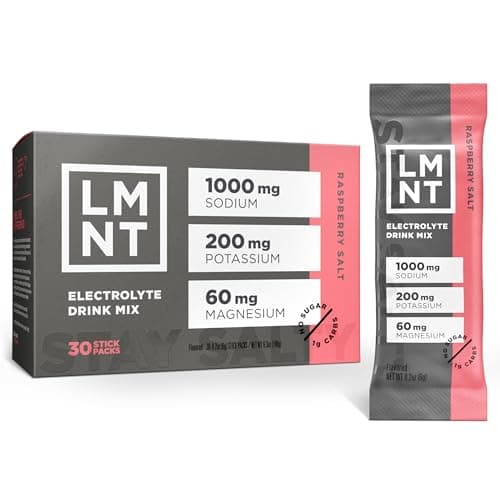
LMNT — LMNT Recharge Electrolyte Drink Mix
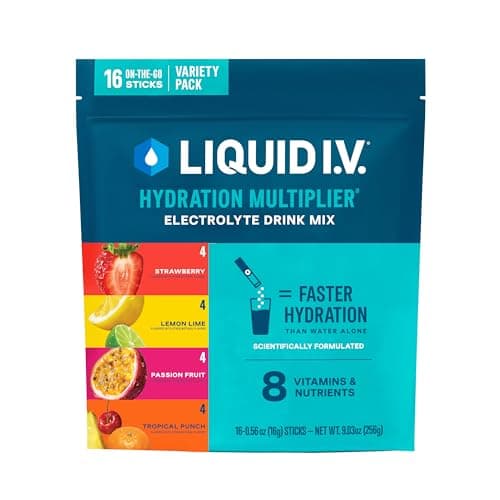
Liquid I.V. — Liquid I.V. Hydration Multiplier
The verdict
Pick LMNT if you're on a low-carb diet, sweat heavily in training or heat, or specifically want to avoid added sugar. Pick Liquid IV if you want a moderately-sweetened mix that pulls water into cells faster via the glucose-sodium cotransport pathway, or you're rehydrating after alcohol or illness and don't mind 11g of sugar per serving.
Side-by-side
| Attribute | LMNT Recharge | Liquid I.V. Hydration Multiplier |
|---|---|---|
| Sodium per serving | 1,000 mg | 500 mg |
| Potassium per serving | 200 mg | 370 mg |
| Magnesium per serving | 60 mg | 0 mg |
| Added sugar per serving | 0 g | 11 g |
| Sweetener | Stevia leaf extract | Cane sugar + dextrose + stevia |
| Calories per serving | 10 | 45 |
| Third-party testing | Published COAs, not batch-certified | Minimal public third-party testing data |
| Best use case | Heavy sweat / keto / low-carb | Rapid rehydration / post-illness / fuel |
| Approximate price per serving | $1.50-$2.00 | $1.30-$1.60 |
| Where to buy |
Prices pulled from Amazon as of October 18, 2026 and are subject to change. The price shown on Amazon at checkout applies.
Who should pick which
Pick LMNT Recharge
- Keto or low-carb eaters who need electrolytes without breaking ketosis.
- Heavy-sweat athletes and outdoor workers losing >1,000mg sodium per hour.
- People avoiding artificial sweeteners (stevia-sweetened).
Pick Liquid I.V. Hydration Multiplier
- People rehydrating after illness, travel, or alcohol — sugar-aided absorption is useful.
- Anyone who wants a flavorful, sweetened drink mix.
- Buyers shopping in retail stores — Liquid IV is more widely stocked.
Sodium dose — the single biggest difference
LMNT delivers 1,000mg of sodium per serving; Liquid IV delivers 500mg. For context, sweat-rate studies on endurance athletes in heat measure sodium losses of 500-2,000mg per hour. If you're doing a 45-minute indoor spin class, Liquid IV's 500mg is fine and arguably excessive. If you're doing a 3-hour Saturday ride in 85°F, LMNT's 1,000mg is closer to a realistic replacement, and even that may need to be supplemented. This is why the question isn't 'which is better' — it's 'which matches my actual sweat output.'
Sugar — not just a sweetener, a mechanism
Liquid IV's 11g of sugar is not (only) a taste decision. The product's 'Cellular Transport Technology' leverages the SGLT1 (sodium-glucose cotransporter 1), which pulls water across the intestinal wall along with glucose and sodium. This is the same mechanism used in oral rehydration solutions for diarrheal disease. In scenarios where rapid fluid uptake matters — post-illness, heavy dehydration, post-alcohol — that glucose-sodium combo genuinely speeds absorption compared to pure water or sodium alone. LMNT's zero-sugar approach loses that pathway but is the right call if you're specifically avoiding added sugar for metabolic reasons.
Use-case matching
If you drink electrolytes daily for general hydration (no specific athletic or medical need), both are overkill vs a glass of water with salt. If you're training hard, outdoors in heat, or on keto — LMNT. If you're rehydrating after a stomach bug or a long flight — Liquid IV. If you have high blood pressure, sodium-sensitive hypertension, or kidney disease, talk to your doctor before adding either regularly.
Cost and availability
Liquid IV has significantly wider retail distribution — you'll find it at big-box stores, pharmacies, and online. LMNT is subscription-first with Amazon availability. Per serving, the two are close enough in price that it's rarely the deciding factor.
Frequently asked questions
You can, but both products were designed for specific-use-case hydration, not as daily supplements. Most adults already meet sodium needs from food. Daily use is more defensible if you exercise hard, eat low-carb, or work outdoors in heat.
Related reading
Sources
- Oral rehydration therapy and glucose-sodium cotransport — American Journal of Physiology, 2007
- Sweat sodium concentration and sodium balance during exercise — Journal of Sports Sciences, 2007
LMNT — LMNT Recharge Electrolyte Drink Mix
$45.00 · on Amazon