Natural Alternatives to Metamucil
The short answer: the best natural alternative to Metamucil is plain psyllium husk, because it is the same active fiber with nothing else in it — our pick is NOW Psyllium Husk Caps. That is worth understanding before you shop, because most people looking for a Metamucil alternative are not actually looking for a different fiber. Metamucil's active ingredient is psyllium husk, and the things people dislike about it are the additions: the sweeteners, the flavoring and coloring in the orange powders, the texture when it thickens in the glass, and the price per serving. Buy plain psyllium — powder or capsules — and you get the identical gel-forming soluble fiber with a one-ingredient label. If psyllium itself is the problem because it makes you gassy or feels like drinking wallpaper paste, there are genuinely different options with different textures and tolerability: partially hydrolyzed guar gum dissolves clear and is the gentlest of the group, acacia is similar, inulin and resistant starch feed gut bacteria but produce more gas, and a bowl of oats, beans, chia or ground flaxseed does the job with food. Below: which alternative matches which problem, the fibers to approach carefully if you have a sensitive gut, and the honest note that food should be the first move for most people. This is general information rather than medical advice — new or persistent changes in bowel habit, blood, unexplained weight loss or abdominal pain need a clinician rather than a fiber tub.
Affiliate disclosure: Trusted Health Gear is an Amazon Associate. If you buy through links on this page, we may earn a commission at no extra cost to you. Commission does not influence our rankings. Full policy.
First, know what you are replacing: Metamucil is psyllium
Start here, because it reframes the whole question. Metamucil's active ingredient is psyllium husk, a gel-forming soluble fiber from Plantago ovata seeds, and psyllium is also the fiber with the best-established evidence base in this category — for regularity, for lowering LDL cholesterol, and for glycemic effects. So "natural alternative to Metamucil" usually means one of three things in practice: you want psyllium without the flavoring, sweeteners and coloring; you want a cheaper version of the same thing; or you want a different fiber because psyllium does not agree with you. The first two are solved by buying plain psyllium husk, which is sold as loose powder, as whole husks and as capsules, with nothing on the label but the fiber. The third is a real question and the rest of this page answers it. One practical point on psyllium regardless of brand: it needs water. Take it with a full glass, drink more through the day, and do not take it dry or immediately before lying down, because a gel-forming fiber without enough fluid is the mechanism behind the choking and obstruction warnings on the label.
Food first: the alternatives that are not supplements
Before any tub, the honest answer for most people is food, and the numbers make the case. Adult fiber intake recommendations land around 25 g a day for women and around 38 g for men, most people in the US fall well short, and the fiber in food arrives with water, potassium, polyphenols and a food matrix that a scoop of powder does not replicate. The highest-yield swaps are unglamorous: beans and lentils, which are the densest practical source; oats and barley, which supply the same kind of viscous soluble fiber that psyllium does; chia and ground flaxseed, both of which form a gel in water in much the same way; and simply leaving the skins on fruit and vegetables. Two scoops-worth of fiber from food costs less than any supplement here and improves your diet in other ways at the same time. The sensible order is to add food fiber first, see whether that resolves the problem, and treat a supplement as the gap-filler for the days or the life circumstances where it does not. Add any fiber gradually and increase fluid at the same time, or you trade constipation for gas and bloating.
If psyllium is too gassy or too thick: gentler soluble fibers
Two fibers are the best answers if psyllium itself is the problem. Partially hydrolyzed guar gum, sold as Sunfiber, is the gentlest option in common use: it dissolves clear and tasteless in water or coffee with no thickening, which makes it the obvious pick for anyone who cannot face the psyllium texture, and it is generally well tolerated by people whose guts react to more fermentable fibers. Acacia (gum arabic) behaves similarly — soluble, mild, slow to ferment. Both are genuinely different products rather than psyllium relabeled, and both trade some of psyllium's bulking effect for tolerability and convenience. Methylcellulose and wheat dextrin are the other common commercial alternatives and they are also non-gelling, though wheat dextrin is a wheat derivative, which matters if you are avoiding wheat. The practical approach with any of them is the same: start at half the suggested serving for a week, increase fluid, and build up. Fiber side effects are overwhelmingly a dose-escalation problem rather than a product problem, and people who quit fiber supplements almost always started at a full dose.
If your goal is feeding gut bacteria: prebiotics are a different job
This is where a lot of shopping goes wrong, because prebiotic fiber and bulking fiber are not interchangeable. A prebiotic is defined as a substrate that is selectively used by host microorganisms conferring a health benefit — the ISAPP consensus definition — and the common ones are inulin and fructo-oligosaccharides, galacto-oligosaccharides, and resistant starch such as unmodified potato starch. These are fermented by gut bacteria, which is the point, and that fermentation is also why they produce noticeably more gas than psyllium or guar gum. Inulin and FOS in particular are high-FODMAP, so they are a poor first choice for anyone with IBS or a sensitive gut, where a gentler fiber is a better starting point. If your goal is regularity, buy a bulking fiber. If your goal is specifically feeding your microbiome, buy a prebiotic — and start small, because the typical mistake is a full scoop of inulin on day one followed by an uncomfortable evening and a tub in the cupboard forever. Our prebiotics roundup goes into the types properly.
The alternatives we'd actually buy
Every pick below is already reviewed and scored in our roundups — same products, same specs, with live Amazon prices.
| Attribute | NOW NOW Psyllium Husk Caps (500 mg)Our pick | Tomorrow's Nutrition Sunfiber (Tomorrow's Nutrition) — Partially Hydrolyzed Guar | NOW NOW Inulin Prebiotic Pure Powder (Organic) | Anthony's Anthony's Organic Potato Starch (Unmodified) |
|---|---|---|---|---|
| Best for | Best psyllium capsule — grit-free, from a trusted maker | Best gentle, low-FODMAP option for sensitive guts | Best overall — a pure, organic, well-priced inulin/FOS from a trusted maker | Best resistant starch — a cheap, whole-food-style way to feed butyrate producers |
| Who it's for | For most people replacing Metamucil: the same psyllium husk fiber in capsule form with a one-ingredient label — no sweeteners, no flavoring, no coloring, and no glass of thickening orange liquid. | For the reader whose problem is psyllium itself — partially hydrolyzed guar gum dissolves clear and tasteless, does not thicken, and is the gentlest common option for a sensitive gut. | For the reader whose actual goal is feeding gut bacteria rather than bulking stool — organic inulin, which is a different job from psyllium and needs starting at a small fraction of a scoop. | For the resistant-starch approach: unmodified potato starch is about as close to a whole-food prebiotic as a tub gets, stirred cold into water or yogurt and never heated. |
| Key specs | Psyllium husk in capsules · 500 mg each · Non-GMO Project Verified · no grit or mixing · GMP-manufactured · take with a full glass of water | Partially hydrolyzed guar gum (PHGG) soluble fiber · flavorless, dissolves clear · marketed as low-FODMAP and gentle · prebiotic · mixes into any drink or food | Certified Organic inulin (FOS) from chicory root · single-ingredient powder · Non-GMO Project Verified · dissolves in water or food · GMP-manufactured · scalable dosing | Unmodified potato starch = raw resistant starch (RS2) · organic, gluten-free, non-GMO · 2 lb bag · must be used cold/unheated to keep the resistant structure · very low cost per serving |
| Our score | 8.3/10 | 7.9/10 | 8.5/10 | 8/10 |
| Where to buy |
Prices pulled from Amazon as of October 18, 2026 and are subject to change. The price shown on Amazon at checkout applies.
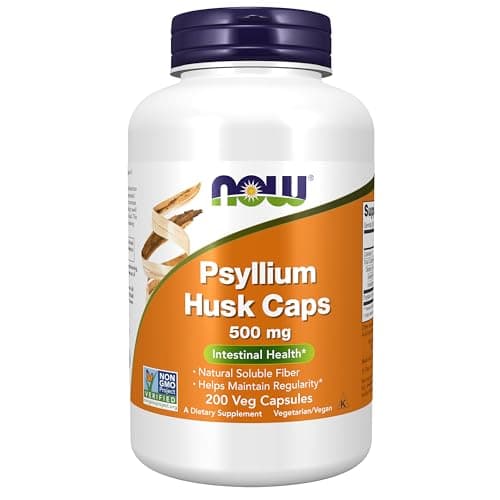
NOW — NOW Psyllium Husk Caps (500 mg)
For most people replacing Metamucil: the same psyllium husk fiber in capsule form with a one-ingredient label — no sweeteners, no flavoring, no coloring, and no glass of thickening orange liquid.
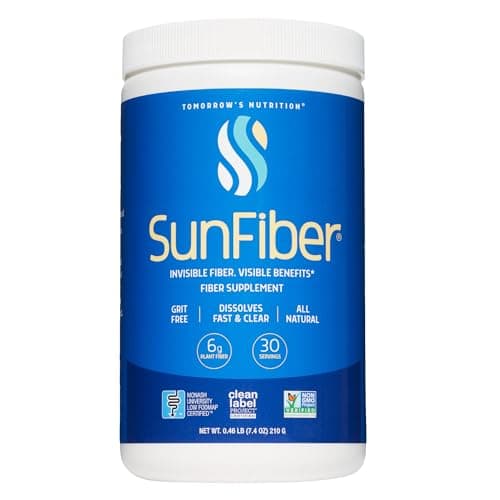
Tomorrow's Nutrition — Sunfiber (Tomorrow's Nutrition) — Partially Hydrolyzed Guar
For the reader whose problem is psyllium itself — partially hydrolyzed guar gum dissolves clear and tasteless, does not thicken, and is the gentlest common option for a sensitive gut.
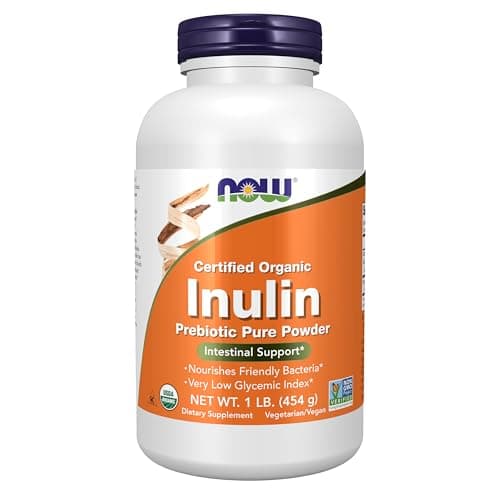
NOW — NOW Inulin Prebiotic Pure Powder (Organic)
For the reader whose actual goal is feeding gut bacteria rather than bulking stool — organic inulin, which is a different job from psyllium and needs starting at a small fraction of a scoop.
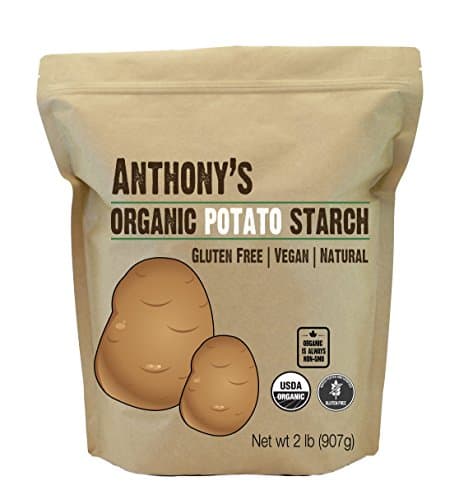
Anthony's — Anthony's Organic Potato Starch (Unmodified)
For the resistant-starch approach: unmodified potato starch is about as close to a whole-food prebiotic as a tub gets, stirred cold into water or yogurt and never heated.
Matching the fiber to the problem
Four common goals, four different answers. For regularity and general bulking, psyllium is the default and the evidence leader; plain psyllium husk capsules or powder is the straight Metamucil replacement. For lowering LDL cholesterol, psyllium again — the viscous soluble fiber is the mechanism, and oats and barley do the same thing in food form. For a sensitive gut or IBS, partially hydrolyzed guar gum or acacia, started low, and avoid inulin and FOS at first. For microbiome support specifically, a prebiotic such as inulin, GOS or resistant starch, introduced in small amounts. And across all four, more water. One honest caveat on insoluble fiber, which is the other half of this picture: psyllium is mostly soluble and gel-forming, whereas the insoluble fiber in wheat bran and vegetable skins adds bulk and speeds transit by a different mechanism. Both matter, which is another argument for food, since a mixed diet delivers both without you having to think about it. Our guide on how much fiber per day covers the targets, and the soluble-versus-insoluble distinction is covered in our fiber supplement reviews.
What to check on the label, and when to see a doctor
Four label checks, then the safety section. First, the actual fiber and its amount per serving in grams — not a "fiber blend" with a combined weight. Second, added sweeteners, flavoring and coloring, which are the main things people are trying to escape when they look for a Metamucil alternative; a one-ingredient label is available in every category here. Third, servings per container, since cost per serving is the only price comparison that means anything. Fourth, the form: powder is cheapest and most flexible, capsules are more convenient but it takes several to equal a powder serving, and whole husks are the least processed and the least pleasant. On safety: fiber supplements can interfere with the absorption of medications, so take them a couple of hours apart from prescriptions and check with a pharmacist if you take anything time-sensitive. Gel-forming fibers must be taken with plenty of fluid. And see a clinician rather than self-treating if you have new or persistent constipation or diarrhea, blood in the stool, unexplained weight loss, abdominal pain, a change in bowel habit lasting more than a couple of weeks, or a history of bowel obstruction or swallowing difficulty — fiber is not the answer to any of those, and some of them need looking at promptly.
Frequently asked questions
Plain psyllium husk, because it is the same active fiber Metamucil uses with nothing added. Metamucil's active ingredient is psyllium, so most people searching for an alternative are really looking to drop the sweeteners, flavoring and coloring — and buying plain psyllium powder or capsules does exactly that, usually at a lower cost per serving. If psyllium itself does not agree with you, the genuinely different options are partially hydrolyzed guar gum (Sunfiber), which dissolves clear and does not thicken, or acacia, which is similarly mild. And the food answers work: oats, barley, beans, lentils, chia and ground flaxseed all supply viscous soluble fiber without any supplement at all.
Related reading
Sources
- Dietary fiber: Essential for a healthy diet (recommended intakes ~25 g/day for women and ~38 g/day for men; soluble vs insoluble; add fiber gradually with fluid) — Mayo Clinic
- Fiber — The Nutrition Source (soluble vs insoluble fiber, food sources, psyllium and cholesterol/glycemic effects) — Harvard T.H. Chan School of Public Health
- Psyllium — evidence for regularity, LDL-cholesterol reduction and glycemic effects; gel-forming soluble fiber — Examine.com
- The International Scientific Association for Probiotics and Prebiotics (ISAPP) consensus statement on the definition and scope of prebiotics — Nature Reviews Gastroenterology & Hepatology, 2017
- Prebiotics vs probiotics — the difference, food sources, and how prebiotic fiber feeds gut bacteria — Johns Hopkins Medicine
- Prebiotics — types (inulin/FOS, GOS, resistant starch), mechanisms, evidence and tolerability — Examine.com
- Product titles, fiber types, grams per serving, servings per container, live prices and availability for the fibers and prebiotics referenced — retrieved via the Amazon product data layer — Amazon product listing data, 2026
NOW — NOW Psyllium Husk Caps (500 mg)
$11.00 · on Amazon