The Best Supplements for Gut Health, Ranked by What the Trials Actually Show
Gut health is the vaguest phrase in the supplement aisle, and the vagueness is the business model. It is not a diagnosis, it is not a measurement, and it is not something a label can promise to improve — which is exactly why it sells so well. So this page starts by replacing the phrase with the three things people actually mean by it: regular, comfortable digestion; a well-fed, diverse microbiome; and fewer of the specific problems, like the loose stool that follows a course of antibiotics, that have real trial evidence behind a real product. Sort the aisle by those three outcomes instead of by marketing and the ranking flips. The famous, expensive category — probiotics — drops to the bottom, and the boring one — fiber — takes first place by a wide margin. Here is why fiber wins. National guidance puts the adult target at about 25 g a day for women and 38 g for men, roughly 14 g per 1,000 calories, and most people land closer to 15 g. That is not a marginal shortfall; it is the largest and most consistent nutritional gap in the average diet, and it has the clearest fix. Psyllium husk, the fiber in the top pick, is one of the best-studied supplements of any kind: a 2018 meta-analysis of 28 randomized trials and 1,924 participants found a median dose of about 10.2 g a day lowered LDL cholesterol by 0.33 mmol/L, roughly 13 mg/dL, with the evidence graded moderate quality. That is a measured outcome from a product that costs cents per serving, and there is nothing else in this category that comes close. If you eat the way this site's readers tend to — high protein, lower carb, lots of meat and eggs — this gap is probably yours, because cutting grains, beans, and fruit is how fiber quietly disappears from a diet that is otherwise excellent. Now the probiotic reality, stated as plainly as the sources state it. The NIH Office of Dietary Supplements says there are currently no formal recommendations for or against the use of probiotics in healthy people. The American Gastroenterological Association's 2020 clinical guideline went through the conditions people buy probiotics for and, for irritable bowel syndrome, Crohn's disease, ulcerative colitis, and the treatment of C. difficile infection, recommended using probiotics only in the context of a clinical trial. It suggested against them for children with acute infectious gastroenteritis. The evidence-backed use that survives is narrow and specific: preventing antibiotic-associated diarrhea. There, the AGA conditionally suggests Saccharomyces boulardii or a handful of named strain combinations, and a 2019 Cochrane review of 33 trials and 6,352 children found probiotics cut the incidence of antibiotic-associated diarrhea from 19% to 8%, with the benefit concentrated in doses of at least 5 billion CFU a day. Note the shape of that evidence. It is a specific strain, at a specific dose, for a specific situation, for a few weeks — not a daily capsule taken forever by someone who feels fine. Probiotic effects are strain-specific, which means a 20-strain blend is twenty separate claims rather than one big one, and ODS adds that the CFU count that matters is the one at the end of the shelf life, not the one at manufacture, because live bacteria die in the bottle. Two more honest points before the picks. First, the prebiotic in the middle of this list is legitimate but modest: prebiotics are fibers that feed the bacteria you already have, and the best-studied of them reliably increase beneficial Bifidobacteria — which is a biomarker, not an outcome, so they score below psyllium and above most probiotics. Second, and most important for anyone about to spend money: whole food does most of this job. Vegetables, legumes, oats, fruit, nuts, and cooked-and-cooled potatoes and rice supply fiber, prebiotics, and resistant starch together, and fermented foods like yogurt and kefir supply live microbes with the food matrix a capsule cannot replicate. A supplement is for closing a gap that is real for you, ramped in slowly with plenty of water. And if the gut problem you are trying to fix is persistent — ongoing pain, unexplained weight loss, blood in the stool, a change in habits that does not settle — it is a reason to see a clinician, not a reason to buy a stronger blend. This is general information, not medical advice.
Top pick
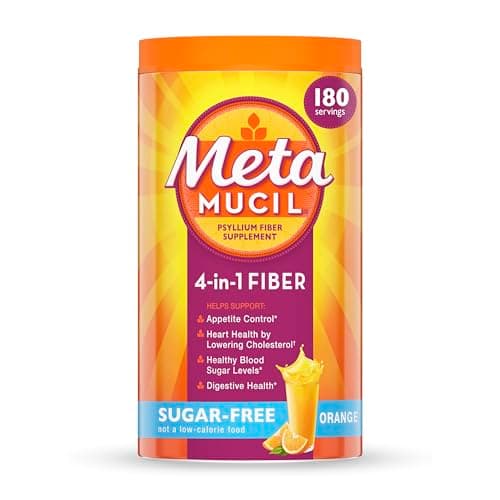
Metamucil — Metamucil Psyllium Husk Fiber (Powder)
Psyllium husk soluble fiber powder · scalable dosing by the teaspoon · flavored and sugar-free options · the psyllium brand behind much of the clinical research · mixes into water
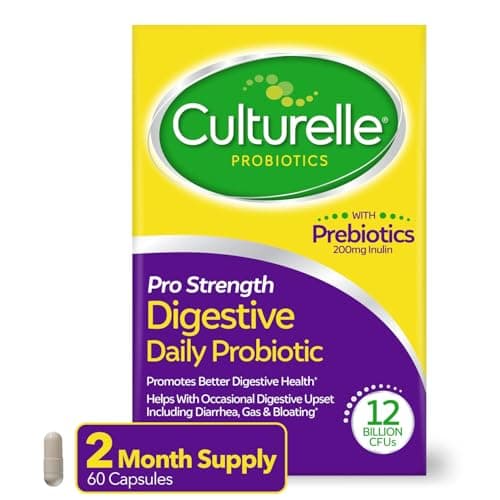
Culturelle — Culturelle Digestive Daily
At a glance
Tap a row to check price · tap a header to sort| # | Best for | Price | ||
|---|---|---|---|---|
| 1 | | Best overall | 8.6/10 | $34.97 |
| 2 | | The probiotic to buy when you have an actual reason | 7.8/10 | $30.99 |
| 3 | 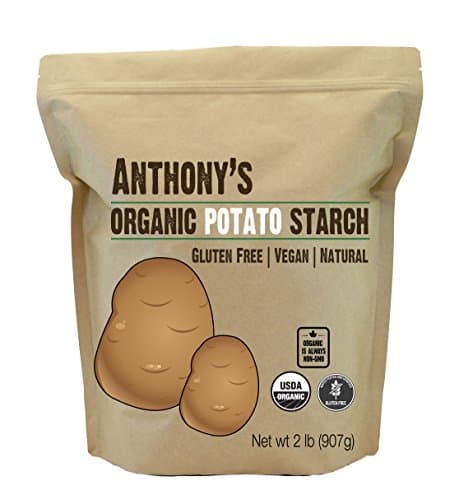 | Best food-first prebiotic | 7.6/10 | $17.19 |
| 4 | 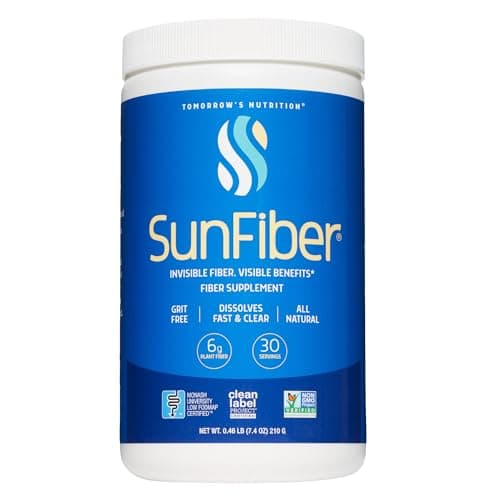 | Best for a sensitive gut | 7.4/10 | $24.99 |
| 5 | 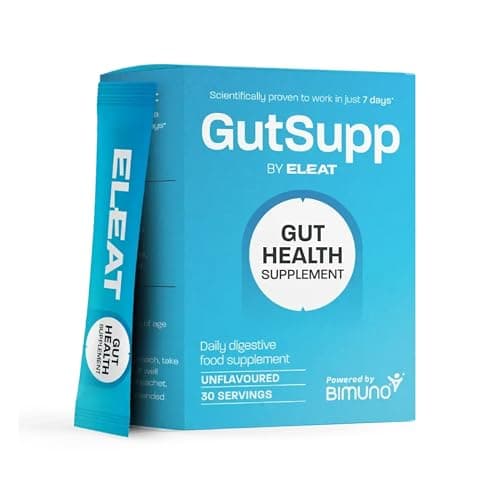 | The best-studied prebiotic | 7.2/10 | $46.60 |
| 6 | 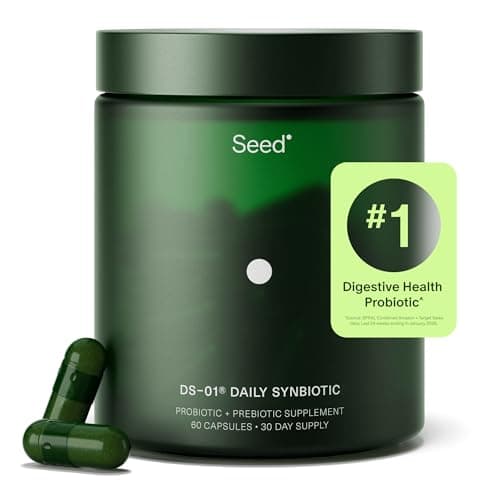 | The most transparent probiotic label on the market | 6.4/10 | $59.99 |
| 7 | 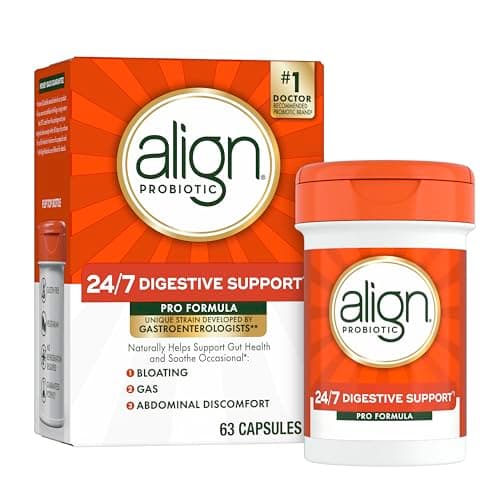 | A well-researched single strain that the guidelines still put inside a clinical trial | 6.2/10 | $59.99 |
Prices pulled from Amazon as of Sep 16, 2026 and are subject to change. The price shown on Amazon at checkout applies.
How we scored
Every product below is scored on six metrics, 0-10 each, with the weighting described on how we review. The criteria specific to this category:
- Evidence for a gut outcome, not a gut mechanism. The bar is a trial showing a change in something you would notice or a clinician would measure — stool regularity, LDL cholesterol, fewer episodes of antibiotic-associated diarrhea — rather than a stool-sample shift in a bacterial genus. Almost every product in this aisle clears the second bar; very few clear the first. This is why a fiber that has been through 28 randomized trials sits above a probiotic that publishes strain-level references, and why increasing Bifidobacteria, real as it is, earns a middling score rather than a high one.
- Dose and tolerability at the amount that works. Fiber and prebiotics only help at doses that most people find uncomfortable at first — gas and bloating are the reason people quit — so we score how gently a product can be introduced and whether the effective dose is realistic to take every day. For probiotics, this metric checks the CFU count against the trial evidence: the Cochrane subgroup analysis found at least 5 billion CFU a day clearly outperformed lower doses, so a 1 billion CFU product is scored against that, however respectable its brand.
- Label honesty. A fiber label should name the fiber; a prebiotic label should name the prebiotic; a probiotic label should list each strain with its research designation, disclose the CFU at the end of shelf life rather than at manufacture, and state the count per strain rather than a blended total. Proprietary blends, marketing words in place of ingredients, and sweeteners or flavors riding along in a product sold as pure fiber all cost points.
- Food-first fit. This site's position is that supplements top up a whole-food diet rather than replace one, so we reward products that behave like food — single-ingredient powders, resistant starch that is chemically what a cooled potato provides, fibers you can stir into a meal — over engineered capsules that make a routine feel medical. It also means we are frank that the highest-scoring product on this page can be partly replaced by a bowl of oats and a can of beans.
- Value at the effective dose. We price the serving that produces the outcome in the trials, not the label serving. This is unkind to premium probiotics, whose price per day is high for a benefit the guidelines cannot recommend to a healthy person, and kind to psyllium and potato starch, which deliver the best-evidenced outcomes on this page for the least money. That is not a coincidence — it is the shape of the evidence.
What to know before buying
- Count your fiber before you buy anything else. The target is about 25 g a day for women and 38 g for men — roughly 14 g per 1,000 calories — and most people are near 15 g. Add up a normal day honestly: if it is mostly meat, eggs, dairy, and protein powder, you are almost certainly short, and a fiber supplement is the one purchase on this page with a large, well-measured benefit. If you already eat beans, oats, vegetables, and fruit daily, you may not need anything here at all.
- Ramp up over two weeks and drink the water. This is the difference between a fiber supplement that works and one that ends up in a cupboard. Gel-forming fibers like psyllium need a full glass of water with every dose, and every fermentable fiber — inulin, GOS, resistant starch, even the gentle ones — produces gas until your bacteria adapt. Start at a third of the label dose, hold for several days, then step up. If you have a GI condition or take medication, ask your doctor first, because fiber can change how and when drugs are absorbed.
- Buy a probiotic for a reason, not a feeling. The narrow, evidence-backed reason is a course of antibiotics: the AGA conditionally suggests Saccharomyces boulardii or specific named strain combinations to prevent antibiotic-associated diarrhea, and Cochrane found a clear reduction in children at doses of 5 billion CFU a day or more. For a healthy adult with no symptoms, no expert body recommends a daily probiotic, and for IBS, Crohn's, and ulcerative colitis the AGA says use them only within a clinical trial. If that is what you were hoping to treat, talk to a gastroenterologist rather than the supplement aisle.
- Read the CFU line the way ODS tells you to. Because probiotics must be alive to do anything and they die during storage, the number that matters is the CFU guaranteed at the end of the product's shelf life, not at the time of manufacture — and a total for a multi-strain blend tells you nothing about how much of any one studied strain you are getting. A label that gives end-of-shelf-life counts per named strain is doing it right. A label that says 50 billion in big type and explains nothing is the one to walk past.
- Fermented food covers the probiotic base for most people. Yogurt and kefir with live cultures, sauerkraut, kimchi, and similar foods supply live microbes along with protein, calcium, and fiber, and ODS names fermented foods as a potential source of beneficial microbes — with the caveat that not every fermented product contains true probiotic organisms. On a high-protein, lower-carb diet, plain full-fat Greek yogurt or kefir is the cheapest and most on-plan way to get there, and it makes the premium capsule largely redundant.
Our picks
Metamucil — Metamucil Psyllium Husk Fiber (Powder)
Key specs: Psyllium husk soluble fiber powder · scalable dosing by the teaspoon · flavored and sugar-free options · the psyllium brand behind much of the clinical research · mixes into water
Pros
- Psyllium has real outcome trials: a 2018 meta-analysis of 28 randomized trials and 1,924 participants found a median ~10.2 g a day lowered LDL cholesterol by 0.33 mmol/L (about 13 mg/dL), graded moderate-quality evidence
- A gel-forming soluble fiber with long-standing evidence for regularity, useful at both ends of the spectrum rather than only as a laxative
- Closes the fiber gap directly — at roughly 15 g a day against a 25-38 g target, most people are further from their fiber goal than from any other nutrient
- Powder lets you start at a fraction of a dose and ramp up, which is the only way fiber gets tolerated, and it is among the cheapest products here per gram
Cons
- Thickens fast once mixed and needs a full glass of water each time — the texture is the reason some people quit
- Flavored SKUs carry sweeteners and the '4-in-1' marketing; choose the plain or sugar-free version if you want just fiber
- Still a supplement: oats, beans, and vegetables deliver the same fiber with everything else a capsule leaves out
Metamucil — Metamucil Psyllium Husk Fiber (Powder)
- Gut evidence10/10
- Dose & tolerability8/10
- Label honesty8/10
- Food-first fit8/10
- Value9/10
Culturelle — Culturelle Digestive Daily
Key specs: Lactobacillus rhamnosus GG, 10 billion CFU, 30-count, shelf-stable
Pros
- Lactobacillus rhamnosus GG is one of the most-studied single probiotic strains in human trials, and a single named strain is the shape of product the evidence supports
- 10 billion CFU clears the 5 billion-a-day threshold the 2019 Cochrane review found made the difference for preventing antibiotic-associated diarrhea
- Cheap per day, shelf-stable, and the label tells you exactly what is in it — no blended total hiding the dose
- A short, situational course is exactly how the evidence says to use it, and a 30-count box matches that use
Cons
- For a healthy adult with no symptoms there is no recommendation from any expert body to take this daily, and no trial that says you should
- Not one of the AGA's named options for preventing C. difficile specifically — that list is Saccharomyces boulardii and a few named combinations
- Single strain by design, which is a strength for evidence and a limitation if you were sold on 'broad spectrum'
Culturelle — Culturelle Digestive Daily
- Gut evidence8/10
- Dose & tolerability9/10
- Label honesty9/10
- Food-first fit5/10
- Value8/10
Anthony's — Anthony's Organic Potato Starch (Unmodified)
Key specs: Unmodified potato starch = raw resistant starch (RS2) · organic, gluten-free, non-GMO · 2 lb bag · must be used cold/unheated to keep the resistant structure · very low cost per serving
Pros
- Chemically the same resistant starch you get from cooked-and-cooled potatoes and rice, which makes it the most whole-food-like product on this page
- Feeds butyrate-producing bacteria — a different fermentation pathway from inulin and GOS — and does it for one of the lowest costs per serving in the whole supplement aisle
- Single-ingredient, organic, with nothing to read on the label except the ingredient
- Lower-carb readers can get the fermentable-fiber effect without the digestible carbohydrate, provided it stays uncooked
Cons
- The evidence is mostly for microbiome and short-chain fatty acid changes rather than for outcomes you would notice, which is why it ranks below psyllium
- Heat destroys the resistant structure, so it only works stirred cold into water or a cool shake — cook it and you have bought regular starch
- Gritty, does not dissolve, and the gas on the way in is real; ramp up from a teaspoon
Anthony's — Anthony's Organic Potato Starch (Unmodified)
- Gut evidence6/10
- Dose & tolerability5/10
- Label honesty10/10
- Food-first fit8/10
- Value9/10
Tomorrow's Nutrition — Sunfiber (Tomorrow's Nutrition) — Partially Hydrolyzed Guar
Key specs: Partially hydrolyzed guar gum (PHGG) soluble fiber · flavorless, dissolves clear · marketed as low-FODMAP and gentle · prebiotic · mixes into any drink or food
Pros
- Slow-fermenting and low-FODMAP, so it is the fiber most likely to be tolerated by someone whose gut rebels against everything else on this list
- Flavorless and dissolves clear with no gel, no grit, and no thickening — it disappears into coffee, water, or a protein shake
- A genuine soluble prebiotic fiber, not a marketing blend, and the label says so
Cons
- Does not carry psyllium's outcome evidence for LDL cholesterol or regularity — it is the tolerable option, not the best-evidenced one
- Noticeably more expensive per gram of fiber than psyllium or potato starch
- Gentler is not gas-free; the ramp-up rule still applies
Tomorrow's Nutrition — Sunfiber (Tomorrow's Nutrition) — Partially Hydrolyzed Guar
- Gut evidence7/10
- Dose & tolerability10/10
- Label honesty9/10
- Food-first fit6/10
- Value5/10
Bimuno — Bimuno GutSupp Prebiotic (GOS)
Key specs: Galactooligosaccharides (GOS) prebiotic · the specific prebiotic class with some of the deepest human research on Bifidobacteria · tasteless, soluble · daily-serving format
Pros
- GOS has some of the deepest human research of any prebiotic for reliably increasing beneficial Bifidobacteria, and Bimuno is the branded GOS used in much of it
- A real, named prebiotic at a stated dose — the opposite of a 'prebiotic blend' — and it meets the ISAPP definition of a substrate selectively used by host microbes
- Tasteless and soluble, and better tolerated than inulin at comparable doses for many people
Cons
- Raising Bifidobacteria in a stool sample is a mechanism story; the trials do not show an everyday outcome the way the psyllium trials do, and the site scores that difference deliberately
- The most expensive per serving of the fiber and prebiotic products here by a wide margin
- Still fermentable — introduce it gradually
Bimuno — Bimuno GutSupp Prebiotic (GOS)
- Gut evidence8/10
- Dose & tolerability8/10
- Label honesty9/10
- Food-first fit6/10
- Value5/10
Seed — Daily Synbiotic (DS-01)
Key specs: 24 named strains, 53.6 billion AFU end-of-shelf-life, 2-in-1 capsule with inner prebiotic coating, 30-day subscription
Pros
- Does the label the way ODS says it should be done: every strain named with its designation, and the live count guaranteed at the end of shelf life rather than at manufacture
- Shelf-stable, with a capsule design intended to get organisms past stomach acid
- Publishes its strain references, which is more than almost any competitor manages
Cons
- Transparency is not evidence: a 24-strain combination is 24 strain-specific claims, and the combination itself has not been through the kind of outcome trials that would put it in a guideline
- The AGA guideline offers no recommendation for probiotics in healthy people, and its situational recommendations name other strains — so the premium price is buying label quality rather than a demonstrated result
- Subscription-only and among the most expensive per day of anything the site reviews; plain kefir covers most of the same ground for a fraction of the cost
Seed — Daily Synbiotic (DS-01)
- Gut evidence6/10
- Dose & tolerability9/10
- Label honesty9/10
- Food-first fit4/10
- Value4/10
Align — Align Probiotic Supplement
Key specs: Bifidobacterium 35624, 1 billion CFU, 28-count, shelf-stable
Pros
- A single named strain with published symptom trials behind it, which is the honest shape for a probiotic product
- Shelf-stable and widely available, with a label that does not hide the strain or the dose
Cons
- The research is aimed at IBS symptoms, and for IBS the 2020 AGA guideline recommends using probiotics only in the context of a clinical trial — this is a conversation for a gastroenterologist, not a shelf purchase
- 1 billion CFU sits well under the 5 billion-a-day level the Cochrane analysis found mattered for antibiotic-associated diarrhea, so it is not the pick for that use either
- Expensive per day for a low-count single strain; Culturelle delivers ten times the CFU for less
Align — Align Probiotic Supplement
- Gut evidence6/10
- Dose & tolerability9/10
- Label honesty8/10
- Food-first fit4/10
- Value4/10
Frequently asked questions
Fiber, and specifically psyllium husk, for the unglamorous reason that it fixes the gap most people actually have. National guidance sets the adult target at about 25 g a day for women and 38 g for men, and most people land near 15 g. Psyllium is a gel-forming soluble fiber with real outcome trials: a 2018 meta-analysis of 28 randomized trials found about 10 g a day lowered LDL cholesterol by 0.33 mmol/L, and it has long-standing evidence for regularity. It costs cents per serving. Nothing else in the category — including every probiotic — has evidence of that size for a benefit that broad. Start at a third of the label dose with a full glass of water and ramp up over two weeks.
Related reading
- → How much fiber per day (the 25 g / 38 g targets, and how to hit them with food)
- → How to read a supplement label
- → Seed vs Culturelle
- → AG1 vs Seed
- → Best fiber supplements (psyllium and the alternatives, in depth)
- → Best prebiotic supplements
- → Best probiotics (strain-by-strain scoring)
- → Best greens powders (food-based fiber, honestly scored)
- → Best supplements for immune support
Sources
- AGA Clinical Practice Guidelines on the Role of Probiotics in the Management of Gastrointestinal Disorders (Su GL et al., Gastroenterology 2020;159(2):697-705 — IBS, Crohn's disease, ulcerative colitis and C. difficile treatment: probiotics only in the context of a clinical trial; suggests against use in children with acute infectious gastroenteritis; conditionally suggests S. boulardii or named strain combinations to prevent C. difficile in adults and children on antibiotics, low-quality evidence) — American Gastroenterological Association / Gastroenterology, 2020
- Probiotics for the prevention of pediatric antibiotic-associated diarrhea (Guo Q et al., Cochrane Database Syst Rev 2019;4:CD004827 — 33 studies, 6,352 participants; incidence 8% vs 19%, RR 0.45, NNTB 9, moderate-certainty evidence; high dose ≥5 billion CFU/day 8% vs 23%, NNTB 6) — Cochrane, 2019
- Effect of psyllium (Plantago ovata) fiber on LDL cholesterol and alternative lipid targets: a systematic review and meta-analysis of randomized controlled trials (Jovanovski E et al., Am J Clin Nutr 2018;108(5):922-932 — 28 trials, n = 1,924; median ~10.2 g/day; LDL −0.33 mmol/L, 95% CI −0.38 to −0.27; moderate-quality evidence) — American Journal of Clinical Nutrition, 2018
- Probiotics — Fact Sheet for Health Professionals (no formal recommendations for or against probiotic use in healthy people; effects are strain-specific; look for CFU at the end of shelf life, not at manufacture; fermented foods as a potential source of beneficial microbes) — NIH Office of Dietary Supplements
- Dietary Guidelines for Americans, 2020-2025 — dietary fiber recommendations (~14 g per 1,000 kcal; ~25 g women / ~38 g men) — USDA / HHS, 2020
- The International Scientific Association for Probiotics and Prebiotics (ISAPP) consensus statement on the definition and scope of prebiotics (Gibson GR et al., Nat Rev Gastroenterol Hepatol 2017) — Nature Reviews Gastroenterology & Hepatology, 2017
- Probiotics and prebiotics — global guidelines (strain-, dose- and indication-specific use) — World Gastroenterology Organisation, 2023
Last verified: September 16, 2026. See our editorial policy and how we review for details on scoring and update cadence. Canonical URL: https://trustedhealthgear.com/reviews/best-supplements-for-gut-health.
Metamucil — Metamucil Psyllium Husk Fiber (Powder)
$34.97 · on Amazon