The Best Plant-Based Protein Powders for Vegans and the Dairy-Free
Plant-based protein used to be a compromise — gritty, chalky, and short on the amino acids that actually build muscle. That's largely fixed now, but the marketing has raced ahead of the substance, so buying well still takes a skeptical eye. Here's the honest baseline: for most people who tolerate dairy, whey is cheaper per gram, tastes better, and has a naturally higher leucine content, which is the amino acid that flips on muscle protein synthesis. Plant proteins can absolutely match it for building and keeping muscle — the research is clear that total daily protein matters far more than the source — but you have to buy them correctly. A single plant source like pea is a strong, near-complete protein; combining sources (pea plus rice is the classic) rounds out the amino acid profile even further; and because plant proteins are lower in leucine than whey, a slightly larger scoop (aim for the 25-30g protein serving) closes the gap. Two other things separate a good plant protein from a bad one. First, the label should be short and honest — real protein sources, minimal gums and fillers, no proprietary blend hiding the doses, and ideally organic to cut pesticide load. Second, and specific to this category, plant proteins (rice protein especially) have been repeatedly flagged for heavy-metal contamination, so third-party testing is worth a real premium — an NSF Certified for Sport or Informed Sport seal is the gold standard, particularly if you're a tested athlete. We ranked these on protein quality and amino profile, label cleanliness, third-party testing, taste and texture, and value. Whole food first, as always: beans, lentils, tofu, tempeh, and edamame should carry most of a plant-based diet's protein. A powder is the convenient top-up around training and busy days, not the foundation.
Top pick
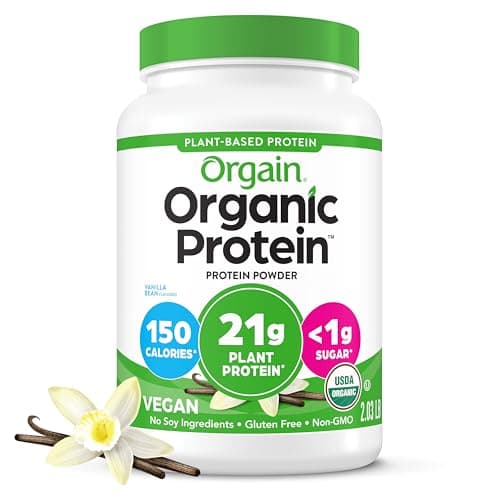
Orgain — Orgain Organic Vegan Protein Powder (21g)
21g protein per scoop from organic pea, brown rice, and chia/hemp · USDA Organic · vegan, gluten-, dairy-, and soy-free · lightly sweetened with stevia/erythritol · multiple flavors · 2.03 lb tub
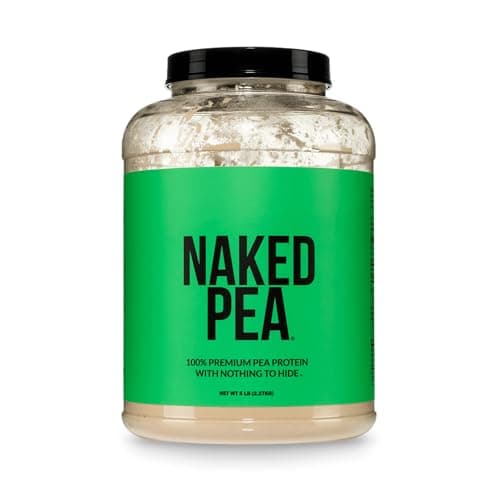
Naked Nutrition — Naked Pea Protein (Unflavored Isolate, 5 lb)
At a glance
Tap a row to check price · tap a header to sort| # | Best for | Price | ||
|---|---|---|---|---|
| 1 | | Best overall | 8.5/10 | $31.98 |
| 2 | | Best minimal-ingredient pick | 8.4/10 | $57.99 |
| 3 | 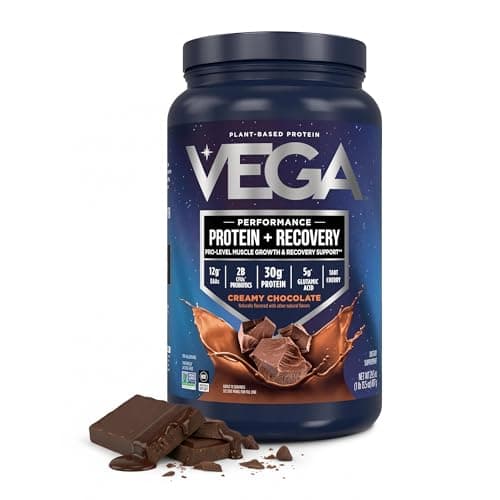 | Best for tested athletes | 8.1/10 | $44.99 |
| 4 | 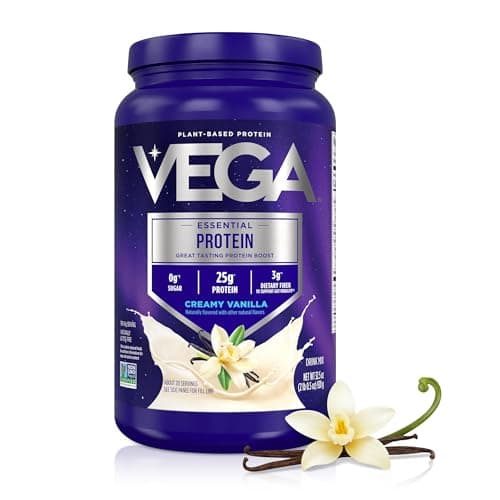 | Best everyday blend | 8/10 | $26.99 |
| 5 | 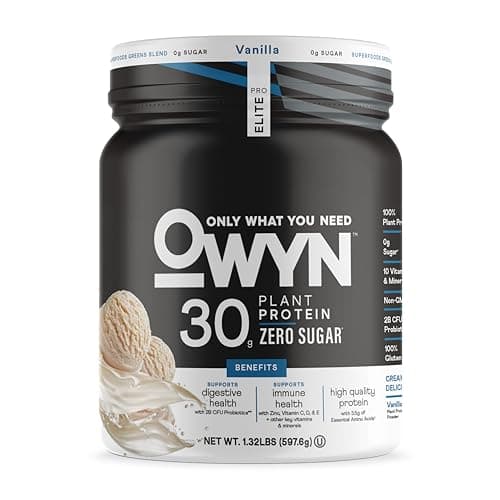 | Best allergen-friendly | 7.8/10 | $22.12$24.97 |
| 6 | 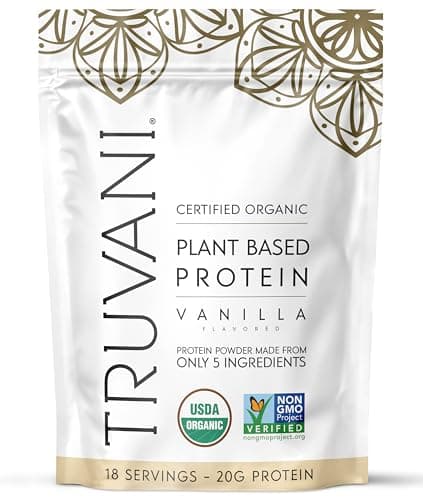 | Best clean-label organic option for ingredient minimalists | 7.5/10 | $40.87$44.99 |
| 7 | 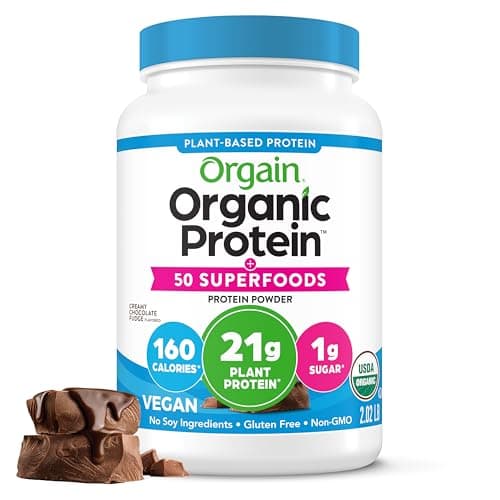 | Best if you want greens folded into your protein | 7.3/10 | $34.99 |
Prices pulled from Amazon as of Sep 16, 2026 and are subject to change. The price shown on Amazon at checkout applies.
How we scored
Every product below is scored on six metrics, 0-10 each, with the weighting described on how we review. The criteria specific to this category:
- Protein quality and amino acid profile. Plant proteins vary in completeness and in leucine, the trigger for muscle building. Pea protein is high-quality and nearly complete on its own; pea-plus-rice (or other) blends round out the profile further; single soy is complete but polarizing. Because plant sources run lower in leucine than whey, we favor formulas that deliver a genuine 20-30g of protein per scoop and note where a slightly larger serving is needed to match dairy protein gram-for-gram.
- Clean, honest label — minimal fillers, no proprietary blend. The best plant proteins read like a short recipe: one or two protein sources, a natural flavor and sweetener, maybe a gum for texture. We mark down long ingredient lists padded with gums, 'natural flavors' stacks, and — worst of all — proprietary blends that hide how much of each protein source you actually get. Organic certification is a plus for lowering pesticide exposure.
- Third-party testing (heavy metals matter here). This is the category's real safety issue: plant proteins, and rice protein in particular, have been repeatedly flagged by independent labs for heavy metals (lead, cadmium, arsenic) concentrated from soil. An NSF Certified for Sport or Informed Sport seal — or a brand that publishes heavy-metal panels — is worth a genuine premium, more so than for most supplements and especially for daily, long-term use or drug-tested athletes.
- Taste and texture. Modern plant proteins are far better than the old chalk, but they're still generally earthier and grittier than whey, and pea protein has a distinctive taste some people dislike. We reward blends that mix smoothly and taste clean without burying the formula in sugar, and we're honest that most plant proteins are best in a smoothie or with milk alternative rather than shaken in plain water.
- Digestibility and add-ins. Some people find pea protein easier on the stomach than whey; others react to specific gums or added fibers. We note where a formula is deliberately allergen-friendly (free of dairy, soy, gluten, and top allergens), where added digestive enzymes or fiber appear, and where 'superfood' add-ins are really just marketing padding you don't need to pay for.
- Value per gram of protein. Plant proteins are usually pricier per gram than whey, so value matters. We calculate cost per gram of protein (not per scoop or per tub) and reward formulas that deliver a clean, tested, complete protein cheaply, while flagging premium tubs whose price buys superfood claims and packaging rather than more or better protein.
What to know before buying
- For building muscle, total daily protein beats the source — plant works. The research consensus is that if you hit your daily protein target (roughly 0.7-1.0 g per pound of bodyweight for people training hard), you build and keep muscle whether that protein comes from whey or plants. Plant proteins are lower in leucine, so the simple fix is a slightly bigger serving — aim for 25-30g of protein and you erase most of the theoretical gap. Don't let anyone tell you plant protein 'doesn't work'; buy a good one, eat enough total protein, and train hard.
- Pea is the best single plant source; a blend is even better. Pea protein is high-quality, nearly complete, and usually the backbone of the best formulas. Combining it with another source — rice is the classic pairing — fills in the amino acids each is slightly short on and gives you a more complete profile. If you want the simplest, cleanest option, a pure pea isolate is excellent; if you want the most rounded amino profile, choose a pea-plus-rice (or multi-source) blend. Either beats a single rice protein on quality.
- Heavy-metal testing is the one place to spend up. Rice protein especially has a documented heavy-metal problem, and plant proteins in general concentrate what's in the soil. This is the rare supplement where an NSF Certified for Sport or Informed Sport seal genuinely earns its premium — it screens for contaminants and banned substances. If you take a scoop every day, are pregnant or nursing, or compete in a tested sport, treat third-party testing as a requirement, not a nice-to-have.
- Read the label for real protein per scoop, not the tub's headline. Some 'plant protein' tubs pad the scoop with fiber, gums, and superfood powders so the protein-per-serving is lower than the marketing implies. Check the nutrition panel: you want a genuine 20-30g of protein per scoop from named sources, not 15g of protein hiding inside a big scoop of blend. And prefer a short ingredient list — a clean pea/rice protein with a natural flavor beats a sprawling formula every time.
- Whole food first — the powder is a top-up. Beans, lentils, tofu, tempeh, edamame, and seitan should carry most of the protein on a plant-based diet; they bring fiber and a food matrix a powder can't. Use a plant protein powder to conveniently top up around training or on days you fall short, not as the foundation. That's the same rule the whole site applies to every supplement: it supplements a real diet, it doesn't replace one.
Our picks
Orgain — Orgain Organic Vegan Protein Powder (21g)
Key specs: 21g protein per scoop from organic pea, brown rice, and chia/hemp · USDA Organic · vegan, gluten-, dairy-, and soy-free · lightly sweetened with stevia/erythritol · multiple flavors · 2.03 lb tub
Pros
- A multi-source organic blend (pea plus rice and seeds) gives a well-rounded amino profile, and 21g per scoop is a solid base you can bump to 25-30g with a bigger serving
- USDA Organic and free of dairy, soy, and gluten — one of the most accessible, tolerable, and widely stocked plant proteins for beginners
- Mixes and tastes better than most plant proteins, which is the difference between a tub you finish and one you abandon
- Fair price per gram for an organic, multi-source formula
Cons
- 21g per scoop is a touch low for plant protein — use a heaping or 1.5x scoop to reach the 25-30g that closes the leucine gap
- Uses stevia and erythritol; people sensitive to sugar alcohols or the taste of stevia may not love it
- Publishes limited third-party contaminant data compared with NSF-certified options — verify current testing if daily use is your plan
Orgain — Orgain Organic Vegan Protein Powder (21g)
- Protein quality8/10
- Clean label8/10
- Testing7/10
- Taste/texture8/10
- Value8/10
Naked Nutrition — Naked Pea Protein (Unflavored Isolate, 5 lb)
Key specs: Single-ingredient yellow pea protein isolate · ~27g protein per scoop · no sweeteners, flavors, or gums (unflavored) · vegan, non-GMO · 5 lb tub · brand publishes heavy-metal testing
Pros
- Exactly what the owner's 'minimal ingredients, no proprietary blend' rule asks for: one ingredient — pea protein isolate — and nothing else
- A generous ~27g of protein per scoop puts it above the leucine-gap threshold without any scoop math
- Naked publishes third-party heavy-metal testing, which is the single most important thing for a plant (and pea) protein
- Huge 5 lb tub drives the cost per gram of protein down despite the clean formula
Cons
- Unflavored pea protein is earthy and best blended into a smoothie with fruit or a milk alternative — it's a rough drink in plain water
- Single-source pea is excellent but a pea/rice blend has a marginally more rounded amino profile
- No flavor options in this SKU means you're doing your own flavoring
Naked Nutrition — Naked Pea Protein (Unflavored Isolate, 5 lb)
- Protein quality8/10
- Clean label10/10
- Testing8/10
- Taste/texture6/10
- Value9/10
Vega — Vega Protein + Recovery (NSF Certified for Sport)
Key specs: ~30g protein blend (pea and others) plus carbs and electrolytes for post-workout recovery · NSF Certified for Sport · vegan, dairy- and gluten-free · added probiotics · chocolate and other flavors
Pros
- NSF Certified for Sport is the gold-standard seal — it screens for banned substances and contaminants batch by batch, which is exactly what a drug-tested athlete needs from a plant protein
- Around 30g of protein plus recovery carbs and electrolytes makes it a genuine post-training formula, not just protein
- Backed by one of the most established plant-protein brands with real testing infrastructure
Cons
- The added carbs and 'recovery' extras mean a higher calorie count than a plain protein — great post-workout, less ideal as an all-day protein top-up
- More expensive per gram of protein than a plain pea isolate; you're paying for the certification and the recovery add-ins
- The formula is longer and less minimal than a single-ingredient isolate
Vega — Vega Protein + Recovery (NSF Certified for Sport)
- Protein quality8/10
- Clean label6/10
- Testing10/10
- Taste/texture7/10
- Value6/10
Vega — Vega Essential Protein (25g)
Key specs: 25g protein per serving from a pea-forward blend · vegan, dairy- and gluten-free · added vitamins/minerals on some SKUs · lightly sweetened · vanilla, chocolate and more
Pros
- A full 25g of protein per serving lands right at the level that closes the plant-vs-whey leucine gap without extra scoop math
- Pea-forward multi-source blend gives a rounded amino profile, and the taste is among the more drinkable in the category
- From an established brand with broad availability and consistent quality
Cons
- Not the certified-for-sport SKU — if you're drug-tested, choose Vega's NSF Certified for Sport line instead
- Contains added vitamins and flavor systems, so it's less minimal than a plain isolate
- Mid-pack on price per gram; fine value but not the cheapest
Vega — Vega Essential Protein (25g)
- Protein quality8/10
- Clean label7/10
- Testing7/10
- Taste/texture8/10
- Value7/10
OWYN — OWYN Pro Elite High Protein Powder (30g)
Key specs: ~30g protein from a pea/pumpkin blend · free of top allergens (dairy, soy, gluten, tree nuts, peanut, egg) · vegan · added greens on some SKUs · marketed 'Only What You Need'
Pros
- A big 30g of protein per scoop clears the leucine-gap threshold comfortably — strong for building and keeping muscle on a plant diet
- Deliberately free of the top allergens, which makes it a rare safe option for people with multiple sensitivities
- Pea/pumpkin blend gives a rounded profile and mixes reasonably well
Cons
- Some SKUs fold in greens and extras that pad the label — check the panel if you want a pure protein
- Priced at a premium for the high protein and allergen-friendly positioning
- Verify current third-party contaminant testing, as with any plant protein
OWYN — OWYN Pro Elite High Protein Powder (30g)
- Protein quality8/10
- Clean label7/10
- Testing7/10
- Taste/texture7/10
- Value6/10
Truvani — Truvani Organic Plant-Based Protein
Key specs: Organic pea protein base with a short ingredient list · no added sugar, no gums or 'natural flavors' stacks on the cleanest SKUs · vegan, non-GMO · ~18-20g protein · smaller tubs
Pros
- Among the shortest, most honest ingredient lists in the category — squarely aligned with the 'minimal ingredients, no fairy dust' philosophy
- Organic and free of the artificial flavor-and-sweetener stacks many competitors rely on
- A good pick for people who react to gums, sugar alcohols, or long formulas
Cons
- Protein per scoop (~18-20g) runs lower than the high-protein picks, so plan on a bigger serving to hit 25-30g
- The most expensive per gram of protein here — you pay a real premium for the clean label and small-batch positioning
- Minimal formulation means an earthier taste that's best blended, not shaken in water
Truvani — Truvani Organic Plant-Based Protein
- Protein quality7/10
- Clean label9/10
- Testing7/10
- Taste/texture6/10
- Value5/10
Orgain — Orgain Organic Vegan Protein + Superfoods
Key specs: Organic pea/rice protein plus an added greens-and-superfoods blend · USDA Organic · vegan, dairy- and gluten-free · ~2 lb tub · chocolate and other flavors
Pros
- Combines a solid organic plant protein with a greens blend, which can be a convenient one-scoop option for people who want both
- USDA Organic and from a widely available, tolerable brand
- Reasonable value for a combined protein-plus-greens product
Cons
- The 'superfoods' blend is the kind of padding the owner's philosophy is skeptical of — a pinch of many greens, undosed, rather than a meaningful serving
- Combining protein and greens means you can't dose each independently; a separate protein and greens powder gives you more control
- Protein per scoop is diluted slightly by the added blend versus a pure protein
Orgain — Orgain Organic Vegan Protein + Superfoods
- Protein quality7/10
- Clean label6/10
- Testing7/10
- Taste/texture7/10
- Value7/10
Frequently asked questions
For building and keeping muscle, what matters most is total daily protein, and on that measure plant protein works. The one real difference is that plant proteins are lower in leucine — the amino acid that triggers muscle protein synthesis — so gram-for-gram whey has a slight edge. The fix is simple: take a slightly larger serving (aim for 25-30g of protein) and, ideally, choose a blend like pea plus rice for a more complete amino profile. Do that, hit your daily protein target, and train hard, and plant protein builds muscle just fine. Whey is cheaper and tastes better for people who tolerate dairy, but 'plant protein doesn't work' is a myth.
Related reading
- → How to choose a protein powder (type, testing, and fillers)
- → Daily protein requirements (how much you actually need)
- → Whey vs plant protein (which is right for you)
- → Whey isolate vs concentrate (if you also tolerate dairy)
- → Best protein powders overall (including whey)
- → Best creatine (the other proven performance basic)
Sources
- International Society of Sports Nutrition Position Stand: protein and exercise (total daily protein and leucine content drive muscle protein synthesis; plant sources work when dose and quality are adequate) — Journal of the International Society of Sports Nutrition
- Protein quality of plant vs animal sources and leucine thresholds (plant proteins are lower in leucine; larger doses or blends compensate) — PMC / U.S. National Library of Medicine
- NSF Certified for Sport — third-party certification screening for banned substances and contaminants — NSF International
- Heavy metals in plant-based and rice protein powders — independent testing reports — Clean Label Project / consumer testing reports
Last verified: August 2, 2026. See our editorial policy and how we review for details on scoring and update cadence. Canonical URL: https://trustedhealthgear.com/reviews/best-plant-protein.
Orgain — Orgain Organic Vegan Protein Powder (21g)
$31.98 · on Amazon