Is Pea Protein a Complete Protein?
Yes — and the catch matters more than the label. Pea protein contains all nine essential amino acids, which is the textbook definition of a complete protein, so anyone telling you it is incomplete is using a stricter definition than nutrition science does. What is true is that pea protein is relatively low in methionine. Methionine is pea's limiting amino acid: the one present in the smallest proportion relative to what your body wants, and therefore the one that caps how much of the rest can be used in a single feeding. That is why pea scores below whey on DIAAS, the FAO's current protein-quality metric, and it is the real content behind every incomplete claim you have read. The practical consequence is not that you need a blend, a formula, or an amino acid supplement. It is that your scoop needs to be bigger. The plant protein literature points consistently in one direction: plant sources support muscle building and maintenance when the dose is large enough to clear the leucine threshold, which in practice means 25-30 g per serving rather than the 18-21 g many tubs put in a scoop. So our pick for anyone acting on this page is Naked Pea Protein Isolate, which puts roughly 27 g in one scoop and has a single-ingredient label. If you would rather the blend do the patching for you, Orgain Organic Vegan pairs pea with brown rice — a genuinely methionine-richer source — and that combination is the one real mechanism behind the word blend. And if you want the biggest dose per scoop, OWYN Pro Elite delivers 30 g from pumpkin seed, chia and pea. Anything beyond that — a sprinkle of quinoa, a proprietary amino matrix — is label length, not amino acids.
Affiliate disclosure: Trusted Health Gear is an Amazon Associate. If you buy through links on this page, we may earn a commission at no extra cost to you. Commission does not influence our rankings. Full policy.
What 'complete protein' actually means, and why the term is misleading
A complete protein is one that contains all nine essential amino acids — histidine, isoleucine, leucine, lysine, methionine, phenylalanine, threonine, tryptophan and valine — the ones your body cannot synthesise and must get from food. Pea protein contains all nine. By that definition, which is the one used in nutrition textbooks and by dietitians, pea protein is complete, and so are soy, quinoa, buckwheat and most other sources people call incomplete. The term is misleading because it is binary and the underlying reality is continuous. What actually varies between protein sources is the proportion of each amino acid relative to human requirements, and whether any single one falls short enough to limit how much of the rest gets used. That shortfall is called the limiting amino acid, and every protein source has one. For pea, it is methionine. For most grains, it is lysine — which is precisely why pea and rice are a classic pairing: pea is lysine-rich and methionine-poor, rice is the opposite shape, and together they cover each other. So the useful question is never whether a protein is complete. It is how much of it you need to eat to get an adequate amount of its limiting amino acid.
DIAAS: the number that replaced the complete/incomplete argument
The modern way to score protein quality is DIAAS — the Digestible Indispensable Amino Acid Score — which the FAO recommended as the successor to the older PDCAAS method. DIAAS works by comparing the digestible amount of each indispensable amino acid in a food against a reference pattern for human requirements, and then taking the lowest-scoring one. The score is therefore set by the limiting amino acid, which is exactly the concept above expressed as a number. Two properties of DIAAS are worth knowing. First, it is measured at the end of the small intestine rather than from faecal nitrogen, which makes it a better proxy for what your body actually absorbs. Second, it is not capped at 1.0 the way PDCAAS was, so a high-quality animal protein can score above a plant protein by a visible margin instead of both being truncated to the same ceiling. In practice, dairy and egg proteins score at the top, soy sits in the middle of the plant range, and pea protein sits below dairy primarily on methionine. None of which means pea protein does not work — it means the dose has to be larger to deliver the same amount of the limiting amino acid.
The real fix is scoop size, not a blend
Here is the arithmetic that makes this practical. If pea protein's limiting amino acid is present at, say, three-quarters of the ideal proportion, then a serving three-quarters as useful can be made equivalent by eating about a third more of it. That is the whole mechanism. The plant-protein research supports the same conclusion from the other end: trials comparing plant and animal protein for muscle outcomes tend to converge when the plant dose is scaled up, and the ISSN's position stand on protein and exercise frames the question around total daily protein and leucine content rather than source. Translated into shopping advice: treat 25 g as the floor for a pea protein serving and 30 g as comfortable, against the 20-25 g you would accept from whey. This is why scoop size is the metric our pea protein roundup ranks hardest on, and why a 21 g scoop at the same tub price as a 30 g scoop is not the bargain it looks like. A blend helps — a pea-and-rice product genuinely does improve the amino profile — but a bigger serving of pure pea isolate achieves the same thing without a longer label.
The pea proteins that solve the dose problem
Every pick below is already reviewed and scored in our roundups — same products, same specs, with live Amazon prices.
| Attribute | Naked Nutrition Naked Pea Protein (Unflavored Isolate, 5 lb)Our pick | Orgain Orgain Organic Vegan Protein Powder (21g) | OWYN OWYN Pro Elite High Protein Powder (30g) | Vega Vega Protein + Recovery (NSF Certified for Sport) |
|---|---|---|---|---|
| Best for | Best minimal-ingredient pick — one ingredient, no fillers, big tub | Best overall — organic, widely available, and easy to actually drink | Best allergen-friendly, high-protein pick | Best for tested athletes — third-party certified for banned substances |
| Who it's for | For anyone acting on this page: roughly 27 g of protein in one scoop clears the dose threshold without scoop math, the label is a single ingredient, and Naked publishes heavy-metal testing — which matters more for a pea protein than the completeness question does. | For the person who wants the blend to do the patching. Pea plus brown rice is the genuine mechanism behind the word blend — rice is methionine-richer where pea is short — and it is the most drinkable option here. Use a heaping scoop to get past 21 g. | For the biggest dose per scoop at 30 g, and for anyone with multiple allergies — free of dairy, soy, gluten, peanut, tree nut and egg. The pumpkin seed and chia alongside the pea round out the profile; the greens and vitamin blend is padding you tolerate. | For drug-tested athletes, where an uncertified plant protein is a risk you cannot assess yourself. NSF Certified for Sport means batch-level screening for banned substances and contaminants — the best heavy-metal assurance available in this category. |
| Key specs | Single-ingredient yellow pea protein isolate · ~27g protein per scoop · no sweeteners, flavors, or gums (unflavored) · vegan, non-GMO · 5 lb tub · brand publishes heavy-metal testing | 21g protein per scoop from organic pea, brown rice, and chia/hemp · USDA Organic · vegan, gluten-, dairy-, and soy-free · lightly sweetened with stevia/erythritol · multiple flavors · 2.03 lb tub | 30g protein from organic pumpkin seed, chia and pea · all nine essential amino acids · free of dairy, soy, gluten, peanut, tree nut and egg · vegan and non-GMO Project Verified · zero sugar · this SKU also carries a kale/spinach/broccoli greens blend, 10 vitamins and minerals, omega-3 and 2B CFU probiotics · 12 servings (1.32 lb) | ~30g protein blend (pea and others) plus carbs and electrolytes for post-workout recovery · NSF Certified for Sport · vegan, dairy- and gluten-free · added probiotics · chocolate and other flavors |
| Our score | 8.4/10 | 8.5/10 | 7.8/10 | 8.1/10 |
| Where to buy |
Prices pulled from Amazon as of October 18, 2026 and are subject to change. The price shown on Amazon at checkout applies.
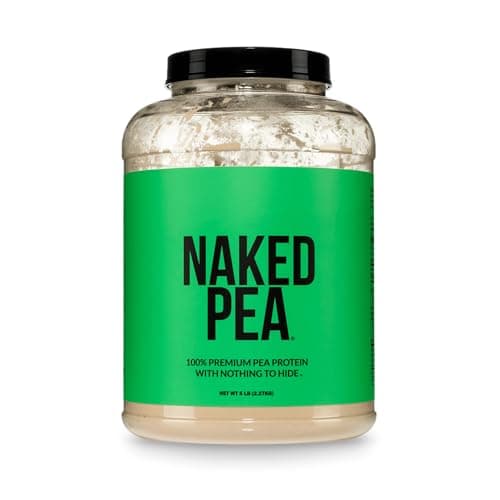
Naked Nutrition — Naked Pea Protein (Unflavored Isolate, 5 lb)
For anyone acting on this page: roughly 27 g of protein in one scoop clears the dose threshold without scoop math, the label is a single ingredient, and Naked publishes heavy-metal testing — which matters more for a pea protein than the completeness question does.
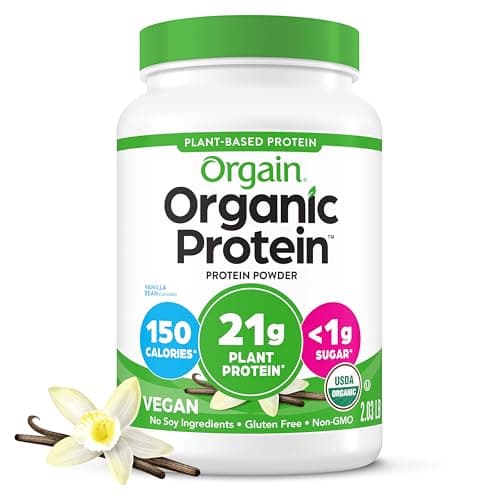
Orgain — Orgain Organic Vegan Protein Powder (21g)
For the person who wants the blend to do the patching. Pea plus brown rice is the genuine mechanism behind the word blend — rice is methionine-richer where pea is short — and it is the most drinkable option here. Use a heaping scoop to get past 21 g.
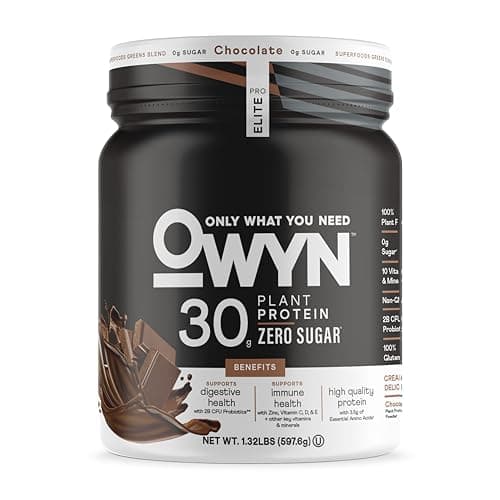
OWYN — OWYN Pro Elite High Protein Powder (30g)
For the biggest dose per scoop at 30 g, and for anyone with multiple allergies — free of dairy, soy, gluten, peanut, tree nut and egg. The pumpkin seed and chia alongside the pea round out the profile; the greens and vitamin blend is padding you tolerate.
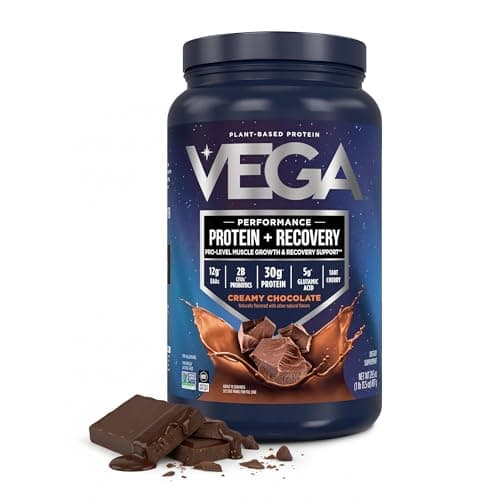
Vega — Vega Protein + Recovery (NSF Certified for Sport)
For drug-tested athletes, where an uncertified plant protein is a risk you cannot assess yourself. NSF Certified for Sport means batch-level screening for banned substances and contaminants — the best heavy-metal assurance available in this category.
What this means over a whole day, not a single meal
The complete-protein anxiety mostly comes from an outdated idea: that you must combine complementary plant proteins within the same meal or the amino acids go to waste. That framing has not held up. Your body maintains a free amino acid pool, and amino acids from a morning meal are still available to combine with amino acids from an afternoon one, so the relevant window for complementarity is the day rather than the plate. For anyone eating a varied diet — legumes, grains, nuts, seeds, vegetables — methionine shows up from the grains and nuts while lysine shows up from the legumes, and the whole question dissolves. Where it remains worth thinking about is at the extremes: a very low-variety diet, a very low total protein intake, or a single enormous pea-protein serving relied on as the day's main protein source. If that last one describes you, the sensible adjustments are to vary the protein sources across the day and to make the serving 30 g rather than 18 g. None of this requires buying an amino acid supplement, and a proprietary amino matrix added to a protein powder is the clearest sign you are paying for marketing.
Pea protein's actual strengths, which get lost in this argument
Spending a whole page on methionine undersells what pea protein is good at, so for balance: it is relatively rich in lysine and in the branched-chain amino acids, it is well tolerated by most people because the isolate is largely stripped of the fermentable carbohydrates that make whole legumes gassy, it is dairy- and soy-free, and it is by far the cheapest high-quality plant protein to manufacture at scale — which is why it is the base of almost every product in the plant protein aisle regardless of what the front of the bag advertises. It is also a straightforward label when brands let it be: a one-ingredient isolate is about as simple as a supplement gets. The one genuine caution is unrelated to amino acids. Plants concentrate what is in the soil they grew in, and independent testing programs have repeatedly reported higher heavy-metal levels in plant-based protein powders than in whey-based ones, so published batch testing or a third-party certification such as NSF Certified for Sport is worth more in this category than in any other. That, rather than the completeness question, is what we would actually screen on.
Frequently asked questions
Yes. Pea protein contains all nine essential amino acids, which is the standard definition of a complete protein, so the common claim that it is incomplete is simply using a stricter test than nutrition science does. The real point hiding behind that claim is that methionine is pea protein's limiting amino acid — present in a smaller proportion than the pattern human requirements call for — which caps how much of the rest can be used in a single feeding and is why pea scores below dairy protein on DIAAS. The practical consequence is a larger serving, not a different product: aim for 25-30 g of pea protein per serving rather than the 18-21 g many scoops contain.
Related reading
Sources
- Dietary protein quality evaluation in human nutrition — FAO expert consultation recommending DIAAS, the limiting amino acid concept, and the reference amino acid patterns — Food and Agriculture Organization of the United Nations
- International Society of Sports Nutrition Position Stand: protein and exercise (total daily protein and leucine content drive muscle protein synthesis; plant sources work when dose and quality are adequate) — Journal of the International Society of Sports Nutrition
- Protein quality of plant vs animal sources and leucine thresholds (plant proteins are lower in leucine; larger doses or blends compensate) — PMC / U.S. National Library of Medicine
- Position of the Academy of Nutrition and Dietetics on vegetarian diets (amino acid complementarity over the day rather than within a single meal; adequacy of plant protein) — Journal of the Academy of Nutrition and Dietetics / PubMed
- Product titles, amino profiles, serving sizes, certifications, live prices and availability for the powders referenced — retrieved via the Amazon product data layer — Amazon product listing data, 2026
Naked Nutrition — Naked Pea Protein (Unflavored Isolate, 5 lb)
$57.99 · on Amazon